
Idaho taxpayers could wait months for the bulk of information that sheds light on who’s benefitting from the state’s private school choice program.
And some data collected through the application process — whether recipients were already enrolled in private school, for example — might not be released to the public.
The Idaho State Tax Commission distributed $42.4 million in refundable tax credits and advance payments last month, during the inaugural application cycle of the state’s first program subsidizing private school tuition. Enacted last year through House Bill 93, the Parental Choice Tax Credit offers private school students and home-schoolers state funds to reimburse their education expenses. GOP lawmakers, who had been divided on the issue for years, passed the bill and Republican Gov. Brad Little signed it into law.
The Tax Commission has released some data on the rollout: Among the 6,069 applications received by the agency, about 45% came from households that earn 300% or less than the federal poverty level. This income benchmark — $96,000 in annual earnings for a family of four — determined which applicants received priority access to limited state funds.
The total of refundable tax credits issued through the first application cycle didn’t reach the program’s $50 million annual spending cap, which includes administrative costs. So the Tax Commission plans to reopen the application window later this month to distribute the remaining $7.1 million. 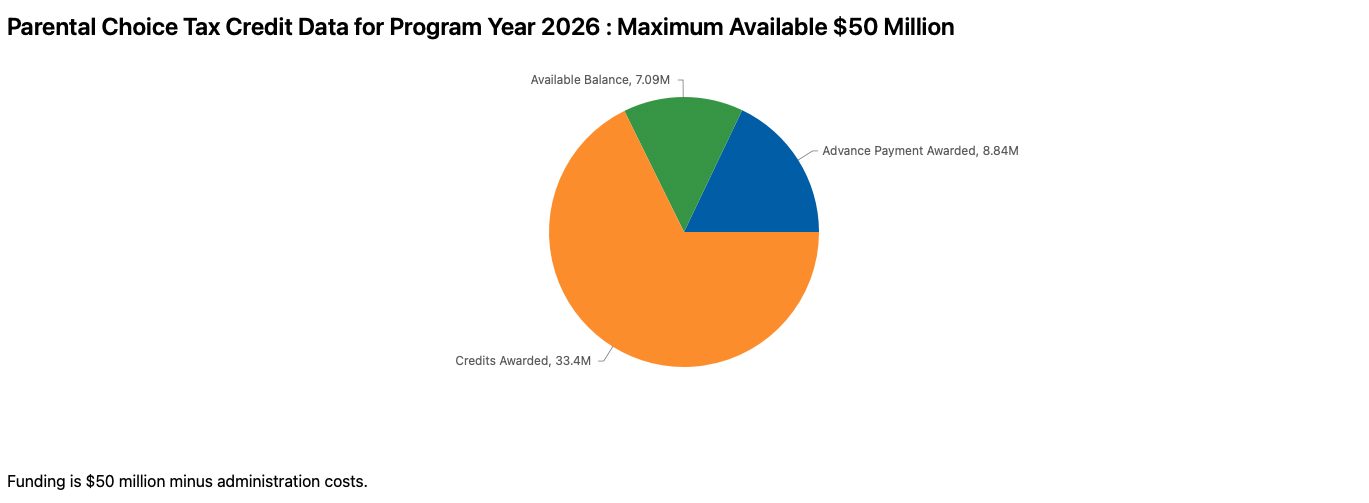
But the commission is withholding additional information collected through the application process, including how many students who received a tax credit or advance payment previously attended a public school. Last week, the Tax Commission rejected a request from Idaho Education News for aggregate data, after declining a similar request from Democratic lawmakers last month.
The Parental Choice Tax Credit applications asked about enrollment history, and the answers would test a selling point of the program. Lawmakers who supported HB 93 — most of whom are running for reelection, with the primary election less than two weeks — argued that it would open doors for students who couldn’t otherwise afford an education outside the public school system. Opponents — most of whom are also on the ballot — said it’s a tax break for Idahoans who could already afford to send their kids to private school.
While the federal poverty data shows that thousands of applications came from households under the federal poverty level, it doesn’t paint a complete picture. Private school choice programs in other states have tended to benefit students who were already attending private schools or home schooling.
Tax commissioner, governor’s office says data still being processed
On April 17, Idaho Education News filed a records request with the Tax Commission seeking aggregate data on applicants’ enrollment history. It also asked the commission for:
- Income data, including an average and/or median income of all tax credit recipients, along with the number of applicants who had household incomes above or below 300% of the federal poverty level.
- Current school data, including a list of schools where tax credit recipients are claiming state reimbursement for tuition and other expenses.
- Geographic data, including the counties, cities and/or ZIP codes where recipients live.
The Tax Commission denied EdNews’ request Friday, claiming that it didn’t have spreadsheets, reports or other records it could release.
Janet Moyle, one of four state tax commissioners who oversee the agency, didn’t budge when EdNews questioned the records denial this week. The Tax Commission has yet to analyze most of the data from Parental Choice Tax Credit applications because the commission plans to reopen the application window later this month, Moyle said by phone Tuesday.
“The information that everybody keeps trying to request isn’t information that is complete or available at this time because, plain and simply, we’re not through the process,” she said. “We’re not trying to be untransparent. We haven’t run these reports. We’re not finished with it.”
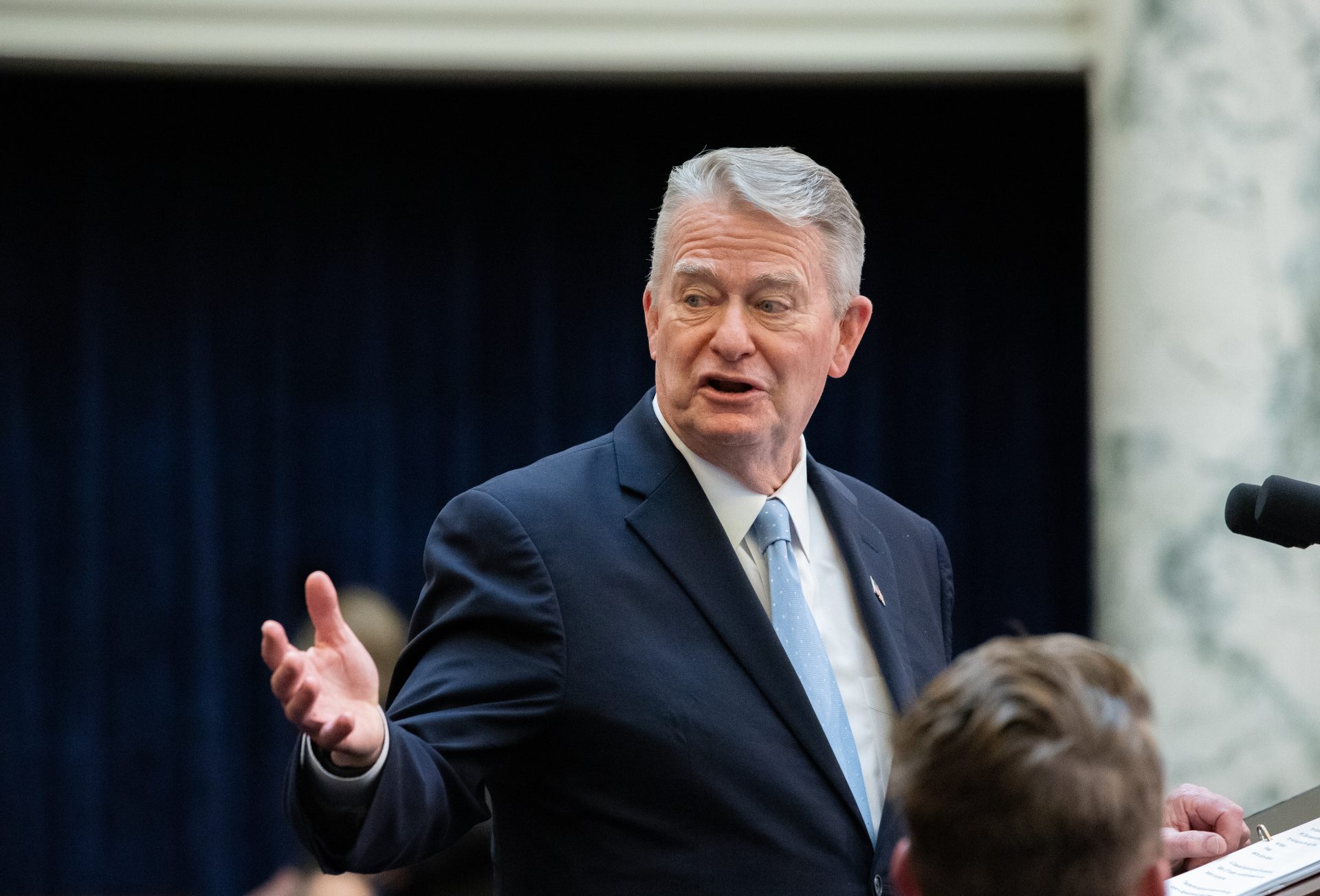
The governor’s spokeswoman also said this week that the Tax Commission is “still processing applications.” Little’s staff didn’t coordinate with the agency on its response to EdNews’ records request, said Joan Vargas, Little’s press secretary.
“The Tax Commission is still processing applications, and certain information will be aggregated and included in a report to the Legislature as required by law,” Vargas said by email. “Gov. Little supports providing information as soon as it is available in a format that can be shared without disclosing individual taxpayer information that is protected by law.”
Little signed HB 93 into law after promising that he would only support a private school choice program that’s “transparent, accountable, fair and responsible.” The Legislature “delivered” that program, Vargas said, and the governor is “proud that Idaho offers abundant education options for Idaho families.”
Commission attorney cites privacy laws to shield documents
The Tax Commission has processed and released at least some application data.
The federal poverty data shared publicly Friday showed 55% of applications came from households above the threshold while 45% were below it. Advocacy groups that support the tax credit highlighted the numbers in news releases touting the program’s assistance to needy families.

“The Idaho Parental Choice Tax Credit is a life-changing opportunity for families across the state, especially lower-income and working-class families who too often remain stuck in schools that fail to meet their children’s needs,” Valeria Gurr, senior fellow at the American Federation for Children, said in a news release Monday.
The Tax Commission also included the federal poverty data in its response to EdNews’ records request. But the commission did not release spreadsheets, reports or other documents, as EdNews requested under the Idaho Public Records Act, that could be used to independently analyze the data.
These records are shielded by privacy laws that protect information from an individual’s tax return, Moyle said. A deputy attorney general advised commissioners that “even the aggregated information may not be possible to release,” she said.
One privacy provision the commission cited is in the Public Records Act, and the other is in a section of state law governing tax collections.
EdNews did not ask for tax returns or any other personally identifying information. Its request cited aggregate data, taken from the tax credit applications, along with a list of private schools where state dollars are funding tuition.
When will additional data be released?
It’s unclear how soon the Tax Commission will process and release additional data— or whether it will generate reports beyond what HB 93 requires.
Moyle noted that the commission is legally required to submit a report to the Legislature by January, per the legislation’s reporting requirements. Asked whether the commission would release the data sooner — perhaps after the next application cycle, which is scheduled to end Aug. 15 — Moyle responded, “At this point, I can’t commit to anything, because at that point I don’t know that my staff is going to be prepared.”
Moyle, a former Republican state lawmaker, was the only tax commissioner who responded to questions from EdNews this week.
Former Gov. C.L. “Butch” Otter appointed Moyle to the Tax Commission in 2017, during her third term in the House. She’s married to House Speaker Mike Moyle, R-Star, who supported HB 93 and has touted his school choice credentials during his reelection campaign this year.
The Tax Commission’s January report to the Legislature likely won’t include much of the data that EdNews requested. As EdNews previously reported, HB 93 established more lenient reporting requirements than states with similar private school choice programs. The legislation didn’t require reporting on which schools recipients attend or how many recipients previously attended a public school.
The Tax Commission could still generate a report on this data and release it to the public. But Janet Moyle signaled Tuesday that this is unlikely. Because the tax credit application asked parents to “attest to” whether their child previously attended public school, Moyle said, the data would be based on “assumptions.”
“I don’t know if a student has attended public school,” she said. “If you look at what the statute has us do, the parents just attest to that, and then we have to take that on face value.”
Democratic lawmakers also stymied on data requests
The Tax Commission’s delays on releasing data could prevent voters from fully evaluating the program ahead of this year’s elections.
All 105 legislative seats and constitutional offices are open this year, and private school choice remains a wedge issue among Republicans ahead of the May 19 primary. Dozens of lawmakers who supported HB 93 last year, and the governor who signed it into law, are on the ballot.
Democrats, for their part, are gearing up to campaign on their opposition to the tax credit before the November general election. And so far, the Tax Commission has stymied their requests for data on the program, according to emails shared with EdNews.
Last month, Sen. Melissa Wintrow and Rep. Ilana Rubel — minority leaders of the Senate and House, respectively — asked John Bernasconi, chairman of the Tax Commission, for the number of tax credit applicants who:
- Met the 300% federal poverty threshold for priority access.
- Have a learning disability.
- Are home-schooled.
- Were ever enrolled in a public school.
While the Boise Democrats ultimately received the federal poverty data, Bernasconi declined their other requests, according to the emails. In a letter, he cited the tax return privacy laws and said the Tax Commission has “not prepared aggregate reporting of application data other than what’s shared on our website so we don’t have it to share.”
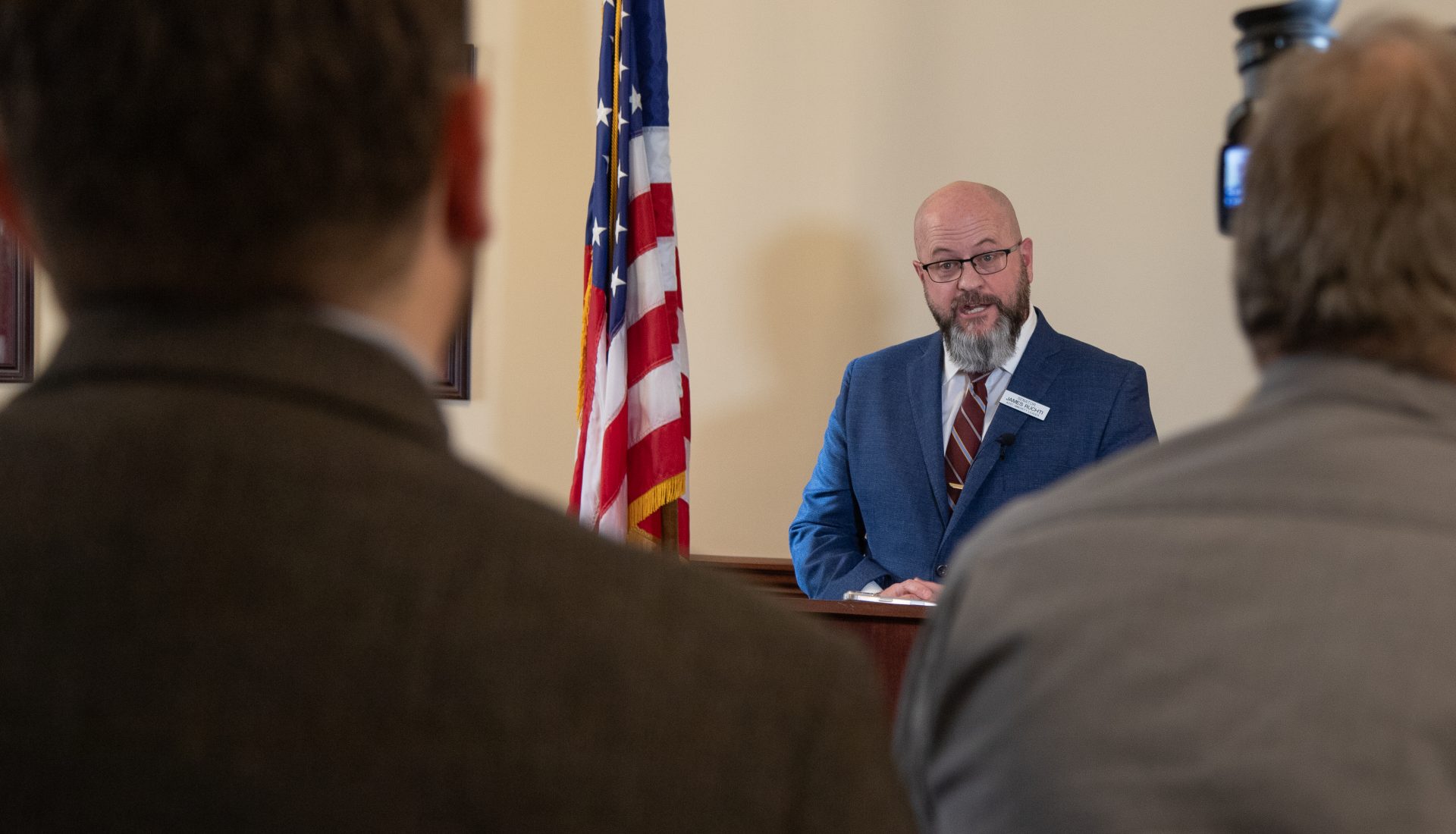
Sen. James Ruchti isn’t buying it. Ruchti, D-Pocatello, is Senate assistant minority leader and a Parental Choice Tax Credit opponent. He also unsuccessfully requested records from the commission — copies of the applications.
“I think we are getting unwarranted delays and excuses for why they can’t produce this information,” Ruchti said by phone Tuesday. “If the data that they have available to them was helpful to this voucher program, we’d be seeing it right now. The fact that we are not seeing it tells me that there are concerns with how people will either perceive the data or just out-and-out what the data says.”