
The College of Western Idaho is determined to jump into the chaos and competition of intercollegiate athletics.
It’s too early to know where CWI will get started, or when. That depends on donor dollars and community support. The state’s largest two-year school is determined to use an endowment-based model to bankroll its athletics in perpetuity. CWI will not field a team until it funds the team, newly hired Athletic Director Mahmood Sheikh said in a recent Idaho EdNews interview.
The endowment-based approach is novel, and Sheikh says he knows of no other two-year schools using it. And while this approach complicates the rollout, it could also offer CWI some defense against possible community backlash. Athletics are a marked departure for a college that has spent nearly two decades meeting Southwest Idaho’s rapidly growing student demand — and doing it, CWI officials are quick to add, on skinny budgetary margins.
How will it all play out?
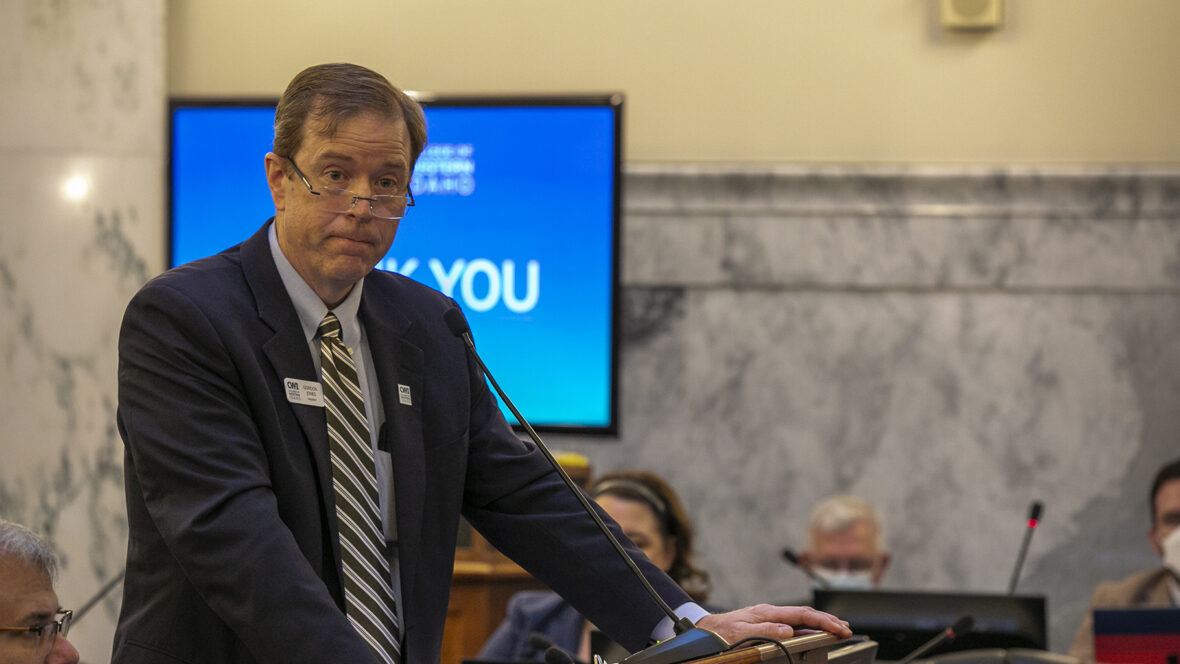
Community college athletics operate on a shoestring compared to big-time NCAA sports. Some CWI teams could run on a $200,000-a-year budget, President Gordon Jones told the State Board of Education in June.
That means CWI would look to raise $5 million to fully endow an athletic team, covering future costs of scholarships, staff salaries and benefits, equipment and travel.
Sheikh, who was hired in late May, sees parallels between fundraising for startup teams and fundraising for academics. “We’re going to be doing the same, in finding what excites folks from an intercollegiate athletics perspective.”
CWI has set up an email address, athletics@cwi.edu, for community comments.
But donor interest alone won’t determine the teams CWI fields.
Geography and regional competition are major factors. A sport like women’s lacrosse might have appeal to donors, Sheikh said. But few nearby two-year schools field women’s lacrosse teams, so it might not be the right fit for CWI.
Title IX compliance is another huge factor. The federal education law outlaws discrimination based on sex — and that requires colleges and universities to strike a balance between men’s and women’s sports programs.
And the bottom line: Some sports simply cost more than others. Even if donors want to see CWI on the gridiron, football is an expensive proposition with large rosters and overhead to match.
So, some early guesses. CWI rodeo and men’s and women’s basketball? Definite possibilities. Women’s lacrosse? Unlikely. Football? Don’t bet on it.
CWI’s place in a shifting landscape
You don’t have to be an ESPN junkie to know college athletics are in turmoil. Name, image and likeness — NIL for short — has turned student-athletes into paid performers, with the highest-bidding programs landing most top recruits. A transfer portal allows athletes to freely move from school to school, sometimes year by year. Athletic programs themselves are on the move, with conference realignment rendering the big-time collegiate map into a scatterplot.
In June, Gov. Brad Little assigned a task force to examine Idaho’s place in this shifting landscape — although the group appears focused on the four-year schools competing at the NCAA and NAIA levels, as opposed to two-year schools like CWI.
Turmoil trickles down to CWI’s level.

NIL will factor into junior college recruiting, albeit at a “much smaller level” than at the NCAA’s top tier, Sheikh said.
Meanwhile, newly adopted NCAA rules will make it easier for student-athletes to transfer after playing two years at a community college, says the National Junior College Athletic Association, a parent organization for community college athletics.
In addition, new recruiting opportunities are opening up at the community college level. Some NCAA and NAIA programs are shutting down programs, instead of navigating the volatility of the day. The antitrust agreement that created the NIL framework — known as the House settlement — also limits NCAA roster sizes. “You have a number of student athletes who are looking for homes,” Sheikh said.
While change roils through college athletics on the national level, Sheikh sees a place for locally powered athletics at CWI. Sheikh — an Idaho native who worked in the University of Idaho’s athletic program before coming to CWI — believes the new CWI programs can compete by landing athletes from the Treasure Valley’s largest high schools and the state’s rural high schools.
How does this all fit on the CWI campus?
Even without athletics, CWI attracts most of its students close to home. More than 98% of its 34,000 students come from Idaho, and 77% from Ada and Canyon counties, CWI’s local taxing district.
Yet CWI has long been, as Jones frequently notes, a college without a campus. Many classes are held in leased spaces in the Treasure Valley. CWI is adding facilities on its main campus in Nampa, but that’s been a long process. CWI has no dormitories and no plans to build them.
None of this suggests an infrastructure built for athletics. CWI leaders, however, see opportunity.
While intercollegiate sports command much of the attention, CWI plans to start by launching club-level and intramural sports programs to bring students together, Jones said.
And students want a place to connect. Sheikh cites results of a survey from the dean of students’ office: Two-thirds of respondents want campus offerings that create a sense of belonging.
Sports can provide what a scattered campus cannot.
“I anticipate, once you create a varsity program, you have those student-athletes in those classes, they’re engaging with their classmates, they’re befriending them, they’re building relationships,” Sheikh said. “Students will want to come watch them compete, no matter where they live.”

And any discussion of sports on the CWI campus leads, inevitably, to the Ford Idaho Center. Acquired by CWI in December, in a non-cash transfer from the city of Nampa, the Idaho Center sits squarely on CWI’s main campus. It gives CWI what many community colleges can’t match: a 12,200-seat indoor arena that can (and already does) host athletic events such as basketball and rodeo.
A year ago, when CWI first broached the idea of an Idaho Center acquisition, Jones struck a lowkey tone, saying the center would bring CWI “one step closer” to athletics.
Now, CWI has a potential venue. And a full-time athletic director, his $175,000-a-year salary covered through student fees. And a potential conference; the Scenic West Athletic Conference, already home to the College of Southern Idaho and North Idaho College, is open to adding CWI, Sheikh said. And a nickname: the Otters.
The athletic ambitions Jones only hinted at 12 months ago are no longer secret. The playbook is wide open.
The ultimate test: Will the math work?
Some lawmakers are already openly skeptical. And on March 18, when the House considered a spending bill for Idaho’s four community colleges, the brief debate focused on CWI.

Rep. Brent Crane, R-Nampa, called out Jones by name, questioning whether he even has the authority to hire an athletic department.
“We know exactly where this individual is going to go. So it’s going to start with the athletic director, then you’re going to hire the basketball coach, then you’re going to hire the volleyball coach. He told me to my face, he wants to have a hockey team out there, he wants to have a rodeo team out there,” said Crane, the chair of the powerful House State Affairs Committee. “There was never any talk about athletic teams (at CWI), but that’s where it’s headed.”

Rep. John Gannon, D-Boise, echoed Crane’s concerns about the Idaho Center, noting that CWI was acquiring a “free” complex with $25 million in deferred maintenance needs, and a facility that received $21 million in city subsidies over 20 years.
“That’s not what the college is for. The college is for the people I represent, and that’s the kids and the adults who are going there to get an education … and that’s how I’m going to vote today.”
The budget passed. But, perhaps, a warning was delivered.
“I don’t know if I’d call it criticism,” Sheikh said recently. “I think it just may be an opportunity to educate individuals on our vision, our intentions, on our plan.”
At a June 17 State Board meeting, Jones emphasized the CWI athletics business model. The Ford Center acquisition was a “calculated risk,” he said, but college officials believe the complex has the potential to become self-sustaining. It could take time to raise the $5 million to endow a sports team, he said, but the endowment approach will keep CWI’s overall $95 million budget focused on serving students.
“My goal is to protect the core of that academic enterprise,” he said.
And more than any one game or season, this might be the biggest test of the CWI athletic program — its most important measure of failure or success.
Kevin Richert writes a weekly analysis on education policy and education politics.