


It’s trite but usually true: Nothing in life is free. Someone, somewhere, is paying for almost everything.
But when you’re a parent staring down the cost of raising six kids, you don’t argue semantics when someone hands your child $1,000.
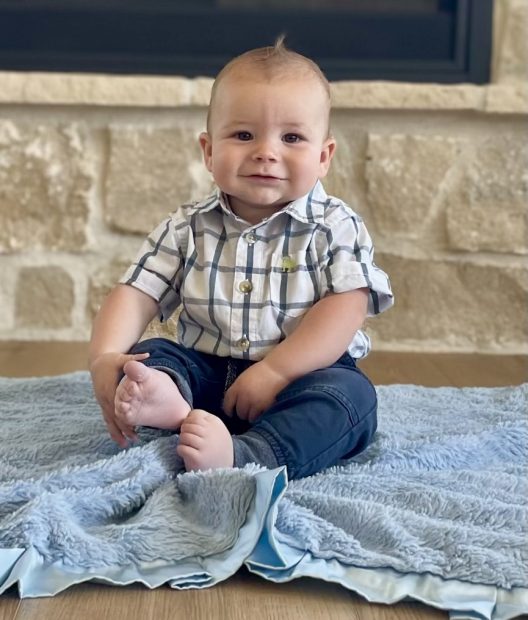
It happened to us earlier this week when our youngest qualified for $1,000 in his Trump Account, a federally authorized investment fund created under the One Big Beautiful Bill Act to help children begin building long-term savings.
The accounts are invested in a low-cost stock index fund, can receive contributions from parents, relatives and others, and are intended to grow over time.
Children like our Bowie — born between Jan. 1, 2025, and Dec. 31, 2028, and who meet eligibility requirements — receive a one-time $1,000 federal seed contribution after the account is activated. Parents and others can contribute up to $5,000 per year, subject to certain rules.
So there it is: free money. Of course, that first $1,000 isn’t free in the broadest sense. It’s funded by taxpayers. But the money is free to my wife and me — and to our little guy, whom we’d love to see attend college without graduating under a pile of debt someday.
So $1,000 means something to us. A lot, really.
Last year, I wrote about how daunting it can feel for families to save for college in an environment where tuition continues to climb — and more rapidly in recent years. It’s a familiar refrain for a lot of Idaho parents: I want to help my kids, but wanting and affording are different things.
And six kids — or two or three — multiplied by tens of thousands of dollars for college can turn simple math into heartburn.
So we’ve had this unofficial family philosophy: If we can’t do everything, we can do something.
The accounts provide that flexibility. Parents can contribute as they are able. Grandparents can chip in. Friends can too.
Birthday money. Christmas money. Twenty bucks here. Fifty there.
And as with any investment, time matters. If the market averages about 7% annually and we never add a nickel, Bowie’s $1,000 could still be worth roughly $3,400 by the time he graduates high school.
It’s a drop in the modern higher ed bucket, but it’s something.
And kids don’t have to be babies to benefit. Other donors, including Idaho-based Micron Technology, have also announced Trump Account contributions, meaning older children may still qualify for some help. We’re opening accounts for all of our children, ages one to 15.
Still, a program with a $1,000 government contribution hasn’t immediately become a household priority. As of mid-July, about 6.5 million children had opened accounts — fewer than 10% of children under 18, according to The 74.
Maybe Bowie’s account won’t pay for college someday. Maybe it will. For now, it’s a head start.
Click here to download the app and start an account. Click here for more ways to approach college savings, including Idaho’s state-sponsored 529 savings accounts, which deliver tax benefits and can pay for higher ed courses, apprenticeships and student loans.
And here’s an EdNews explainer on Trump Accounts.
