

The line of 5-year-olds in blue caps and gowns entered the front door of Lit’l Spuds Kampus, where they sat in folding chairs and waved to gushing parents and grandparents.
But our kid looked nervous. She’d spent much of the week before graduation day debating whether she’d even participate.
She often freezes in front of crowds. I warned her teacher, Miss Penny, a couple of days earlier that the little one might get cold feet for a solo she was supposed to sing at the event. Alone. In front of everyone.

The assignment: “Mary Had a Little Lamb.” Serious business for a preschooler.
Preschool graduations are funny that way. This is our fourth. Adults smile at the little outfits and songs about wheels on the bus. But somewhere between the wiggles and off-beat songs, you realize your kid really has changed.
A year ago, some of them cried when their parents dropped them off. Now they sing together, little tassels swinging, about the ABCs, colors and shapes, firefighters and police officers, and how they’ve learned to sit still and be quiet when they’re asked to — a big one for the moms and dads out there.
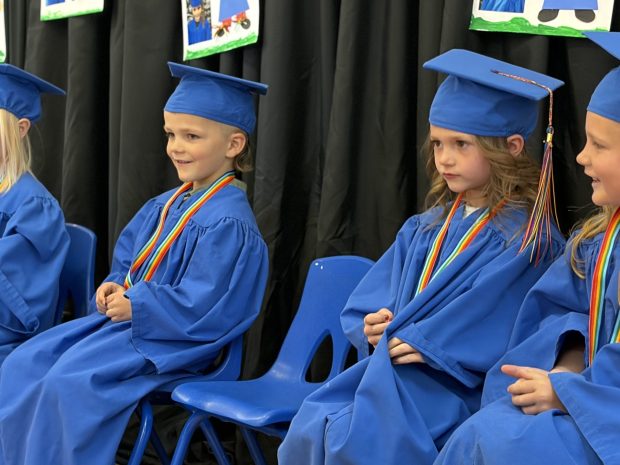
But the ceremony was largely a display of confidence: how to stand up in front of people and speak (or sing), take turns, listen, and be part of a classroom community. And it was about being ready for kindergarten, where they’ll be asked even more often to form a line and sit still for long periods.
These things hang over a lot of Idaho families like ours this time of year. Is my kid ready for the next step?
Kindergarten teachers will tell you readiness is about more than counting and saying the ABCs. It’s whether a kid can follow directions, work with classmates, communicate feelings and function in a structured environment. And that’s what preschool is supposed to teach, for good reason.
Research has long shown early childhood education shapes later academic performance, especially in literacy and social development. Students who attend preschool are generally better prepared for kindergarten.
And to add even more pressure to moms and dads: Early reading proficiency is closely tied to long-term educational outcomes.
Yet Idaho remains one of only a handful of states without state-funded pre-K. That means preschool often depends on whether families can afford tuition, find a school or rearrange work schedules around pickup times and half-day programs.
For many Idaho parents, preschool is as much an educational stepping stone as it is a financial balancing act.
So while watching the little grads sway through their songs, it was hard not to think about how much the investment matters.
Miss Penny treats it like it does. Her dress was covered with her students’ artwork — stick figures, rainbows, mountains, clouds and suns scattered across the fabric like some wearable scrapbook.
Then came the solo.

Our daughter walked to the front. She looked terrified. My wife and I exchanged glances.
Then she started singing with Miss Penny’s help. Quietly at first, then louder.
By the end, she knocked it out of the playground (according to her dad).
Everyone clapped. She beamed and darted back to her chair after doing something hard.
Maybe that’s the real lesson of preschool.

