
BALLOT BEAT
Out-of-state money pours into Idaho legislative races
Sean Dolan | 04/09/2026
An Idaho political action committee funded by a massive out-of-state donation has spent $135,291 to support 15 legislative candidates ahead of the May 19 primary.
The Citizens Alliance PAC filings give Idaho voters a first glance at how the PAC, registered in Hayden, is spending some of its $450,000 in contributions from the Citizens Alliance super PAC based in Virginia.
All incumbents the PAC is supporting voted in favor of the $50 million Parental Choice Tax Credit last year. All of their opponents who were in office last year voted against the bill.
Here’s the list of who the PAC supports:
Supported candidate Independent expenditure support Primary opponent(s) Rep. Josh Keyser $36,653 Russ Spencer, Richard Marsh Rep. Barbara Ehardt $25,165
Connor Cook Kelly Golden $15,117 Rep. Stephanie Mickelsen Brian McKellar $15,117 Rep. Erin Bingham Rep. David Leavitt $7,925 Cherie Vollmer Sen. Josh Kohl $7,925 Casey Swensen Andrew Messer $7,925 Grayson Stone, Zaine Newberry, Josh Callen David Worley $5,348 Sen. Jim Guthrie James Lamborn $5,348 Rep. Rick Cheatum, Mike Saville Rep. Elaine Price $3,404 Christa Hazel Karey Hanks $2,682 Rep. Rod Furniss Julianne Young $1,269 Rep. Ben Fuhriman Rep. Rob Beiswenger $707 Sean Hall Rep. Faye Thompson $354 Brian Beckley Sen. Christy Zito $354 Megan Blanksma, Terry Gestrin Click here to view our previous reporting, detailing the PAC’s funding and the pledge it asks candidates to sign.
Idaho attorney general endorses challenger in race against Sen. Guthrie
Sean Dolan | 04/08/2026
Idaho Attorney General Raúl Labrador has endorsed David Worley, a District 28 Senate candidate, in his Republican primary bid against Sen. Jim Guthrie, who is seeking a ninth term in the Legislature.
Worley is a major in the Idaho National Guard. He ran for Senate in 2022 but lost in the general election to Sen. James Ruchti, D-Pocatello.

Idaho Attorney General Raúl Labrador In a press release, Labrador said Worley will fight for Idaho families, support strong border security and hold government accountable.
“Voters are tired of politicians who campaign one way at home and govern another when they are in Boise,” Labrador stated. “David is different. He’ll bring integrity, courage, and common sense to the Senate. I encourage Republicans in District 28 to support David Worley on May 19.”
Guthrie, R-McCammon, was first elected in 2010. He chairs the Senate State Affairs Committee and has faced criticism this session from hardline Republicans for not allowing hearings on immigration bills. Guthrie tops the Stop Idaho RINOs PAC list of Republicans who vote with Democrats.
In response to an EdNews candidate survey, Worley wrote Idahoans deserve honest government where bills are heard in public.
“In Boise, too many decisions are controlled by procedure and closed-door gatekeeping, and that undermines trust,” Worley wrote. “I am running to uphold immigration law, defend Idaho family values, and restore integrity and transparency so the people’s business happens in daylight.”
Worley submitted responses to the EdNews candidate survey, but Guthrie has not. Neither Worley nor Guthrie have responded to multiple requests for phone interviews for an election profile.
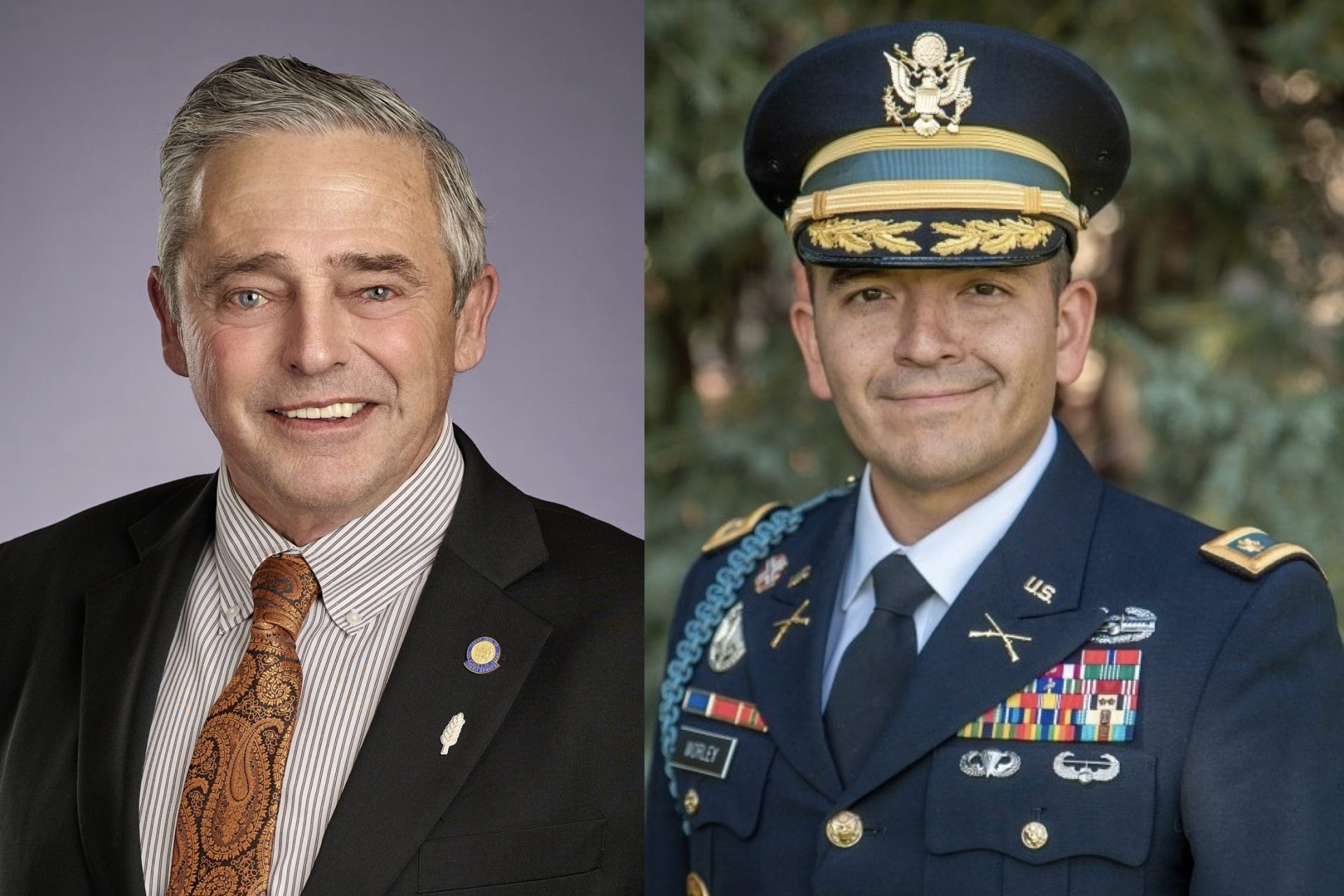
Jim Guthrie and David Worley On his campaign website, Worley stated that he believes “Cultural Marxism” has no place in public schools, and schools should not “promote hatred of their nation.” He is committed to driving “radical Leftist ideology” from Idaho’s education institutions.
Also on his website, Worley said Christian morality is the “foundation of Western Civilization” and the state plays a legitimate role in supporting public and private morality.
If elected, Worley has committed to banning the use of government resources to “advance the LGBTQ agenda or support sexual immorality generally,” according to his website.
Worley in January 2025 filed a religious discrimination lawsuit against leaders of the Idaho National Guard. U.S. District Court Judge David C. Nye dismissed the suit in February.
According to the lawsuit, Worley claimed leaders of the Idaho National Guard affirmed a “No Christians in Command” policy.
Nye, in a memorandum and order to dismiss the case, wrote that it’s not clear to the court that such a policy exists.
Click here to read Worley’s lawsuit and here to read Nye’s order to dismiss.
Guthrie’s history
Guthrie is a former trustee for Marsh Valley School District and former Bannock County Commissioner. According to his website, he champions the principle that local governments know their communities best.
He voted against the $50 million Parental Choice Tax Credit last year and prioritizes “robust funding and support” for Idaho schools, according to his website. That means pushing for “restored and increased” education budgets.
In 2023, he was a legislative co-sponsor of the bill that established the Idaho Launch grant program for graduating high school seniors.
On social issues, Guthrie was the sole Senate Republican who voted last month against a bill that regulates which bathrooms transgender people can use.
School choice group closes Idaho political fundraising arm, shifts to national organization
Sean Dolan | 04/03/2026
The American Federation for Children this week terminated its Idaho-based political action committee that spent more than half a million dollars on state elections in 2024 and will instead use a national super PAC to support school choice candidates in the state this year.
Shifting to a national super PAC will make it more difficult for Idahoans to track money the American Federation for Children spends to influence voters in Idaho.
The Texas-based nonprofit will now funnel money into Idaho directly from its AFC Victory Fund super PAC instead of the Idaho Federation for Children PAC, which it established in January 2024.
Brian Jodice, national press secretary for the American Federation for Children, confirmed these plans in a call with Idaho Education News on Wednesday.
“We’re active in a lot of states across the country,” Jodice told EdNews. “Obviously, Idaho we’ve cared deeply about over the last few years, specifically, over the last year getting that school choice program stood up.”
The group plans to continue supporting candidates who “support the issue,” Jodice added.
The school choice program Jodice referred to is the $50 million Parental Choice Tax Credit the Legislature passed last year through House Bill 93. Parents can receive up to $5,000 in tax credits per child that attends a non-public school. Students with special needs can claim up to $7,500.
The AFC Victory Fund, which is registered in Alabama, in 2024 contributed $560,000 to the Idaho Federation for Children PAC, which is registered in Idaho but headquartered in Maryland. The Idaho PAC’s only other donation in 2024 was a $5,000 contribution from Malaleuca Inc., a wellness company based in Idaho Falls.
According to data on Idaho Sunshine, not a single individual in Idaho has contributed to the Idaho Federation for Children PAC.
With a large out-of-state donation in hand, the Idaho Federation for Children PAC in 2024 reported $432,923 in independent expenditures to support and oppose candidates, and $129,180 in other expenses. (View the full list of expenditures below.)
But as of this week, the American Federation for Children decided to cut out the middleman and terminate the Idaho Federation for Children PAC.
Different reporting requirements
National PACs do not have to follow the same reporting requirements as in-state committees.
Idaho PACs have to register with the secretary of state and file monthly reports that list expenditures they make to support or oppose candidates. These in-state PACs also have committee profile pages on Idaho Sunshine with easy-to-digest information listing their contributions, expenses and independent expenditures. These profiles for Idaho PACs also include charts that show how much money comes from out of state versus in state, and from companies or individuals.
But national PACs do not have committee profiles on Sunshine, are not required to submit monthly reports and do not show up as easily in searches.
Instead, national PACs register with the Federal Election Commission and must simply submit independent expenditure reports to the Idaho secretary of state, as laid out in state law.
State law requires PACs to report their independent expenditures no less than one week before election day, or within 48 hours if those expenses total more than $1,000 and are made “after the 16th day before, but more than 48 hours before” the election.
“PACs that are registered with the FEC can contribute to local candidates and PACs, but they do not have to register in Idaho,” according to a statement the Idaho secretary of state’s office sent EdNews. “We just ask that those that receive the contributions report the FEC number on their report.”
How to find national PAC spending
National PACs will not show up in simple committee searches on Idaho Sunshine.
To track national PAC spending in Idaho, go to the Idaho Sunshine independent expenditure tab or the filings and reports tab and search for the committee’s name to view independent expenditure reports. These reports show how much money PACs have spent and include lists of which candidates the groups are supporting or opposing.
Who did the Idaho Federation for Children PAC support and oppose in 2024?
Here’s a list of some of the PAC’s independent expenditures in 2024.
- Supported:
- Rep. Wendy Horman: $47,534
- Sen. Chuck Winder: $19,629
- Sen. Julie VanOrden: $16,282
- Rep. Dori Healey: $7,794
- Sen. Codi Galloway: $6,349
- Rep. David Cannon: $128
- Opposed:
- Rep. Melissa Durrant: $80,655
- Sen. Rick Just: $78,390
- Rep. Kenny Wroten: $73,370
- Rep. Rick Cheatum: $63,546
- Mary Shea (Democratic House candidate): $26,968
- Kathy Dawes (Democratic House candidate): $12,272
Where does the AFC Victory Fund’s money come from?
From 2023 to 2024, the AFC Victory Fund reported $13.47 million in contributions, according to FEC data.
The super PAC’s biggest funder is billionaire school choice supporter Jeff Yass. He gave the super PAC $8.7 million in 2023 and 2024.
Other contributors include former Secretary of Education Betsy DeVos and her husband, Dick, who contributed a combined $1.45 million.
- Supported:
Feds sue Idaho over voter data
Devin Bodkin | 04/02/2026
The Trump administration is suing Idaho’s top election official, who refused to hand over sensitive data for about 1 million registered voters, including partial Social Security and driver’s license numbers.
The Idaho Capital Sun reported on the lawsuit Tuesday.
The lawsuit targeting Idaho Secretary of State Phil McGrane underscores deeper issues surrounding privacy versus federal oversight and debates ahead of the May primary and November general election.
Idaho has joined other states resisting similar requests from the feds, who have asked McGrane and other secretaries of state to hand over unredacted voter files, including sensitive personal identifiers.
The justification: ensuring election integrity and verifying voter eligibility.
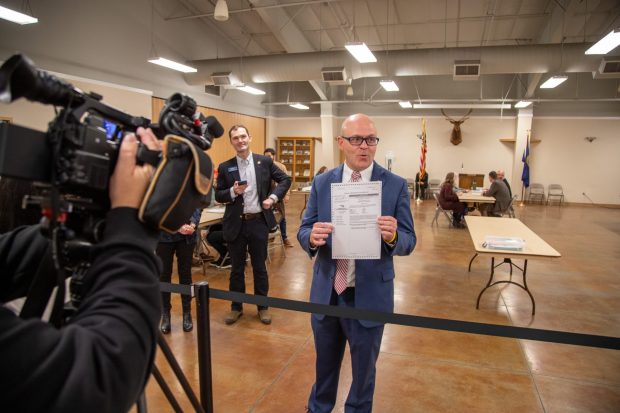
Secretary of State Phil McGrane shows a ballot to the crowd of observers during a recount on Monday, Nov. 24, 2025, at the Elk’s Lodge in Mountain Home. (Sean Dolan/EdNews) Many state election officials “are choosing to fight us in court rather than show their work,” Justice Department Civil Rights Division Assistant Attorney General Harmeet Dhillon said in a statement.
McGrane said Idaho law restricts disclosure and that the state has a responsibility to protect voter data.
Idaho has already provided a public version of voter files with scrubbed data and worked with the feds to verify citizenship. McGrane’s office flagged about 30 possible noncitizens to be investigated as part of state-level election integrity checks.
Noncitizen voting is rare in Idaho and nationwide, though President Donald Trump claims otherwise.
Some of the lawsuits targeting secretaries of state have been dismissed, including in Oregon, California and Michigan.
McGrane, a Republican running for re-election, expressed confidence in Idaho’s election oversight.
“Idahoans have confidence in how we run our elections,” he said.
The outcome could determine how much control states retain over voter data — and how much of Idahoans’ personal information the federal government can access.
Here’s the lawsuit:
Outside spending surfaces in Idaho elections — but some remains hidden
Sean Dolan | 03/31/2026
The first reports of independent expenditures for Idaho’s 2026 election cycle trickled into the state’s campaign finance portal last week — but the filings probably don’t tell the whole story of outside spending.
There are several complications in tracking spending from political action committees, particularly if they are registered out of state. Here’s what we know so far.
Two groups reported independent expenditures last week. The PAC For Public Lands last Monday reported $784 to support Sen. Jim Woodward, R-Sagle, and $1,708 to support Sen. Jim Guthrie, R-McCammon.
On Friday the Kootenai County Republican Central Committee reported $6,000 in independent expenditures to support 25 candidates for the Idaho Legislature, statewide offices and a few local races. Here are some of the candidates the committee supports:
- For governor: Mark Fitzpatrick
- Senate candidates: former Sen. Scott Herndon and incumbents Phil Hart, Doug Okuniewicz, Ben Toews, and Carl Bjerke
- House candidates: challenger Jane Sauter and incumbents Cornel Rasor, Heather Scott, Dale Hawkins, Vito Barbieri, Jordan Redman, Joe Alfieri, Elaine Price, Ron Mendive and Tony Wisniewski
Both of these in-state groups filed their reports the day after making the expenditures, but some groups wait until the last minute to file their reports.
Complications
A spokesman for the Idaho secretary of state’s office told EdNews there are complications in tracking PAC spending.
Some independent expenditures come from national PACs that are registered with the Federal Election Commission. Those groups do not have to file monthly reports in Idaho, but still have to report their independent expenditures as laid out in Idaho law (below).
For in-state PACs, some of their independent expenditures might appear in their monthly filings but not show up in “independent expenditure” searches in Idaho Sunshine.
The “final complication” is that some PACs record independent expenditures as regular expenditures, so they are “harder to spot,” according to the secretary of state’s office.
What does the law say?
Idaho statutes require anyone who makes an independent expenditure of more than $100 to file a statement with the secretary of state “not less than seven days prior” to the election and 30 days after the election.
If those independent expenditures are in an aggregate amount of $1,000 or more and made “after the 16th day before, but more than 48 hours before” an election, they must be reported within 48 hours of the time of the expenditure.
A case study
Looking through 2024 independent expenditure reports from Make Liberty Win, a Virginia-based national PAC associated with the libertarian Young Americans for Liberty, reveals that the group expertly filed their reports during the 2024 election cycle to get in right under the deadline.
Make Liberty Win in 2024 spent $705,000 in Idaho in 864 separate independent expenditures, according to Idaho Sunshine data. Republican leadership, including Speaker of the House Mike Moyle and Senate President Pro Tem Chuck Winder, sat at the top of the group’s hit list.
Between March 29 and April 30, the group spent $400,604 in Idaho but did not report those independent expenditures until May 14, seven days before the election — just as the law requires.
And then in the period “after the 16th day before, but more than 48 hours before” the primary election — which in 2024 was between May 5 and 19 — the PAC filed its reports within two days of making expenditures. For example, the PAC on May 15 spent $62,695 and reported it two days later on May 17.
As Make Liberty Win is a national PAC, it has to report fundraising and expenses to the FEC. But the FEC reports don’t shed much light on which candidates the PAC supports in Idaho. All of its spending in Idaho passes through various companies in other states, such as CampaignHQ in Iowa, Propellant Media in Georgia or WAB Holdings LLC in Ohio.
If 2024 is any guide, Make Liberty Win could be making independent expenditures now, but we won’t know how much the out-of-state PAC is spending until a week before voters hit the ballot box.
Independent candidate outraises leading Democrat in governor race
Sean Dolan | 03/27/2026
In less than two months, an independent candidate for governor has outraised the leading Democrat, who has been in the game for over two years.
John Stegner, a former Idaho Supreme Court justice, is running against Republican Gov. Brad Little in November as an independent. He declared a campaign treasurer on Jan. 29 and has since raised $80,820.
Democrat Terri Pickens, a private practice attorney, declared a campaign treasurer in December 2023 and has reported $77,752 in contributions. She will face three other Democrats in the May primary.
The makeup of their donations and contributors are quite different.
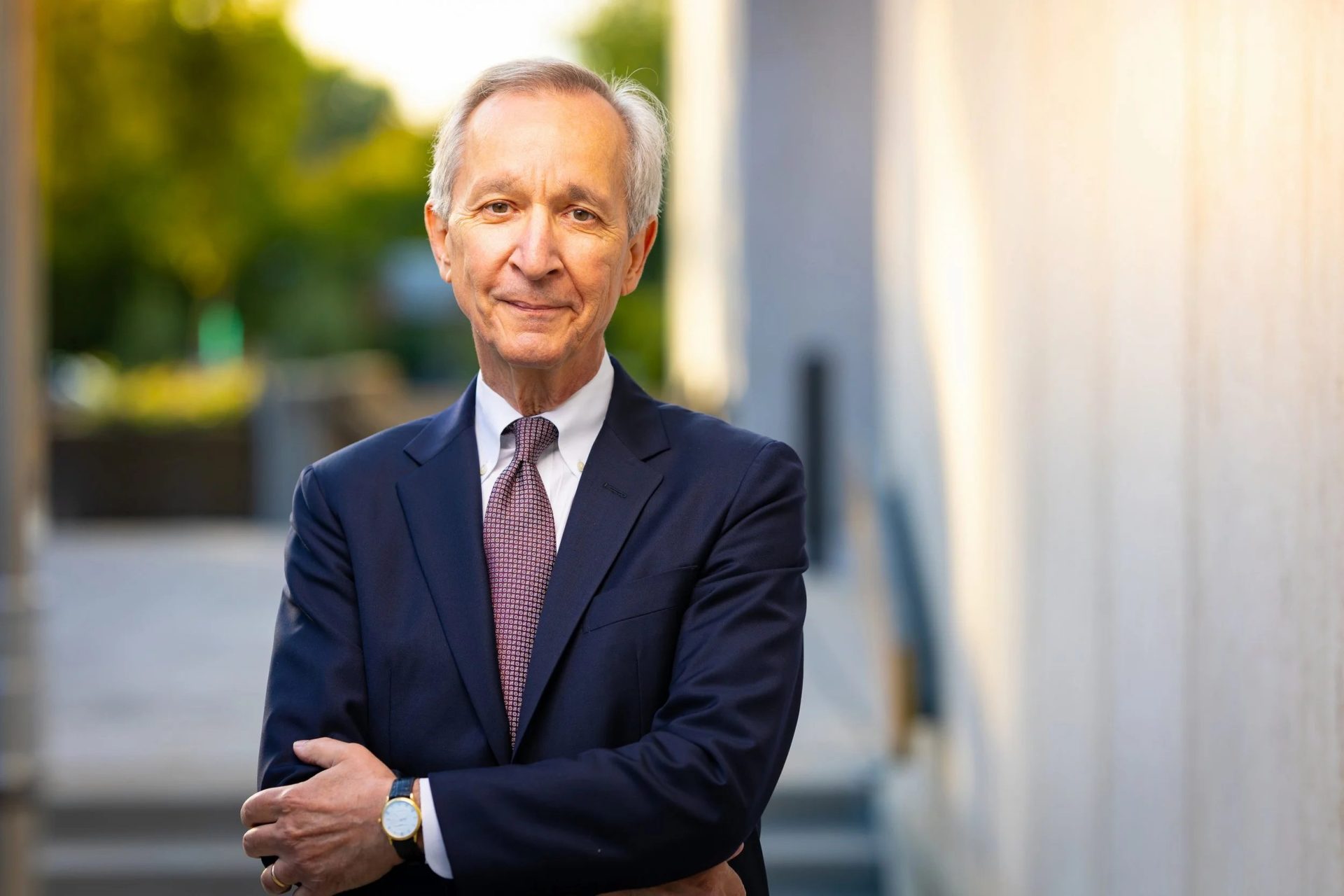
John Stegner (Photo courtesy of Stegner for Idaho) Stegner’s $80,820 comes from 46 donations, at an average contribution of $1,757. A good chunk of that money — 42% — comes from out-of-state. Here’s the breakdown by state:
- $47,070 from Idaho
- $20,250 from Washington State
- $6,000 from California
- $5,000 from Washington D.C.
- $2,500 from New York
Stegner’s donors include Tom Arkoosh, a Democrat who ran for Idaho attorney general in 2022, and John Carlson, who previously worked for the Idaho attorney general’s office.
Pickens’s donor list is significantly longer, the contributions smaller and more likely to come from Idaho.
The Democrat has reported 841 separate donations, at an average of $92. Of her campaign’s $77,752 in donations, 96% comes from Idaho. Here’s the breakdown by state, just including the top five:
- $74,414 from Idaho
- $2,500 from Utah
- $250 from California
- $200 from Tennessee
- $100 from Washington State
Her donors include Rep. Chris Mathias, D-Boise, former Boise School District trustee AJ Balukoff and California resident Leslie Nielsen.
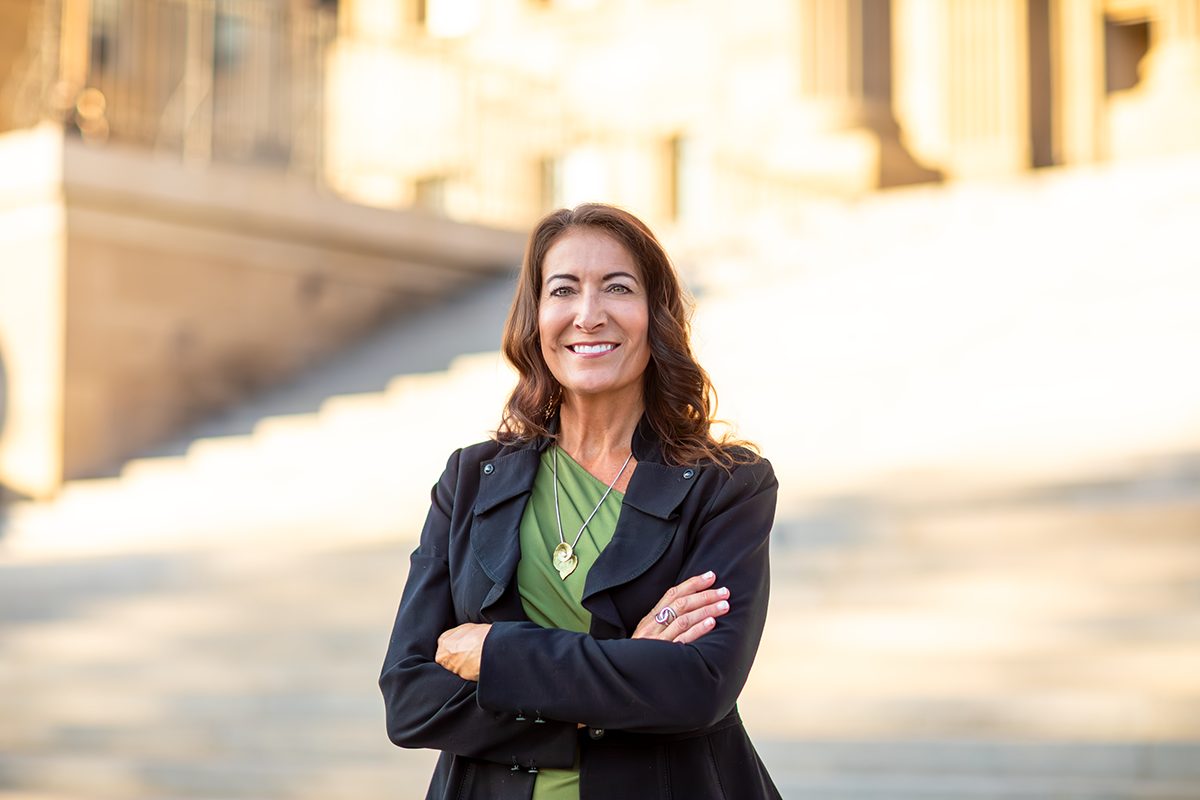
Terri Pickens (Photo courtesy Terri Pickens for Governor) Neither Stegner nor Pickens come close to matching Little’s warchest.
The governor’s campaign has reported $1.54 million in contributions, including 224 who maxed the $5,000 donation.
Little will run against seven other Republicans in May, of which only two have reported contributions. Mark Fitzpatrick, owner of the Old State Saloon in Eagle, has raised $39,599 and Kimberly resident Justin Plante has raised $2,195.
Massive out-of-state contribution funds Idaho political action committee
Sean Dolan | 03/26/2026
Slapping an “of Idaho” onto the end of a political action committee’s name doesn’t necessarily mean the money it spends comes from within the Gem State.
The Citizens Alliance of Idaho PAC on Wednesday reported a $400,000 contribution from Citizens Alliance Political Action Committee Inc., a super PAC based in Fairfax, Va., just outside of Washington, D.C.
That’s on top of a $50,000 donation the super PAC made last month to the Idaho PAC, for a total of $450,000 this year.
The only other itemized contributions the Citizens Alliance of Idaho PAC has reported this year are $100 donations from Jilene Burger of Idaho Falls — a Republican running against Rep. Marco Erickson, R-Idaho Falls, in May — and Robert Shillingstad of Hayden.
According to the Citizens Alliance of Idaho PAC’s website, the group wants to bring honesty and integrity to state politics by getting legislators to sign “The Citizens Alliance of Idaho Pledge.”
Forty-two have signed on, including Republican Reps. Cornel Rasor, Heather Scott, Dale Hawkins, Vito Barbieri, Jordan Redman, Joe Alfieri, Elaine Price and Republican Sens. Phil Hart, Doug Okuniewicz, Ben Toews and Carl Bjerke.
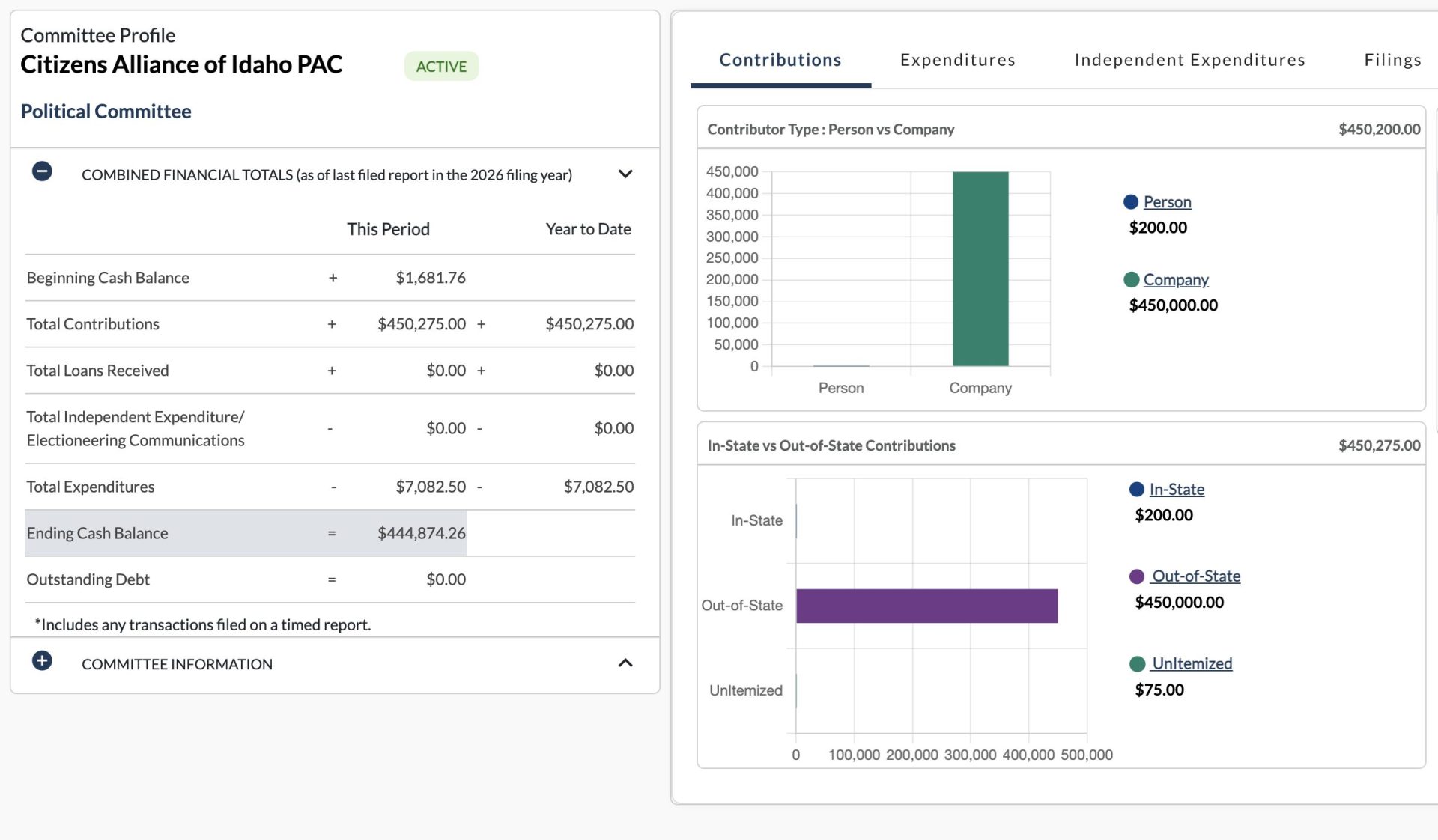
A screenshot from Idaho Sunshine shows that nearly all of the Citizens Alliance of Idaho PAC’s contributions this year come from out-of-state companies. (Photo courtesy of the Idaho secretary of state’s website) According to the PAC’s website, legislators who sign the pledge agree to vote in support of:
- The right to self defense
- Individual medical freedom
- Election integrity
- Expanding education freedom
- The right to due process
The pledge was inspired by the Idaho State Constitution and the U.S. Constitution, the website states. A video on the site provides more information.
“Talk is cheap and so are political promises, hidden agendas and special interests,” a narrator says over a video clip of a cowboy wrangling livestock. “That’s why we created the Citizens Alliance of Idaho pledge, affirming the values Idahoans have been livin’ by for over a hundred years.”
Who’s funding the super PAC?
As the Citizens Alliance super PAC is a national committee, the Federal Election Commission provides data on its funding and spending.
For the two-year period of 2025 and 2026, the super PAC reported $1.79 million in donations.
Of that, $1.29 million came from one business, POM of Pennsylvania LLC, which is associated with Pace-O-Matic, Inc., a business that describes itself as the “nation’s leading developer of skills games.”
There is a debate over whether the “skill games” that Pace-O-Matic produces are gambling devices, according to a November story from the Pennsylvania Capital-Star, part of the nonprofit States Newsroom, which also owns the Idaho Capital Sun.
In the 2025-26 filing period, two Idaho residents contributed to the Citizens Alliance super PAC.
Eagle resident Dan McKnight contributed $2,500 and Camp Hill resident Lynn Bradescu donated $1,000. Bradescu is a conservative realtor who ran for Boise City Council last year, as BoiseDev reported. That $3,500 from Idaho residents accounts for 0.2% of the super PAC’s funding in 2025.
During the 2024 election cycle, the super PAC donated $435,000 to the Citizens Alliance of Idaho PAC. The Idaho PAC spent $67,107 on independent expenditures to support or oppose legislative candidates in 2024 and reported $446,961 in expenditures that year to Mobilize the Message LLC, based in Fort Walton Beach, Fla.
“If anything, the only special interests represented by the Pledge are the citizens of Idaho,” the Citizens Alliance of Idaho’s website states.
Withdrawals thin the field in Idaho’s legislative races
Sean Dolan | 03/10/2026
Ten candidates have withdrawn from legislative races as of Tuesday morning. EdNews will update this story as more candidates drop out.
Here’s the list of dropouts so far:
- Republican James Spencer, District 6 House Seat A
- Democrat Marissa Wilson, District 11 House Seat A
- Democrat Ariel Olvera, District 14 Senate
- Republican Matt Stallsmith, District 14 House Seat A
- Republican Rep. Codi Galloway, District 15 Senate
- Republican Gary Alfred Butts, District 15 Senate
- Republican Gina Johnson, District 21 House Seat A
- Democrat Brian Stroops, District 23 House Seat B
- Democrat Rosann Mathews, District 28 Senate
- Republican Jeff Thompson, District 33 House Seat B
The withdrawals mean five fewer primary elections in May. There will now be 45 Republican primaries and five Democratic primaries. These incumbents and challengers will no longer have a primary:
- Rep. Ted Hill, R-Eagle, District 14 House Seat A
- Desi Burbank, Republican, District 15 Senate
- Rep. James Petzke, R-Meridian, District 21 House Seat A
- Joe Fuller, Democrat, District 23 House Seat B
- Mandy Peace, Democrat, District 28 Senate
Four more legislative candidates withdraw, including one who filed in two states
Sean Dolan | 03/06/2026
UPDATED: 2:15 p.m. Friday, March 6, with a third withdrawal, Democrat Rosann Mathews
Updated: 3:15 p.m. Friday, March 6, with a fourth withdrawal, Republican James Spencer
The field of legislative candidates has narrowed from 272 at the end of last week to 266 on Friday afternoon.
Democrat Brian Stroops, who filed to run for District 23 House Seat B, withdrew his candidacy Thursday. His departure means Democrat Joe Fuller will not face a primary election and will run against incumbent Rep. Shawn Dygert, R-Melba, in November.
Former Republican Rep. Jeff Thompson also withdrew his candidacy on Thursday. The Idaho Falls resident filed to run on Feb. 27 in District 33 House Seat B.

Jeff Thompson The Idaho Statesman reported Friday that Thompson also filed to run as a representative in the Kentucky General Assembly.
Kentucky’s elections website shows Thompson declared on Jan. 7 but withdrew that filing Wednesday, one day before he ended his Idaho run.
His campaign email handle — “jeff4legislator” — is vague enough to be used in both states.
Voters in District 33B will still have a Republican primary. Republican Jilene Burger faces Rep. Marco Erickson, R-Idaho Falls, in May. The winner will run against Democrat Todd DeVries in November.
On Friday, another candidate dropped out. Democrat Rosann Mathews filed last week to run for Senate in District 28. Her withdrawal on Friday eliminates another Democratic primary. Democrat Mandy Peace will run in November against the winner of a two-way Republican primary pitting Sen. Jim Guthrie, R-McCammon, against challenger David Worley.
Shortly after Mathews withdrew, Republican James Spencer exited his race. He was planning on running in District 6 House Seat A for Lewiston Republican Rep. Lori McCann’s seat. McCann is running for Senate, leaving her seat vacant. Republicans Colton Bennett and Cindy Agidius will run in the May primary, without Spencer.
Sen. Codi Galloway, R-Boise, and Republican Gary Alfred Butts, withdrew earlier this week, as we reported on Tuesday.
The six withdrawals this week narrowed the field and reduced the number of primaries in May. There will be five Democratic primaries and 48 Republican primaries.
Democrats seeing increase in candidates
Sean Dolan | 03/03/2026
More Democrats filed to run for office in Idaho last week than at any point in recent history.
One hundred Democrats out of 272 candidates filed for the Legislature and 10 out of 29 filed for statewide offices. Party leaders are touting their organizing and recruiting efforts, while also noting an increased interest in public office as the Republican supermajority in the Legislature votes on budget cuts.
“We pounded the pavement and talked to people,” Idaho Democratic Party Chair Lauren Necochea told EdNews on Monday. “Sometimes people have to be asked, and sometimes people raise their hand and say, ‘I want to run.'”
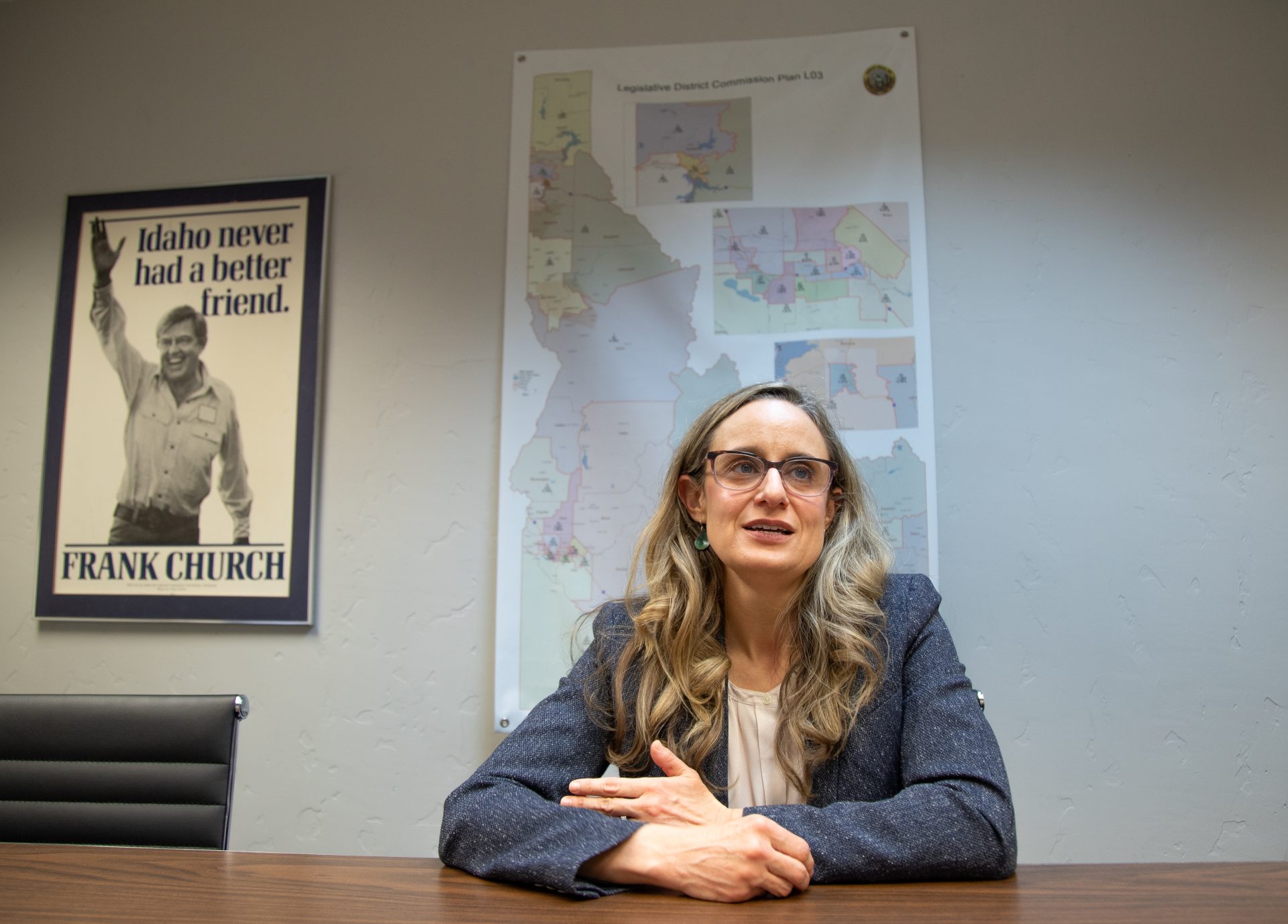
Lauren Necochea, chair of the Idaho Democratic Party, speaks during an interview on Monday, Dec. 15, 2025, at party headquarters in Boise. (Sean Dolan/EdNews) Ada County Democrats say they have a candidate running in every legislative race in the county for the “first time in modern history.”
“This is a direct response to the extremism coming out of the Statehouse,” Ada County Democrats Chairman Jared DeLoof stated in a Friday news release.
More than twice as many Democrats are running for the Legislature this year compared with four years ago — and there are more primaries for these candidates.
- 2026: 100 Democrats, seven contested primaries
- 2024: 87 Democrats, four contested primaries
- 2022: 46 Democrats, no contested primaries
“We’re just thrilled with the outpouring of interest in running at a critical moment in Idaho’s history,” Necochea said.
The state party stays neutral in primaries, she said, and voters will decide whose message resonates the most.
View the full list of candidates here.
There will be three Democratic primaries in District 6 and two in District 16:
District 6
- Senate
- Richard Gayler vs. Robin Weldy
- House A
- Trish Carter-Goodheart vs. Bryce Blankenship vs. Ryan Wayne Augusta
- House B
- Kathy Dawes vs. Kenneth Williams
District 16
- Senate
- Soñia Galaviz vs. Justin “Justice” Mitson
- House A
- Megan Woller vs. Jeffrey Watkins
General Election
Necochea said she thinks Democrats can flip seats in District 15 and 29 this year.
In District 15, Sen. Codi Galloway, R-Boise, in 2024 beat incumbent Democrat Rick Just by a 3.6% margin. Galloway on Monday withdrew her re-election campaign. Democrat Nancy Gregory, a 24-year Boise school trustee, is running for the seat. She will face Republican Desi Burbank in November.
In District 29, Rep. Tanya Burgoyne, R-Pocatello, in 2024 beat incumbent Democrat Nate Roberts by a 5.2% margin. Roberts is running again this year, but first Burgoyne will face Republican Jennifer Miles in the primary.
“With people excited to run all across the state, we’re going to be narrowing the margins where Republicans have strongholds, and potentially flipping some seats and some surprising places,” Necochea said.
The Latest
-
Out-of-state money pours into Idaho legislative races
-
Idaho attorney general endorses challenger in race against Sen. Guthrie
-
School choice group closes Idaho political fundraising arm, shifts to national organization
-
Feds sue Idaho over voter data
-
Outside spending surfaces in Idaho elections — but some remains hidden
-
Independent candidate outraises leading Democrat in governor race
-
Massive out-of-state contribution funds Idaho political action committee
-
Withdrawals thin the field in Idaho’s legislative races
-
Four more legislative candidates withdraw, including one who filed in two states
-
Democrats seeing increase in candidates