Gov. Brad Little proposed keeping K-12 “classroom funding” flat next fiscal year, protecting traditional public schools from more than $850 million in cuts, reversions and transfers aimed at balancing the state’s budget.
Virtual public schools may not be spared, however. Colleges and universities could also face additional cuts, beyond the $13 million hit they took from Little’s executive order reducing spending by 3% last year.
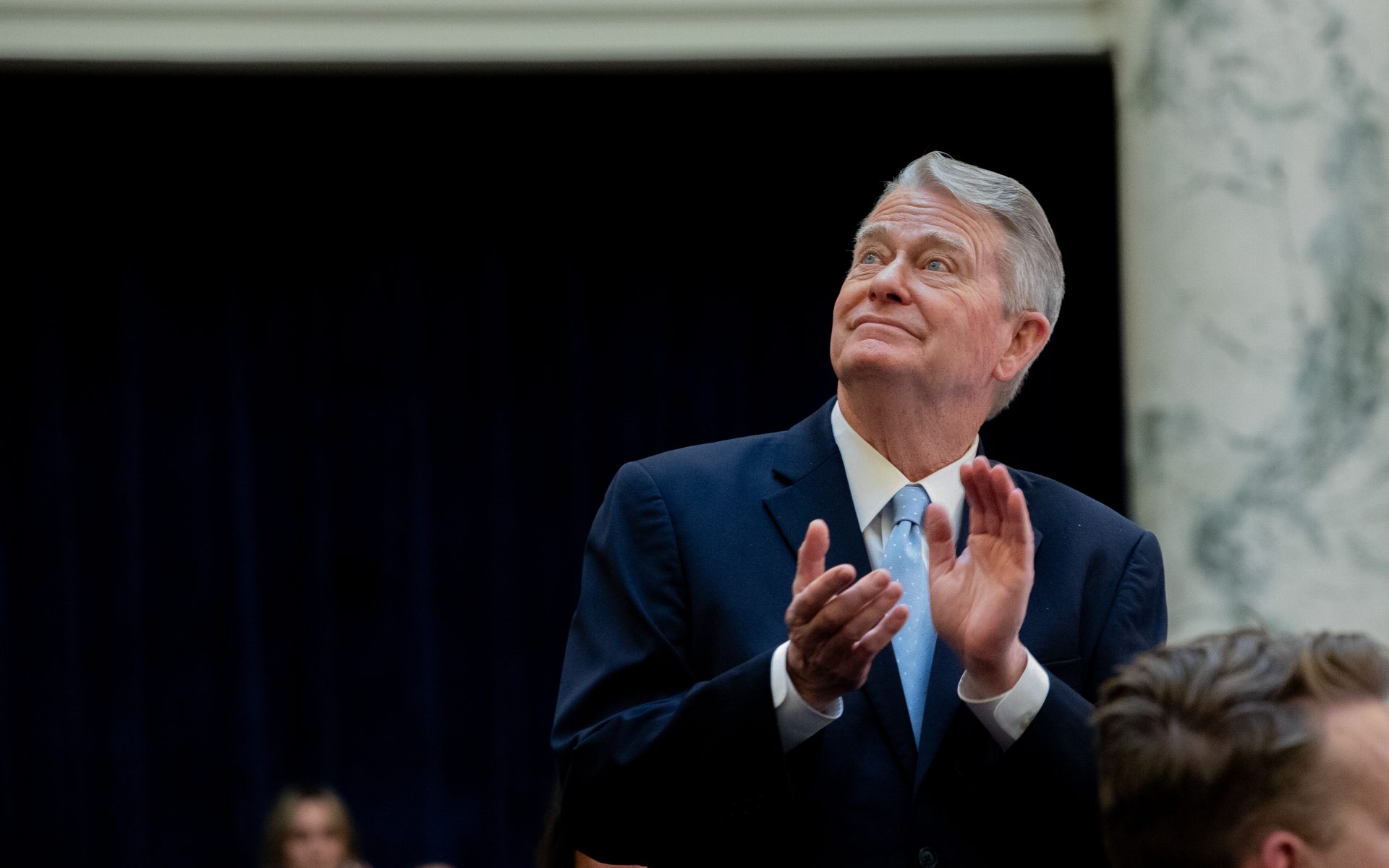
Little unveiled his budget plan — “Enduring Idaho” — Monday at the Statehouse during his annual State of the State address, kicking off the 2026 legislative session.
The 30-minute speech trod familiar ground. Little touted past investments in public schools and lauded Idaho’s economy, the state’s credit rating and its alignment with the Trump Administration — on border policy, tax cuts, energy research and culture-war issues like diversity, equity and inclusion.
But it was a departure from past years when it came to the state’s budget. After years of surpluses, buoyed by population growth and federal COVID-19 aid, this year’s session gets underway with a looming revenue shortfall caused, in part, by last year’s massive tax cuts.
Little’s budget plan illustrates the scope of the problem: It includes program cuts, reversions and fund transfers totaling $222.9 million for the current fiscal year and $642.5 million next fiscal year, the largest of which would affect funding for road projects and Medicaid.
“Some of these budget decisions are tough, but we will emerge stronger in the long-run because of them,” Little said. “This is what financial responsibility looks like — planning ahead and living within our means.”
In the weeks leading up to the session, state budget analysts projected a $40 million deficit for the current fiscal year, which ends June 30, followed by a $555 million revenue shortfall for next fiscal year, which starts July 1. These estimates didn’t include the impact of conforming to tax changes in President Donald Trump’s “One Big Beautiful Bill Act.”
Little on Monday recommended conforming to the federal tax changes, which could cost the state up to $284 million, according to an estimate from the Tax Foundation. The governor’s Division of Financial Management (DFM) used a smaller number, $155 million, to estimate the impact, which was based on a mid-range projection from the Idaho State Tax Commission.
“At a time when everything costs more, the Trump tax cuts will provide real relief,” Little said. “They will put more money back in the pockets of Idaho’s seniors and working families so they can afford the basics and breathe a little easier.”
Little’s total budget recommendation for fiscal year 2027 is $5.63 billion, a 0.5% decrease from the current fiscal year.
Getting to this number — and leaving just $25 million on the bottom line — would require a hodgepodge of one-time and ongoing budget cuts, reversions and fund transfers, including, among other things:
- A $275 million one-time cut to the Idaho Transportation Department’s Strategic Initiatives Fund for road projects in FY 2027, on top of a $45 million cut in FY 2026,
- Permanent 3% spending cuts to all state agencies, which saved about $64 million this fiscal year,
- A $45 million ongoing reduction to Medicaid costs. This would be achieved by implementing a 4% Medicaid provider rate adjustment, saving $23 million, and by making “further service reductions” that save $22 million. Little said that he has a list of options to achieve these savings, but it does not include repealing Medicaid expansion,
- Tapping $100 million in interest from a handful of state funds, and
- Reverting $20 million in salary funds for 100 state positions that have been vacant for more than six months.
Public schools are shielded from the cuts, for the most part. Little proposed keeping the roughly $2.8 billion public schools support budget flat for the 2026-27 school year.
K-12 spending increases required by law — such as career-ladder and transportation adjustments — would be covered using rainy-day funds. The governor’s budget taps about $30 million from the $265 million Public Education Stabilization Fund (PESF). He didn’t recommend raises for state employees, including teachers.
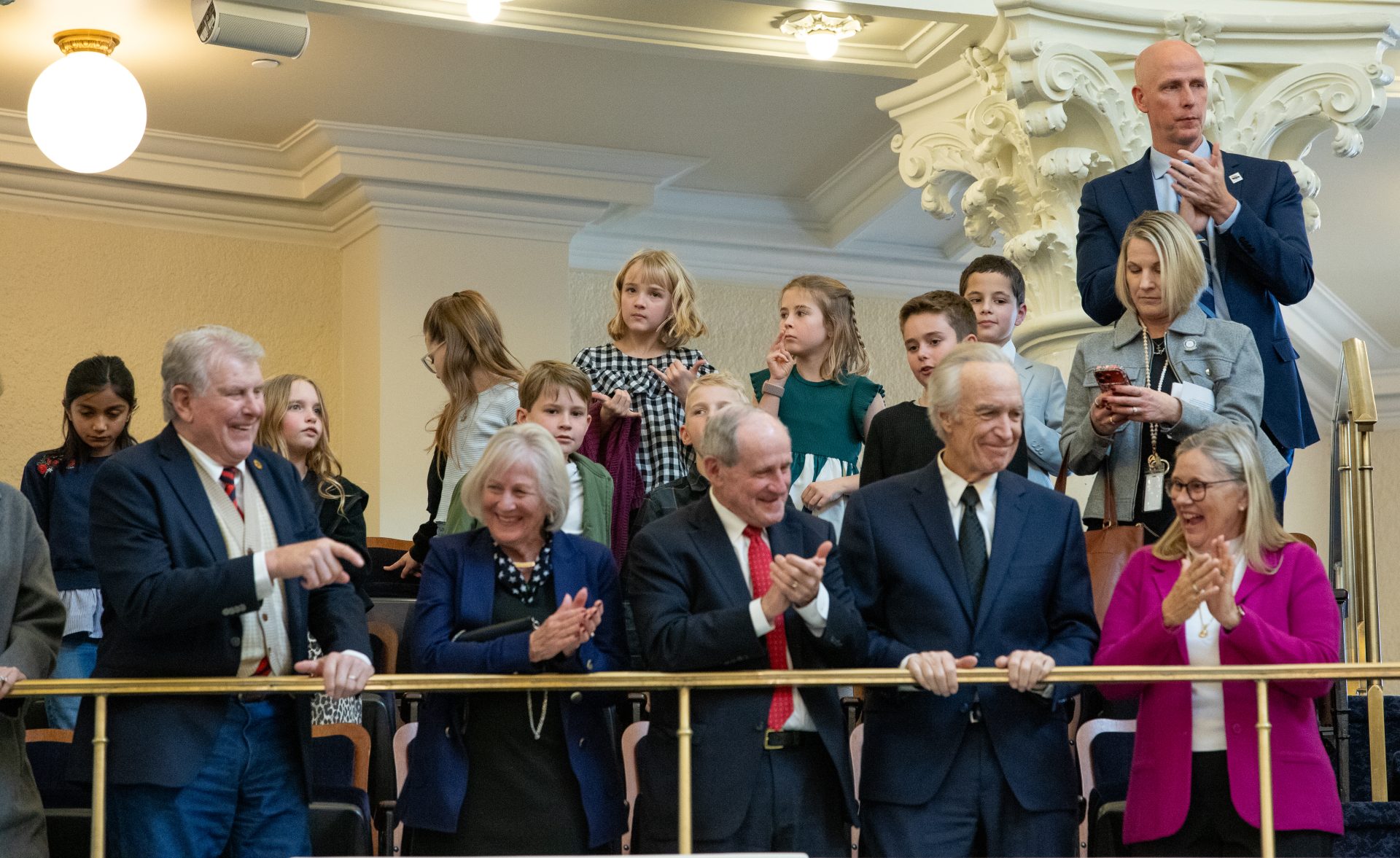
During his speech, Little recognized students from Eagle Hills Elementary, who stood up and waved from the House gallery. Little said his plan “ensures classroom funding is protected.”
“Idaho’s public schools are the heart and soul of our communities, and our children are our future,” he said, “which is why, even in a year of reduced revenues, schools remain our top priority.”
The Idaho Education Association applauded the governor’s plan Monday. “Forcing cuts on already underfunded public schools — like cuts being demanded of agencies across state government — would significantly harm students, families and communities that are already straining to support the local public schools they rely upon every day,” said Layne McInelly, president of the teachers’ union.
This immunity doesn’t extend to K-12 virtual schools, however.
The governor’s budget calls for clawing back $23 million from online academies. This includes $20 million that virtual schools, like the Idaho Home Learning Academy, offer to parents for controversial “supplemental learning” material. It also includes $3 million in transportation funding that virtuals use for online access.
Little said his budget “right-sizes funding for online schools, enhancing accountability and ensuring long-term sustainability for this important school choice option for thousands of Idaho families.”
In addition, colleges and universities would not get $9.5 million earmarked for enrollment increases under the governor’s budget recommendations. This is on top of the roughly $13 million in ongoing spending cuts to higher education from the Idaho Act, Little’s executive order from last year.
The governor’s budget protects funding for the $75 million Idaho Launch program, although Little proposed reverting $10 million in unused scholarship money to the state’s general fund. Launch offers graduating high school seniors up to $8,000 in scholarships that cover college or career training.
GOP House leaders aren’t as keen on preserving Launch. House Speaker Mike Moyle, a longtime critic of the program, promised that there will be legislation aimed at restricting how the money can be used.
“Everything’s on the table this year,” said Moyle, R-Star.
Aside from tapping PESF for public schools, Little’s spending plan doesn’t lean on reserves to resolve the budget shortfall. The state currently has about $1.7 billion in rainy-day funds, representing nearly a quarter of its annual spending.
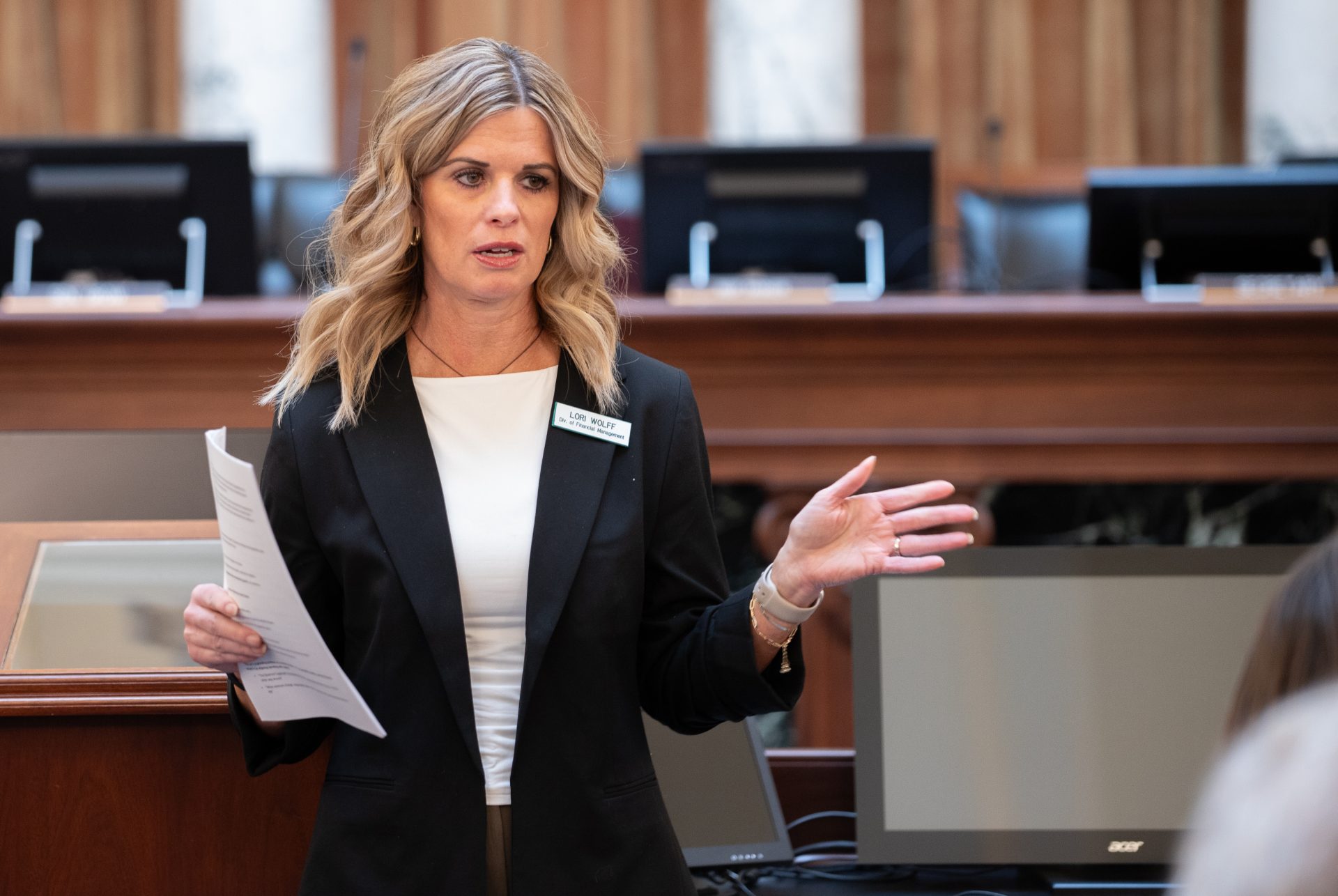
“The economy is strong, it’s not raining,” DFM director Lori Wolff told reporters Monday. “We tried to avoid the use of reserve funds, wanting to save that for times of economic downturn or recession.”
This is a developing story and will be updated.