
For decades, special education funding in Idaho and across the United States has been in crisis. Being critically underfunded is not a new problem, and it is not the result of poor planning or mismanagement by public school districts. This crisis is the predictable outcome of a long-broken promise.
When Congress passed the Individuals with Disabilities Education Act (IDEA) in 1975, the federal government committed to covering up to 40 percent of the additional cost of educating learners with disabilities. Nearly 50 years later, that promise has never been fulfilled. Today, federal funding typically covers less than 15 percent of actual costs. The remaining burden has fallen to states like Idaho and to local school districts—year after year, budget after budget – a gap that local communities have been quietly absorbing for decades.
For decades, districts across Idaho, including Pocatello/Chubbuck School District 25, have found ways to make it work. We stretched dollars, reallocated staff, delayed purchases, and absorbed rising costs—because our learners cannot wait. They have immediate legal rights to services, and we have a moral responsibility to meet their needs.
But what we are facing now is different.
Years of chronic underfunding have collided with rapidly increasing need. The number of learners requiring special education services continues to grow, and the complexity of those needs is increasing as well. These are not future projections. These are learners already in our classrooms today.
Over the past several years, Pocatello/Chubbuck School District 25 has added multiple specialized programs to serve learners with significant needs. Each program requires highly trained staff and substantial resources. Even with careful planning and responsible budgeting, we are stretched thin.
Here is the critical reality many people may not understand: when a learner with significant needs enrolls unexpectedly, no new funding comes with them. To serve that child, a school district must use existing resources.
Public schools have also become the default safety net for the entire system. As a public school district, we are legally responsible for identifying learners with disabilities, including learners enrolled in home schools, online schools, and those educated in private schools. We take that responsibility seriously, even as the funding has never matched the scope of the obligation.
Medicaid helps offset some costs, but even that support is limited. Complex rules, penalties, and restrictive requirements reduce how much districts can realistically access. In some cases, increased reimbursement comes with added financial obligations that limit flexibility. This means districts are often discouraged from fully leveraging the very funding intended to support learners with disabilities.
There is also a very real human cost to this underfunding.
There are no caseload caps when needs increase and no automatic funding triggers when enrollment rises. Staff burnout is high, vacancies are increasingly difficult to fill, and experienced educators are leaving the field. When staff burn out increases, learners lose consistency. Progress slows. Families lose trust.
When we underfund special education, we do not just lose dollars—we lose people.
Today, nearly one in five learners in PCSD 25 receives special education services. That number continues to grow. We have budgeted carefully, reallocated responsibly, and absorbed costs for years. I often describe it like putting rubber bands around a watermelon. At first, it holds, but the more pressure you add, the more strain it feels—until eventually, it gives way.
We are at that point.
Without meaningful action, this system will break—and when it does, learners with disabilities and their families will feel the impact first and hardest.
Funding special education is not optional. Our commitment to these services reflects our values as a community. And right now, our most vulnerable learners must be the priority.
School districts cannot fix this alone.
Strong schools are one of the most powerful community assets we have. They touch nearly every family and help shape the skills, and opportunities of the next generation. What happens in our classrooms today directly influences our future workforce, local economy, and civic life. When communities step in to support schools—especially in areas where long-standing funding gaps exist—that investment comes back to all of us in stability, opportunity, and pride.
We can innovate. We can stretch resources. What we cannot do is make up for decades of systemic underfunding without action from state and federal leaders. State and federal policy decisions are where the levers of change exist.
This is the moment when broader community voices matter. Business leaders, healthcare providers, nonprofit partners, and community advocates bring voices that legislators listen to differently. Speaking up helps to reinforce that the underfunding of special education is not just a school issue—it is a workforce issue, a healthcare issue, and a community stability issue.
We are asking our elected leaders to do three things: (1) fully fund IDEA as originally promised; (2) modernize special education funding systems so they respond when learner needs increase; and (3) remove barriers that penalize districts for accessing Medicaid and other supports designed to serve learners with disabilities.
You do not need to be an expert in special education law to speak up. What matters is that legislators hear—clearly and consistently—that underfunding special education harms real children, real families, and the strength of our communities.
This issue is ultimately about values. It asks whether our community believes that its most vulnerable learners deserve stability, dignity, and opportunity—not just in words, but through sustained action.
As a public school district made up of dedicated and passionate educators and staff, we appreciate the community’s partnership in our schools. We now ask that this partnership extend beyond our classrooms and into the statehouses and congressional halls where special education funding decisions are made.
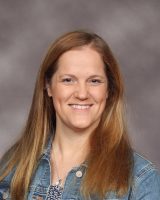
Janelle Harris is the Director of Special Services for Pocatello/Chubbuck School District 25 and a former special education teacher and school administrator with more than two decades of experience in public education. She is deeply passionate about ensuring learners with disabilities receive the services, stability, and dignity they deserve.

