

(UPDATED, 8:41 a.m., April 5, to reflect Little’s actions on the bills that passed Friday.)
The Legislature moved quickly to pass a “medical freedom” law — in a last-day-of-the-session push to send a rewrite to Gov. Brad Little.
The House amended and passed Senate Bill 1210 to the floor Friday. The Senate passed the amended bill Friday afternoon, sending it to Little, who promptly signed it.
The flurry of legislative activity occurred on the 89th and final day of the 2025 session. At 3:46 p.m., the House adjourned for the year. The Senate followed suit at 4:40 p.m. Little signed SB 1210 at 4:42 p.m.
Both of the key changes in SB 1210 address health protocols in schools.
The main thrust, for K-12 schools and higher education, remained untouched. Schools would not be allowed to mandate a “medical intervention” in order to attend class, enter a campus or school building, or take a job at a campus or school.
But this section of the bill also refers back to several existing pieces of state law. One of those laws allows public schools to send home students “who are diagnosed or suspected as having a contagious or infectious disease,” and allows administrators to close a school during a disease outbreak.
One amendment extends these same rights to private and parochial schools.
A second amendment addresses unvaccinated students. “Notwithstanding any other provision of law to the contrary, under no circumstance may a healthy person be excluded in a disease outbreak due to such person’s vaccination status.” Existing state law does allow allows schools to exclude students “who are not immune and have been exposed to a contagious or infectious disease.”
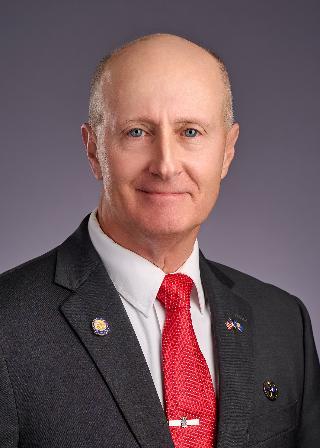
When the House State Affairs Committee took up the bill Friday morning, the bill’s sponsor tried to draw a distinction between what the bill would allow — and what it wouldn’t allow. Schools and businesses would be allowed to turn away students, employees or customers who are sick, said Sen. Dan Foreman, R-Moscow. But they would not be allowed to require a medical treatment, such as a vaccination.
The committee’s two Democrats — Reps. Brooke Green and Todd Achilles, both of Boise — said the bill was vaguely worded. Green said she was worried that the bill would prevent private daycare centers from preventing the spread of communicable diseases.
Green, Achilles and Rep. Stephanie Mickelsen, R-Idaho Falls, supported a motion to derail the bill, but the committee’s other Republicans opposed the move. The committee then voted unanimously to send the bill to the floor for amendment.
The House amendment process was contentious. Mickelsen and other moderate Republicans pushed an amendment designed to shield businesses from liability. Rep. Brent Crane, R-Nampa, said the language would threaten a fragile truce between the House, the Senate, and Little, who had vetoed an earlier version of the “medical freedom” bill last week.
“We have an ironclad agreement,” said Crane, House State Affairs’ chairman. “This is a hostile amendment and it could potentially take down this bill.”
The amendment failed, and the House passed the bill soon after. Achilles was the only lawmaker to debate.
Despite the amendments, the bill remains “deeply flawed,” he said. “Look at the definition of ‘medical intervention.’ It’s still the same overly broad definition. You can’t diagnose, you can’t prevent, you can’t cure.”
The House passed the bill, 44-23. Within about an hour, the Senate agreed to the amendments and passed the bill, without debate, on a 27-6 vote.
The Legislature’s last-day rush on “medical freedom” came six days after Little pressed the issue with his only veto of the session, to date. Little said he believed the first bill, Senate Bill 1023, would handcuff school officials during a disease outbreak.
Legislative leaders critique the 2025 session; Moyle foreshadows private school debate in 2026
As the 2025 session neared its end Friday, Republican and Democratic leaders took turns recapping what happened, and what didn’t happen.
Predictably, they offered widely different views of the session.
Lawmakers could expand private education tax credit next year. House leadership is already weighing what’s next for House Bill 93.
The private education tax credit is capped at $50 million. But House Speaker Mike Moyle, who supported the bill, said House Republicans would consider expanding the program next year.
Applications for the tax credit open in January 2026, so lawmakers will likely have a sense of the demand during next year’s legislative session. The bill directs the Idaho State Tax Commission, which will administer the program, to create a waiting list “demonstrating who would be eligible on a first-come, first-served basis if the annual maximum limit…increased.”
“I have no problem, and I don’t think any of us on this leadership team do, expanding the amount of money there if there’s a need,” said Moyle, R-Star.
Funding formula changes fall flat. Moyle also said lawmakers couldn’t agree on changes to the state’s archaic K-12 funding formula, but will try again next year.
State superintendent Debbie Critchfield, a Republican, proposed weighting schools’ discretionary funding based on student needs. The bill passed the Senate but didn’t get a hearing in the House. Rep. Wendy Horman, R-Idaho Falls, pitched a competing per-student model that promised weights in the future. Horman’s bill also didn’t get a House hearing.
“There wasn’t a consensus on any of them,” Moyle said. “I’m hoping that by next year, the different groups can get together and come up with the solution going forward, because it needs to be resolved. But it needs to be resolved in a way where we don’t have the winners and the losers.”
“The textbook opposite of fiscal conservatism.” Moments after the House GOP news conference, House Minority Leader Ilana Rubel took to the podium and blasted the GOP majority’s tax and spending decisions. She criticized the GOP for pushing an estimated $450 million in tax cuts, passing a private school “voucher scheme” that she said could siphon hundreds of millions of dollars from the state budget, cutting agency budgets and borrowing to pay for infrastructure repair.
“This is the textbook opposite of fiscal conservatism,” said Rubel, D-Boise.
Senate Minority Leader Melissa Wintrow, D-Boise, criticized the dysfunction she saw on the Joint Finance-Appropriations Committee. The House-Senate panel struggled to pass budget bills, she said, while fumbling through its rules process.
“The chaos and gridlock we’re seeing this session is the natural result of extreme ideology driven by deep-pocket special interests overtaking the values of Idahoans,” she said.
Senate passes anti-DEI bill; Little signs it
The Senate rehashed a debate over diversity, equity and inclusion Friday, before sending an anti-DEI bill to Gov. Brad Little’s desk.
Senate Republicans had already approved an earlier version of Senate Bill 1198. But the House amended a penalty provision that would allow the attorney general to seek fines of up to $50,000, or 10% from the college or university office where a violation occurs.
The Senate approved the updated version 23-12.
Seeking to end the drawn-out DEI debate on a positive note, Sen. Ben Toews praised the state’s colleges and universities.
“I actually think that they’re amazing organizations, and they do so much good for our state,” said Toews, R-Coeur d’Alene, who co-sponsored the bill. “I’m excited to see our institutions of higher education fully focused on equipping the next generation of engineers, doctors and small business owners.”
SB 1198 would bar DEI in hiring and college admissions and it would prohibit diversity training programs and DEI offices. It would also forbid colleges and universities from requiring DEI classes, unless they’re part of a chosen degree program.
Much of the opposition Friday focused on the potential penalties. In addition to directing the attorney general to investigate and potentially fine colleges and universities, the bill would give students and staff a private cause of action to seek injunctive relief for an alleged violation.
“My concern…is that we’re crossing into territory where we’re starting to police our universities and literally fine them,” said Sen. Dave Lent, R-Idaho Falls. “I’m just concerned where this ends.”
Little signed the bill at 4:42 p.m. Friday.
Empowering Parents phaseout heads to governor
A bill that would phase out the Empowering Parents program is heading to Gov. Brad Little’s desk.
Without debate Friday, the Senate approved an amended version of Senate Bill 1142, after the House made changes. The latest version would halt new Empowering Parents payments but continue funding awards that were already promised. Recipients have three years to spend awards issued this year.
The Senate unanimously approved the amended bill.
While Little promptly signed the “medical freedom” and anti-DEI bills Friday, he took no action on the Empowering Parents bill, spokeswoman Emily Callihan said late Friday. Little’s deadline is Thursday, at 12:26 p.m.

