
The House Education Committee deadlocked Wednesday on a bill punishing student walkouts, effectively killing it for this legislative session.
House Bill 794 would have required that public schools count protest walkouts as unexcused absences. A motion to advance the bill failed on a 7-7 tie, amid concerns that the bill would infringe on free speech rights and parents’ right to excuse their children from school.
“This is an assault on parental rights,” said Rep. Chris Mathias, D-Boise. “And unless we can articulate a significant state interest in this restriction … this is not going to withstand constitutional scrutiny.”

Sponsor Rep. Steve Tanner gave the committee printouts of news articles on recent student protests. Students from Boise to McCall to Idaho Falls have staged school walkouts in recent weeks to protest federal Immigration and Customs Enforcement.
“It’s a waste of taxpayer money for students to leave their classrooms to (protest),” said Tanner, R-Nampa. “Students are free to protest at any other time.”
Rep. Clint Hostetler, who supported the bill, said walkouts are disruptive and students are being used as a “political tool.”
“When we have large groups of children walking out to protest, many times, probably, for what they don’t understand or what they’ve been told without critical thinking itself, there’s some big issues there,” said Hostetler, R-Twin Falls.
A Boise junior high student and his mother testified against the bill during Wednesday’s public hearing.
Cruz Beazer from South Junior High said he helped organize a recent walkout. It occurred in the last 20 minutes of the school day — during a class period designed for students to catch up on late work. “We made sure we were not in disruption of other classes,” Beazer said.
Jenn Beazer said she excused her son from school to protest — and to testify Wednesday. “I have lots of opportunities to be proud of my son,” Jenn Beazer said, through tears. “I was very proud that day, and I’m very proud this day, too.”
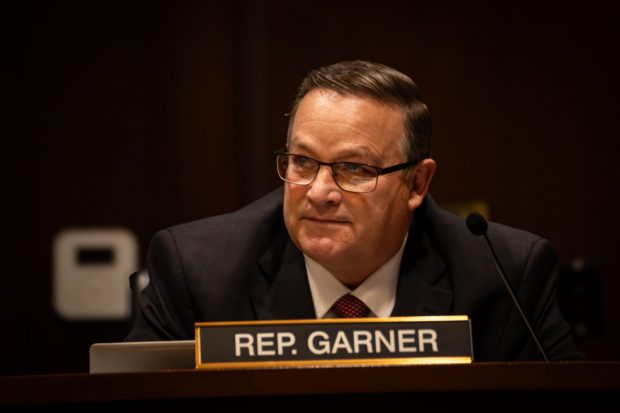
Rep. Dan Garner, who opposed the bill, recalled a walkout during his school days. Garner, R-Clifton, said he protested a school policy that forbade girls from wearing Levi’s jeans. “We learned more about government and how it should work in the democracy of the United States in that afternoon than I did the whole year in government class,” he said.
New IDLA budget cut proposal emerges
A second bill to cut state funding for the Idaho Digital Learning Alliance surfaced Wednesday.
The new proposal from Rep. Douglas Pickett, R-Oakley, and Sen. Codi Galloway, R-Boise, would cut $16 million from the online learning platform’s $26 million annual budget.
The House Education Committee voted to introduce the bill Wednesday after rejecting a proposal to outright eliminate IDLA.
Pickett said he represents a district that uses IDLA, and he “felt an obligation to try to get involved in this issue.” He described his bill as a “middle-ground approach.”
It would reduce IDLA’s state allocation from $445 to $400 per enrollment, as part of a new “user-funded fee model.” It would also recreate IDLA’s board of directors, adding legislators and two citizen members. Pickett said the bill also “takes care” of what has been called a “double-dipping” issue.
GOP lawmakers and Republican Gov. Brad Little have objected to IDLA’s current funding model, which allows brick-and-mortar schools to collect attendance-based state funding for students that are enrolled in IDLA’s online courses.
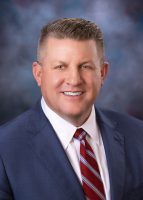
The Pickett-Galloway bill is the second proposal introduced this session to cut IDLA funding. The other bill, from Rep. James Petzke, R-Meridian, debuted in House Education nearly three weeks ago, but it hasn’t had a public hearing yet.
Petzke’s House Bill 622 would reduce IDLA’s per-enrollment state allocation from $445 to $427, limit yearly enrollments and eliminate state funding for students younger than sixth grade, among other things. These changes would cut IDLA’s budget by about $9 million — not including the savings that would come from excluding homeschooled students from the platform.
Four Republicans voted against introducing Pickett and Galloway’s bill. Rep. Mark Sauter of Sandpoint said it cuts too deep into IDLA’s budget. “I think we ought to be working on this in the offseason. I think this is a little too much.”
But it’s a lighter touch than a separate proposal presented to House Education Wednesday. Rep. Elaine Price proposed eliminating IDLA. Private education providers offer virtual courses more cheaply, said Price, R-Coeur d’Alene. “My thinking on this is just repeal, have a conversation and see what our options are with this.”
Price’s proposal failed on a tie vote.
“It kind of seems like it’s a program that’s working well for our rural districts,” said Rep. Dan Garner, R-Clifton, who opposed introducing the repeal. “It kind of seems like you’re throwing the baby out with the bath water.”
Fourth grader aces assignment at Senate State Affairs
Betty Grandy showed up prepared Wednesday morning.
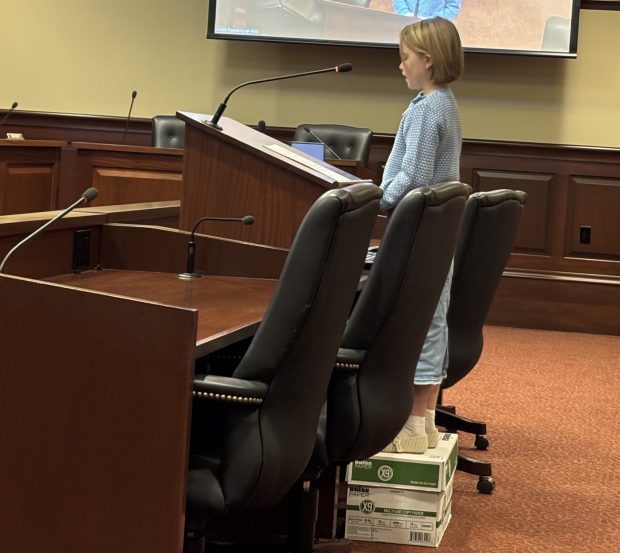
She had data. She had a case study from a neighboring state. She’d already bounced her proposal off Gov. Brad Little.
Betty also had backup: her parents, a younger sister, her grandfather.
Minutes later, Betty had the Senate State Affairs Committee on her side. Equally persuaded and charmed, the committee unanimously endorsed the Twin Falls homeschooled fourth grader’s bill designating hunting as Idaho’s state sport.
Grandy, 9, told lawmakers that Idaho already has a host of state symbols. But no state sport — unlike other states, like Wyoming, which honors rodeo.
But when Betty polled readers of the Grandy Gazette, a newspaper she shares with family and friends, she found support for a different sport. “Hunting was a clear winner.”

Making her subscribers’ case, Betty said a state designation would honor hunting’s place in Idaho’s heritage. And, she said, it would ensure that future fourth graders learn about the role hunting plays in the state.
After presenting the evidence, Betty did what every savvy lobbyist learns to do. She employed some people skills. “I’m grateful you are willing to consider an idea from a kid,” she said.
“You might be the best public speaker in this room,” said Sen. Ben Adams, R-Nampa.
“Good luck following that,” said Rep. Grayson Stone, R-Twin Falls, as the bill’s Senate sponsor, Meridian Republican Treg Bernt, prepared to close the presentation.
But by then, the committee’s mind was clearly made up.
“Sen. Bernt, sit down,” said Sen. Mark Harris, R-Soda Springs, wryly.
The hunting bill now goes to the Senate floor for a final vote. It passed the House unanimously on Feb. 23.
Bill defining school staff roles bound for amendments
A bill that would more clearly define public school administrative and instructional roles is heading to the Senate floor, where it could be amended.
After a lengthy discussion about what the legislation would do, the Senate Education Committee voted unanimously Wednesday to advance House Bill 728. The bipartisan bill is sponsored by Reps. Monica Church, D-Boise, and Kyle Harris, R-Lewiston.
“We are trying to create transparency between lawmakers (and) taxpayers, who don’t understand the people that are in our buildings, and give a full scope of all of the jobs and titles that exist,” Church told the committee.
Church recommended amendments aimed at appeasing administrators who have opposed the bill over concerns it would hamstring their ability to pay salaries. The bill could force districts to redefine 108 instructional coaches across the state as administrators — rather than instructional staff — for state funding purposes.
This would limit the amount of state funding districts get for administrators, said Heather Williams, associate executive director for the Idaho Association of School Administrators. “We can’t make 10 pieces out of an eight-piece pie at the end of the day.”
The House already unanimously approved the bill.
Also Wednesday, Senate Education quickly approved a bill that would distribute $1.6 million in state funding for digital curriculum on an as-needed basis. Currently, the funding is dished out on a first-come, first-served method.
House Bill 599, which cleared the House on a unanimous vote, now heads to the full Senate.

