
A new bill could sever Idaho’s 53-year relationship with the University of Washington’s medical school.
The bill, unveiled Friday, would require the State Board of Education to partner with two other regional medical schools by 2027-28. The bill also spells out an exit strategy from the “WWAMI” medical program: After 2026-27, Idaho would no longer subsidize new medical school seats at the University of Washington.
The proposed medical school shuffle comes as Idaho faces a chronic physician shortage — and limited options to train and develop next-generation doctors. Idaho does not have a public medical school.
Since 1972, Idaho has partnered with WWAMI — named for the member states of Washington, Wyoming, Alaska, Montana and Idaho. The $7.5 million program subsidizes 160 Idaho students at a time, who begin their coursework at the University of Idaho, and conclude their studies at the University of Washington.
But WWAMI has come under scrutiny at the Statehouse, on several fronts. A 2022 law requires WWAMI graduates to practice medicine in Idaho for at least four years. Hardline conservatives have also questioned the University of Washington’s course offerings, which include optional courses in abortion and critical race theory.
The driving issue behind the new bill is capacity, one of the bill’s supporters said Friday. Idaho has sought additional seats through WWAMI, but has been rebuffed.
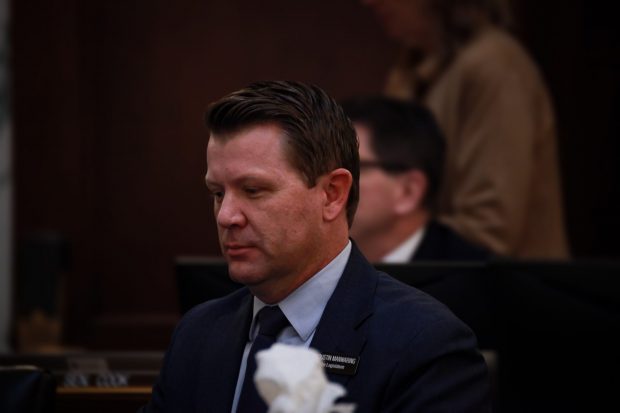
“(WWAMI) has proven insufficient to meet the needs of our state,” said Rep. Dustin Manwaring, R-Pocatello, who is co-sponsoring the bill with House Speaker Mike Moyle, R-Star, and Senate Education Committee Chairman Dave Lent, R-Idaho Falls.
During a House Education Committee hearing Friday, Manwaring made clear that the bill would eventually end Idaho’s partnership with the University of Washington. “I think that relationship would terminate.”
The bill would phase out WWAMI; current students would remain in the program. And it’s not exactly clear how Idaho would replace WWAMI.
The bill does not name potential partners, but directs the State Board to work with “at least two medical education programs within Idaho, or adjacent states located wholly within the Mountain Time Zone.”
The former could be a veiled reference to the Idaho College of Osteopathic Medicine in Meridian, a private medical school operating in partnership with Idaho State University. As Idaho Education News reported in November, Idaho State is studying the feasibility of purchasing ICOM outright.
The latter could refer to the University of Utah. Idaho already has a partnership with the University of Utah, spending close to $3 million a year to subsidize 40 medical school seats.
On Friday, spokeswoman Jodi Walker said the U of I “is exploring other options.”
“(We) will continue to work with the State Board of Education and the Legislature to meet the health care needs of Idaho in a way that best fits Idaho,” Walker said.
House Education voted unanimously to introduce the bill, setting the stage for a full hearing at a later date. But committee members raised several questions about the transition from WWAMI.
Rep. Monica Church, D-Boise, said she has already heard from doctors who are concerned about what medical schools would qualify to partner with Idaho. Rep. Jack Nelsen, R-Jerome, worried about losing capacity.
“I would hate to get caught in the middle.”
Sex ed opt-in bill returns
Another version of a sex education “opt-in” bill debuted Friday.
But it was a rocky takeoff.
The bill would again require written parental permission for sex education classes. Current state law allows parents to opt their children out of sex ed.

“Opt-out is not working,” said the bill’s sponsor, Rep. Barbara Ehardt, R-Idaho Falls. “The sexual content is increasing.”
Ehardt has proposed opt-in bills since 2019. But on Friday, Ehardt struggled to reassure House Education Committee colleagues that her bill would only address sex ed. Several lawmakers said they were worried that the language would reach into art or literature classes.
“I do see great problems with this,” said Rep. Dan Garner, R-Clifton.
Rep. Dale Hawkins, R-Fernwood, said the bill would put power in the hands of the “only stakeholder” in education: the parent. “I’m amiss that we haven’t taken care of this sooner.”
After voting down a motion to reject the bill, House Education voted unanimously to introduce it.
Ehardt’s bill allows parents to seek “statutory damages” of $250, “as well as actual damages and any other relief available by law.” However, schools would have 30 days to rectify an opt-in error, before parents can seek damages.
Reworked bill seeks to limit transgender students’ access to dorms
A rewritten bill requiring single-sex college dorms and restrooms surfaced Friday.
Like its predecessor, this bill would require colleges and universities to designate restrooms, changing rooms and dorms “for the exclusive use by either females or males.”
The bill further states: “No individual shall enter a restroom, changing room or sleeping quarters that is designated for females or males unless such individual is a member of that sex.”
The bill does not directly address transgender students, but the bill’s statement of purpose says the intention is “to protect the rights of girls and women and their single-sex spaces.”
The House Judiciary, Rules and Administration Committee introduced the bill, sponsored by Rep. Barbara Ehardt, R-Idaho Falls.
Title IX bill heads to House floor
A bill putting college and university presidents in charge of campus Title IX programs will go to the House floor.
House Bill 141 would give the presidents “the exclusive authority and duty” to implement Title IX, the 1972 federal law banning sex-based discrimination in schools.
The goal is to make sure presidents have “direct involvement” in Title IX, and are accountable for their programs, said House Education Committee Chairman Douglas Pickett, R-Oakley, a co-sponsor.
House Education Committee members spent considerable time discussing the mechanics.
As written, the bill would require Title IX staff to work in the presidents’ offices. But Rep. Jack Nelsen, R-Jerome, said that wording would require the College of Southern Idaho to add a staffer to the president’s office.
After a sidebar discussion, the committee settled on language that would allow the Title IX staff to work outside the presidents’ office — as long as they report to the presidents.
On a unanimous vote, the committee send HB 141 to the House floor for amendment.
Advanced Opportunities update debuts
The House Education Committee introduced a bill that would tweak the Advanced Opportunities program.
The bill makes a couple of changes to Advanced Opportunities, which provides seventh- through 12th-graders $4,625 that they can spend on dual-credit classes, career-technical classes and college entrance exams.
The bill would allow home-school students to set up dual-credit classes through community colleges, instead of making them go through local school districts. It would also allow students to use their money to retake college entrance exams.
The bill, sponsored by Rep. Wendy Horman, R-Idaho Falls, could come back to House Education for a full hearing at a later date.