
The Joint Finance-Appropriations Committee’s co-chairs Tuesday revealed their plan for state budget cuts — and public school leaders are in for another dizzying turn.
Sen. C. Scott Grow and Rep. Josh Tanner, both R-Eagle, proposed clawing back 1% or 2% this year from most state agencies, except K-12, Medicaid, prisons and state police.
JFAC members will vote Friday on the “Idaho Budget Rescission Act,” a sweeping bill to enact the midyear budget cuts — in addition to the 3% holdbacks that Gov. Brad Little ordered last year.
The bill responds to doubts surrounding the cost of conforming to federal tax changes in the One Big Beautiful Bill Act, Grow told the committee Tuesday. And JFAC’s co-chairs hope to have a larger carryover balance than the governor proposed in his budget for fiscal year 2026 — about $32 million.
“It’s hard to balance the budget when you have that kind of uncertainty,” Grow said. “This isn’t a big additional cut here … but we felt at least it would be worth our consideration.”
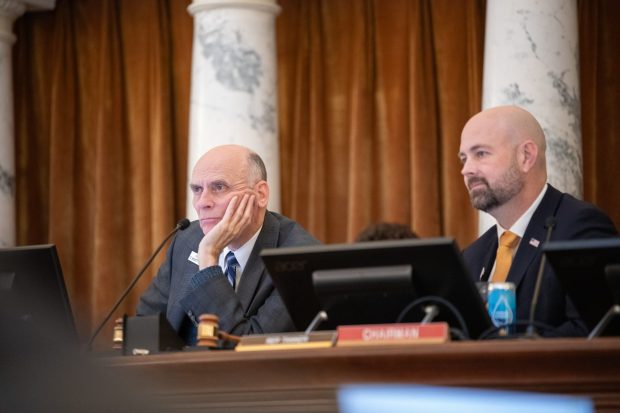
In addition to considering midyear budget cuts, JFAC will vote Friday on whether 1% or 2% cuts should carry into agency budgets next fiscal year, which starts July 1. The committee will also consider $106.7 million in transfers to the general fund that Little proposed — including $10 million in unspent Idaho Launch scholarships.
The co-chairs’ proposal comes after last week’s whirlwind of budget-cut memos. On Jan. 25, Grow and Tanner asked for “budget reduction plans” from all agencies except the K-12 system and the Division of Medicaid. But a follow-up memo two days later added K-12 and Medicaid to the mix.
On Thursday, state superintendent Debbie Critchfield declined to participate in the exercise. She told the JFAC leaders that she had “already fulfilled the assignment” by reducing her budget request ahead of the legislative session.
Other agency directors, including State Board of Education Director Jennifer White, delivered their plans to JFAC Friday. They showed that 1% or 2% cuts would lead to immediate staff reductions and furloughs. (While Critchfield declined to propose cuts to the K-12 budget, delivered a plan for cuts to the Department of Education’s administrative costs.)
The 1% cuts, unveiled by Grow and Tanner Tuesday, would save the state $15.3 million this year. A 2% cut would save $28.9 million this year. The cuts would affect the State Board, universities and community colleges, among most other state-funded agencies. They would not apply to the $2.7 billion public school support budget, Medicaid, the Department of Corrections or Idaho State Police.
JFAC members had mixed reactions Tuesday.
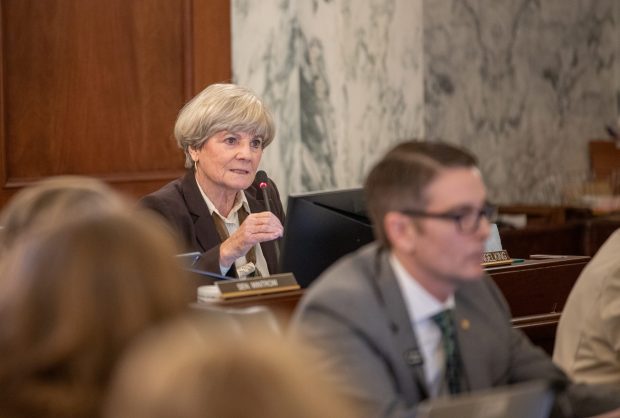
Sen. Codi Galloway said that nearly across-the-board cuts would paint with a “broad brush.” But she clarified that JFAC will still be able to add to or subtract from agency budgets as they consider individual spending requests. Keith Bybee, the chief budget analyst for the Legislative Services Office, confirmed that this was the co-chairs’ intent.
“That gives me the confidence to be able to vote on this fairly soon and move forward,” said Galloway, R-Boise.
Senate Minority Caucus Chair Janie Ward-Engelking, a Boise Democrat and JFAC’s longest-serving member, said she’s never seen a sweeping plan like this from the co-chairs. She said it would trim budgets before JFAC has met with agency leaders to discuss details in their requests.
“I’m very concerned about making those cuts before I’ve had those discussions, and I’m not sure we’ll get it added back in,” she said.
House passes Trump tax cuts, on party lines
Moving quickly — but not moving off party lines — the House passed Idaho’s version of One Big Beautiful Bill tax cuts.
House Bill 559 would bring Idaho tax laws in line with the federal cuts passed last summer. It would allow Idahoans to collect the tax cuts immediately, based on 2025 earnings — setting up a potential showdown between GOP legislators and Republican Gov. Brad Little.
The House floor debate took on a populist flavor.
The bill’s sponsor, Meridian Republican Rep. Jeff Ehlers, said the tax bill allows everyday Idahoans to fully capitalize on President Donald Trump’s tax rewrites, including exemptions for tips and overtime earnings. “Let’s put money back in the hands of our average Idaho citizens.”
Democrats said the tax relief would come at the expense of everyday Idahoans. Saying Idaho was hurtling toward “one big beautiful bankruptcy,” House Minority Leader Ilana Rubel said the tax cuts would further slice into state revenues. And that, in turn, would affect teacher pay, college and university tuition and special education funding, said Rubel, D-Boise.
Democrats drew links between the immediate tax cuts in HB 559 and the possible spending cuts looming in the Joint Finance-Appropriations Committee. JFAC and the House Revenue and Taxation Committee are “conjoined twins sharing a common circulatory system,” said Rep. Steve Berch of Boise, one of two Democrats on Revenue and Taxation.
As he did during a Revenue and Taxation hearing just a day ago, Ehlers again divorced the tax bill from spending, and any future House votes on budgets. “This bill says nothing about any budget whatsoever.”
But the bill — and folding the tax benefits back into the 2025 calendar year — would have an immediate impact on this year’s state budget. It would take a projected $155 million off the bottom line for the current budget year, which ends June 30, and critics have questioned this estimate. Legislative leaders have said the tax relief fits into this year’s budget, albeit barely, while also telling state agencies to prepare for possible funding cuts this year.
Little has recommended delaying One Big Beautiful Bill implementation until next budget year. His budget for this year — which also narrowly balances — contains no money for immediate tax relief.
But Tuesday’s 59-9 House vote suggests lawmakers have the two-thirds majority to comfortably override a veto.
The tax bill now heads to the Senate, which could expedite action.
House quietly adopts social studies standards, other rules
Education rulemaking — which has been contentious in previous years — came to an uneventful end Tuesday morning.
The House Education Committee passed a battery of six agency rules. Several were simple word changes, but one wrapped up a multiyear debate over new social studies standards.
The 2025 Legislature rejected some of the standards last year, specifically for fourth-grade social studies and sixth- through 12th-grade U.S. history. That sent the Idaho Department of Education back to the drawing board. The same committee of educators that worked on the original proposal came back together to address legislators’ concerns, meeting through the spring.
The line-by-line review led to extensive changes, and a focus on rigor in U.S. history.
On Tuesday, Rep. Barbara Ehardt pressed for some details about the new standards. The Idaho Falls Republican asked if the standards address “the horrors of communism,” and adequately teach about the nation’s founding.
More than 20 of the new standards address the nation’s founding, Greg Wilson, state superintendent Debbie Critchfield’s chief of staff, told Ehardt. He said the department feels “very, very strongly” that the new standards providing students a strong foundation in early U.S. history.
In total, the social studies standards run from kindergarten through 12th-grade. The state does not set curriculum; local schools select learning approaches that align with state academic standards.
In other rulemaking of note, the state updated its special education manual, aligning with federal guidelines. The federal government in 2023 determined that the state was out of compliance with special education law, in areas such as eligibility for 3- and 4-year-old children, Wilson said.
The state also updated its teacher ethics guidelines, at the urging of the state’s Professional Standards Committee. The new rule would prohibit teachers and staff from contacting students over a personal email account; teachers would have to communicate over a school-based account. The new rule also would prohibit any improper use of a school-issued device. The previous rule addressed only the access of pornography.
The Senate Education Committee last week adopted all six rules, from the Idaho Department of Education and the State Board of Education. The votes on the House side effectively put the rules in place, concluding this process for the 2026 session.

