
Public schools would not be allowed to grant excused absences for students attending political protests, under a new bill introduced Friday.
Rep. Steve Tanner’s bill targets recent student walkouts over federal immigration enforcement. Leaving school for such protests would count as an all-day, unexcused absence.
“While we recognize the First Amendment right to protest and to use political speech for all students, it’s a waste of taxpayer money for students to leave their classrooms in order to do so,” said Tanner, R-Nampa. “Students are free to protest at any other time.”
The bill would also require public schools to report annually to the state superintendent their total number of unexcused absences for political protests. The superintendent would then have to report the number to the Legislature.
Idaho students from Boise to McCall to Idaho Falls have staged school walkouts in recent weeks to protest federal Immigration and Customs Enforcement. ICE agents shot and killed two people last month in Minnesota during an enforcement operation.
The House Education Committee voted to introduce the bill, setting the stage for a public hearing.
But there were some questions. Rep. Jack Nelsen worried that restricting “political protests” would cast too wide of a net. The Jerome Republican wondered whether it would apply to students who testify at the Legislature, for instance, and whether it might discourage “political involvement from kids to get involved in things.”
The committee also voted to send two bills to the House floor, including:
- Senate Bill 1244, a DOGE Task Force bill that eliminates sections of state code that reference a regional library system that no longer exists.
- Senate Bill 1227, which would direct the Idaho Department of Education to create a framework for the “responsible use of AI in K-12 education.”
The Senate has already passed both bills.
Two new bills would amend a disputed library law
Two new bills would amend a 2024 law restricting “harmful” materials in school and public libraries.
The amendments don’t change the gist of the law. Dissemination of “material harmful to minors” remains a misdemeanor, subject to a jail sentence of up to one year, and a fine of up to $1,000.
However, one of the bills extensively rewrites the law. It also tries to draw distinctions between public libraries and public school libraries and private school libraries.
“The proposed amendment recognizes that the state of Idaho has more latitude to select the content of educational materials in public schools and libraries than in private schools,” according to the statement of purpose for one of the bills. “In public schools and public libraries, the state of Idaho is exercising its own First Amendment rights through its selection of curriculum and library materials.”
The rewrite tries to apply wording from a U.S. District Court ruling on the law, said Rep. Jaron Crane, R-Nampa, who is co-sponsoring the two new bills with Sen. Cindy Carlson, R-Riggins. The law’s language on private schools was a focal point in a July 2024 lawsuit filed by a battery of opponents, including private entities.
The library law remains mired in court, although it remains in effect. In January, the U.S. Court of Appeals for the 9th Circuit kicked the case back to U.S. District Court, directing the lower court to consider a limited injunction blocking the law.
The House State Affairs Committee introduced both library bills, which could pave the way for full hearings.
Committee rejects Bible-reading, school immigration data bills
The House Education Committee split on two hot-button proposals — which failed on tie votes before they could be introduced.
One proposed bill would have required public school teachers to read the Bible each day. The other would have collected data on the immigration status of public school students.
Bible-reading. The Idaho Family Policy Center renewed its push to require Bible-reading in public schools, arguing that the Christian text was previously part of the curriculum.
“The goal of this legislation is to cultivate the morality of future generations and encourage good citizenship,” said IFPC President Blaine Conzatti. “This legislation satisfies the history and tradition test created by the U.S. Supreme Court.”
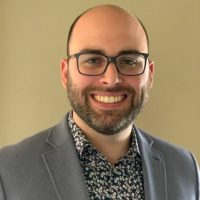
The Christian lobbying group proposed the requirement last legislative session, but it didn’t get a public hearing in House Education. Rep. Jordan Redman, R-Coeur d’Alene, sponsored this year’s version.
Committee members debated state-sponsored religion before voting 7-7 on a motion to introduce the bill.
“This nation was founded on a separation of church and state,” said Rep. Jack Nelsen, R-Jerome. “If we’re going to dive into history, people did not come to this nation as immigrants to go to government-sponsored religion. They came here to get away from it.”
Rep. Barbara Ehardt disagreed. “I challenge anyone on this committee to show me where it says in our founding documents, there’s a separation of church and state,” said Ehardt, R-Idaho Falls.
Immigration data. The committee also rejected a second attempt this session to collect state-level data on the immigration status of public school students.
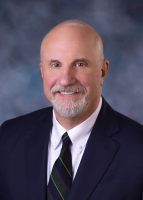
Rep. Steve Tanner’s proposal would have directed the State Board of Education to collect “aggregated” immigration data. Tanner, R-Nampa, said this would allow the Legislature to “estimate what the costs are to educate children of foreign aliens.”
The House Education Committee voted 7-7 on a motion to introduce the bill, killing it on a tie vote. It would have replaced a bill that was already introduced. The earlier version could return, but Friday’s vote signals it likely would fail unless a committee member flips.
The replacement would have corrected errors in references to federal law, and clarified that the requirement applies to charter schools as well as school districts, Tanner said.
Rep. Soñia Galaviz, a public school teacher, questioned the proposal’s lack of fiscal note — a statement in each bill that estimates costs tied to a policy change. K-12 administrators would have to be trained on many different types of immigration visas, said Galaviz, D-Boise.
“Who’s responsible for the training, the administrative oversight and the burden, to be able to educate the folks who would be collecting and deciphering that data, and then reporting it to the state?” she said.
JFAC stalls out, again, on military scholarships
Legislative budget-writers remain deadlocked on a small — but relatively early — proposal to boost next year’s budget.
In limbo, after a tense Friday morning committee hearing, is $190,800 for scholarships for Idaho National Guard members.
The scholarship money does not appear in the state Military Division’s “maintenance” spending bill — a budget that rolls current year spending into the next year. But all the maintenance budget bills contain spending cuts for next year, and the National Guard scholarships were among the cuts.
On Friday, the Joint Finance-Appropriations Committee met to work on “enhancement” budgets — followup bills that can restore or further reduce spending. And the $190,800 in National Guard scholarships were one agenda item.
Rep. James Petzke, R-Meridian, led the push to restore the scholarships.
“This is a form of compensation for our military branch,” he said.
Sen. Codi Galloway, R-Boise, led the push to hold the line.
Galloway said she had done more research on the scholarships since Feb. 20 — when JFAC first took up the budget, but left it on hold. Zeroing out the budget will not force the state to revoke any scholarships, she said, but would cut support by about $500 per person. Scholarship recipients would be able to make up the difference by lining up other financial aid, or by going to a less expensive college.
“We have to fund those things that only government can do,” said Galloway, adding that JFAC will need to make more difficult spending cuts as the session unfolds.
“I’m sad to hear that thought process,” said Sen. James Woodward, R-Sagle, saying the Legislature could cover the scholarships easily by cutting from its own budget.
JFAC then stalemated on two votes.
Petzke’s budget proposal, including the scholarships, failed on an 8-10 vote.
Galloway’s proposal, which zeroed out the scholarships, secured a 10-8 majority. But since JFAC’s Senate members deadlocked on a 4-4 vote, her motion also failed.
JFAC will take up the issue again at a later date, House co-chair Josh Tanner, R-Eagle, said after the committee votes.
The stalemate comes as JFAC is beginning to look at budget “enhancements.” The committee is scheduled to look at higher education budgets Monday morning.

