
Idaho Republicans’ campaign against illegal immigration is coming to public schools.
The House Education Committee Wednesday introduced a bill that would direct the state to publicize data on the immigration status of students attending K-12 public schools and public colleges and universities.
Rep. Steve Tanner said his bill would allow the Legislature to estimate the costs to educate undocumented immigrants. “It does not seek, nor does it ask for, personal identifying information of any students,” said Tanner, R-Nampa. “(It’s) aggregate data only.”
Tanner proposed a similar bill last year, but it stalled in House Education.
The new version is among a suite of immigration-related proposals that a group of GOP lawmakers unveiled during a news conference last week. The group had a few House Education members, including the committee’s chairman, Rep. Dale Hawkins.
During the news conference, Hawkins referred to the U.S. Supreme Court’s ruling in Plyler v. Doe, which held that public schools can’t deny enrollment to students based on immigration status.
“We can’t turn people away from the education system. That’s fine,” Hawkins, R-Fernwood, said last week. “But if the federal government is requiring us to educate, the federal government should be paying us to do it.”
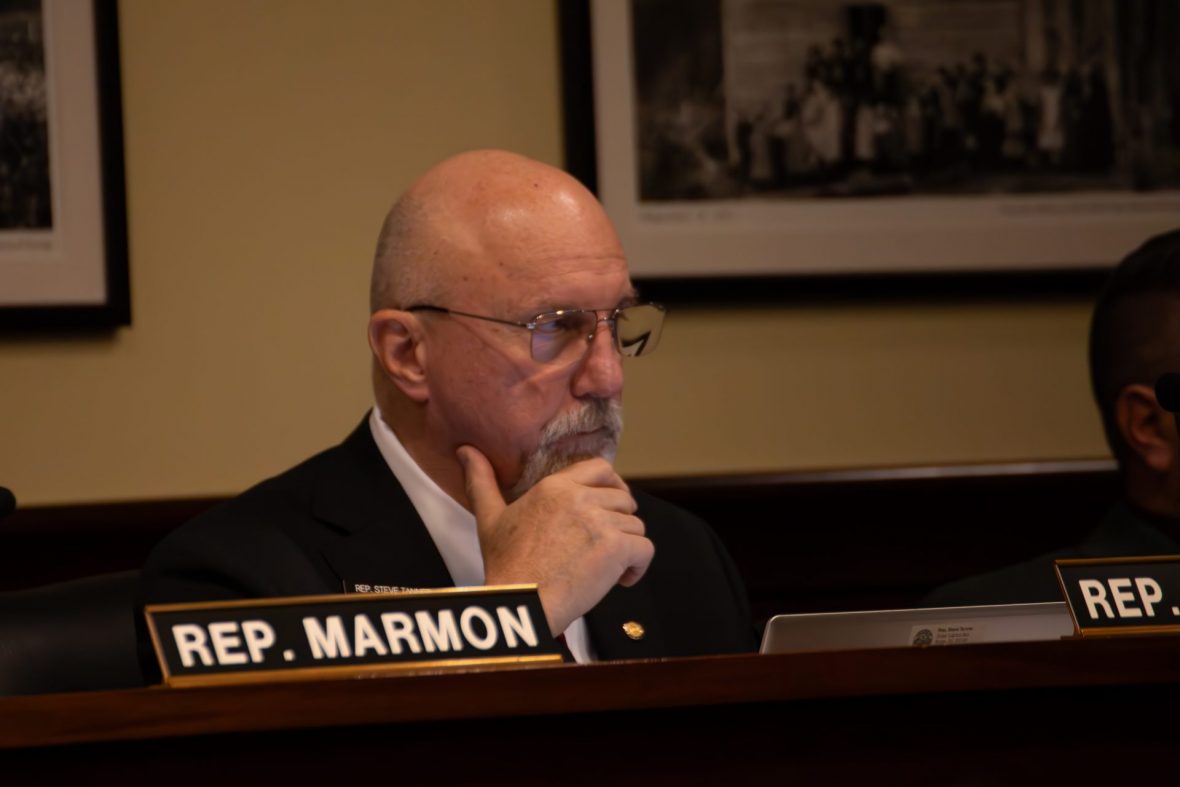
The bill directs the State Board of Education to collect “aggregated data regarding the immigration status, nationality, and primary language of all enrolled students” in public schools, colleges and universities. This data would have to be shared with the Legislature.
The bill initially didn’t include charter schools. But Rep. Clint Hostetler, R-Twin Falls, motioned successfully to add a reference to charters.
The committee also removed one sentence from the bill’s statement of purpose, at Rep. Douglas Pickett’s urging. “Like many other states, Idaho has seen a recent surge of undocumented immigrants,” the statement of purpose initially read.
“That sentence just seems, to me, to presuppose something that we’re actually trying to ascertain through the application of the bill,” said Pickett, R-Oakley. “What I like about this bill is that it allows us to ascertain the unfunded mandate of a failed national immigration policy.”
Rep. Soñia Galaviz, D-Boise, a public school teacher, opposed the bill. Lawmakers can already ask state education agencies for information on the costs to educate immigrant students, she said, adding the bill “unnecessarily targets an already vulnerable population.”
Public schools historically don’t ask students about their immigration status, according to guidance state superintendent Debbie Critchfield sent to local K-12 leaders last year.
The share of undocumented immigrants among the state’s roughly 310,000 public school students is likely small. That’s according to a 2023 report from the American Immigration Council (AIC), a Washington, D.C.-based advocacy group that promotes the economic benefits of immigration.
Relying on data from the U.S. Census Bureau’s American Community Survey, AIC estimated that 7,500 Idaho children are foreign-born. And about 30% of the state’s immigrant population is undocumented, which aligns with the national rate among foreign-born U.S. residents. A smaller number are school-aged, and some likely don’t attend public schools.
But not everyone at last week’s news conference announcing the GOP immigration bills were focused exclusively on undocumented Idaho residents. Sen. Brian Lenney directed indignation at foreigners broadly. Lenney, R-Nampa, said that “foreign nationals and illegal invaders who hate us” are unrightfully taking a share of the “American dream” from Idaho children.
“Idahoans want to put an end to the pillaging of our state by foreign nationals, both legal and illegal,” he said.
Tanner’s bill says that aggregated data on students’ immigration status “shall not be used to discriminate against any student in any manner.”
The bill could return to House Education for a future public hearing.
Parental rights amendment introduced
Rep. Dale Hawkins is taking another run at adding parental rights language to the Idaho Constitution.
The House Education Committee chairman proposed an amendment that strikes language on compulsory school attendance for 6- to 18-year-olds, and says families can pursue “education by other means.”
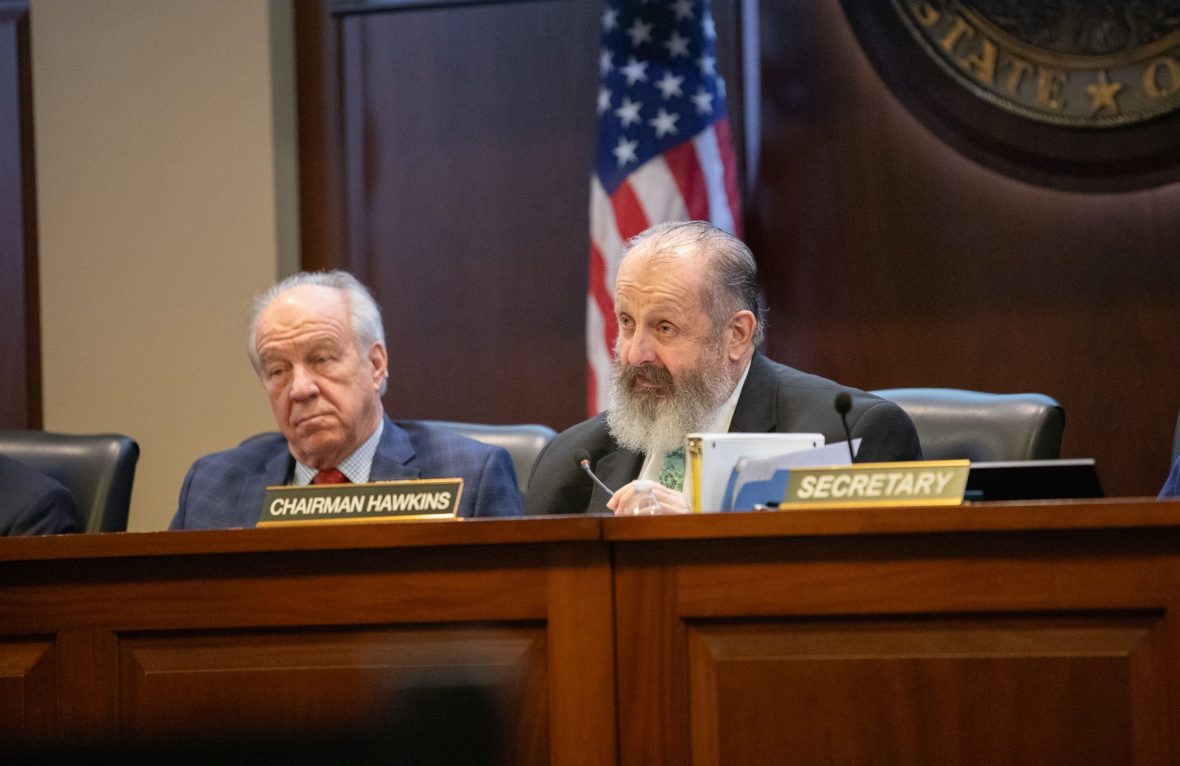
Hawkins, R-Fernwood, said the amendment “brings parents’ rights to the forefront of educating their children.”
The wording of the amendment is unchanged from Hawkins’ 2025 proposal, which states that the “right of the people to educate their children without government regulation outside of the public schools of the state shall not be infringed.”
House Education introduced the amendment, a first step toward a full public hearing.
Constitutional amendments face an arduous path to passage. They must clear both houses of the Legislature by two-thirds majorities and then go before voters for ratification.
Hawkins’ amendment received 46 yes votes on the House floor last year — falling just one vote short of the threshold to clear the 70-member body.
The House Education Committee had a busy day Wednesday, altogether introducing five new proposals. Here are the other three bills, at a glance:
- Binding state funds for public schools. Rep. Kyle Harris, R-Lewiston, reintroduced a stalled proposal from last year that would tighten restrictions on how public schools spend state funds. Appropriations “intended for a certain purpose” can only be used “for such purpose,” the bill says. Failure to comply with “binding allocations” would result in penalties.
- Professional Standards Commission. Rep. Heather Scott, R-Blanchard, introduced a bill requiring that the Professional Standards Commission report to law enforcement allegations of “behavior that may be criminal” in ethics complaints against teachers and administrators.
- Public school facilities expenses. Rep. Soñia Galaviz, D-Boise, introduced a bill that would allow school districts to use facilities funds from 2023’s House Bill 292 on lease-purchase agreements. This would be an eligible expense after the district pays off existing bonds and levies.
Public buildings bathroom bill heads to House
Despite bipartisan opposition, a bill regulating bathrooms in public buildings is headed to the House floor.
House Bill 607 would require all government agencies to provide separate restrooms and changing facilities on “the basis of biological sex.”
This bill would cover public libraries and a host of other buildings, such as state offices, recreational facilities and highway rest areas. Previous state laws already cover public schools and state colleges and universities, said Blaine Conzatti, president of the Idaho Family Policy Center, a conservative lobbying group that wrote the bill.
This year’s bill also covers “places of public accommodation,” such as businesses or entertainment and recreation facilities open to the public. Owners of such businesses would be required to “take reasonable steps to ensure that the privacy and safety of an individual is protected from members of the other sex.”
The House State Affairs Committee passed HB 607 on a 9-5 vote after some opponents said the bill placed an undue burden on businesses. The full House could vote on the bill in the next few days.

