
The new co-chair of the Legislature’s budget committee urged education-focused policymakers Tuesday to take a closer look at Idaho’s “antiquated” K-12 funding formula.
In a presentation to the House Education Committee, Rep. Josh Tanner called the $2.7 billion K-12 budget a “behemoth.” He said the formula distributing state funds to public schools should be simplified so it’s easier to understand. It also should have stronger ties to student outcomes like test scores.
“It’s hard to, honestly, wrap your head around even sections of it, let alone the entirety of it,” said Tanner, co-chair of the Joint Finance-Appropriations Committee (JFAC). “In the end, I believe our goal is to educate kids and do our best job of doing that.”
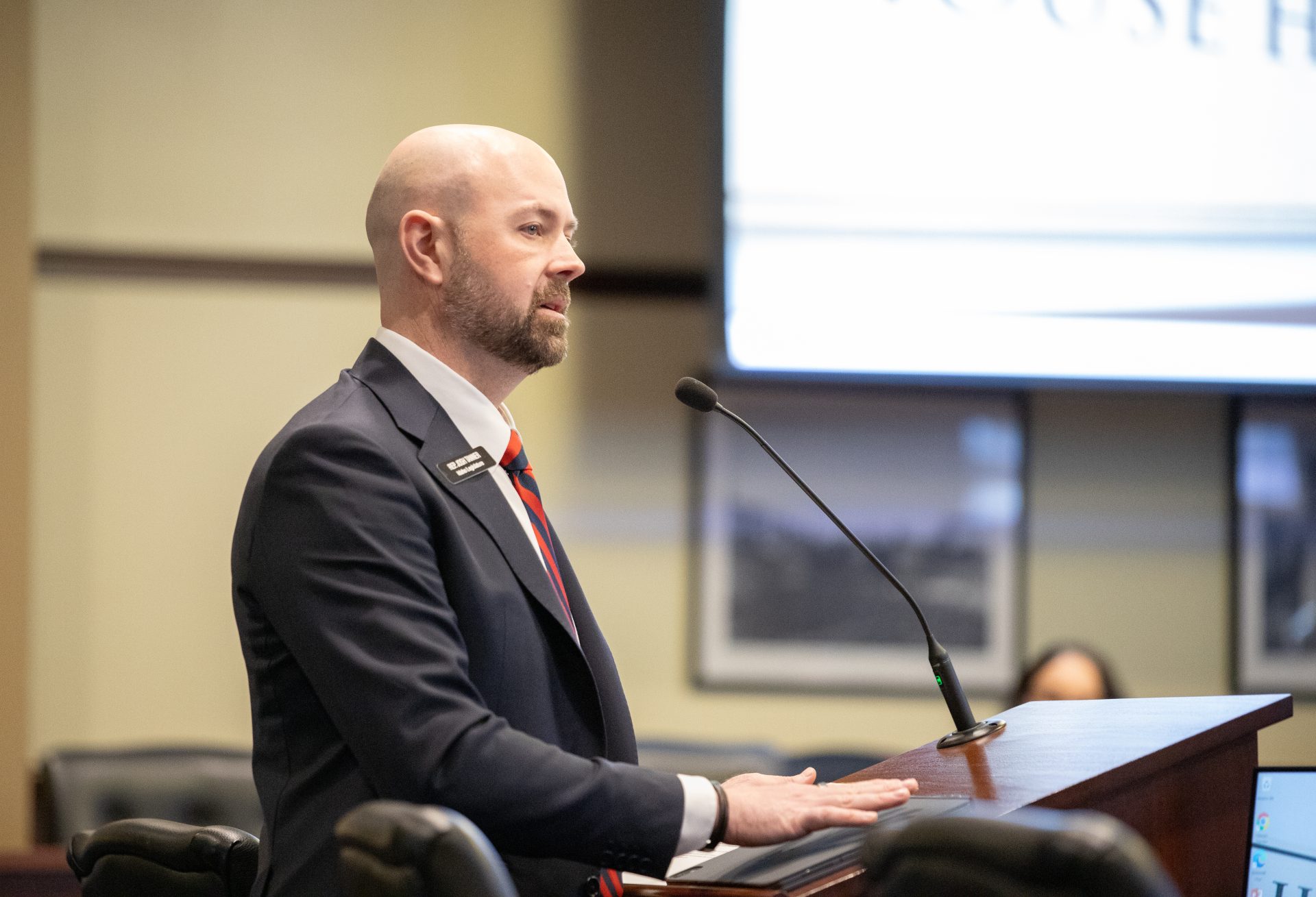
But House Education members appeared hungry for more specifics. Rep. Mark Sauter said he’s “not at all frightened” by the idea of tackling the formula, which hasn’t had a major refresh in 32 years, but he wasn’t hearing a plan from Tanner.
“If we’re going to delve into a new education funding formula, then let’s get with it,” said Sauter, R-Sandpoint. “I don’t think that it’s helpful to just talk about it … But if there’s a plan to start with, or there’s some kind of an expectation or a challenge to us, then please say so.”
Tanner responded that he would “love to be a dictator,” but that’s not how the Legislature works. He hopes the policy committee will look for formula “loopholes” that allow public schools to “game” the system. He accused school leaders, for instance, of counting athletes toward their student enrollment even if they only participate in sports.
“I would look forward to you guys actually revisiting a lot of those programs, making sure that we’re funding things correctly,” he said
Rep. Soñia Galaviz, a Boise Democrat and public school teacher, asked whether Tanner would support House Education members meeting with staff from the Legislative Services Office (LSO) who could explain components of the formula.
“You said a lot of things there,” she said. “We could spend the entire time with followup questions on what data you’re citing and what we need to dig into.”

Tanner agreed that he tends to “speak a lot,” and he would support policymakers tapping the expertise of LSO’s budget staff. They do “amazing work,” he said.
House Assistant Majority Leader Douglas Pickett applauded Tanner for his “good-faith” effort asking the committee to address the formula. Pickett, a Republican from Oakley who previously served as House Education chairman, offered one suggestion: adding sunset clauses to school funding mechanisms, which would force policymakers to reconsider them in future years.
“We’re talking about layers, and we’re talking about generations of policy that, all of a sudden, we’re … trying to peel back and find out how we got here,” Pickett said.
Tanner was named JFAC co-chair before this year’s legislative session. He replaced former Rep. Wendy Horman, the Legislature’s most experienced education budget-writer, who resigned for a job in the Trump administration.
Horman was among a group of state education leaders that have mulled an overhaul of the formula for nearly a decade — with little progress. Horman and state superintendent Debbie Critchfield in recent years pitched a few competing ideas, like weighting per-student allocations based on individual needs, but they fizzled among other legislative priorities.
Critchfield’s focus for the current session isn’t a formula update, however. It’s keeping K-12 funding flat amid statewide budget cuts. Public schools so far have been exempt from across-the-board cuts. They were exempt in the JFAC co-chairs’ Monday memo telling agency directors to prepare for cuts up to 5%.
Still, Tanner is among a growing chorus of hardline conservative lawmakers that include K-12 in conversations about the state’s “spending problem.” Rep. Dan Garner pushed back on this characterization Tuesday.
When adjusting for added costs from population growth and inflation, state spending is down over the last decade, said Garner, R-Clifton. “Isn’t it really that we have a revenue problem, rather than a spending problem?”
If you’re just considering the last year of revenue, you could make that argument, Tanner responded. His goal regarding public school spending is “to say that there’s always room for improvements, whether that’s cuts, whether that’s looking at things in a different light,” Tanner said.
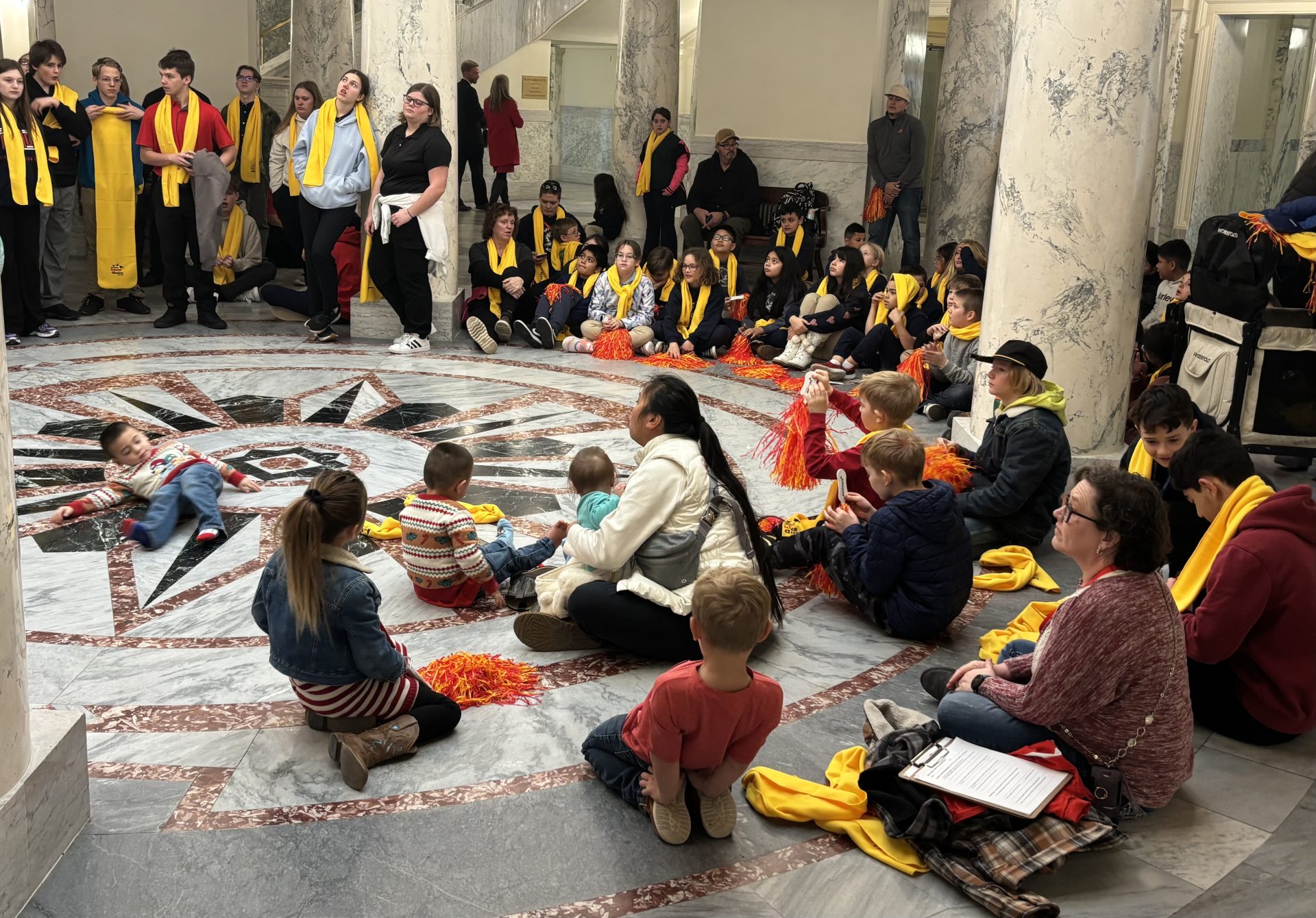
Childcare hires would focus on ‘integrity’ of federally funded program
The state wants to use federal childcare grant money to hire five full-time staffers, including a fraud investigator.
All five proposed hires would work on “program integrity,” but the head of the state’s Department of Health and Welfare said this shouldn’t be viewed as proof of fraud in the Idaho Child Care Program.
“We all want to make sure that the funds are going where they should be going,” Juliet Charron told Joint Finance-Appropriations Committee members Tuesday.
The staff salaries would come from a three-year, $40 million federal grant program, designed to expand childcare options, especially in rural Idaho.
In December, the Trump administration froze federal funding for childcare centers in Minnesota, after conservative YouTuber Nick Shirley posted a viral video alleging fraud in that state.
Idaho’s federal grant money is on hold — but that’s a state-level decision.
Idaho hasn’t spent its first round of grants, totaling $14 million. Health and Welfare is conducting what Charron called a “360 review” of its childcare providers, something she wants the agency to do annually. Charron hopes the money will be available later this budget year, which ends June 30.
“We want to make sure we’re a little farther down the road before that $14 million goes out.”
The second round of proposed grants, nearly $16 million, is on the table for next budget year.
The balance of this money would go to childcare providers, both licensed and unlicensed, to build out centers and their capacities. For example, childcare providers could use the grants to purchase safety equipment or supplies — but only for expansion.
“Based on the current level of additional funding, the program anticipates the creation of approximately 600 new childcare slots statewide,” according to a summary of the request, from the state’s Legislative Budget Book.
Gov. Brad Little has recommended using $504,000 of the $16 million to pay for the five staff positions.
While the childcare money would come from the feds, the Legislature still would have to approve the spending.

