
Another round of budget cuts would force immediate staff cuts and furloughs across Idaho campuses, college and university officials said Friday.
The cuts would lead to larger classes and reduced student support.
And cuts could affect some of higher education’s highest-profile programs. The University of Idaho would have to cut back its longstanding medical school partnership with the University of Washington, a training ground for Idaho doctors since the early 1970s. Boise State University said cuts could affect even its athletics programs — which is bankrolled largely by boosters and ticket and TV revenues.
Colleges and universities — and most state agencies — submitted budget-cutting scenarios to legislative staff Friday. The submissions capped a tumultuous third week of the 2026 legislative session, as key lawmakers cranked up the pressure to cut budgets in 2026 and 2027.
How we got here: a wild week in review
On Monday, legislative staff directed most state agencies to submit budget-cutting plans for 2026 and 2027 — setting a noon Friday deadline. The memos came at the behest of the co-chairs of the powerful Joint Finance-Appropriations Committee: Sen. C. Scott Grow and Rep. Josh Tanner, both R-Eagle.
The Monday memo exempted public schools. But on Wednesday, Grow and Tanner directed the Idaho Department of Education and the state’s Medicaid program to submit similar budget memos, also by noon Friday.
Tanner has said budget cuts are not a done deal. “We want to make sure all the options are on the table as we’re continually working through this,” he told EdNews earlier this week.
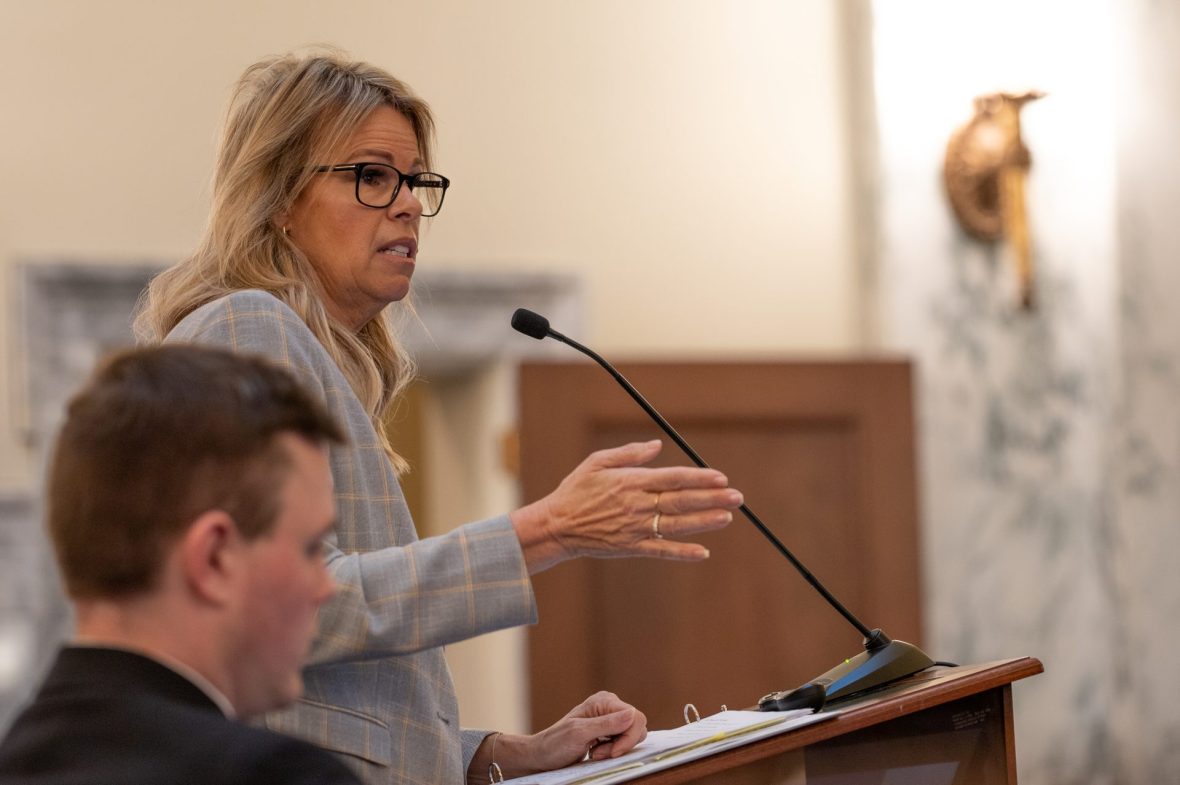
But the memos have caused consternation around the Statehouse — and drew a sharp response from state superintendent Debbie Critchfield. On Thursday, she said she would refuse to turn in a plan for budget cuts to public schools.
Friday’s submissions
Many of the agency submissions painted a grim short- and long-term budget picture.
State Board of Education Executive Director Jennifer White noted that colleges and universities have already absorbed budget cuts — starting in August, when Gov. Brad Little ordered most state agencies to reduce spending by 3%. For example, Lewis-Clark State College has already cut $400,000 for adjunct faculty positions, which means students “will face larger classes, fewer class options and sections, and reduced or delayed academic support.” Another round of cuts, across the board, and in the final months of the current budget year, ending June 30 — could lead to unintended damages and “are not a substitute for thoughtful reform,” White wrote in a memo Friday.
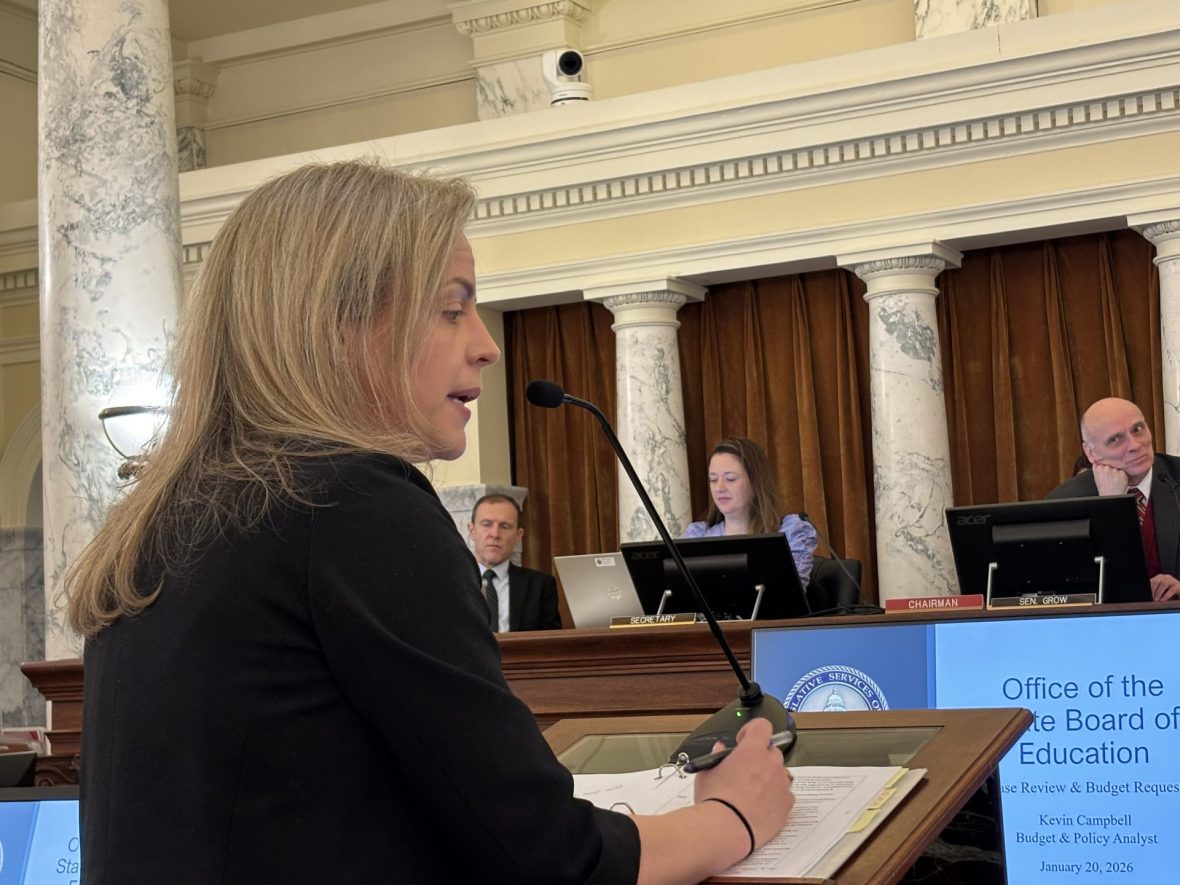
“We have prepared good faith submissions, but do not recommend or support further reductions,” she said.
Little’s budget chief said agencies made a good-faith effort to paint an honest picture. The scenarios track with what Little’s office saw last summer, when it explored cuts of 2%, 4% and 6%.
“There’s a reason we landed at (a) 3% (cut),” Division of Financial Management Administrator Lori Wolff told reporters Friday afternoon.
Beyond the education realm, other agencies said cuts could have even more dire impacts. The Idaho Department of Correction said it would have to furlough staff, with “far-reaching consequences across prison operations.” Idaho State Police furloughs would leave the agency with “fewer personnel for patrol and active threat response.”
Not every agency was required to turn in a cost-cutting plan, however. The directives applied only to agencies that receive state general funds — such as proceeds from sales and income taxes. For example, the Workforce Development Council was exempt. Its $75 million Idaho Launch postsecondary aid program and its staff costs all come from dedicated funds.
What’s in the memos — and education thumbnails
The state agencies were asked to address a series of budget-cutting scenarios: 1% and 2% cuts in the current budget year, ending June 30, and 1% and 2% cuts in the following budget year, which begins July 1 and runs through June 30, 2027.
Here’s a thumbnail look at key education-related agencies:
Public school support
- 1% cut, $27.5 million per year
- 2% cut, $55.1 million per year
EdNews first reported Thursday on Critchfield’s pointed response to JFAC. “The public schools budget is more than numbers on a spreadsheet,” she said in her letter to Grow and Tanner. “It represents every one of our students, classrooms, teachers and communities.”
In an EdNews interview, the Republican Critchfield said she “already fulfilled the assignment” by cutting her $2.7 billion public school support budget before the legislative session. This included pulling back a $50 million special education block grant proposal that would have addressed about half of the state’s special education funding gap.
“I will not be recommending further cuts to the public schools budget,” she wrote Thursday.
Critchfield’s letter does not preclude lawmakers from cutting K-12 funding, the largest of all state budgets.
As a statewide elected official — as opposed to a hired or appointed agency head — Critchfield has more power to push back against legislative orders. And two other statewide officials, Secretary of State Phil McGrane and Attorney General Raúl Labrador, did not cut their office budgets after Gov. Brad Little imposed a 3% budget holdback across most of state government.
Colleges and universities
- 1% cut, $3.8 million per year
- 2% cut, $7.7 million per year
Boise State University said it could need to delay up to nine faculty hires “for in-demand career programs” such as engineering, health sciences and education. The university might also need to cut staff salaries in university research support and admissions and student support programs. The university also said the cuts could have an impact on charitable giving. “Donors have expressed frustration about being asked to fund basic university operations.”
Boise State’s memo also addressed its most public-facing program: athletics. Cutting the athletics budget “undermines our ability to compete nationally,” and could translate into a $100,000 hit on maintaining aging facilities used by 600,000 spectators per year.
University of Idaho officials say they would need to cut staff this year and next, leading to higher student-to-teacher ratios and curtailed student support and advising programs. Undergraduate research programs would be cut. Faculty searches in research and ag extension programs would be put on hold. The U of I’s longstanding but controversial partnership with the University of Washington medical school — known as WWAMI, for the member states of Washington, Wyoming. Alaska, Montana and Idaho — could face $300,000 in cuts over two years. “A 2% budget reduction … would necessitate downsizing and reallocation of the (WWAMI) faculty workforce.”
Idaho State University would impose mandatory furloughs this budget year, affecting all employees making more than $60,000 per year. In 2026-27, Idaho State would make most of its cuts through staff reductions and restructuring. “(This) will impact student services and support and planned expansion of high-demand workforce programs,” Idaho State wrote. In 2026-27, Idaho State also would launch a $500,000 early retirement program “for eligible contracted employees.”
Cuts also could “jeopardize” a dental education partnership with Creighton University in Omaha, Neb.
Lewis-Clark State College says it could absorb a 2% this year through one-time savings, from midyear staff retirements. But that option would go away next year, and the college would have to cut five positions permanently. Three of the cuts would directly affect the classroom: a full professor’s position in physical life sciences, an associate professor’s post in English and an instructor’s job in social sciences.
Career-technical education
- 1% cut, $958,000 per year
- 2% cut, $1.9 million per year
A 2% budget reduction would force the Division of Career Technical Education to cut two full-time state positions. It would also defund CTE programs and faculty support for both K-12 and higher education, and it would defer training, including for rural and volunteer firefighters.
“Reductions affect students today and weaken Idaho’s long-term economic competitiveness by disrupting Idaho grown talent pipelines, reducing employer readiness, and limiting community stability, particularly in rural areas,” Director Pete Risse and other CTE staffers wrote in a memo to JFAC.
Community colleges
- 1% cut, $684,000 per year
- 2% cut, $1.4 million per year
College of Eastern Idaho said it would freeze most vacant positions and eliminate seven “crucial” roles in instruction, student support and student life. CEI also would have to reduce cohorts of students entering “high-demand” programs in medical and technology fields.
College of Southern Idaho said it would eliminate one-full time instructor position. Under a 2% cut, it would also lose about $320,000 in operational funds that cover outreach efforts and pay for supplies in science and medical classes. “Students may be asked to absorb some of those costs in order to successfully complete their programs of study.”
College of Western Idaho said every 1% the state cuts would eliminate funding for 2.25 full-time positions. CWI said it would also delay exemptions in “high-demand” and “high-cost” fields.
North Idaho College said it would enact a partial hiring freeze this year, and would limit travel, including for athletes. Next fiscal year, NIC would implement an “early retirement” program that leaves some positions unfilled while others are filled at a lower salary. “While this reduces personnel costs, it removes experienced and knowledgeable employees whose institutional expertise and knowledge cannot be readily replaced.”
Health education programs
- 1% cut, $296,000 per year
- 2% cut, $590,000 per year
This program, which covers residencies for medical school graduates, is a rare growth area in Little’s budget proposal. He has recommended spending an additional $900,000 this year to add 15 residencies. Cuts this year and next year would undermine existing contracts and threaten the effort to grow the program. Cuts are unsustainable, said Ted Epperly, Moe Hagman and Lisa Nelson of the State Board’s Graduate Medical Education Committee in a memo to board leaders.
“The Legislature has made it clear that developing the health care workforce … (is) key in solving Idaho’s physician workforce problem,” they wrote Thursday. “Cutting funding for this priority simply doesn’t make sense.”
Idaho Department of Education
- 1% cut, $120,000 per year
- 2% cut, $241,000 per year
While Critchfield declined to recommend cuts to the public school support budget, she sent JFAC a plan for cuts to her department, which administers public school funds and enforces rules.
Faced with 1% or 2% cuts, Critchfield proposed reducing funding for two “passthrough” programs: Advanced Opportunities and the Local Innovation School Act.
But she warned that the Trump administration’s plans to dismantle the U.S. Department of Education — which Critchfield supports — could mean the state will have a growing responsibility to distribute federal funding to schools.
“I believe it will require continued state funding for the department and its requirements to fulfill state and federal laws,” she said.
Commission for Libraries
- 1% cut, $49,700 per year
- 2% cut, $99,400 per year
Idaho State Librarian Dylan Baker said the commission would hold off on filling two “critical” vacancies — deputy state librarian and library consultant — this budget year to save 2%. Next fiscal year, Baker proposed eliminating two contracts through the state’s Libraries Linking Idaho database.
“This action would directly impact Idahoans by reducing access to statewide online research and information resources used by students, job seekers, educators, and the general public.”
STEM Action Center
- 1% cut, $34,000 for this year
- 2% cut, $67,000 for this year
Unlike many state agencies, the STEM Action Center only submitted a plan to cut this year’s budget. Staff savings would cover a 1% cut. But if the cut increases 2%, the center would have to reduce aid for rural students hoping to attend cut would affect science and engineering fairs.
Idaho Public Charter School Commission
- 1% cut, $2,000 per year
- 2% cut, $4,000 per year
The small commission, which oversees most of the state’s charter schools, would “significantly limit travel and apply heightened scrutiny to all travel requests.”

