
Post Falls Superintendent Dena Naccarato wants to know if any of her constituents missed a day of work so far this year.
Maybe they had a stomach bug, had to go to the dentist or attend a friend’s wedding.
For Naccarato, student absences don’t just mean make-up work, they create budget implications. Idaho funds schools on an average daily attendance model. In Post Falls, North Idaho’s largest school district, on a four-day school week, each absence costs $46, Naccarato said.
At a lunchtime presentation on the district’s upcoming levy vote to Knudtsen Chevrolet employees last week, she likened the amount the district loses every two days to the cost of a new truck.
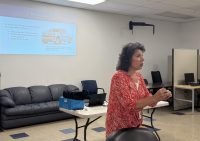
“When a student is absent… I don’t turn the power off, we don’t send the teacher home,” Naccarato said. “Our costs remain the same, whether every child is in attendance or not.”
Naccarato blames the more than 30-year-old funding formula as a large factor in her school district asking taxpayers for a nearly $12 million, two-year supplemental levy that will appear on voter’s ballots later this month.
If her district was funded on enrollment, Naccarato said that levy amount could drop to under $3 million.
“The only way we can get 100% of our operational funding is if 100% of the students attend school, 100% of the time,” Naccarato said.”Which is 100% ridiculous. There’s absolutely no way we’re going to get 100% attendance.”
What: A $11.92 million, 2-year levy
What’s at stake? The majority of the levy funds go to ensuring competitive salaries for teachers and staff. The levy also funds extracurricular activities and athletics, the Kootenai Technical Education Campus, and safety, security, counseling and nursing support services.
Impact: The levy would cost taxpayers about $61.35 per $100,000 of assessed property value. However, that rate will drop to $44.69 with state property tax relief funds. The levy amount requested by Post Falls replaces an existing levy that is soon to expire. Supplemental levies need a simple majority to pass. See a sample ballot here.
Learn more about all of the levies and bonds set to appear on Idaho ballots this month here.
Post Falls, like many school districts in Idaho, received less money from the state and federal government for special education services than it spent.
“We were $2.6 million short to educate our most vulnerable children, which we want to do,” Naccarato said. “We just need more money to do it.”
Across Idaho, school districts spent about $82 million more than they received on special education. Superintendent of Public Instruction Debbie Critchfield’s plans to address the gap were unpopular with lawmakers and did not make it to the governor’s desk earlier this year.
Not only are the funding gaps in Idaho a strain on Post Fall’s budget, Naccarato said, but so is competition with nearby Washington.
A first-year teacher in the Central Valley School District just 13 miles away in Washington makes just over $52,000 a year. That same teacher would make just over $46,000 in Post Falls.
The difference only grows with the pay scale which tops out at nearly $79,000 in Post Falls compared to over $118,000 in Washington’s Central Valley.
That competition along with how rural many North Idaho school districts are, led them to rely more heavily on levies than their southern counterparts.
Up until a few years ago, Naccarato said levies were just a part of life.
“This used to be an automatic thing,” she said.
Failed levies have become more common in the panhandle with nearby Lakeland having two failed levies in as many years. Coeur d’Alene also had a levy failure in 2023 and smaller districts like West Bonner and Boundary County have had repeated failures over the last few years.
To prevent that strife in her district, Naccarato spends months every other year rushing from lunch presentations back to the district office then jets off after work to speak to another group.
“The superintendents that came before us and came before COVID, they didn’t have to go on tour, they weren’t politicians,” she said. “They didn’t have to do speaking engagements, they didn’t spend six months every year and a half begging for operational funds.”
She, like her neighbors, blames, in part, transplants from other states who moved to Idaho for its conservative values but failed to research how public schools are funded.
Naccarato said she frequently hears confusion over why the district adds a new tax every two years, when in reality the new levy is replacing an expiring one.
Voters also often don’t read beyond the headlines, she said. Like how what was billed as a 5% raise for teachers often doesn’t equate to that in reality due to a variety of factors.
The state property tax relief too, can confuse patrons, she said.
On the ballot, the levy is listed as costing taxpayers $61.35 per $100,000 of assessed property value, but with state property tax relief the rate will drop to about $44.69.
Naccarato mentions the lower rate in her levy talks and said the difference, while easily explainable, can sow distrust among patrons.
Much of what the levy pays for are things parents expect, not extras, Naccarato said, like school resource officers and surveillance cameras, sports and other extracurricular activities, career technical education opportunities, and well-qualified teachers.
“The Post Falls School District levy is fundamental,” she said.

