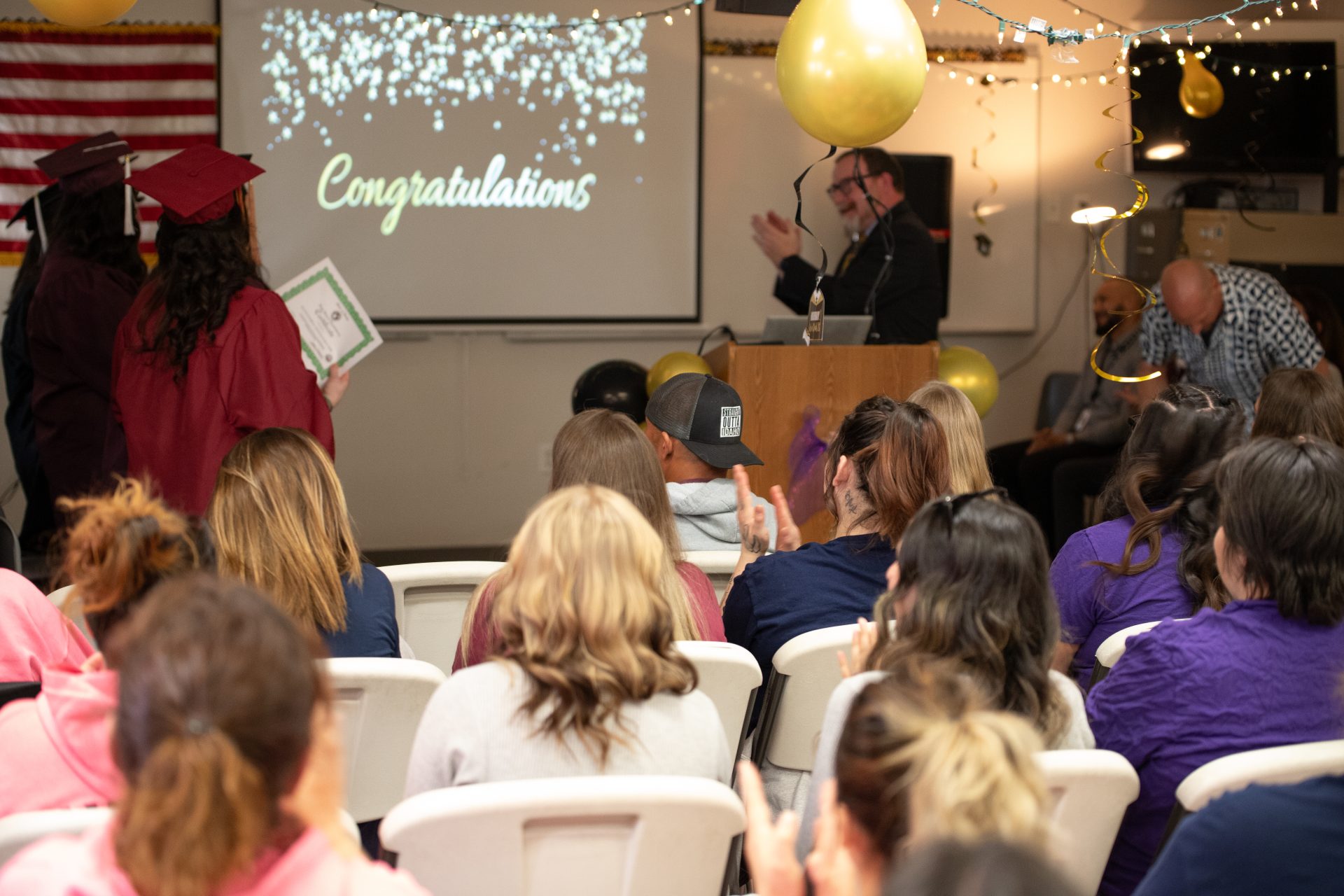
Sporting caps and gowns and huge smiles, 13 mostly teary-eyed women earned GED certificates at South Boise Women’s Correctional Center’s spring graduation in March.
At least 40 incarcerated women attended, a mix of prison friends and GED-seekers, who applauded the graduates as frequently and loudly as they could.
SBWCC Warden Dagoberto Martinez said, “Growth comes when we choose to do things that are uncomfortable, when we lean into what’s hard. Today isn’t just about what you achieve, it’s about who you’re becoming.”
Strung lights, loud music, balloons, streamers and cake added to the atmosphere in the education building at SBWCC.
The correctional center houses 300 incarcerated females who serve six-to-nine months in “retained jurisdiction,” an interim between freedom and a prison sentence. Following a period of treatment and programming, judges determine if the women will be released into the community on probation or be sentenced to prison. Their crimes are usually non-violent felonies that range from drug-related offenses to property crimes or DUIs.
The 13 graduates had a mix of career goals, going to trade schools to study cosmetology or hygienist, or college to study engineering.
Graduate Shoshanna “Reggie” Norton, 27, has been trying to get their GED since they dropped out of high school their freshman year after having a baby.
“I’m really proud of myself,” Norton said. To get their GED, Norton had to pass four sections — English, math, science, and social studies. The center covers the $26 fee for each test.
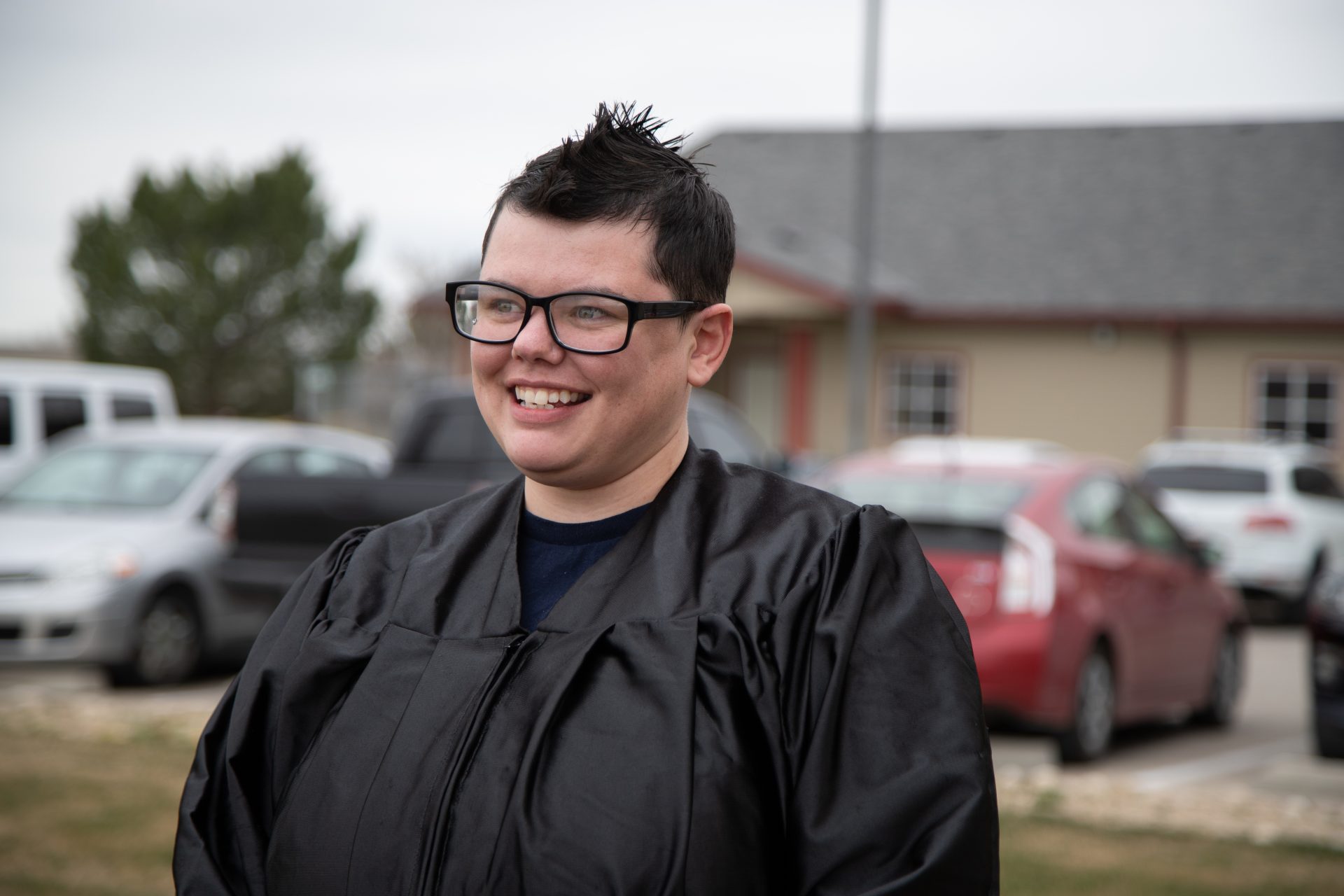
Norton struggles with a learning disability called dyscalculia (a math-related learning disability) and became discouraged after they did not pass the GED math section on the first try.
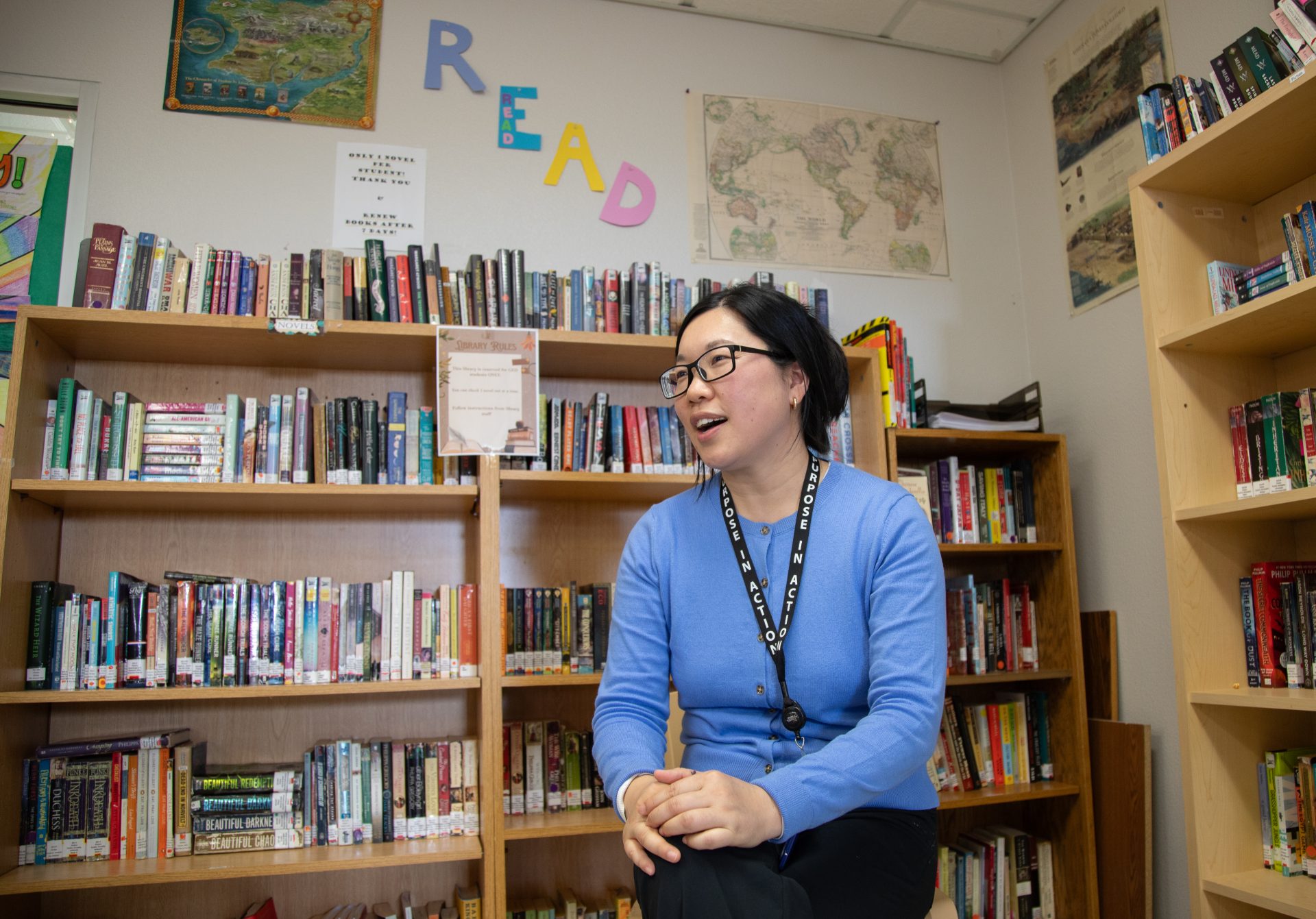
Adult Basic Education instructor Sherry Carr says math is the trickiest subject, and students always ask the classic question, “when are we going to use this?” She tells them, “in the process of learning how to do hard math problems, you’re learning to be resilient. You’re learning not to quit when things get hard.”
Norton says others in the prison can get discouraged, especially if they fail a section and have to wait the mandatory 60 days to retake the tests. “I felt that way a lot — overwhelmed, discouraged. But ultimately, I did it.”
Inspired by a Bill Nye masterclass, Norton hopes to attend college upon release and “make Bill Nye proud” by studying how to invest in alternative fuels.
While GEDs open career opportunities, they can also change the lives of graduates still in prison. Carr recalled a student who came to class saying, “Ms. Carr, I was on the phone with my son last night, and I helped him with fractions. And he said, ‘Mom, you’re so smart!’”
Warden Martinez also acknowledged the ripple effect of the graduates’ accomplishments. “You’re an example to the women who are here watching you, and you’re an example to your children, your grandchildren, your families, your brothers, your sisters, and to those folks that are struggling that you may not even know are struggling.”
Those who get their GED in prison increase their chances of being released on probation after their six-to-nine-month sentence. IDOC Director of Education Ted Oparnico also shared at the graduation that those who participate in prison education programs nationally have a 43% lower chance of returning to prison than those who do not.
Graduations take place four times per year in hopes that every graduate has a chance to attend their own ceremony. Nearly 50 students graduated from SBWCC last year.
Efforts like this are part of a bigger push from Idaho Department of Corrections (IDOC) officials to make education a cultural centerpiece of Idaho’s prisons. Education classes in prison aren’t mandatory. In 2023, IDOC reported around 13% of incarcerated residents chose to participate in education programming.
When Carr first became an instructor under a different warden, new inmates were told that education “wasn’t mandatory.” She addressed this right away.
“During the intake process, please don’t say education is optional. We don’t have to tell them it’s mandatory, but don’t tell them it’s optional.”
Carr started sitting in during the intake process so she could talk with the incoming prisoners and get them interested in education. She also has a list of every incarcerated female and whether they have their GED or not. “If they don’t have a GED, I go after them,” she said.
In another effort, Carr worked with their new warden to make education part of the incentives process within the prison. In order to work on service-learning projects like Sagebrush in Prisons, those at SBWCC must be doing their education courses. “We saw a big difference,” she said.
Once you get more incarcerated residents involved with education, it’s a snowball effect. “Our former students are our ambassadors.”
Carr has also learned to coordinate with program schedulers to make sure there are no conflicts between the treatments incarcerated residents receive and their education courses, as those programs take priority over education. “Over the years, I’ve built a relationship where they’re working with me.”