In Lewiston, Gooding, Firth and Homedale, students are busting the sobering national headlines about post-pandemic learning declines.
In these school districts, the average student has gone beyond catching up and is exceeding 2019 math and reading benchmarks.
District leaders chalk it up to common-sense strategies like goal-setting and collaboration. But those efforts are intentional, systemic and shared with students and their parents.
These success stories are bright spots amid gloomy conversations around student learning. What’s called the Nation’s Report Card showed discouraging results in math and reading, and a just-released national analysis, dubbed the Education Recovery Scorecard, confirms that the average U.S. student remains behind pre-pandemic achievement in those subjects.
But in a few places, students have shaken the pandemic’s lingering hold on their education. Leaders in Lewiston and Gooding shared how.
What’s been working for Lewiston: Goals galore
At Lewiston School District, goal-setting is ubiquitous.
Teachers and staff set goals for individuals, for classes, for grade levels and for schools. There are academic goals, of course, but also student engagement, attendance and behavior goals.
Walk down the hallways of any Lewiston elementary school, and those goals will be plastered along the walls, Superintendent Lance Hansen told EdNews.
“It doesn’t make any sense for adults to set goals for kids if the kids don’t know what the goals are, because how can they contribute to the success?” he said.
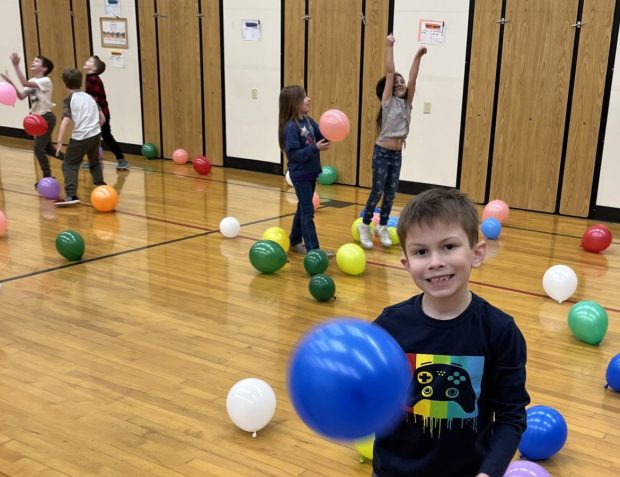
Teachers are also sharing goals with parents. That squares with recommendations from national researchers that call on teachers to let parents know when their children are behind.
Parent-teacher conferences in Lewiston have been revamped so parents walk away knowing three things:
- Their child’s learning goals (in accessible terms, not education jargon)
- How their child is progressing
- How they can support their child’s learning
Another important part of the district’s goal-setting programs: “Our district doesn’t push out (professional development). This superintendent has not set one goal for anybody in the district,” Hansen said.
Instead, he holds educators accountable to the goals they’ve set for themselves, which are always based on data and are measurable.
Goal-setting is just the first step. Then, there’s progress monitoring, feedback gathering, reflection and more. The goal is to analyze the process, repeat what works and refine what doesn’t, Hansen said.
Lewiston’s investments in reading and teacher collaboration have paid off
Researchers from Harvard, Stanford and Dartmouth found that federal COVID relief dollars made a difference for students — if the money was spent on effective academic intervention programs like summer learning. Now, those same researchers say district leaders need to double down and find ways to continue funding those programs.
Lewiston leaders have done just that.
With its pandemic dollars, the district started a six-week summer reading program for qualifying learners. Program instructors taught reading skills, but also worked to foster a love of reading, Hansen said.
It worked — more than 75% of participants either showed gains or no slides in reading achievement from spring to fall. “We can’t afford to slide,” Hansen said.
The district also used COVID dollars to ensure there are four reading-focused support staff members at every elementary. Hansen said that creates “systemic equity.”
Those initiatives have been so successful that the district has continued to fund them, even after COVID dollars expired.
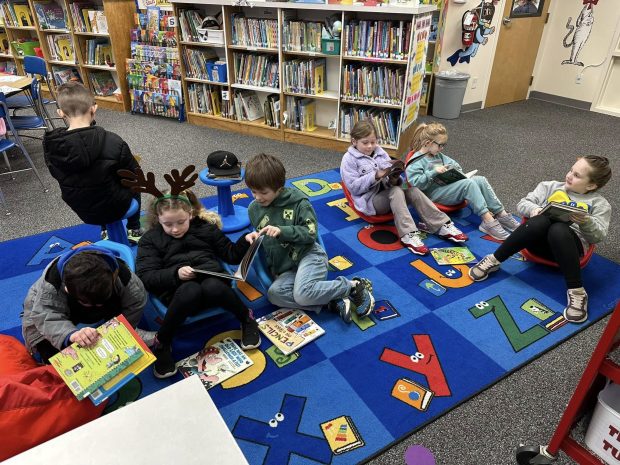
Reading achievement levels were also boosted when the district adopted a program that was initially used to help just struggling readers.
“When I became superintendent, I said if this helps our most struggling readers learn to read, we’re going to use it with everybody,” Hansen said.
Lewiston’s early literacy gains have been so strong that the state’s largest district, West Ada, took notice. In January, West Ada leaders toured schools in Lewiston and Post Falls to learn from the best.
“That’s happening right here, inside of Idaho, and we don’t have to travel across the country to do that,” said Marcus Myers, West Ada’s chief academic officer. “Both of those districts are early literacy experts.”
In both cases, a “really intense focus” on literacy has been getting results, Myers said. In Lewiston, intentional, consistent goal-setting and data analysis also made an impression.
“We learned a ton and came back with some really great strategies,” Myers said.
“It takes a community. It takes our parents, it takes our teachers, it takes our instructional support staff.” — Lance Hansen, Lewiston superintendent, on how students there are succeeding.
Lewiston school district has also supported students by supporting teachers.
Some of the district’s COVID relief money was used to fund new positions charged with leading teacher collaboration efforts. The collaboration leaders’ impact was so “substantive,” that the district continues to fund those positions out of its levy dollars, Hansen said.
When it comes to students’ academic recovery, “it wasn’t one thing, it was many things,” Hansen said. “It takes a community. It takes our parents, it takes our teachers, it takes our instructional support staff.”
Community ties in Gooding make all the difference
In rural Gooding, north of Twin Falls, community support helps ensure the success of the small local district’s approximately 1,200 students.
“Just like all rural agricultural communities in Idaho, their culture is their school district, and we embrace that,” said David Carson, superintendent of Gooding School District.

District staff members try to be involved and visible within the community, whether that’s at local parades or rodeos. And the district is part of the community — about 74% of its staff lives in Gooding, which is somewhat unique, Carson said. In other rural districts he’s lead, like Hansen, many teachers commute to work from neighboring towns.
Ultimately, that support translates to supplemental levy renewals, Carson said. And that means the district can afford extra staff members and resources for students.
“A concerted effort has been made to put extra money into people,” Carson said. “Having more staff to work with students is always going to be a good thing.”
Carson said his district plans to continue funding after-school tutoring and extra staffing previously covered by federal COVID-relief dollars, which have now expired. The district will either secure grants to do so, or pull from other revenue sources.
Carson also attributes students’ academic recovery to regular teacher collaboration — called Professional Learning Communities or PLCs in education jargon.
Gooding has long operated on four-day weeks, which provides teachers the opportunity to spend one Friday each month collaborating and training.
While many Idaho schools have PLCs, Carson said they all take a different approach, and some are more effective than others: “It’s about how well you do them, and the time and effort and intentionality you put into that.”