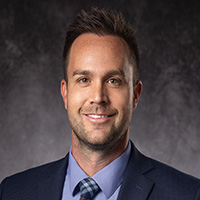
Ted Hill says his political journey started on an Idaho highway 14 years ago.
Except he wasn’t behind the wheel. His daughter was.
A car accident that day took her life — and further shaped Hill’s worldview and drive to pursue public service.
He turned grief into policy action, spearheading efforts to change the intersection where the wreck happened.
But other factors shaped the lawmaker’s activism and ambitions long before his daughter’s death. His decades-long military career spans combat tours as a fighter pilot, commander, foreign negotiator and war planner.
“He loved the military so much that he returned to active duty at 59 to keep flying,” said Hill’s longtime friend and Navy wingman Rob Maclachlan.
A warrior ethos dominates Hill’s approach at the Statehouse — and underscores his place as an influencer in Idaho’s education debates over things like lawmakers’ recent approval of a state tax credit for families who choose homeschooling or private school.
But it goes far beyond that.
Some of Hill’s policy priorities in recent years have fueled divisive culture wars in Idaho, including battles over classroom banners perceived as political, transgender bathroom use, gender pronouns and a failed attempts to arm classroom teachers.
For the conservative Hill, the battlefield may have changed from foreign soil to public schools, but the broader mission objective remains.
“I need to give back and do what I can to make America stronger,” he told Idaho Education News.

Hill was raised in Idaho but built in the Navy
At 65, he is largely a product of Idaho and its public schools.
The former Boise High School grad holds a business degree from Boise State University and a master’s degree in international relations from Salve Regina University, a private Catholic school in Newport, R.I.
But it was the military that shaped Hill’s outlook more than his alma maters.
Forty years ago, the bright-eyed Boise High grad joined the Navy, where he flew fighter jets and nurtured a deep conviction for military values: discipline, defined roles, strong leadership and clear standards.
Hill excelled at warfare.
“I shot thousands and thousands of rounds, and I was really, really good at it,” he said.
Photos from his three combat tours overseas cover Hill’s office walls. Models of fighter jets he’s flown sit near his desk. A sword honoring his military accomplishments stands in the corner, and a long-barreled model revolver sits on a filing cabinet. (“Don’t worry, it’s fake,” Hill said, snatching it with a smile.)
Hill’s military career extended far beyond the cockpit. He helped foreign countries with defense operations. His service included three combat tours and 78 missions.
Decades after firing his first shots, it’s clear the military was much more than a stint for Hill. It defines his career and professional accomplishments.
He retired as a Navy captain in 2012 and later worked on classified projects in Hawaii.
In 2018, he was recalled to the Navy and assigned to Top Gun, where he completed missions and says he was surprised when he outperformed younger pilots on fitness tests.
Hill flew his last flight as the oldest active-duty fighter pilot at 62, though he still contracts with the Navy as a fighter pilot in an F-5 supersonic jet to support training. His call sign is still “Lurch,” a reference to the tall, stoic, intimidating butler from The Addams Family.

Issues shift Hill’s focus to the Statehouse
Over the years, the death of his daughter remained with him. Alongside his military experience, the tragedy redirected his focus from flying to shaping policy.
Hill felt Idaho wasn’t addressing road safety issues after the crash. And the person who hit his daughter was impaired.
“That got me angry,” he said.
Hill pored over crash details. The 65 mph speed limit at the intersection where the wreck happened was too fast, he told EdNews: “I’m a fighter pilot, and I wouldn’t drive that road doing that.”
After the crash, Hill gathered 2,000 signatures to present to the transportation department and told local media that changes could save a life.
Friends and family members say his actions after his daughter’s death signal a deep commitment to things he cares about. Maclachlan recalled Hill’s almost obsessive commitment to certain aspects of the Navy.
“I’m looking at this guy like, he’s putting way too much effort into this,” Maclachlan said.
Hill can be surprisingly dismissive of things of less value to him, Maclachlan added. Years ago, after mastering day and night aircraft carrier takeoffs and landings, Hill had a party at his house in San Diego. Someone told him his Corvette had been stolen during the gathering.
“He shrugged … and continued the celebration without missing a beat,” Maclachlan said.
For Hill’s wife, Heidi, a former school teacher, and their adult daughter, Haley Cubero, determination has always stood out.
“I can’t fathom, now that I’m a parent, even thinking about other people,” Cubero said of Hill’s actions after the car crash. “I’d be so in the depths of despair for missing my daughter.”
Over the years, something else nudged Hill toward policy action. “Wokeness” had crept into the military he loved — especially during the Biden administration, he said. “It was like the Soviet Union. It was ludicrous, like HR running the military.”
In general, Hill said he developed deep dissatisfaction with “ridiculous and counterproductive” cultural and institutional changes during this time, particularly in the military and in education. Concerns about discipline, social media influence and ideological content in schools deepened his frustrations.
Issues Heidi Hill experienced at school concerned her husband. She recently retired from the Boise School District.
Hill decided cultural issues needed fighting at home. He’d by then settled in Eagle, a largely conservative pocket in the Treasure Valley. He shifted back into change mode, and a run for office emerged as a way to act. He won the 2022 race for representative of District 14 Seat A, which covers Gem County and parts of Ada County.
With a values-driven mindset pushing him evermore, Rep. Hill set his sights on the Idaho Capitol.
Hill’s worldview drives his politics
Idaho’s youth and schools present a logical focal point for Hill. He was raised in the Church of Jesus Christ of Latter-day Saints, though he doesn’t practice the religion today.
Still, he views the family as the fundamental unit of society. He echoes the church’s stance that families are under societal attack.
And schools aren’t far behind, in Hill’s view. Idahoans are frustrated with public schools and the lack of discipline they provide these days, Hill believes.
Hill frames school choice as parental empowerment and competition that can improve education, supporting things like tax credits so families aren’t “trapped” in schools that don’t meet their needs.
Earlier this year, he questioned whether House Bill 93, the controversial Parental Choice Tax Credit that devotes $50 million in state funds to parents of private and home schoolers, goes far enough. The bill passed and went into effect this year.
“It’s hardly any money,” he said of the measure, which critics say contributed to budget shortfalls straining state agencies this legislative session. “It’s a very small piece, and it’s not going to make a huge difference or move the needle much. But people really want it,” he told EdNews in December.
But Hill’s focus on classrooms transcends state dollars. In 2024, he sponsored House Bill 538, which prohibits, without parental consent, public school employees from using a student’s preferred pronouns if they don’t match the student’s birth sex.
He sponsored a bill this session that would restrict transgender bathroom access in Idaho by allowing private businesses and government entities to be sued if their restrooms are not separated by biological sex.
Last week, the House passed a bill Hill sponsored that would fine the city of Boise $2,000 a day for flying the LGBTQ+ flag. The measure builds on a ban Hill sponsored last year that lacked an enforcement mechanism.
Hill last year sponsored the successful House Bill 41, which prohibits teachers from displaying flags or banners depicting opinions, emotions, beliefs or thoughts about politics, economics, society, faith or religion.
The law triggered a viral standoff between West Ada teacher Sarah Inama and the district over signs in her classroom, including one that read “Everyone Is Welcome Here.” Idaho Attorney General Raúl Labrador said the sign was illegal.
Inama has since sued West Ada and five other defendants, including the attorney general, asking a federal judge to declare the law unconstitutional. All parties have countered and asked for the lawsuit to be dismissed.
From wars to culture wars
When asked how often he believes issues involving transgender students and pronoun disputes happen in Idaho schools, Hill acknowledged, “It’s not a widespread problem here.”
Boise, his childhood district and wife’s former employer, does have a problem, he added.
Boise district spokesman Dan Hollar responded with a statement about the district’s compliance with state laws; fostering safe, respectful learning environments; and supporting student achievement.
Still, Hill gives the sense that these and other socially charged issues are matters of principle.
“No father of any worth would tolerate that,” he said of the prospect of a transgender woman entering a bathroom where a young girl might be. “I can’t believe I have to even talk about it.”
Heidi Hill added: “He’s a protector.”
Hill defended his bans on flags and banners by pointing out that they would also apply to opinions he agrees with.
Yet critics say Hill’s legislation singles out transgender Idahoans while imposing costly mandates on cities and small businesses that have reported few, if any, related complaints. LGBTQ+ advocates argue the measures amount to government overreach and are part of a broader push to limit protections and local control, rather than address documented safety concerns.
Boise State University political science professor Jaclyn Kettler noted that issues emphasized in Hill’s legislation reflect national partisan debates that have come to heavily influence policymaking and polarization.
State politics are increasingly shaped by national partisan dynamics and social issues, Kettler said. The phenomenon drives polarization and legislative priorities in Idaho and other states.
Outspoken combat veteran and former Idaho Supreme Court Justice Jim Jones put his criticism for Hill another way.
Hill “typifies the dismissive attitude of MAGA warriors toward public schools,” Jones wrote in a recent op-ed, adding that the lawmaker “appears to believe that being elected to the Legislature makes one all-knowing. Actually, the government closest to the people governs best.”
Neither of Hill’s fellow District 14 lawmakers, both Republicans who co-chair Idaho’s powerful Joint Finance-Appropriations Committee, responded to questions about Hill’s emphasis on a range of culturally sensitive topics. Sen. Scott Grow said through an aide that he “is reluctant to make comparative and assessment comments on a fellow legislator.”
Hill’s wife offered her take on Hill’s viewpoints. He can seem “crotchety” at times, said Heidi Hill, adding that, as a former Boise teacher, she generally agrees with Hill on issues surrounding his policy priorities for schools.
Hill pointed out that his focus on social issues often overshadows his work on other matters, including national security threats from China, and Idaho’s future in nuclear energy.
Hill made a constitutional appeal of his own in reference to a recent bill he sponsored.
“Pronouns … that is direct compelled speech,” he said.