
The state’s four four-year schools — and Idaho’s largest community college — have sought exemptions to a new, sweeping anti-DEI law.
They have asked to continue DEI-heavy summer classes in the aftermath of Senate Bill 1198, a controversial law outlawing campus diversity, equity and inclusion programs. And the schools might seek additional exemptions before fall semester.

“This is going to be an evolution,” State Board of Education Executive Director Jennifer White said during a board meeting Wednesday. “These are new shoes. There are going to be blisters.”
Passed in April, SB 1198 doesn’t actually go into effect until July 1. But in May, the State Board spelled out a process for colleges and universities to seek exemptions for summer classes with a heavy DEI component.
Idaho Education News received a list of the exemptions this week, after filing a public records request with the State Board.
The 11 exemptions cover courses that are required for a degree or a minor — coursework that cannot be replaced with another class that doesn’t have a DEI component:
- Boise State University requested four exemptions — related to its bachelor’s and master’s programs in social work, and minors in critical theory and gender studies.
- Idaho State University sought three exemptions. Two requests cover bachelor’s and master’s programs in social work, similar to Boise State. The third request involves a minor in gender and sexuality studies.
- Lewis-Clark State College requested exemptions for its social work bachelor’s program and its minor in women and gender studies.
- The University of Idaho sought an exemption for its minor in women’s, gender and sexuality studies.
- The College of Western Idaho requested an exemption for its associate’s degree program in social work.
The State Board briefly discussed SB 1198 Wednesday, as it wrapped up a two-day meeting on the Idaho State University campus.

State Board President Kurt Liebich asked whether SB 1198 would require the board to rewrite its own policies protecting academic freedom. White said she believed the two are compatible.
But Liebich said the colleges and universities should work the details of the new law into faculty training and student orientation.
“If we don’t do it for our faculty, we’re going to stifle the conversations we want to have,” he said. “If we don’t do it for our students, we’re going to get inundated with complaints around things that should be happening in our classrooms.”
Board approves LC State nursing program, despite concerns about ‘collaboration’
Lewis-Clark State College will soon have a direct-entry master of science in nursing. The State Board approved LC State’s request to add the graduate degree.
The vote followed a meandering discussion about whether the nursing degree reflects effective collaboration on health education between the state’s colleges and universities. And the approval included an addendum: The college must report to the State Board on ways it has worked with the University of Idaho on shared nursing programming, faculty and clinical sites.
The U of I, whose Moscow campus is just 33 miles from LC State in Lewiston, is also developing a master’s in nursing. U of I plans to bring the State Board a request to approve the program in August. Last year, the State Board approved U of I’s proposal for a new School of Health and Medical Professions to house three departments — medicine, clinical medicine and nursing.
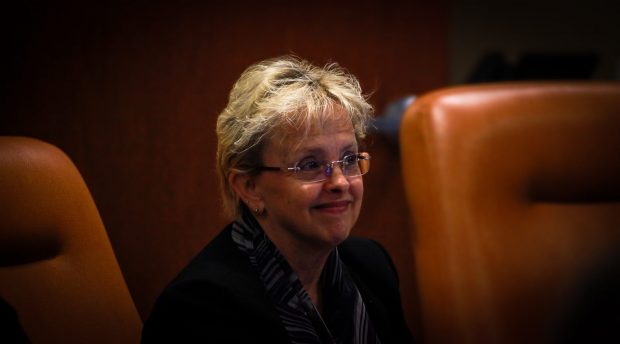
Board member Shawn Keough said she would like to see U of I and LC State leverage their combined resources and come up with a joint nursing program, rather than offer them separately. “I’m concerned that we’re not doing this collaboratively,” she said.
But Keough and other board members also acknowledged that the State Board has yet to define “collaboration” or identify incentives for institutions to partner in high demand fields like health education. Idaho for years has faced a shortage of health care professionals.
“We can be, as a board, more definitive in what we mean by collaboration, what we mean by partnership, so that the expectations are clear and it’s not frustrating on the institution side,” said state superintendent and board member Debbie Critchfield.
Board member Cally Roach suggested that the board could approve LC State’s program and encourage the college to work with U of I. Or the board could table LC State’s request and ask the two institutions to report on how they could collaborate.
A few board members initially leaned toward tabling the request. “We need to provide clarity as a board, but we also need to see action on the institutions on their collaboration,” said David Turnbull.
But board President Kurt Liebich and Vice President William Gilbert argued that the board shouldn’t slow down an institution trying to address a critical workforce need. Liebich noted the high degree of traveling nurses in Idaho and the number of patients who have to go out-of-state for medical care.
“It’s just hard for me to make sense of us putting artificial handcuffs on institutions that can help us solve the problem,” Liebich said.
Krista Harwick, associate dean for LC State’s School of Professional Studies overseeing health programs, said the direct-entry nursing degree could be implemented by the fall semester. After the State Board’s green light, the last step is approval from the college’s regional accrediting body.
“We have the infrastructure, we have the clinical sites,” Harwick said. “We’ve been doing this for a long time.”
The program is designed for applicants with bachelor’s degrees in non-nursing fields. Between 2017 and 2024, an average of 15% of students in each cohort of LC State’s bachelor’s nursing program had previously earned four-year degrees in another field, Harwick said. “For many years, students voiced frustration with having to complete a second bachelor’s degree rather than having the opportunity to pursue a graduate degree.”
Ultimately, the State Board unanimously approved the program.
The motion included a directive that, at the State Board’s August meeting, representatives from LC State and U of I report on “specific plans for institutional collaboration,” including shared academic programming, faculty appointments and clinical utilization.
Medical education, Boise State search, and more
The State Board covered a variety of other topics during its morning meeting Wednesday:
Medical education. The State Board filled its spots on a working group that will spend the next six months looking at Idaho’s medical education needs.
The board appointed one of their own, State Board member Shawn Keough; Idaho Hospital Association president and CEO Brian Whitlock; Idaho Medical Association CEO Susie Keller; and Dr. Ted Epperly, the state’s graduate medical education coordinator.
The appointees will serve on a nine-member working group that will report to the 2026 Legislature. The panel grew out of this year’s legislative session, and attempts to sever or scale back Idaho’s 50-year partnership with the University of Washington’s medical school. The Legislature walked back proposals to cut taxpayer-funded spots in the WWAMI program, named for the member states of Washington, Wyoming, Alaska, Montana and Idaho. But the compromise bill created the working group and set a January deadline for a report on Idaho medical education needs.
Two legislators and appointees from the University of Idaho, Idaho State University and the Idaho College of Osteopathic Medicine will round out the group.
President’s search. By late July, the State Board could shutter the application window for the Boise State University president’s vacancy.
The board began taking applications about four weeks ago. “I think we’re seeing a lot of strength in the applicant pool,” said Matthew Reiber, the State Board’s external affairs and strategy officer.
The board will take applications through July 18. If the board’s eight-member search committee is satisfied with the field, it could close down the application process at its July 28 meeting, said David Turnbull, the board member who is heading the search process.
The search for a new president at Idaho’s largest four-year school has unfolded largely outside the public eye. The search committee has met with five subcommittees representing campus stakeholder groups, but the committee is operating under nondisclosure agreements. Under state law, applicants’ names are exempt from disclosure.
Board President Kurt Liebich defended the process. “The best candidates … will not apply if they believe there’s a risk that their candidacy will become public.”
Four Three Education. The State Board took one more formal step to walk away from the proposed University of Phoenix acquisition.
The board voted to dissolve Four Three Education — a nonprofit created two years ago to handle the University of Idaho’s purchase of Phoenix. But earlier this month, the U of I and Phoenix agreed to call off the $685 million purchase.
“We’re done with the transaction,” said Kent Nelson, the U of I special counsel who had also served as president for Four Three. “Consequently, there’s no further need for the corporation to exist.”
Presidential pay. The board took no action, for now, on college and university presidents’ salaries.
Board members spent part of this week’s meeting behind closed doors, conducting annual evaluations with the presidents. The board will meet next week to set 2025-26 salaries.

