
As the Legislature made a last-ditch push on an anti-DEI bill, a smattering of Idahoans pushed back.
They wrote and called Gov. Brad Little, urging him to veto the bill. But in relative terms, the issue barely registered a ripple.
Little received only 47 phone calls and emails on Senate Bill 1198, which bans diversity, equity and inclusion-based policies in college admissions and campus hiring, campus DEI offices and DEI officers and diversity training.
That traffic, if you can call it that, hardly compares to the torrent of constituent calls and emails from late February — when House Bill 93, a $50 million private school tax credit bill, sat on the governor’s desk. Little’s office reported receiving 37,457 phone calls and emails on HB 93.
One common thread? On both issues, the calls and emails were one-sided, and overwhelmingly in opposition. Little received only two emails supporting SB 1198, spokeswoman Emily Callihan said late Wednesday afternoon.
Another common thread? The input didn’t seem to matter much. Little signed both HB 93 and SB 1198, quietly putting his signature on the DEI bill minutes after the Legislature adjourned for 2025.
It’s dangerous to read too much into anecdotal evidence. And constituent emails, obtained by Idaho Education News through a series of public records requests, are by their nature an unscientific sample. But there’s an engagement gap here, and it could prove to be important.
The private school choice issue clearly has legs. The debate will almost certainly resume during the 2026 legislative session. HB 93 and any followup bills will factor into the 2026 GOP primary, barely a year away, and the November 2026 general election.
DEI? It’s harder to say. Despite the nationalization of the issue — fanned by the White House, which also filled Little’s inbox with emails about President Donald Trump’s anti-DEI crusade. (These emails also showed up in EdNews’ public records request, which used “DEI” as a search term.) For whatever reason or reasons, Idaho’s anti-DEI bill just didn’t catch the same fire as the private school tax credit.
To be sure, a number of Idahoans who emailed Little on SB 1198 were pretty cantankerous. Patrick Delana of Boise called the bill “another piece of political crap,” layered on top of Idaho’s restrictive abortion laws and history of underfunding schools. James Dammarell of Moscow called it “pants-on-fire hysteria brought to you by the folks that all drink from the same trough of misinformation.”
Hannah Lange of Boise wasn’t nearly as salty. Lange, a social work student at the College of Western Idaho, said she was worried that state policies will already hurt at-risk Idahoans, which “will increase the need for social workers whose education is at stake due to this bill.”
Little should have been familiar with at least one Idahoan who urged him to veto SB 1198: Christie Wood, a Coeur d’Alene City Council member who spent 18 years on North Idaho College’s board of trustees. Both elected posts are nonpartisan, but Wood is a registered Republican who has locked horns with the hardliners who control the Kootenai County Republican Central Committee.
Wood called SB 1198 an assault on academic freedom.
“College students are adults,” Wood wrote. “It’s shocking our legislators believe the government should intercede on curriculum that challenges adults to think and apply their own critical reasoning.”
What should not be shocking is the fact that Little signed SB 1198. Asked about the opposition to the bill, spokeswoman Joan Varsek said Little “considers a variety of factors in weighing his decision on any bill that reaches his desk.” But Little’s mind was made on DEI, well before the session began and SB 1198 reached his desk.
In December, a State Board of Education made up largely of Little appointees passed a resolution ordering Idaho’s public four-year schools to close DEI-based student support centers. Little had looked at holding a news conference with State Board members before the board’s Dec. 18 vote, according to emails obtained by EdNews; the presser never happened, Varsek said, due to scheduling conflicts. But on Dec. 21, the Saturday after the State Board vote, Little appeared on “Fox and Friends” to trumpet Idaho’s stance against DEI.
File away Little’s signature as one of those things that should have surprised no one. It was a predictable call, and perhaps a low-risk call.
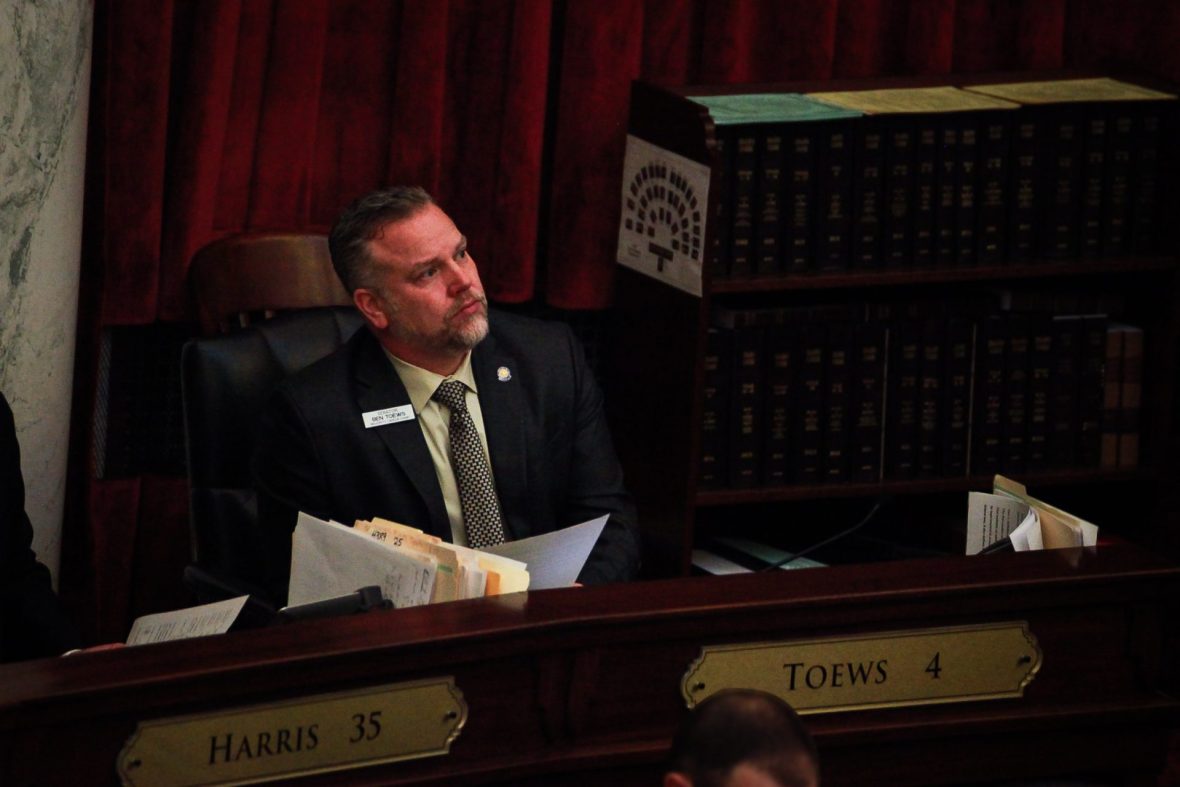
SB 1198 might also have been safe politics for the lawmakers who pushed the bill. EdNews requested emails to and from the bill’s co-sponsors, Sen. Ben Toews, R-Coeur d’Alene, and Rep. Judy Boyle, R-Midvale.
Boyle appeared to receive only two emails from the public, both from fellow DEI opponents. Toews’ inbox was busier and more mixed. He received about 25 emails from the public; 16 urged Toews to leave DEI programs alone.
But Toews’ allies were enthusiastic — including a Coeur d’Alene resident who emailed him on April 4, the day Little signed SB 1198 into law. “Just wanted you to know how much North Idaho appreciates you, Ben … death to DEI!”

Toews wrote back a few days later. “This was a hard-fought battle, but well worth it to stop DEI from doing more damage to our institutions of higher education.”
The DEI issue probably poses no political risk to Boyle, an 18-year House member representing conservative Payette and Washington counties and a sliver of Canyon County. Toews’ Coeur d’Alene district is a bit more complicated: The tension between the KCRCC wing of the GOP and mainstreamers like Wood is real, bitter and in full public view. But KCRCC-backed candidates like Toews have dominated recent legislative elections in North Idaho; for now, at least, these are the committee’s primaries to lose.
And it’s hard to see any of these elections — at the statewide or legislative district level — hinging on DEI.
Kevin Richert writes a weekly analysis on education policy and education politics. Look for his stories each Thursday.