
A last-minute bill targeting teachers’ unions split the Idaho Senate.
Hardline conservatives vs. mainstream Republicans.
A GOP new wave vs. veterans in Senate leadership.
And hardliners vs. one of their own: Sen. Dan Foreman, R-Moscow.
Foreman opposed legislation that would ban schools from using taxpayer dollars to subsidize union activities. He held one such bill in his committee — an olive branch to Idaho Education Association leaders. He opposed the messy procedural push that brought the issue back to life and bypassed his committee.
Public showdowns on the Senate floor. Private discussions between Foreman and IEA, a political odd couple. All culminating in one of the most dramatic and defining education votes of the 2026 session — a victory long coveted by conservatives, and a significant setback for one of the state’s most prominent education lobbying groups.
Here’s how it happened last week. And what led up to it.
March 30: The rapid ‘radiator capping’ of House Bill 516
The practice is common enough to have a nickname.
Statehouse insiders call it “radiator capping.” Taking one small part from legislation — its bill number, a radiator cap — and building an entirely new bill, fender-to-fender.
It’s certainly allowed. Once a bill is up for amendment, it’s fair game, and any lawmaker can propose changes. For years, the Idaho Senate has used radiator capping as its method for writing tax policy. Since all tax bills must originate in the House, the only way for the Senate to write tax legislation is to wheel a House bill into the shop and go to work on it.
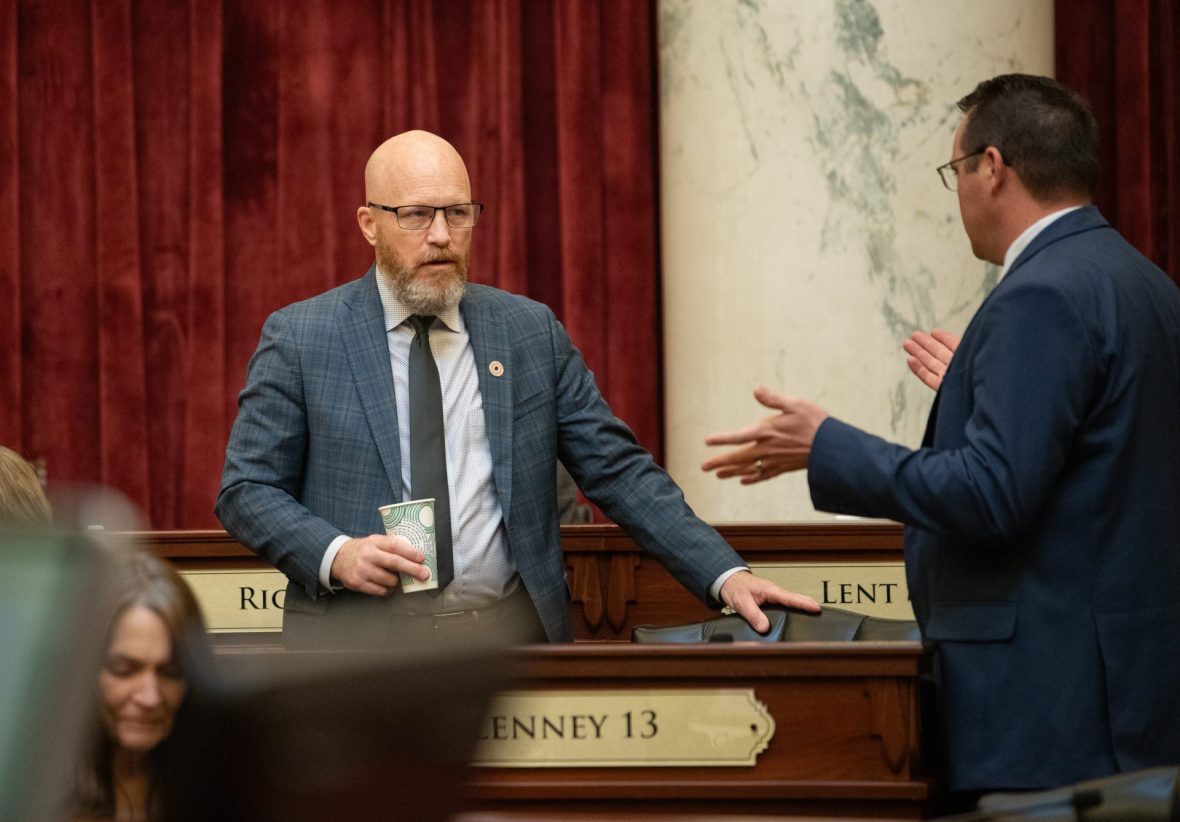
So Sens. Brian Lenney and Cindy Carlson didn’t invent “radiator capping.” They just found a different use for it. A policy application.
The two Republicans seized on an education bill that wasn’t going anywhere — House-passed legislation on LGBTQ+ instruction. In its original form, House Bill 516 was mired in the tar pit of the Senate’s 14th order, the place where legislation might or might not be amended.
Lenney, R-Nampa, and Carlson, R-Riggins, did not respond to EdNews’ requests for interviews or comment. But on the Senate floor the afternoon of March 30, Lenney made no bones about the changes he made to HB 516. He openly called the amendments a “radiator cap,” done with the blessing of House Education Committee Chairman Dale Hawkins, R-Fernwood, the author of the original LGBTQ+ education bill.
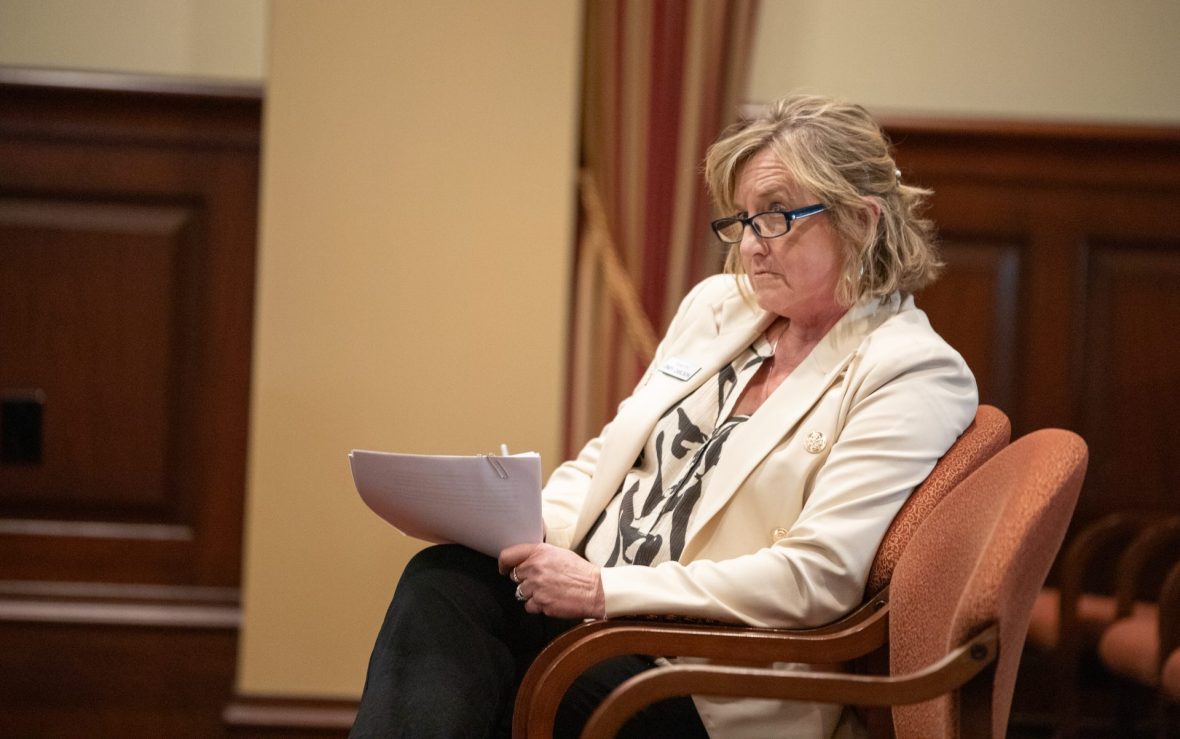
The amendments didn’t catch every senator off guard. There was scuttlebutt around the Statehouse, and Foreman had gotten wind of the rumors. Sen. Mark Harris — who presides over the amendment process as the Senate’s assistant majority leader — had spent the previous weekend going over the amendments to make sure they were fair game.
But when the amendments came to the floor, Senate Education Committee Chair Dave Lent said he’d had about one minute to read them. It was enough time to know he didn’t like what he saw, and he accused Lenney and his allies of going “for the jugular.”
It took the Senate only six minutes to consider the amendments and vote on the overhaul.
2024-2026: Union opponents gain traction in the Senate
The radiator capping was two years in the making.
In 2024, the House narrowly rejected a bill to prohibit taxpayer support of teachers’ unions.
A 2025 version of the bill passed the House and went to the Senate State Affairs Committee, where it never received a hearing.
On March 3, the House passed this year’s version of the union bill on a 45-23 vote, picking up five votes from the previous session. This proposal, House Bill 745, was assigned to Foreman’s Senate Commerce and Human Resources Committee. But even though Foreman was a bill co-sponsor, he declined to give the bill a hearing — confounding bill supporters and his fellow Senate conservatives.
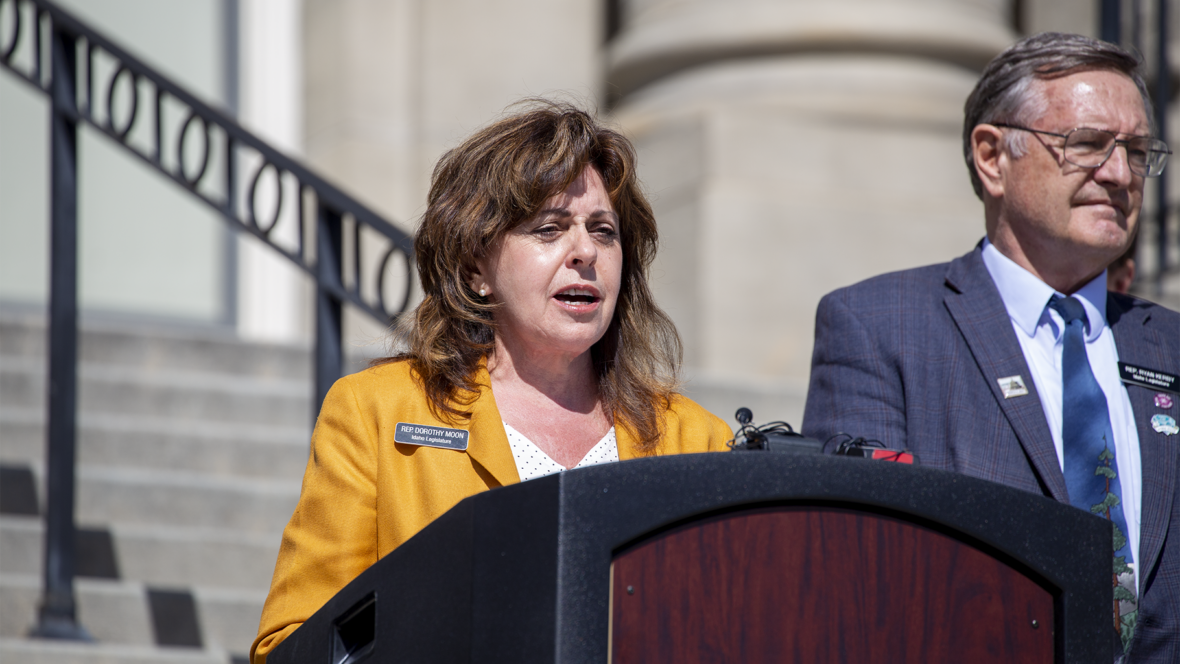
Idaho Republican Party Chairwoman Dorothy Moon called Foreman’s move a “stunt.” “It’s long past time for the taxpayers of Idaho to stand up and say no more subsidies for an organization that hates us and what we believe,” Moon wrote in a March 12 op-ed.
The next day, the issue came to a head on the Senate floor.
Hardliners attempted to pull House Bill 745 out of Foreman’s desk drawer — a procedural move, like radiator capping.
The debate had some fireworks. First-term Sen. Joshua Kohl, R-Twin Falls, accused Foreman of acting as judge, jury and executioner — drawing a pointed rebuke from Foreman.
The vote, however, was one-sided. The Senate voted, 25-9, to excuse Senate Commerce and Human Resources from bringing HB 745 to the floor, upholding Foreman’s decision. Senate leadership sided with Foreman. Only one committee chair, Sen. Tammy Nichols, R-Middleton, wanted a floor vote on the bill.
A Senate that customarily honors protocol and seniority deferred to Foreman.
This time.
2026: The Foreman-IEA talks
Foreman had his reasons. And they were unexpected. He said he wanted HB 745 off the table, while he worked behind the scenes to mend the IEA’s strained relationship with the Legislature.
In an EdNews interview last week, Foreman said union leaders never asked him to hold HB 745. Foreman said he did it on his own, to put his own skin in the game.
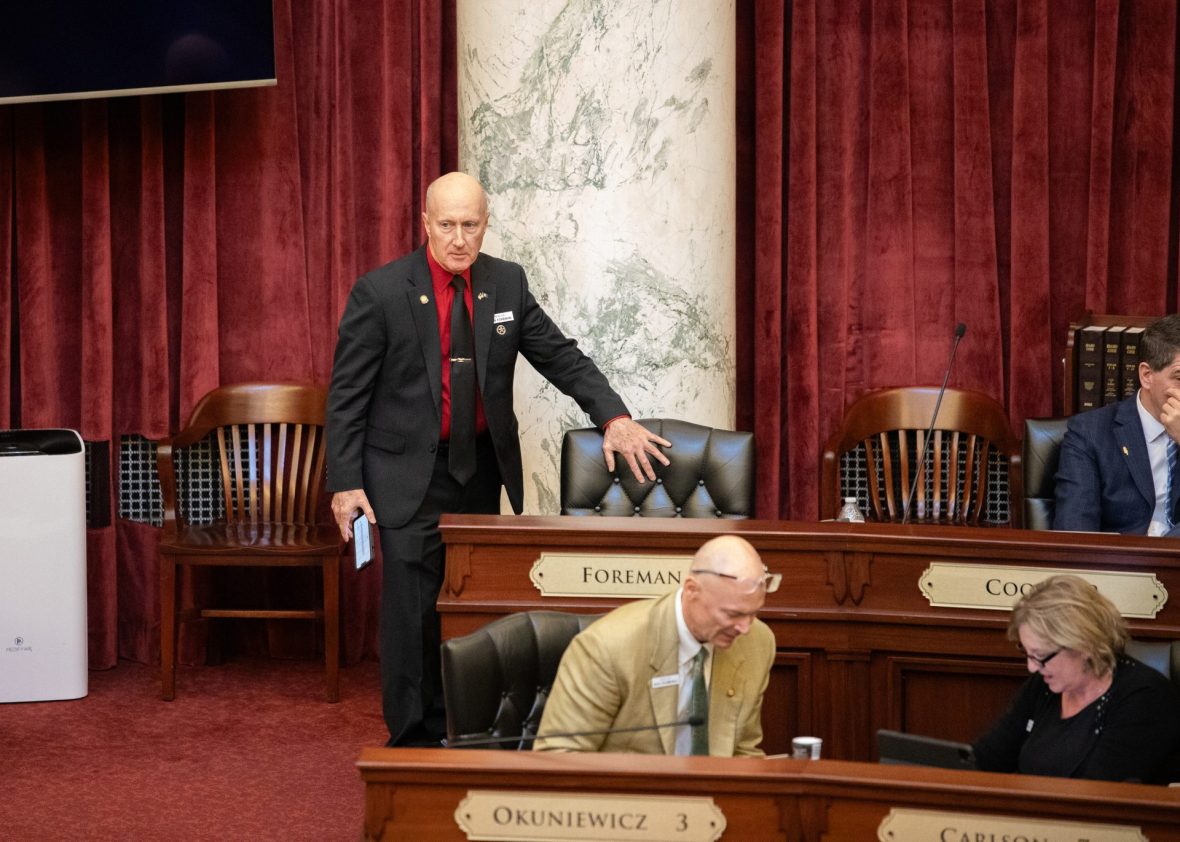
He made the decision after meeting, through an intermediary, with union leaders. During that meeting in his Senate office, the retired Moscow police officer said he picked up on something.
“I’m pretty good at reading people, and I read these people, and they’re desperate,” Foreman said. “They want a change. And I’m desperate. I want a change, and I want it for the kids.”
Why did Foreman walk away from a bill he once co-sponsored? In separate interviews, Foreman and IEA governance officer Peggy Hoy offered the same basic explanation. Foreman wasn’t opposed to drawing a line between union activities and taxpayer support — but he didn’t see a systemic issue requiring a state law.
Especially, said Foreman, legislation with an accusatory tone that insinuates unions are gaming the system. “The extremists on my side of the fence, on the far right, they seem to like almost weaponizing the law at times.”
First elected in 2016, and now in his third Senate term, Foreman has himself been one of the most polarizing figures in the Legislature. On several occasions, Foreman has been accused of directing public and profane outbursts at his political adversaries. His hardline conservative voting record did nothing to foreshadow his recent talks with IEA leaders.
Hoy admits she went in with some skepticism.
“No matter if you’re skeptical or not, you’re not going to get anywhere if you don’t start a conversation,” she said. “I wasn’t afraid of the conversation. I wasn’t sure what was going to be the result of the conversation.”
Foreman has stuck his neck out, challenging his political base, and IEA members have taken notice, spokesman Mike Journee said.
“He wanted to do it right, and he’s taken a lot of heat for it, a whole lot of heat for it,” Journee said.
In May, Foreman faces a high-profile GOP primary challenge — from three-term Rep. Lori McCann, R-Lewiston, a moderate. Like Foreman, McCann opposed the teachers’ union bill. But Foreman believes his stance, and his meetings with the IEA, will cost him support from the hardline base that has backed him in past elections.
“If five people on the left vote for me, it’d probably be a record,” he said. “It might cost me re-election. If it does, fine. Somebody else will continue this, I hope.”
March 30-April 1: An exposed rift within the Senate caucus
Under any circumstance, the Senate amendment process is inherently murky. There are no formal votes. Generally, the 35-member Senate approves or rejects amendments by voice vote. When it was time to vote on the HB 516 amendments, supporters shouted out “ayes” and opponents shouted out “nays,” leaving Harris unsure of the margin. When that happens, senators vote again by standing up from their seats, yes votes first, no votes next. Senate staffers count noses, but they don’t take a formal roll call.
On March 31, however, the GOP’s HB 516 rift was an open wound.
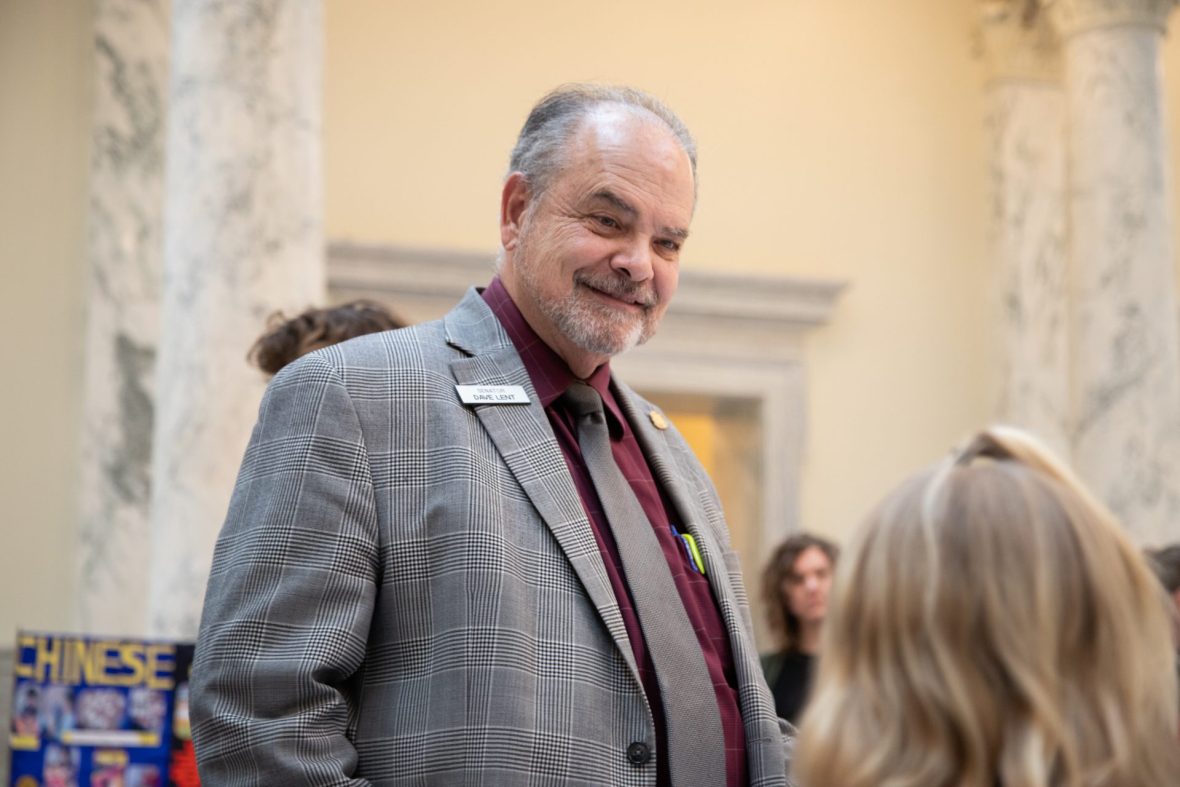
Lent asked the Senate to return the bill to his Education Committee for a public hearing. The bill was now completely different than its predecessor, said Lent and his allies, including Foreman. They said it would be a disservice to vote on the bill without a committee hearing — providing an opportunity for the public to testify before lawmakers.
Opponents said the bill was amended according to Senate rules. Kicking it back to committee would only “prolong the inevitable,” said Lenney, the amendment’s architect. “Everybody in this room knows exactly what’s in that bill.”
The Senate rejected Lent’s motion on a 16-19 vote that evenly split the GOP’s power base. Two of the four members of the Republican leadership team — Senate Majority Leader Lori Den Hartog of Meridian and Caucus Chairman Ben Toews of Coeur d’Alene — went against Lent’s motion. Five of the Senate’s 10 committee chairs also voted no: C. Scott Grow of Eagle, Doug Ricks of Rexburg, Todd Lakey of Nampa, Doug Okuniewicz of Hayden, and Nichols.
Also significant: Five of Senate Education’s eight other members sided with Lent, suggesting HB 516 would have indeed died in committee.
After the March 31 vote, the rest of the process was anticlimactic. On April 1, the Senate passed the bill. The House followed suit the next day — the final day of the session — sending the bill to Gov. Brad Little.
2027 and beyond: A new way of doing the people’s business?
House Bill 516 wasn’t the only bill that was heavily rewritten in the final days of the 2026 session. Senate President Pro Tem Kelly Anthon, R-Rupert, extensively reworked a civics education bill now on Little’s desk. The House rammed immigration language into a Senate-passed e-Verify bill — a last-minute radiator capping attempt that the Senate rejected.
Is this a new normal — where any bill is vulnerable to an overhaul and, in the Senate, committee chairs are openly at odds?

After watching a tense week on the Senate floor, Minority Leader Melissa Wintrow thinks so. “I mean, they’re not protecting each other,” said Wintrow, D-Boise.
Harris — who presides over the amendment process in his leadership role — sees a precedent. The HB 516 rewrite was an end run around the committee, said Harris, R-Soda Springs. “It’s a part of the process, but it isn’t a pretty part of the process,” he said in an interview last week.
Veteran Senate State Affairs Committee Chairman Jim Guthrie minced no words last week, in an email to EdNews. All senators are free to offer any amendments to a bill, said Guthrie, R-McCammon, “but as a senator I also am free to be critical of a troublesome process which included running over a committee chair.”
Foreman, however, isn’t convinced there’s a precedent.
He said he bears no ill will toward the authors of the amendments, saying they’re “good people.” He also said the amendments were “technically in accordance” with Senate rules. But Foreman also makes no apologies for being a stickler to the rules — and at 72, he says some of his younger colleagues are more interested in re-election and party politics.
“Sometimes they tend to think they can be very dismissive of what they might look upon as an old stodgy system, but that old stodgy system has survived the test of time,” he said.
Kevin Richert writes a weekly analysis on education policy and education politics. Look for his stories each Thursday. Due to the timeliness of the topic, this week’s analysis published on Wednesday, April 8.