
Running out of time and running into resistance, state superintendent Debbie Critchfield was fighting to save her sole priority for the 2026 session.
On March 18, she met with Rep. Dale Hawkins, the chair of the House Education Committee. Hawkins agreed to hold a hearing on Critchfield’s bill to earmark state dollars for high-needs special education students — even though he personally opposed the bill.
Hawkins had a condition. He wanted to know funding was available for the $5 million program, particularly $1 million in interest from a career readiness student fund. Hawkins received assurance from Joint Finance-Appropriations Committee co-chair Josh Tanner — another opponent — that the $1 million was in play.
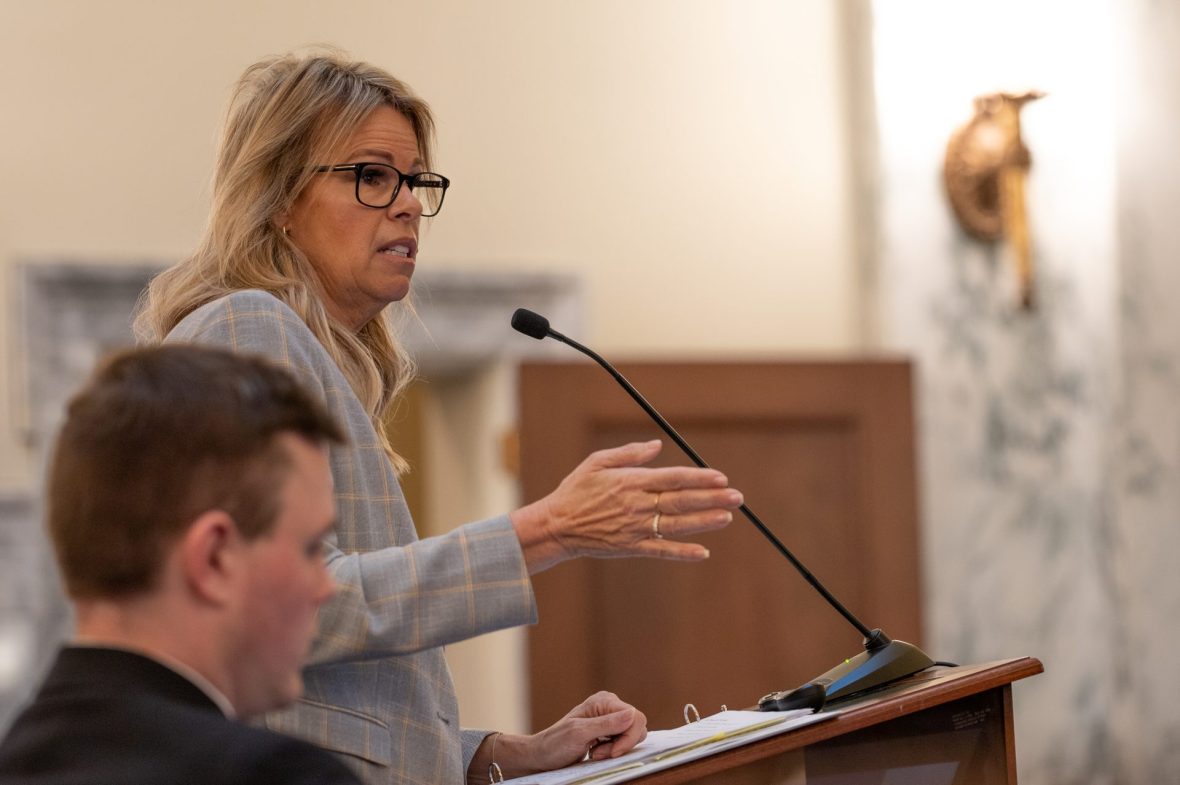
Hawkins put the bill on the committee’s March 20 agenda, making good on his promise. “(He) had the ability to not have anybody vote on it,” Critchfield told Idaho EdNews in a Wednesday interview.
The committee passed the bill. The full House passed it Tuesday, completing a one-year turnaround on special education. The high-needs bill goes to Gov. Brad Little, who has already signaled his support.
How did Critchfield convince lawmakers to create a program that they rejected the previous year? Partly from policymaking. Partly from politicking.
‘(You) come back to make it work’
Critchfield’s goal never changed. She wanted to ease the enormous and unavoidable budget pressure that comes with serving a single high-needs student — one requiring a full-time aide or an American Sign Language interpreter, or a Braille textbook that can cost up to $20,000. She wanted to create a state fund to reimburse these unusual costs, easing the strain on underfunded local special education programs, and property owners who are frequently asked to cover the difference through supplemental levies.
But to get it done, Critchfield changed her strategy.
When she pitched the high-needs program last year, Critchfield sought $3 million and an ongoing state line item. This year, she tailored her tack to an austere legislative session defined by spending cuts. The cost of a high-needs program, now $5 million, would come from two existing accounts: a driver’s education fund and interest from the career readiness fund.
The one-time funding won over some opponents, but not all of them.
In a JFAC hearing in January, and in Tuesday’s floor vote on the high-needs bill, hardline conservative Rep. Kyle Harris, R-Lewiston, chided Critchfield for bringing back an idea that had already been voted down.
Critchfield notes that many laws — including Idaho’s private school tax credit — pass only after several years of reworking.
“I thought it was unfair to highlight this one particular bill,” she said. “That’s the process. You present what you believe is the solution to something, and if it’s not successful, then you go and you work with people to come back to make that work.”
In Tuesday’s House debate, both sides looked at opposite sides of the same coin. Supporters saw the high-needs fund as an incremental step: addressing part of the $100 million gap between state and local special education funding and local needs. Opponents saw the creation of a new program.
They’re both right.
The high-needs bill provides only one-time funding. But it also creates a fund and sets a framework — the guidelines to reimburse costs of up to $100,000 per student. The bill puts the rules on the books, if funding comes through next year, or any year. And future funding could come from the state or the feds, Critchfield said.
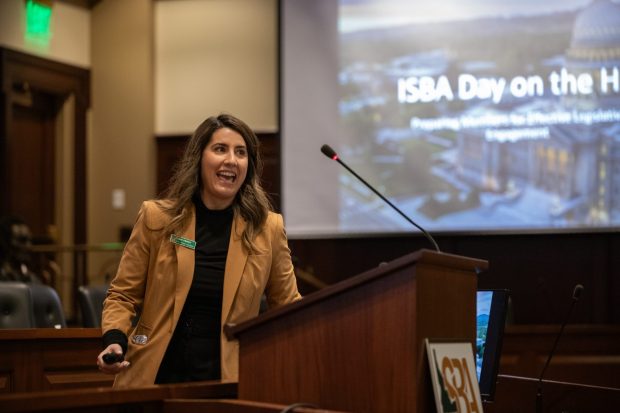
Some school leaders were probably hoping for more money and more help with the special education gap, Idaho School Boards Association deputy director Quinn Perry said Wednesday. But, she’s quick to add, policymaking doesn’t come easy. “Creating the fund is a win.”
Flipping votes — and winning over unlikely converts
The 2025 high-needs bill was a cliffhanger, twice.
The House passed it with a one-vote majority, 36-34. The Senate killed it on a 17-18 vote, leaving it one vote short of reaching Little’s desk.
This time around, Critchfield decided to start the high-needs bill in the Senate. “There was a risk in starting it in the chamber where it failed,” she said. However, she also thought it was a way to test legislative support.
The Senate passed this year’s proposal, Senate Bill 1288, on a 22-12 vote. In the process, Critchfield flipped five Republican lawmakers. But this decisive Feb. 26 vote also began a long waiting game.
The bill spent nearly a month on hold, in Hawkins’ House Education Committee. There is never a guarantee a committee chair will hear a bill, or stuff it in a desk drawer. And while Senate Education Committee Dave Lent, R-Idaho Falls, is a mainstream lawmaker and a close ally of Critchfield’s, Hawkins is both a hardline conservative and an unknown quantity, serving his first year as a committee chair.
Critchfield said there were “absolutely” moments when she thought the bill was dead in the House. But she gives Hawkins credit — not just for hearing the bill last week, but for hearing her out as they met, repeatedly, and she made her case. “He never avoided the conversation.”
Finally before committee, the bill ran into resistance. Hawkins, R-Fernwood, and Rep. Clint Hostetler, R-Twin Falls, questioned whether high-needs student support falls under the role of education. Still, the committee sent the bill on to the House floor.
This time, the vote wasn’t even close. The bill passed on a 49-21 landslide. As in the Senate, SB 1288 received support from a majority of Republicans and every Democrat in the chamber.
Twelve House Republicans who opposed the 2025 bill flipped, supporting this year’s version. Some of Critchfield’s allies were among the House’s most hardened conservatives: Reps. Vito Barbieri of Dalton Gardens; Joe Palmer of Meridian; and John Vander Woude, Brent Crane and Jaron Crane, all of Nampa.
“We’ve worked hard,” Critchfield said. “We’re putting in 12- and 14-hour days, and that’s not only building the relationships, but having the communication.”
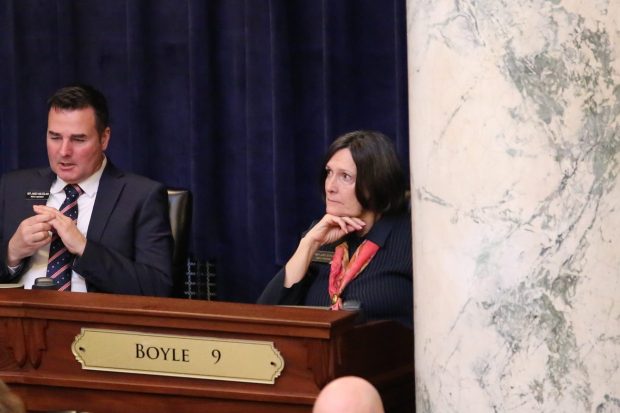
Rep. Judy Boyle was one of the converts. The Midvale Republican voted against the 2025 bill, but co-sponsored this year’s bill. In floor debate, Boyle said the high-needs fund would help schools provide federally mandated special education services, while providing local property tax relief.
Boyle said the one-time funding won her over. “I thought Debbie was being very creative.”
And what about the future — and funding high-needs support after the one-time money is spent?
“Your guess is as good as mine around here,” Boyle said Wednesday.
A small victory — but a big unresolved issue
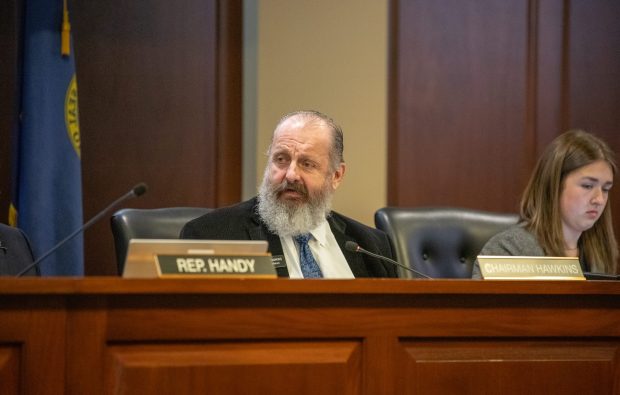
SB 1288 is headed to Little’s desk, despite opposition from some of the House’s power players. House Speaker Mike Moyle, R-Star, and Majority Leader Jason Monks, R-Meridian, voted against the bill Tuesday. So did Hawkins. So did Tanner, the new co-chair of JFAC. Four of JFAC’s House Republicans joined Tanner in opposition.
The high-needs bill also survived external pressure, including a negative score from the Idaho Freedom Foundation — a libertarian-leaning lobbying group that holds sway with many Statehouse hardliners.
The debate over SB 1288 may be settled, but the debate over special education funding is anything but over.
The $100 million funding gap remains largely unaddressed. At least for now, the Legislature lacks the money, and maybe lacks the motivation, to bridge this gulf. Bowing to fiscal headwinds, Critchfield tabled a more ambitious special education request before the 2026 session even began. She pulled a $50 million state block grant proposal in December, to the dismay of ISBA members, who fully embraced the idea.
Critchfield made another calculation heading into the 2026 session. She decided to put all of her political capital behind special education, instead of pursuing a rewrite of Idaho’s aging school funding formula.
Still, Critchfield takes heart that legislators are talking more this year about rewriting the funding formula — beyond the usual suspects, the veteran lawmakers who have been studying this issue over the past decade. She still believes that a new funding formula — with weights that provide extra dollars for at-risk demographic groups — is the best way to address special education. A new formula, she said, could make ideas like a state block grant program obsolete.
Perry, the ISBA’s deputy director, is picking up on the same dialogue about the funding formula. “I’ve never heard so many people want to tackle that beast.” But she said the neophytes might not understand what veterans have learned the hard way. The 30-year-old formula is extraordinarily complex, and a rewrite has proven politically elusive.
But small breakthroughs can also be elusive — such as the one-time, $5 million win Critchfield celebrated with her staff this week.
“I think our celebration and our feelings of happiness were probably disproportionately greater than what you would (normally) see,” she said.
Kevin Richert writes a weekly analysis on education policy and education politics. Look for his stories each Thursday.