
After five failed attempts to pass a bond that would fund a new elementary school and ease overcrowding, the Middleton School District has found the money from another source.
A state panel Tuesday approved Middleton’s application for $11.1 million from the Public School Facilities Cooperative Fund, a recently revived loan program designed to help rural school districts pay for renovations or replacements of unsafe facilities.
“It’s awesome, with a lot of exclamation points,” said Middleton Superintendent Marc Gee, following Tuesday’s Cooperative Fund panel meeting. “To be able to get this school moving along and this project off the ground, just means the world to us.”
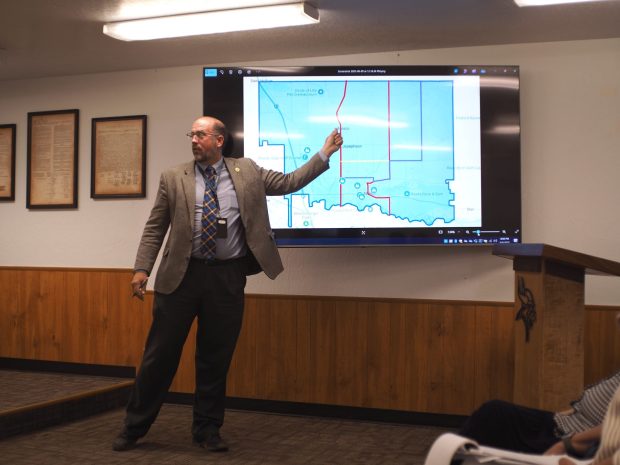
The Legislature this year made it easier for school districts to apply for the Cooperative Fund, which was created in 2006 but seldom tapped until this year. House Bill 338 increased the fund from $25.5 million to $50.5 million, loan funding that’s distributed by a panel that reviews applications.
The panel — which includes state superintendent Debbie Critchfield, lawmakers and school facilities licensing and construction experts — in August approved $30 million in distributions, and on Tuesday approved Middleton’s request among the latest round of applications.
Rep. Rod Furniss, R-Rigby, who co-sponsored HB 338, acknowledged that Middleton “is maybe not such a rural school” district. The growing city of Middleton is just 23 miles west of Boise, and the school district enrolls about 4,300 students.
“But they are in trouble, and I can see why they need the help,” Furniss said.
Middleton’s application followed an unsuccessful bond election in May — the district’s fifth consecutive failed bond measure since 2018. The district had asked voters to approve a $19.9 million bond to build a new elementary school that would relieve overcrowding across the district. But just 53% of voters supported the measure, well short of the 67% supermajority it needed to pass.

“The last one was kind of a hard one,” Gee said. “We felt like we really worked hard to narrow the scope and get everything down to where our patrons could support it.”
Now, the district can use a combination of state funds to build the 400-seat elementary school. In addition to $11.1 million from the Cooperative Fund, the district plans to tap its $8 million share from House Bill 521, the state’s $1 billion school facilities funding package from last year.
But there’s a catch.
Middleton has to hold another unsuccessful bond election in May before it’s eligible for the Cooperative funding. A provision in HB 338 required that districts which failed to pass a bond or levy and are now asking for less than the bond/levy amount from the Cooperative Fund must first hold another bond election.
If Middleton voters approve the bond, then the district won’t need $11.1 million from the Cooperative Fund. If voters reject the bond, then the district will receive the state funding to pay for the elementary school.
Explaining this situation to district patrons is going to be a “communication challenge,” Gee said. But administrators are already preparing to send out information in the coming days. “Either way, it means we’re going to get funding so that we can build that school. We’re willing to take on that challenge.”
The Filer and Camas County school districts were put in the same situation when the Cooperative Fund panel approved their applications in August. Filer later rescinded its application for $3.3 million and instead asked voters to approve two levies worth the same amount. Camas County, on the other hand, is hoping voters will reject its $1.75 million bond measure next week, so the district can qualify for the Cooperative Fund.
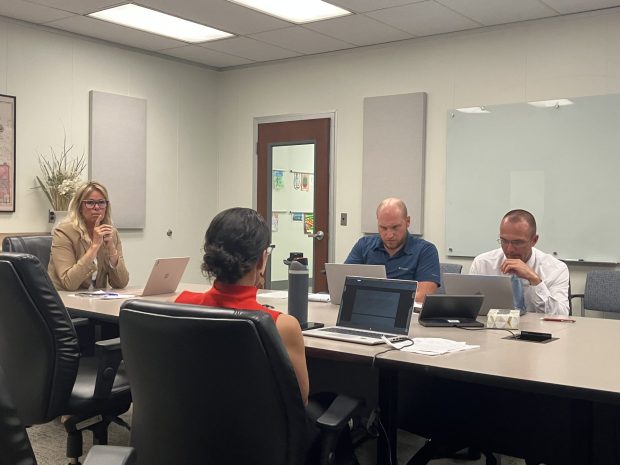
Members of the Cooperative Fund panel, including Furniss, have criticized the provision requiring a follow-up bond or levy election. On Tuesday, the panel included repealing the provision among other possible changes to HB 338 that it could recommend before the next legislative session.
The panel also considered two other requests Tuesday:
- It punted a decision on the Payette School District’s application for $945,446 to replace heating and air conditioning systems at its high school and elementary school. Panel member Michael Arrington, who heads a construction management company, raised concerns that the application didn’t account for all the costs that go into an HVAC overhaul, and
- It approved the Salmon School District’s request to revise its K-8 school building project, for which the panel previously approved $9 million from the cooperative fund. The district plans to build a bus barn in a different location than previously considered and to add classrooms to the school building — at no additional cost.
Who is on the Cooperative Fund panel?
The state law creating the Public School Facilities Cooperative Fund directed the state superintendent to appoint a panel consisting of herself and administrators from Idaho’s Division of Occupational and Professional Licenses (DOPL) and Division of Public Works.
But state superintendent Debbie Critchfield appointed additional members. Critchfield told Idaho Education News on Tuesday that the law set a minimum for panel members. She asked people with experience in school facilities — either in policymaking or construction and design — to also serve.
“It’s just nice to have that around the table,” she said. “I think you’ve heard in the last couple of meetings, somebody will key into something that we may not have considered. We just want to be diligent and thoughtful.”
In addition to the DOPL and Public Works administrators, voting members of the panel include legislators:
- Rep. Rod Furniss, R-Rigby,
- Rep. Soñia Galaviz, D-Boise,
- Sen. Kevin Cook, R-Idaho Falls, and
- Sen. Dave Lent, R-Idaho Falls,
Along with experts from the private sector:
- Cortney Liddiard, a longtime developer and CEO of Kerosene Capital,
- Michael Arrington, president of STARR Corporation, a construction management company,
- Amber Van Ocker, partner at LKV Architects, and
- Brook Thornton, partner at LKV Architects
Industry experts whose firms have contracted with school districts applying for the Cooperative Fund have so far recused themselves from voting on those applications.