Idaho needs more doctors who are willing to help train the next generation of doctors — wherever these students go to medical school.
But it’s hard to find physicians who are willing to take on a mentoring role. It’s time-consuming. The patient load doesn’t change. And there isn’t any money in it.
“We’ve built a system that relies on volunteerism and altruism,” Lisa Nelson, director of graduate medical education for the Saint Alphonsus Health System, told a state panel Tuesday.
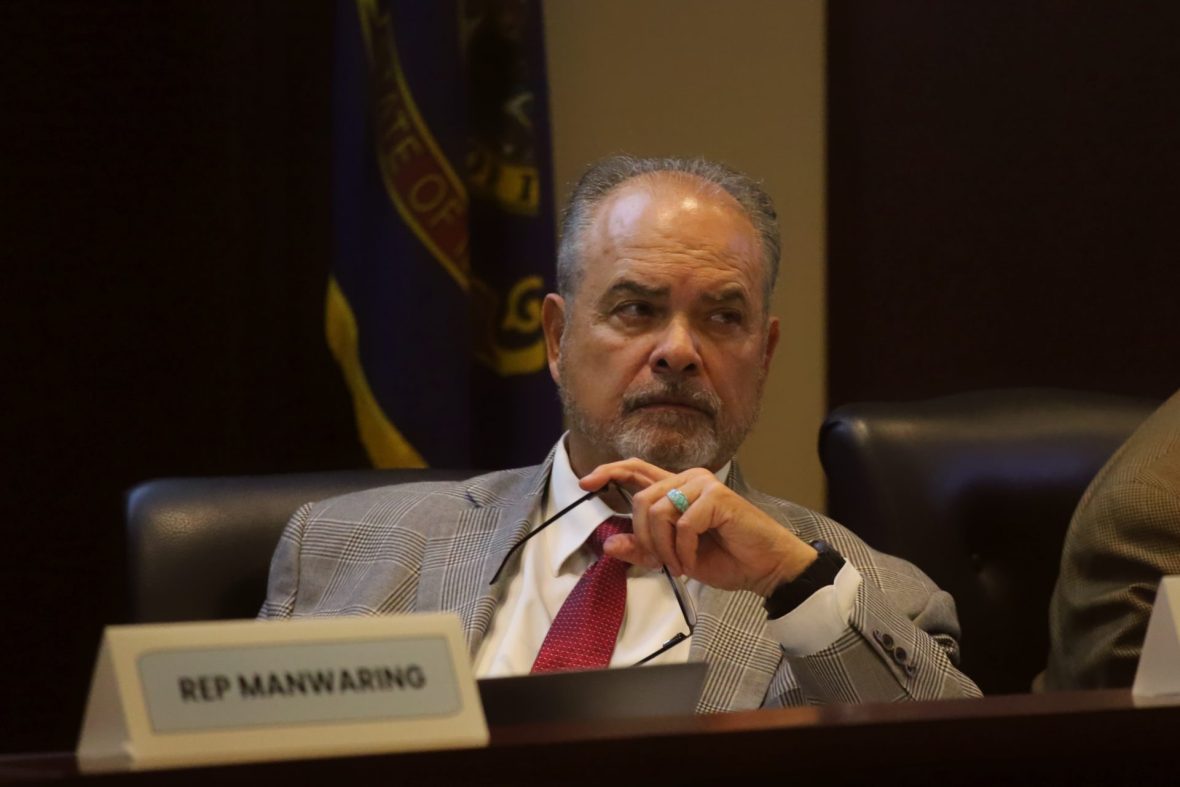
During its second meeting, an Idaho Medical Education Plan Working Group spent little time talking about the biggest issue on its plate: the state’s evolving partnerships with regional medical schools.
By Jan. 2, the group must submit its plan to Gov. Brad Little and the Legislature — addressing state-funded medical school seats, and Idaho’s 50-year controversial relationship with the University of Washington’s medical school. The state now subsidizes 40 medical school seats per year with the University of Washington’s WWAMI program — a regional coalition that includes Washington, Wyoming, Alaska, Montana and Idaho. Some lawmakers have wanted to sever or scale back Idaho’s WWAMI partnership, and a 2025 law calls for Idaho to fund 30 additional medical school seats over the next three years, with schools other than WWAMI.
But Idaho ranks last in the nation in physicians per capita, and state-subsidized medical school seats won’t solve the problem alone. Partnerships with doctors and hospitals, which bring medical students into Idaho for clinical training, are also part of the puzzle.
Medical administrators touted the benefits of the medical “clerkships.” They create a climate where doctors and students talk through treatment options. They also help hospitals recruit new doctors — an acute challenge in rural Idaho.
“We feel the breath of the wolf on the back of the neck,” said Kelly McGrath, chief medical officer at Orofino-based Clearwater Valley Health. “We feel that pressure very intently.”
Clearwater’s medical staff is expected to provide training, McGrath said. But at other hospitals, only a fraction of the medical staff signs on to train students.
There are many reasons. Some doctors say they don’t have time, and can’t take on fewer patients. Some say they don’t feel qualified to train students.
Even doctors who take on the task — acting as “preceptors,” in health care parlance — are candid about the challenges.
It is slower to talk students through medical procudures, said Kanan Silvas, medical director of virtual care for Coeur d’Alene-based Kootenai Health. Silvas believes in the importance of training — but it often equates to longer work days, or asking colleagues to pick up some of the slack.
“We have to see the number of patients we see to take care of our community,” he told the task force.
Solving the shortage could take money — which will be in short supply in 2026, as Idaho faces a projected $80 million deficit, which could grow larger if Idaho complies with federal tax cuts. Administrators said tax credits or loan forgiveness could encourage doctors to sign on as preceptors.
Task force members were noncommittal.