The Legislature’s budget-setting Joint Finance-Appropriations Committee (JFAC) didn’t take action on revenue targets as scheduled.
On Friday morning, the committee pulled an agenda item to consider and vote on the targets.
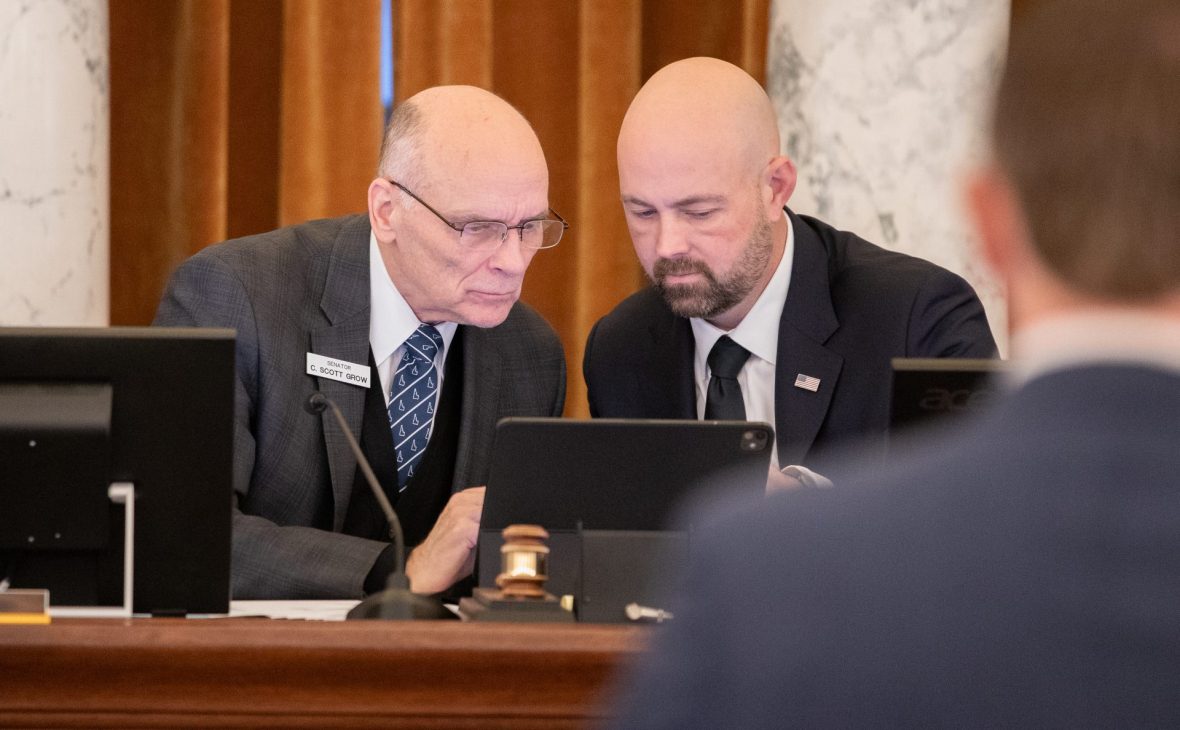
JFAC’s co-chairs told reporters following the meeting that two committee members were absent, and they wanted to offer more time to consider recommendations from the Economic Outlook and Revenue Assessment Committee (EORAC).
“We try to be respectful of the committee, give them more time,” said Sen. C. Scott Grow, R-Eagle.
The revenue targets project how much money the state will collect for the current fiscal year and next fiscal year. They’re key numbers as lawmakers consider agency budgets, including education budgets, and weigh policy bills such as tax cuts.
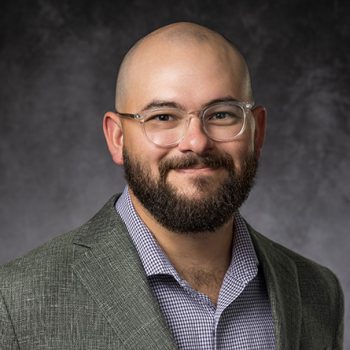
Rep. Josh Tanner, R-Eagle, noted that most House JFAC members don’t also serve on EORAC. The latter committee this week heard presentations on Idaho’s economic outlook and on the state’s fiscal health before sending recommended targets to JFAC.
“It’s important for (JFAC members) to go back and watch those videos, watch those things, and come up with that determination themselves, to see why we picked the number,” Tanner said.
EORAC’s proposed targets are:
- $5.665 billion for fiscal year 2026, the current budget year.
- $5.817 billion for fiscal year 2027, next budget year.
Both targets are more than $130 million higher than revenue forecasts from Gov. Brad Little’s office.
The proposed targets aligned with the median of predictions that came from each EORAC committee member. But Thursday’s 10-8 vote was far from unanimous, and JFAC’s co-chairs were split. Grow voted against the approved targets, favoring “more conservative” projections. But Tanner supported them, arguing Thursday that the governor’s forecast is overly “pessimistic.”
“I think it was actually a really strong thing that we picked a middle number,” Tanner said Friday.
Grow and Tanner said they expect to take up the revenue targets next week.
GOP legislative leaders have promised in recent days that there won’t be a repeat of last year. During the 2025 legislative session, JFAC members debated revenue targets for months and didn’t agree until early March, when the Legislature had already passed major tax cuts.
Bill proposes tougher penalty for speeding in school zones
One of the first bills of the 2026 session would increase the penalty for speeding in a school zone.
Under House Bill 490, a motorist would face a reckless driving charge for traveling more than 20 mph over the speed in a school zone or construction zone.
Reckless driving is a misdemeanor, subject to a jail term of up to six months and a $1,000 fine.
The House Judiciary, Rules and Administration Committee voted to print the bill Thursday. The bill could come back for a full hearing at a later date.
Reps. Mike Pohanka, R-Jerome, and John Shirts, R-Weiser, are co-sponsoring the bill.
The Idaho Statesman first reported on the bill Friday.
EdNews reporter Kevin Richert contributed to this report.