
Schools and community organizations are preparing to make sure kids don’t go hungry if SNAP benefits end in November due to the federal government shutdown.
School staff around Idaho are encouraging families to apply for the free-and-reduced lunch program, reminding families about community food pantries within schools and accepting donations to pay for school lunches.
SNAP, the Supplemental Nutrition Assistance Program, commonly known as food stamps, provided $20 million in benefits to 130,000 Idahoans in September, according to the Idaho Department of Health and Welfare. Spokesperson A.J. McWhorter said Friday afternoon the situation is fluid, but without any guidance from the federal government, SNAP benefits will be “temporarily paused” on Nov. 1.
Several news outlets late Friday, including the New York Times, reported that a federal judge ordered the federal government to continue paying food stamp benefits.
“We’ve seen those news stories as well, but we have not received any new guidance,” McWhorter said in response to a followup question after 3 p.m. Friday.
No matter what happens with SNAP benefits, schools will continue to feed kids as usual, said Pocatello-Chubbuck School District food service program coordinator Heather Canfield. Students keep their free-and-reduced lunch benefits at school even if they lose SNAP benefits at home. The district has also received community donations to help pay for lunch balances.
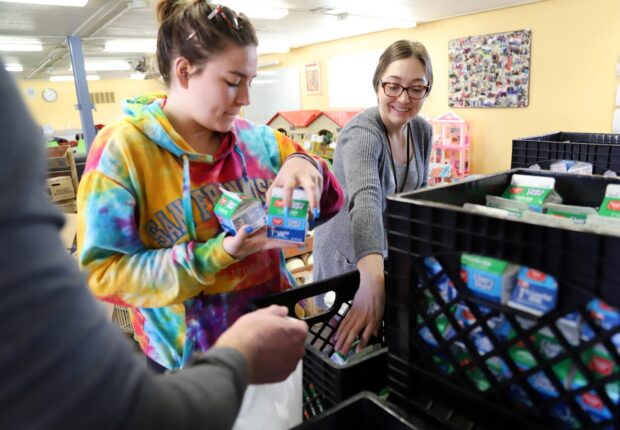
“We have a lot (of students) in our district that don’t quite qualify for free and reduced, but they still struggle,” Canfield said.
Most kids who qualify for SNAP also qualify for the free-and-reduced lunch program, said Pocatello communications assistant Shawna Sprague. That means some families just need to fill out a form to get free school lunch for their kids.
“We encourage families that need those benefits to fill those out, because it’s just one more way that we can help them,” Sprague said.
Food insecurity is always a concern for staff in the Twin Falls School District, said spokesperson Eva Craner.
“Students who are hungry aren’t able to concentrate on their schoolwork and really excel in the classroom,” Craner said.
The district on Thursday reminded parents to apply for the free-and-reduced lunch program, especially if they’ve had a change in employment. Nearly all of Twin Fall’s schools have a food pantry, Craner said, and 13 out of 16 schools qualify for the USDA’s Community Eligibility Provision, meaning all students can eat at school for free due to high levels of poverty in the community.
“We’re making sure that the food pantries are as well stocked as they can be,” she said.
In Nampa, the school district has informed families about food bank distribution sites, according to spokesperson Matt Sizemore. The district recommends checking findhelp.org and the Idaho Food Bank.
Kuna School District runs a community food bank at Ross Elementary open from 5 to 7 p.m. on Wednesdays and 9 a.m. to 2 p.m. on Thursdays, according to spokesperson Allison Westfall.
Community support
The Idaho Food Bank has two programs that specifically aim to help students: school food pantries and a backpack program.
The organization has relationships with 40 food pantries in 23 school districts, according to spokesperson Theresa Vawter. Those schools can order food through the Idaho Food Bank for free. Some of those pantries have backpack programs that sends kids home on Friday with a backpack filled with enough food to last the weekend.
“Two breakfasts, two lunches, two dinners and snacks that schools can provide to children they know who are food insecure,” Vawter said.
Charitable food programs pair with SNAP to help families, but pantries can’t replace the government program, she said.
Folks who are in need of food — and those who are able to donate to food pantries — can visit the Idaho Food Bank website to find a local provider.