
The percentage of Idaho’s youngest students reading at or above grade level is growing, and State Superintendent of Public Instruction Debbie Critchfield says that’s due in large part to investments in literacy and training.
One of the programs that got the largest increase in state funding this year, SMART or Striving to Meet Achievement in Reading Together, received $5 million to expand.
But while some school leaders say the program has yielded great results, including increased proficiency levels on the Idaho Reading Indicator, a standardized test given in the fall and spring, there is no statewide data on the program.
“These results suggest that the investments being made statewide around literacy funding and training are paying off,” Critchfield said in a statement when the IRI scores were released. “This achievement should serve as an example of what’s possible when attention and resources are focused on an area of need, and I’d like to thank our educators directly for making a positive impact on our youngest learners’ futures in education and beyond.”
SMART is a voluntary two-year training that started in 2021. Teachers can sign up on their own, meaning schools have some teachers who have completed the training and others who have not.
Data for the IRI is released publicly by school, district and charter but not by classroom, meaning unless all of the teachers at a given school have completed the program, the data can’t be used to interpret effectiveness of the training.
However, schools get individual student data, allowing them to track both student and teacher progress.
In Idaho Falls, teachers at A.H. Bush Elementary School saw a 57 percentage point increase in their kindergartener’s reading at grade level after the training was implemented.
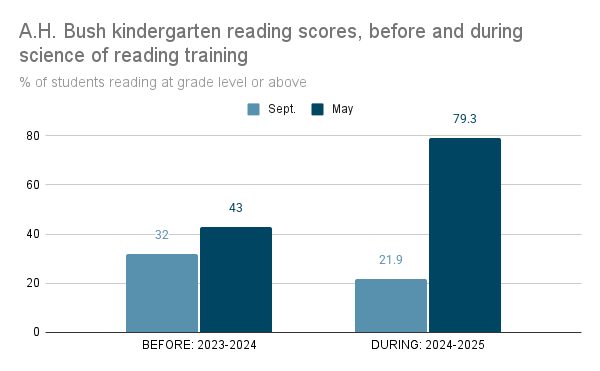
Statewide, the percentage of kindergarteners’ reading at grade level saw the highest bump this spring of grades K-3. On average, about 25-30% of participants in the SMART project are working directly with kindergarteners, said Karyn Kilpatrick-Snell, who coordinates SMART for IDE.

Still, the lack of a requirement to enroll in the program allows a multitude of factors to impact data showing the program’s success, like targeted recruitment efforts, other district trainings, and potential trends in the types of educators who sign up.
The Legislature did not set up enrollment targets this year but prioritized outreach and access for schools scoring in the bottom 25 percent of the most recent IRI results.
“This ensures that the educators and administrators serving students with the greatest need are given priority access to Idaho SMART’s Science of Reading training,” Kilpatrick-Snell said in a statement.
IRI scores are only part of measuring SMART’s success, Kilpatrick-Snell said. There’s monitoring to make sure educators are implementing their knowledge effectively, coaching is assessed, and participants complete pre and post program inventories.
In total 1,630 classrooms have registered for the program in the last five years. That count includes classrooms where multiple teachers or paraprofessionals have registered. There are more than 1,000 educators registered for this upcoming school year.
With the new funds, the state is launching two new program pathways, one for building and district instructional coaches and one for elementary school administrators.
The SMART project also isn’t the only literacy program in the state. Earlier this year EdNews found that the schools that get the most literacy funds tend to have the best scores, after state legislators based a portion of literacy funds on the number of students in a district who were doing well on reading.
What the SMART training entails
The SMART program takes two years and has two main parts:
A monthly book study: Teachers get a monthly professional development session centered around reading and discussing Louisa Moats’ “Speech to Print: Language Essentials for Teachers.” Moats lives in Sun Valley and is a national authority on literacy — read more about her here.

And monthly in-class support: A coach visits each teacher’s classroom once a month to observe and support the teacher’s efforts to implement SMART literacy practices. The observation is followed by time to reflect and give feedback.
The numbers of SMART Registrants by year, by classroom:
2021: 211
2022: 293
2023: 266
2024: 414
2025: 446
