
Kootenai Bridge Academy is an outlier.
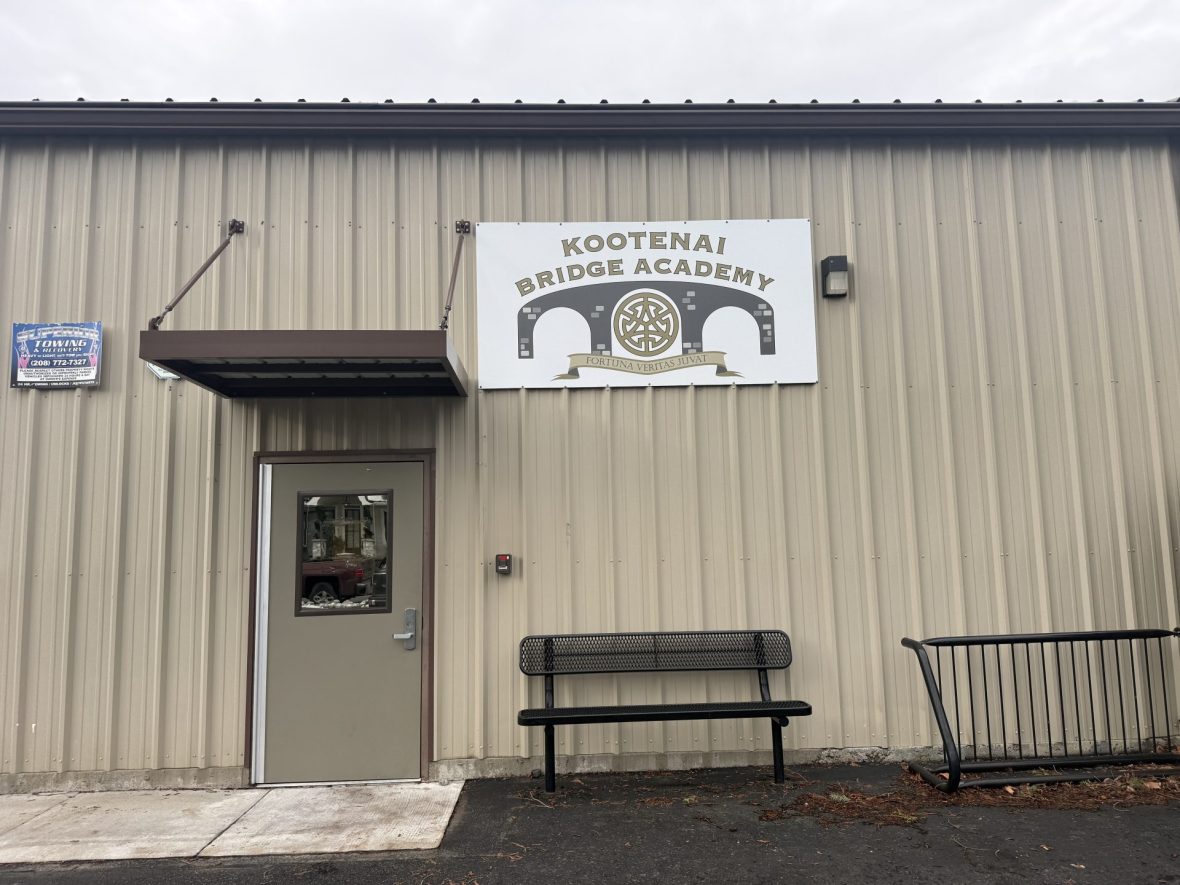
From the school’s self-paced educational model, location in downtown Coeur d’Alene in a refurbished health club, to its’ savings account and test scores — everything about the school is out of the norm.
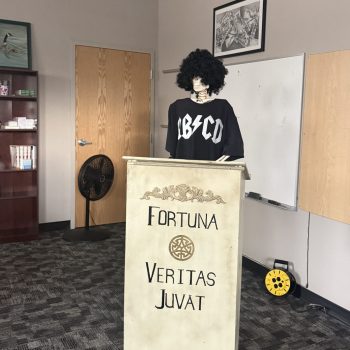
Even the school’s mascot, a troll, raises an eyebrow.
But school leaders say all those abnormalities help them serve their target student demographic: kids who would otherwise be dropouts and students whose lives necessitate a flexible education program.

A hybrid educational model
Kootenai Bridge opened as a public charter school in 2009. Before that, Kenna and a handful of other founders worked at Bridge Academy, a program within the Coeur d’Alene School District that targeted students who otherwise would have dropped out.
In its current iteration, the school is open to students who are 16 and older. Kenna estimates that about 20% of students are “13th and 14th graders,” who are hoping to earn a diploma before they turn 21.
“The harder they work, the sooner it’s over with,” Kenna said.
The school is licensed for just over 350 students and is usually “pretty stuffed to the gills,” Kenna said.
Students take one class at a time online through Connexus by Pearson. Teachers adapt some material and add extra resources like a video on how to take notes, pre-tests, and some Idaho-specific content, like a legally required video on fetal development.
Students must receive an 80% on assessments to move through each unit. Then they take their final exam in person at Kootenai Bridge’s building, nestled next to North Idaho College and Lake Coeur d’Alene.
Students can also come in any time between 8 a.m. and 6 p.m. Monday through Friday for help and support from KBA’s six full-time teachers. Typically, about 30 students cycle in and out of the building on any given day.
Kenna said the type of student Kootenai Bridge serves has changed significantly over the last 15 years. In the past, students were often on probation, with violent or drug-related issues. It was common to see teen parents, too, Kenna said.
Now, students struggle with their mental health.
“Kids these days are very anxious,” Kenna said.
It’s more common for staff to deal with counseling services than a probation officer.
Some students choose KBA because they work full-time. One recent student, Kenna said, worked his shift at Parker Toyota then came in for support in the evening. Other students have medical needs — one student had a double lung transplant that left him behind in credits, Kenna said.
Family situations also can make the flexibility of KBA ideal, he said. Others may have life experiences, like the death of a parent, that make it difficult to be in a traditional classroom with less mature peers, he said.
Students can enroll in the school at the start of the semester, at semester breaks, or mid-term on a case-by-case basis.
“Most of our students come here to get away,” Kenna said. “They just want their diploma.”
The program has about 13% of students receiving SPED services, some with high needs, Kenna said.
The statistics
Kootenai Bridge has the highest average salary and fund balance of any school district or charter in the state.
On average, teachers at Kootenai Bridge make $97,423. Kenna said nearly all six of his teachers are at the top of the pay scale due to their level of experience. The district typically ends up hiring veteran teachers, he said, but hiring just one early career would significantly drop the average.
The school has $6.5 million in savings with a general fund annual budget of only $4 million.
Finance Manager, Dodi Jordan, attributes the high fund balance to a number of factors, including “raw efficiency and miserliness.”
The charter school doesn’t have many typical expenses like transportation or a mortgage and the current student-to-teacher ratio 53 to 1.
The school purchased its building for about $650,000 and paid it off not long after. Their curriculum and online program only costs $35,000 per year.
But Jordan said her understanding is that the state of Idaho can’t single out individual districts and pay them less. The program is “bare bones,” she said.
The fund balance increased significantly during the COVID-19 pandemic when schools across Idaho were funded based on their enrollment, not average daily attendance. But now that the state has reverted to ADA, Kootenai Bridge reports an average daily attendance of 60-70%, tracked by the number of daily assessments completed, reducing their funding.
Still, the school saved more than $1.6 million in 2025.
Jordan and Kenna both say they would be open to a rewrite of Idaho’s funding formula with different calculations for unique school models like their hybrid one but lawmakers haven’t tackled the issue in decades. Idaho’s funding formula was written more than 30 years ago.
The school’s standardized test scores are far below the state average with 32.8% of students proficient in English Language Arts and 7.8% proficient in mathematics on the ISAT.
Math is the subject the majority of Kootenai Bridge students struggle with, he added. The school hired a virtual math tutor to help students and pushes for kids to focus on math remediation before moving on to other courses.
Kenna said he doesn’t expect the school to meet state averages, but he is hoping for improvement.
The school’s four-year cohort graduation rate is 49.2%, however, Kootenai Bridge is not a four-year school causing some problems with data collection.
Supporting students
Kenna and his staff say that despite low test scores, the school meets the needs of students by creating a unique and familial environment that makes students feel safe and willing to take accountability.
Kenna said he just stumbled into running the school after falling in love with alternative education while working at the Coeur d’Alene School District. He previously taught Advanced Placement United States history but felt kids in the bridge program needed him more.
He plans to step down as principal next fall and return to teaching with the vice principal Jill McDaniel taking over as the school’s leader.
McDaniel fell in love with alternative education when working at the Post Falls School District.

