The State Board of Education is narrowing its search for a new Boise State University president to five finalists, whose names will be released to the public — thanks to a state law requiring it.
The State Board discussed its efforts to replace former president Marlene Tromp — now president at the University of Vermont — during its monthly meeting Wednesday in Boise.
Board president Kurt Liebich and member David Turnbull, who’s leading the Boise State president search committee, held in-person interviews over the past two days. More than 50 people have applied, and the search committee is selecting finalists, Turnbull said.
“Because it’s a high-profile position, and it’s being conducted under (non-disclosure agreements), there can be a lot of speculation out there in the public about what’s going on behind closed doors,” he said. “I want to assure everybody that we’ve had a broad array of applicants.”
The State Board didn’t offer a specific timeline for announcing the finalists. But executive director Jennifer White said the public “will have to wait a little longer,” and “we are trying to move as quickly as possible.”
Meanwhile, White and board members complained about a state law requiring that finalists’ names be made public. White stopped short of saying the law should be repealed, but mentioned conversations with lawmakers “who share our concerns about our ability to recruit.”
Lacking confidentiality can deter candidates currently in high-profile roles. Other university presidents, for instance, have applied for the Boise State job, Liebich said.
“You have a 20% chance of getting the job. Are you really going to put your current position at risk?” he said. “That’s the challenge we’re wrestling with right now.”

U of I nursing graduate degree approved, with a twist
The University of Idaho will add a direct-entry graduate degree in nursing, following quick State Board approval Wednesday.
But the master’s degree won’t be offered in Moscow, as it was initially pitched last year. Instead, the program will be based in Coeur d’Alene, through a partnership with North Idaho College. The pivot came after discussions about collaborating with Lewis-Clark State College broke down this summer.
In June, the State Board allowed LC State to launch a direct-entry nursing master’s degree, but only after some hand-wringing over a similar proposal at U of I — the two campuses are just 33 miles apart. Ultimately, the board approved the program with the condition that LC State and U of I discuss ways they could collaborate on nursing programs and report back.
LC State and U of I representatives met on July 21 and discussed ways they could share faculty, buildings and curriculum, according to documents U of I shared with the State Board.
But “collaboration was deemed not feasible, largely due to the success of” LC State’s bachelor of science in nursing, which “demands all … relevant resources,” said a joint letter signed by U of I and NIC.
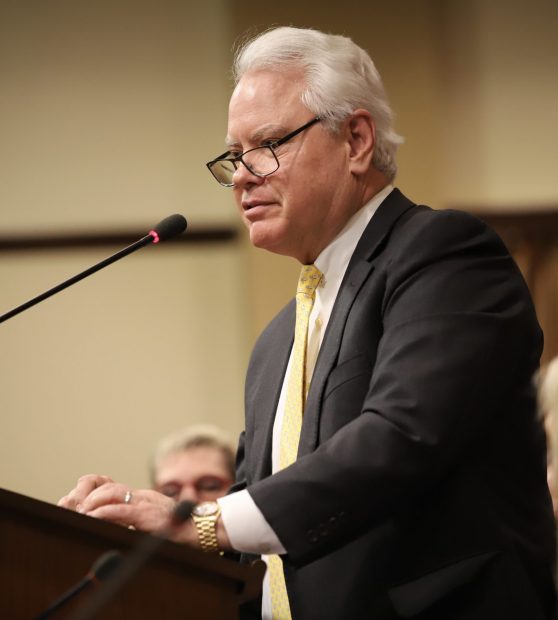
Gwen Gorzelsky, U of I’s vice provost for academic initiatives, told the State Board that LC State was “prepared to deliver the program that they had designed and that you had approved.”
Then, State Board executive director Jennifer White stepped in, Gorzelsky said, and recommended that U of I contact NIC to explore a partnership. Four days after the LC State talks failed, U of I had a deal with NIC.
“In addition to having access to NIC’s top-notch infrastructure, students will have access to their faculty and to the various health care organizations in the region,” Gorzelsky said. “It will be beneficial across the board.”
State Board members appeared satisfied with this result. They unanimously approved U of I’s request without discussion.
Direct-entry graduate nursing degrees are designed for applicants with bachelor’s degrees in non-nursing fields. The U of I program will help produce workers for struggling health care providers in North Idaho, university president C. Scott Green told the State Board Wednesday.
“They’re understaffed, their people are working long hours…and they experience high turnover,” he said. “And it’s becoming increasingly difficult to fill these positions.”
Board members delegate budget authority to agency director
Also Wednesday, State Board members voted to give Jennifer White, executive director of the Office of the State Board, authority to revise and approve budget requests before they go to Gov. Brad Little.
This includes 2026-27 spending requests from colleges and universities and other departments housed under the State Board.
The move is part of a broader evolution in the board’s handling of managerial tasks, said vice president William Gilbert. “Our job as a board is advice, consent and then oversight of our management team. This is another step in that direction, (toward) making us a more strategic board.”
White said her office is reviewing how Little’s recent spending restrictions will affect colleges and universities. On Friday, Little ordered 3% holdbacks, midyear cuts in spending, for the current fiscal year, excluding K-12 public schools. He previously told agencies to hold off on new spending requests for next fiscal year.
“I would be grateful for the flexibility that this vote would offer,” said White, before members unanimously voted to grant her budgeting authority.
Updated social studies standards get go-ahead
New social studies content standards, reworked in recent months to appease the Legislature, got initial approval Wednesday.
The Idaho Department of Education (IDE) in 2023-24 reviewed its social studies content standards — baseline learning expectations in each subject area — for all grade levels. The Legislature later rejected standards in two of 12 subject areas: fourth-grade Idaho history and U.S. history for sixth through 12th grade.
After this year’s legislative session, IDE reconvened content-expert panels that wrote the original standards for another pass through.
The State Board’s approval Wednesday was only preliminary. The reworked standards now undergo a lengthy public comment period before a second State Board vote in November and final consideration by the Legislature next year.
State Board chairman Kurt Liebich wondered whether the new proposals would survive legislative scrutiny this time around. Legislators were involved in the latest process, said state superintendent Debbie Critchfield.
“There’s been a lot of conversations, a lot of vetting and we always like to put our best foot forward,” she said. “I guess we’ll see what happens with the public comment, but we’re feeling good about what we’re proposing.”
Other board business
Also at Wednesday’s State Board meeting:
- Idaho State University President Robert Wagner said that the state’s new anti-DEI law (Senate Bill 1198) has taken his staff “hundreds of man hours,” and counting, to sort through. “The implementation of this law has represented a lot of work, a considerable amount of work at the academic affairs level, the dean level, the department level, the faculty level.”
- State superintendent Debbie Critchfield said that sustained investments in literacy are paying off. She touted recent standardized test scores that showed 71% of K-3 students are reading at grade level. “It feels good to be able to bring a good report to this group,” Critchfield said. “We’re certainly not going to let off the gas.”
- The board approved new agreements for the Center for Advanced Energy Studies (CAES), a consortium involving eastern Idaho’s federal research laboratory and state universities, amid a rebrand of its facility in Idaho Falls. CAES is rebranding to the Critical Materials and Energy Systems Innovation Center (CMESIC).