There’s often a tendency to view Election Day the same way people view the Super Bowl, Boise State University political scholar Sam Martin said.
You show up on game day with a plate of chicken wings.
“But really, democracy needs voters who think that they are players, right?” Martin said. “They are on the field and they’re talking to each other — and the initiative process brings that up.”
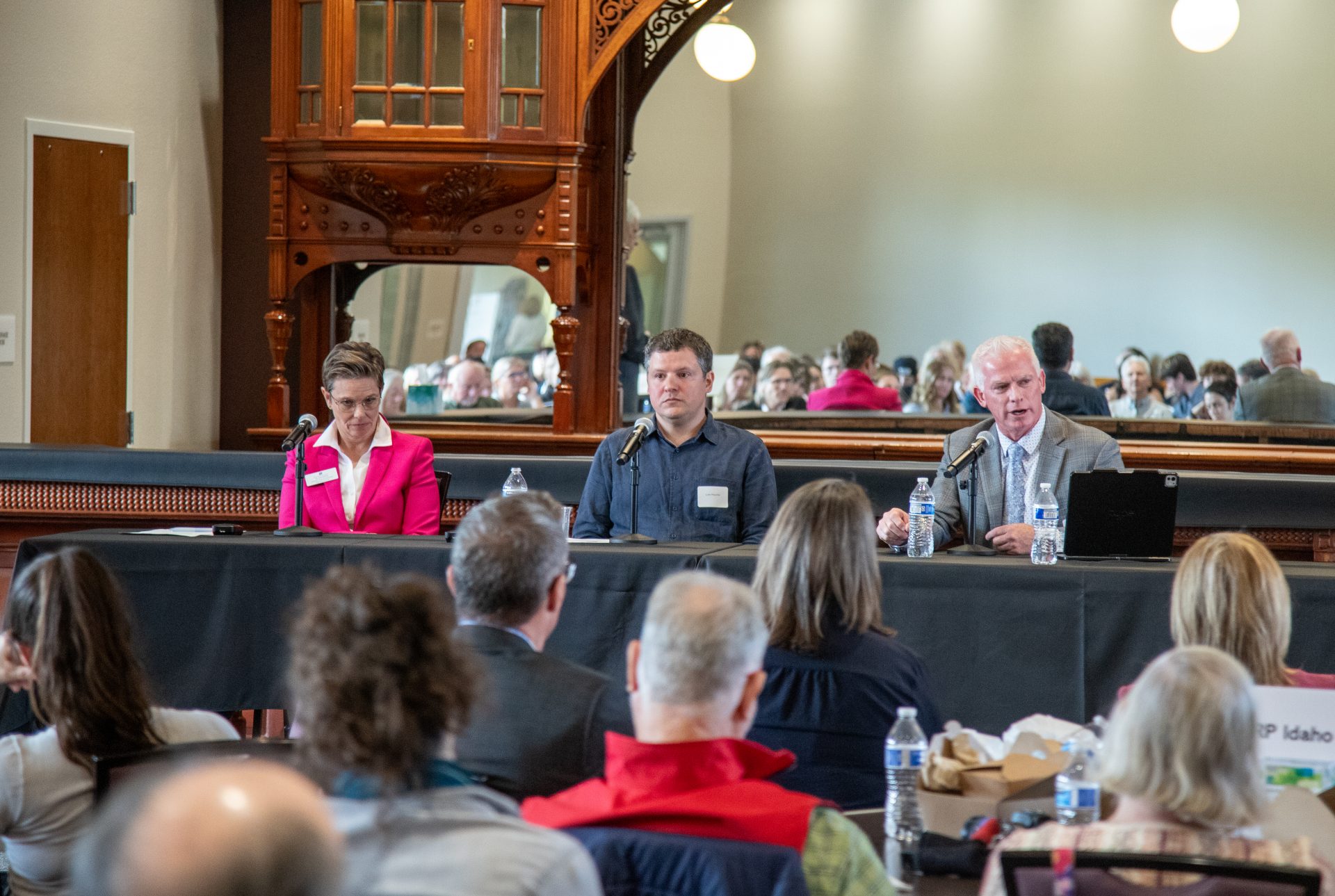
Martin was part of a panel discussion Tuesday at the Idaho State Museum on the past, present and future of ballot initiatives. Reclaim Idaho Executive Director Luke Mayville and House Majority Leader Jason Monks, R-Meridian, joined Martin on stage at the event, hosted by the City Club of Boise.
The only ballot initiative in recent years relating to education never actually made it to the ballot box, but Mayville said it was still a “major victory.”

Urging the Legislature to act
In 2022, Reclaim Idaho proposed the Quality Education Act. The ballot initiative would have raised an estimated $323 million for K-12 public schools.
But before voters had a chance to take to the field in November, the Idaho Legislature passed House Bill 1 during a special session, appropriating $410 million for public education.
In response, Reclaim Idaho withdrew the 2022 ballot initiative.
“Our initiative forced the hand of the Legislature to increase funding for public education by much more than they would have otherwise done,” Mayville told EdNews in an interview. “The increase of $410 million for education was the largest single year increase in a generation. And we do not believe that would have been possible without the pressure created by our initiative.”
There are at least two ways ballot initiatives can be successful, he said. Voters can approve them at the ballot box, or they can generate enough political pressure to convince the Legislature to act.
“There was some underhandedness in the way that the Legislature included a repeal of our initiative in its special session bill,” Mayville said. “But, nonetheless, the end result was a success for the initiative process.”
According to Monks, who was first elected to the Legislature in 2012, that proposed ballot initiative influenced leaders at the Statehouse.
“I think it created more of an urgency,” Monks said in an interview. “I think the Legislature would have still increased education funding, like they have done every year. Even when support units are down — less students — we’re still increasing funding. I mean, we’ve done that at least every year that I’ve been in there.”
Overturning ballot initiatives
Just like the Legislature might overrule or change a law made during a previous session, Monks said it can sometimes be appropriate for the Legislature to overturn a ballot initiative that voters approved.
“More information comes. It changes,” Monks said. “Of course they should be able to do that.”
From Mayville’s perspective, the Legislature should always act with deference in the wake of a successful ballot initiative.
“If a number of years go by and it becomes clear that a policy passed by the initiative process is flawed and would be improved by amendments, legislative action can be a good idea,” Mayville said. “But in most cases, initiatives should not be modified and the will of the voters should be respected.”
Reclaim Idaho does not have plans to pursue any education-related ballot initiatives, Mayville said, but there is no shortage of issues in Idaho that are of urgent public concern.