
A flood of new federal money could help send more Idaho students to medical school — or even help Idaho buy a medical school, a key legislator said Thursday morning.
“We may have realistic one-time opportunities to do big things,” Rep. Dustin Manwaring, R-Pocatello, told fellow Joint Finance-Appropriations Committee members.
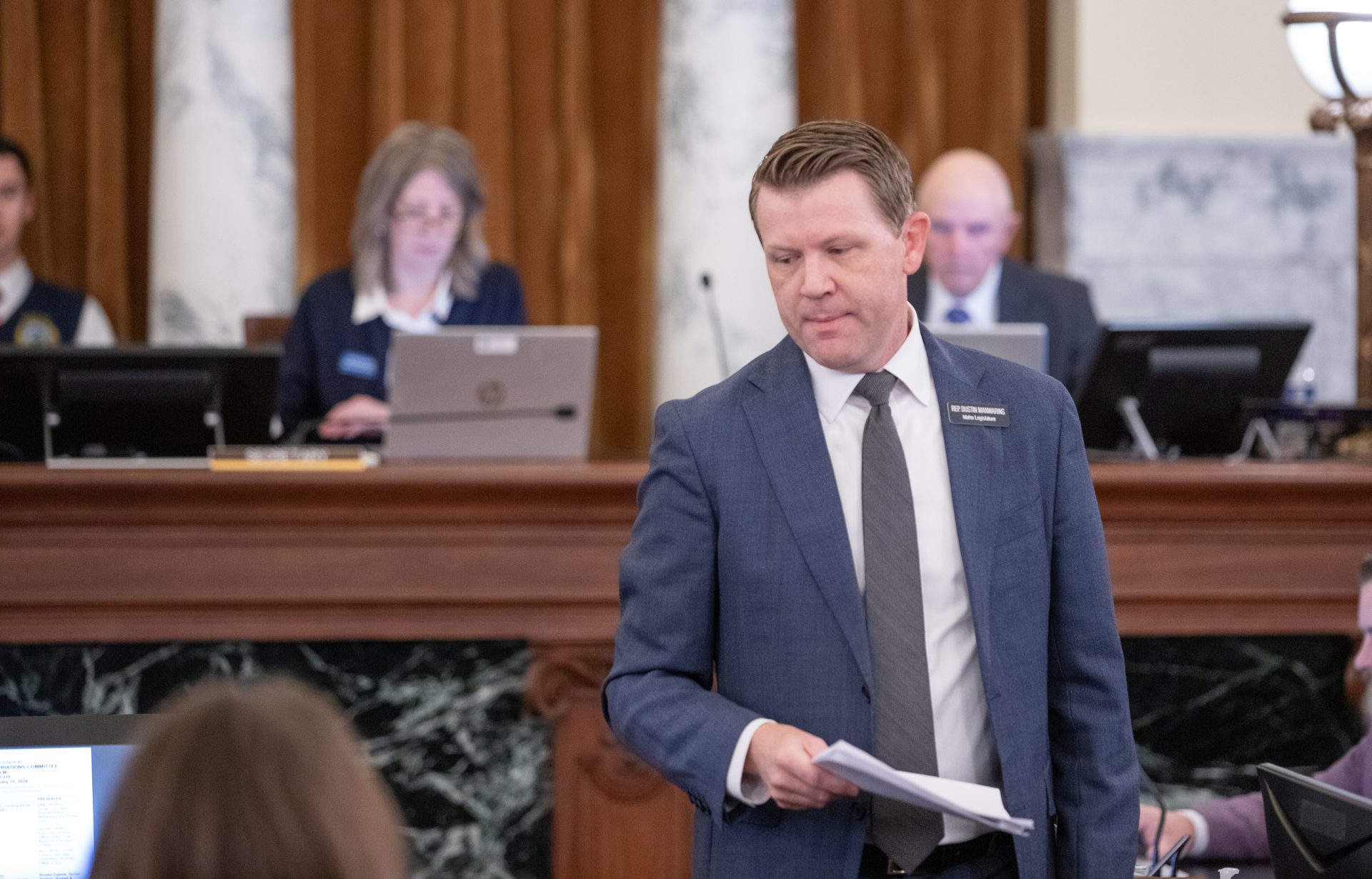
Manwaring, the co-chair of a medical education working group, walked JFAC through the group’s report to Gov. Brad Little and the Legislature. Created by the Legislature last spring, the nine-member group spent four months studying Idaho’s doctor shortage. It’s up to JFAC to take a first look at whether Idaho expands its medical programs — and take a first look at the costs.
Manwaring highlighted the needs.
Idaho ranks 50th in the nation for physicians per capita, and needs about 1,400 additional doctors to hit the national average, Manwaring reminded JFAC members. “(We’re in) crisis mode,” he said.
Help could be on the way, however. In late December, Idaho secured $930 million in federal grants for rural health care programs. The state will receive this one-time money over five years.
Manwaring said the state could tap into the money to address short- and long-term needs:
Medical school seats and a medical director. The working group recommended subsidizing additional medical school seats, allowing Idaho students to enroll at a lower price. That’s consistent with a 2025 state law, which calls for funding 30 additional medical school seats over the next three years.
But in his budget request released Monday, Gov. Brad Little recommends no additional medical school subsidies. He recommends continuing to fund 50 seats a year, costing about $10.7 million.
Manwaring said the state could use some of the federal money to bankroll one of Little’s recommendations: $960,000 for 15 additional Idaho residencies for medical school graduates.
That, in turn, would free up money for medical school seats. It would cost about $485,000 to fund five new seats at the University of Utah, and five seats at the Idaho College of Osteopathic Medicine.
The federal dollars could also free up money to hire a medical education coordinator. Staffing this office could cost about $350,000.
Manwaring said he would prefer to house the coordinator under the governor’s office. State Board of Education Executive Director Jennifer White said she would prefer the coordinator under her office to give State Board members more oversight.
“Either way, I’m all in for making this happen,” Manwaring said.
Buying ICOM? Addressing what he called “the elephant in the room,” Manwaring said the federal money could help the state acquire ICOM, a private for-profit college in Meridian affiliated with Idaho State University.
The working group did not make a recommendation on buying ICOM. The college is not on the market, but a sale could be imminent. A consulting group hired by Idaho State has recommended buying ICOM — even though the purchase price is unknown.
Two pointed exchanges punctuated Thursday’s JFAC hearing.
At one point, Sen. Kevin Cook asked why the working group isn’t pushing for additional medical school seats at WWAMI — the University of Washington-led partnership for students in Washington, Wyoming, Alaska, Montana and Idaho. Graduates at WWAMI are “head and shoulders” above their counterparts at other schools, said Cook, R-Idaho Falls.
Manwaring called that a “subjective” judgment, and he touted medical school graduates from the University of Utah, where Idaho already has a partnership.
“But frankly, that isn’t the point here,” Manwaring said. “We need to expand our options and do better.”
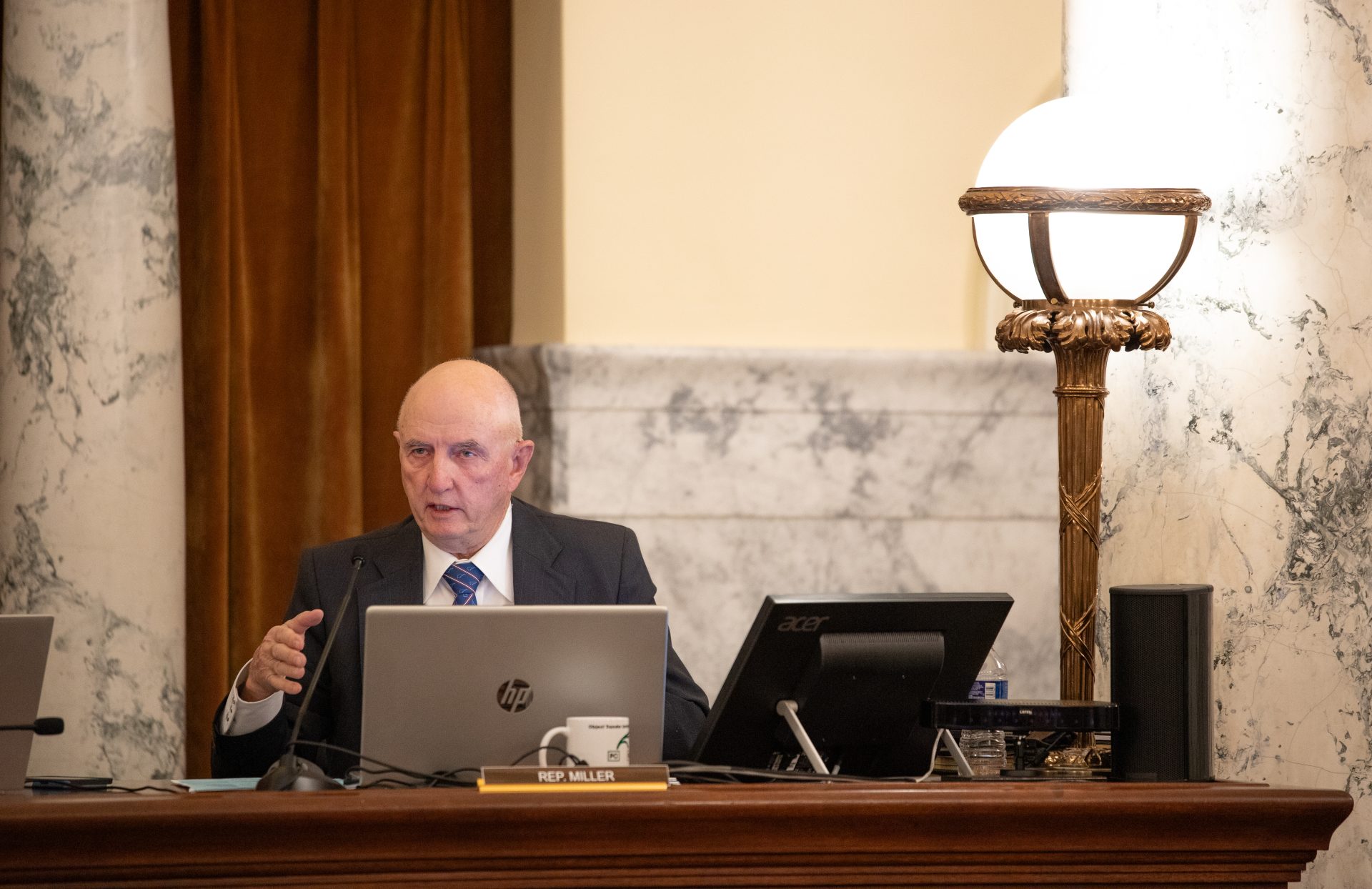
Later in the hearing, Fairfield Republican Rep. Steve Miller acknowledged the numbers behind the physicians’ shortage but questioned whether the shortage is actually affecting the general health of Idahoans.
Manwaring said the shortage is compromising access to doctors.
“I think it is affecting everyday Idahoans,” he said. “I think we are struggling.”
Revenue assessment committee sends targets to JFAC
Lawmakers are one step closer to setting revenue targets that will guide budget-setting in the coming months.
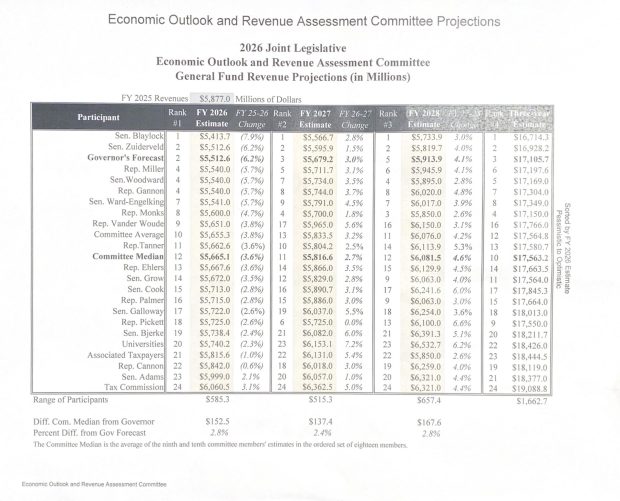
The Economic Outlook and Revenue Assessment Committee (EORAC) voted to recommend revenue targets to the Joint Finance-Appropriations Committee. The proposed targets are:
- $5.665 billion for fiscal year 2026, the current budget year.
- $5.817 billion for fiscal year 2027, next budget year.
Both targets are more than $130 million higher than forecasts from Gov. Brad Little’s office. The governor’s office projected the state will collect $5.679 billion in FY 2027, a 3% increase from the current budget year.
EORAC voted 10-8 to approve the targets. Seven House Republicans supported the successful motion from House Majority Leader Jason Monks, while six Senate Republicans opposed it. The approved targets matched the median of revenue predictions collected from all 18 committee members.
“I like the committee median, so I’m going to shoot for that particular one,” said Monks, R-Meridian.
Revenue targets are key numbers when it comes to setting budgets. They guide how much money the Legislature can spend as it considers agency requests as well as policy bills, including potential tax cuts.
The budget-setting committee has final say on the targets, however, and JFAC is scheduled to vote Friday on whether it will accept EORAC’s recommendations.
Sen. C. Scott Grow, JFAC’s co-chair, opposed the targets Monks proposed. Rep. Josh Tanner, JFAC’s other co-chair, supported them. Grow and Tanner are both Republicans from Eagle.
Grow said after Thursday’s meeting that JFAC likely will concur with EORAC’s recommendations Friday. “I felt … that we ought to be looking at something more conservative,” Grow said of his vote opposing the recommendations.
Last year’s revenue vote was divisive. JFAC members debated the FY 2026 target for months and didn’t settle on a number — $6.4 billion — until early March. By that time, the Legislature had already passed an income tax cut that reduced state revenue by $240 million.
Ultimately, lawmakers enacted tax cuts and credits altogether worth $453 million. Critics of the GOP-backed suite of tax cuts have argued that last year’s high revenue target — which created a cushion for cutting taxes — contributed to the state’s current shortfall.
EORAC members didn’t mention tax cuts Thursday. But during a Monday news conference, House Speaker Mike Moyle opened the door to another round of cuts this session.
Moyle, R-Star, said he first wants to focus on passing a bill conforming to the federal tax cuts in President Donald Trump’s One Big Beautiful Bill. Little’s office estimates that this carries a $155 million price tag. But the Tax Foundation, a Washington, D.C., think tank, pegged the cost at an estimated $284 million, and Moyle himself has estimated the cost at more than $200 million.
But once the Legislature adopts the One Big Beautiful Bill’s tax cuts, Moyle said he would want to look for state tax cuts. He did not offer details.
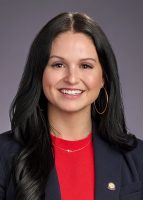
Sen. Camille Blaylock made a motion for lower revenue targets Thursday, but the committee approved Monks’ motion before voting on it. Blaylock, R-Caldwell, proposed a $5.515 billion target for FY 2026 along with $5.711 billion for FY 2027.
Blaylock said she was surprised that the committee’s projections were so much higher than the governor’s, after Little faced criticism from legislators this week for not proposing enough ongoing spending cuts in his budget.
“If we set it too high … then I assume that we’ll be upside down, like we are this year,” she said.
‘All hands on deck:’ State begins fielding tax credit applications
Families began applying for the new Idaho Parental Choice Tax Credit minutes after the application period opened at 12:01 a.m. Thursday morning, according to the State Tax Commission.
“We’re kind of all hands on deck just trying to help people through the application,” Renee Eymann, the commission’s senior public information officer, told EdNews by phone at 9:15 a.m.
By 3:15 p.m., the Tax Commission had received more than 3,300 applications.
It was a “well-planned and well-executed implementation,” Commissioner Janet Moyle said in a news release.
Staff monitored the rollout and helped parents with any “issues that arose,” according to the release.
“The website didn’t go down, but I don’t have details on the specific issues as we’re trying to help all applicants apply,” Eymann wrote in an afternoon email to EdNews.
The 2025 Legislature passed the $50 million program.
EdNews reporter Sean Dolan contributed to this report.

