
Legislative budget-writers reversed spending cuts for community colleges and career-technical programs.
They also took a step that could lead to funding additional medical school seats, in Idaho or elsewhere.
But on a split vote, they left budget cuts intact at Idaho’s four-year schools — leaving higher education on the hook for the brunt of state spending reductions.
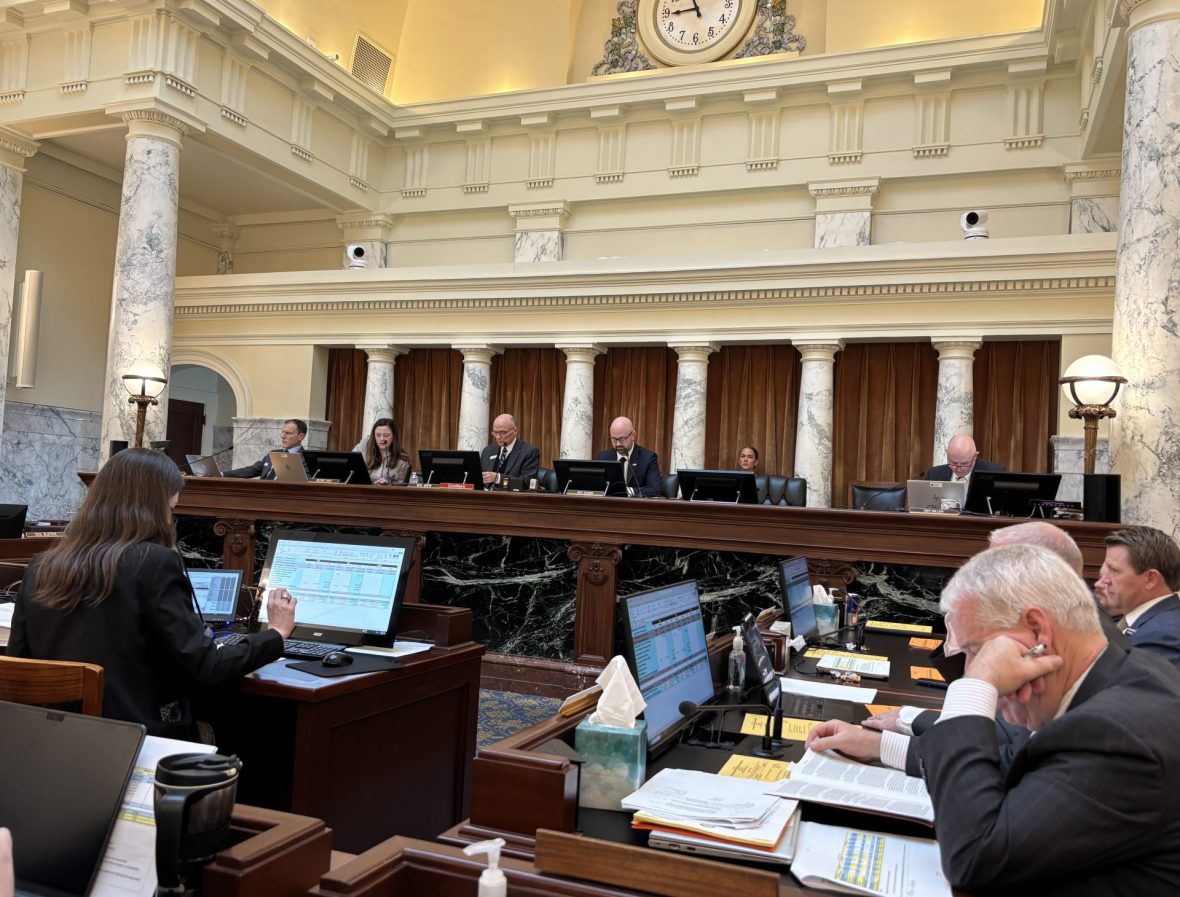
During a busy Monday morning meeting, the Joint Finance-Appropriations Committee considered a host of additions to the higher ed budgets. Here’s what passed and what failed.
Community colleges. JFAC narrowly voted to put almost $1.4 million back into the community college budgets for next year. This would reverse a community college budget cut — part of a series of JFAC-driven “maintenance” budget bills that slice an additional 2% from most state agencies.
“I think community colleges are the best dollars we spend on education,” said Rep. Steve Miller, R-Fairfield, who said the cuts could make it more difficult for the two-year schools to keep teachers who could make more money in K-12.
Sen. Glenneda Zuiderveld, R-Twin Falls, opposed this motion and most other proposed spending increases. She argued that the Constitution requires the state to fund only K-12 and the University of Idaho. (The community college increase translates to $423,800 at the Twin Falls-based College of Southern Idaho.)
The increase passed on 12-7 overall vote, over objections from hardline conservatives.
Career-technical education. JFAC folded more than $2.8 million back into CTE programs — a supplemental increase for the current budget year, and an increase for next year.
Both increases offset JFAC’s original budget cuts, a 1% cut for this year and the 2% cut for next year.
The restored money would go back into high school-level CTE programs.
However, the funding source could create a budget logjam. JFAC wants to take the money from interest on Idaho’s Career Ready Students Fund. State superintendent Debbie Critchfield wants to use interest from that fund to help pay for a $5 million program to help K-12 schools serve high-needs special education students.
The Senate passed the high-needs bill last week. If that bill becomes law — and lawmakers decide to restore CTE funding — the Legislature would need to cobble together another funding source for high-needs programs.
On Monday afternoon, Critchfield said she supports the CTE spending — but was surprised to see budget-writers tap the funding stream she wants to use for special education. Asked whether she considered the move a dealbreaker for the high-needs bill, she said, “I sure hope not.”
Medical education. JFAC signed off on one of the few growth areas in Gov. Brad Little’s budget blueprint: 15 new Idaho residencies for medical school graduates. Little proposed $900,000 for graduate medical education programs.
But Monday’s vote leaves another move on the table. The state could use some of its $930 million in federal rural health funds to cover the graduate residencies. Then the state could use the $900,000 to subsidize 10 new medical school seats, most likely at the University of Utah or the Idaho College of Osteopathic Medicine. A law passed last year calls for funding these additional medical school seats.
Sen. Kevin Cook, R-Idaho Falls, said JFAC would be straying from the purpose of the federal grants — and “shortchanging rural Idaho” — by moving the money away from small-town hospitals and into medical school seats. Cook is sponsoring a bill, awaiting a Senate vote, that would create a committee to oversee the federal grant program.
Rep. Dustin Manwaring said the fund shift would help more Idaho students go to medical school, and eventually go into practice in rural Idaho. “If we don’t have the physicians, we can’t put them anywhere,” said Manwaring, R-Pocatello, who co-chaired a state working group that studied Idaho’s medical education crisis last summer and fall.
Little did not recommend using rural grants for the residencies, “out of concern that doing so could fall outside federal guidelines,” spokeswoman Joan Vargas said Monday afternoon.
Higher education. A $7.3 million proposal for the four-year schools failed on a tie vote.
The $7.3 million would have done the same thing as the community colleges line item. It would have reversed next year’s 2% cut. As EdNews has previously reported, the four-year schools would absorb the largest share of this spending reduction, since K-12, Medicaid, prisons and the Idaho State Police are exempt from the cut.
“I’m just concerned by the level of cuts,” said Rep. James Petzke, R-Meridian, who pushed to restore funding.
Rep. Chris Bruce, R-Kuna, was among the JFAC members who raised concerns — especially because colleagues were talking about siphoning K-12 facilities money to patch the higher ed budget.
Standing outside the JFAC committee room Monday morning, a disappointed Isaac Celedon said JFAC’s decision renders a tuition increase all but inevitable. Celedon, president of the Associated Students of Boise State University, said a university committee is talking about a 6.5% increase — a proposal that would also have to go through the president’s office and the State Board of Education.
Last year, tuition increased by about 3.5% at the four-year schools.
What’s next? A host of budget bills will now have to traverse both houses:
- The funding increases approved Monday will appear in “enhancement” budget bills.
- The House and Senate will have to approve 10 “maintenance” budget bills for next year — including one for the State Board and agencies under its wing, including higher ed. Those maintenance budgets would roil this year’s spending into next year, minus the cuts proposed by Little and JFAC.
- An omnibus “rescissions act,” including the budget cuts for this year. It narrowly passed the Senate Monday, and awaits a House vote.
Senate passes 2026 budget cuts, barely
By the narrowest of margins, the Senate sliced another 1% out of most state budgets for this year.
Senate Bill 1331, the $131.3 million 2026 Idaho Rescissions Act, puts Gov. Brad Little’s midyear budget cuts into law. The bill would make $15.3 million in additional cuts — legislator-driven reductions that Little didn’t recommend.
The bill’s floor sponsor, Sen. C. Scott Grow, said the cuts are needed to give this year’s budget some added breathing room — with state tax collections coming in below forecasts, and with the state taking on an immediate but estimated $155 million revenue hit from conforming with tax cuts in President Donald Trump’s One Big Beautiful Bill.
Senate roll call
The 18-17 vote on the 2026 budget cuts:
Yes: Bjerke (Bjerke), Carlson, Den Hartog, Foreman, Galloway, Grow, Hart, Keyser, Kohl, Lakey, Lenney, Nichols, Okuniewicz, Ricks, Shippy, Toews, Zito, Zuiderveld.
No: Anthon, Bernt, Blaylock, Bruner (Adams), Burtenshaw, Cook, Guthrie, Harris, Lent, Rabe, Ruchti, Semmelroth, Taylor, VanOrden, Ward-Engleking, Wintrow, Woodward.
“This is the beginning of the process, not the end of the process,” said Grow, R-Eagle, the co-chair of the budget-writing Joint Finance-Appropriations Committee. “We’ve got a lot of work to do and a lot of budgets to get out of here.”
The Senate vote was significant — it marks the first major budget bill to pass either house this session. But it almost didn’t pass, and had to overcome bipartisan opposition.
Sen. Kevin Cook, a JFAC member, said the 50-page bill crammed together more than 100 agency cuts. “(It) looks more like a Christmas tree,” said Cook, R-Idaho Falls, who said the Legislature should take the time to make more precise cuts.
Another JFAC Republican saw it differently. “I would love to say we have all the time in the world and we can dig into each of these budgets,” said Sen. Codi Galloway of Boise.
Galloway noted that JFAC is now working on budget “enhancements” that offset some of these cuts. Several education-related enhancements passed JFAC Monday morning.
K-12 is spared from the 2026 cuts — both Little’s recommendations and the Legislature’s. The Legislature also exempted Medicaid, prisons and Idaho State Police, which means higher education would take a disproportionate share of the cuts.
With Monday’s 18-17 vote, the rescissions bill now heads to the House.
Senate rejects funding for special education service centers
Republican senators narrowly rejected a $1 million plan to set up special education support offices across the state.
State superintendent Debbie Critchfield’s proposal would have established “regional service centers,” where public schools could share hard-to-fill special education staff such as speech-language pathologists, occupational therapists and school psychologists.
Senate Bill 1317 failed on a 16-19 vote.
Opponents argued that public schools can set up the centers without the state’s help, and the bill would give too much authority to boards of directors in charge of managing the centers.
“I don’t believe that that board should have the ability to buy property or pay utilities or rent a building, and maybe even not have the ability to hire staff,” said Sen. Cindy Carlson, R-Riggins. “But my concern is that we’re spending money for something we may not need right now.”
Sen. Brian Lenney, who also opposed the bill, said public schools have “bloated administration and bureaucracies,” and SB 1317 would create a new fund that could be refilled every year. Meanwhile, the Senate earlier Monday had debated, and passed, budget cuts to other agencies, he noted.
“K-12 didn’t get any budget cuts,” said Lenney, R-Nampa. “So here we are, instead of cutting their budget, we’re just creating new funds.”
Public schools are mostly exempt from state budget cuts. But some school districts — including Lenney’s home district — are preparing to cut their budgets. The Nampa School District will have to make “significant cuts” if state funding remains flat amid increasing operating costs, the district’s spokesman told EdNews last month.
Senate roll call
The 16-19 vote on special education service centers:
Yes: Bernt, Bruner (Adams), Burtenshaw, Cook, Foreman, Guthrie, Harris, Lent, Rabe, Ruchti, Semmelroth, Taylor, VanOrden, Ward-Engelking, Wintrow, Woodward
No: Anthon, Bjerke (Bjerke), Blaylock, Carlson, Den Hartog, Galloway, Grow, Hart, Keyser, Kohl, Lakey, Lenney, Nichols, Okuniewicz, Ricks, Shippy, Toews, Zito, Zuiderveld
Public schools also face an estimated $100 million gap between what they spend on special education and what they receive from state and federal governments.
Critchfield, a Republican, initially planned to propose a $50 million special education block grant program this legislative session, but she paused the request amid the state’s revenue shortfall. Instead, she proposed the $1 million service centers along with a $5 million fund for high-needs students, which cleared the Senate last week.
Both proposals were budget-neutral, relying on fund shifts from existing state appropriations. One-time startup costs to staff the service centers would have been funded from a driver’s education account. Future costs would have been covered by school districts that used the service centers.
Supporters said the centers would help rural school districts that compete for a limited pool of qualified special education professionals.
“It’s resourceful, it’s working together, and it’s driving local control,” said Sen. Dave Lent, R-Idaho Falls, chairman of the Senate Education Committee. “Our school systems need to be more locally controlled, and this is really pointing in that direction.”
New bill would block schools from accessing state vaccine registry
On the 50th day of the legislative session, lawmakers introduced a handful of new bills affecting schools, colleges and universities.
One bill would require that parents opt in their children to the Department of Health and Welfare’s voluntary immunization registry. It would also block schools and daycares from obtaining vaccination records from the database. Only parents, health districts and health care providers could access the data, according to the bill from Rep. Rob Beiswenger, R-Horseshoe Bend.
“It is a privacy violation for an individual’s confidential medical records to be retained by the state without their knowledge and consent,” says the bill’s statement of purpose.
The bill also changes references to vaccines in state law to clarify that immunization is “voluntary” rather than “not mandatory.” And it would allow parents to collect attorney fees from a legal action that found a government entity vaccinated a child without parental consent.
The House Health and Welfare Committee introduced the bill.
Also Monday, the Senate State Affairs introduced bills related to:
- Foreign athletes. Sen. Doug Okuniewicz, R-Hayden, introduced a new version of his proposal restricting the number of non-citizen athletes on college and university sports teams. A maximum of 10% of athletic scholarships could be granted to non-citizens, and at least half of each team would have to be represented by U.S. citizens.
- The career ladder. Senate Assistant Majority Leader Mark Harris, R-Soda Springs, introduced a bill that would count years of administrative experience toward placement on the career ladder for administrators who return to teaching.
House approves four education-related bills
Moving quickly through its calendar Monday, the House passed four education-related bills.
Each bill now heads to the Senate.
Military charter admissions. House Bill 762 would give military families an edge on charter school waitlists.
Military families, who are required to move often, end up on the bottom of waitlists for in-demand charter schools, said sponsoring Rep. David Leavitt, R-Twin Falls. “A lot of those lists last for a couple of years.”
The legislation, from the Idaho Charter School Network, would allow charter schools to put children of active- or reserve-duty military members third on the list of students that can be given priority on waitlists.
The bill had a contentious hearing in the House Education Committee last week. The Mountain Home School District’s superintendent said it’s aimed at creating a “military charter school” that would draw students away from the traditional school district there.
The House passed the bill 62-4.
Administrator alternate pathways. House Bill 711 would loosen credentialing requirements for public school principals and superintendents easily cleared the House.
The proposal would create two “nontraditional pathways” for non-certified applicants to become public school superintendents and principals:
- The “grow your own” pathway is designed for educators who have at least five years of experience but require leadership development.
- The “executive leadership” pathway would allow military leaders, private sector executives, nonprofit leaders and government officials without education experience to become administrators.
“We already do this in every charter school,” said sponsoring Rep. Dale Hawkins. “I’m always hearing how the schools would like the flexibility the charter schools have. Well, here’s a piece of it.”
The House voted, 59-9, to approve the bill, which now heads to the Senate.
Library directors hiring/firing. House Bill 715 would give city councils authority to hire and fire directors of city-owned libraries.
Currently, library boards oversee the hiring and firing of library directors. The bill would require city council approval for these decisions.
“I look at this as no different than when the city hires a fire chief, police chief,” said sponsoring Rep. Jeff Cornilles, R-Nampa.
The bill passed along party lines.
Civics seal. House Bill 712 would create a diploma endorsement recognizing achievement in civics is heading to the full House.
The bill would create a “State Seal of Excellence in Civics.” Students would qualify by obtaining a 3.25 grade point average or higher in social studies courses and by scoring 90% or higher on the state’s civics assessment. They would also have to complete a civics research project and participate in volunteering.
It unanimously passed the House.
Residency program for veterinary grads heads to Senate
A bill headed to the Senate floor would require graduates from Idaho’s veterinary program to work in the state after graduation.
Senate Bill 1335 creates a four-year work requirement, and graduates would also have to spend at least 600 hours a year working on agricultural animals.
SB 1335 would take a step toward addressing Idaho’s veterinarian shortage, said Sen. Tammy Nichols, R-Middleton, one of the bill’s sponsors. It would also protect Idaho’s taxpayer investment in veterinary training.
Idaho does not have a veterinary school. Instead, Idaho subsidizes veterinary seats through Washington State University at a cost of $2.9 million a year.
Idaho has a similar residency requirement for its medical school partnership with the University of Washington, and SB 1335 builds on that language in state code.
The Senate Education Committee approved SB 1335. A Senate vote could occur in the next few days.

