
Gov. Brad Little has signed $131.3 million of spending cuts into law — including cuts he didn’t ask for.
Known as the 2026 Idaho Rescissions Act, Senate Bill 1331 includes the 3% cuts Little already made to this year’s budget — cuts affecting every state agency but sparing K-12. The Legislature then imposed an additional 1% cut, affecting most state agencies, but again leaving K-12 out of the equation. These additional cuts total about $14.5 million.
Because of the exceptions carved out by Little and legislators, higher education will take a disproportionately large share of the cut.
SB 1331 effectively closes the books on this spending year, which ends June 30. But another round of budget cuts are looming for next year — a 3% reduction recommended by Little and an additional 2% sought by legislative leaders.
Little signed SB 1331 into law late Monday afternoon, but his office didn’t announce the decision until midday Tuesday.
“Idahoans expect their state government to operate efficiently and effectively, and the balanced budget we approved for the current fiscal year delivers on both fronts,” Little said in a statement released to reporters Tuesday.

In the statement, Little’s office said legislative budget-writers heeded his request to restore funding “in other key areas.” One such area is career-technical education funding, especially in rural Idaho. The Joint Finance-Appropriations Committee has recommended additional CTE funding, including $957,000 for this year.
A debate over spending cuts and tax cuts has dominated the 2026 legislative session, pitting the governor against GOP legislative leaders.
Little and his staff have defended his budget proposal, saying it balances the ledger for 2026 and 2027 without the need for deeper spending reductions.
Legislative leaders have sought deeper cuts — partly to fund an immediate, $155 million round of tax cuts from President Donald Trump’s One Big Beautiful Bill. Those tax cuts are now in effect. After proposing to delay the cuts until July 1, Little signed a bill to put the tax cuts on the books immediately.
While the bill to adopt the tax cuts passed the Legislature with a veto-proof two-thirds supermajority, SB 1331 had considerably less support. It passed the House 48-22 but squeaked by the Senate on a 18-17 vote, well below the threshold needed to override a veto.
As news of Little’s signature made the rounds at the Statehouse Tuesday, Democrats were quick to criticize his decision.
“This is not a governor making a hard choice,” said House Minority Leader Ilana Rubel, D-Boise. “This is a governor refusing to make the right choice.”
New bill seeks to cut IDLA funding in half
With the 2026 session possibly headed into its waning weeks, a House committee introduced a bill that would cut Idaho Digital Learning Alliance funding in half.
Several IDLA bills have been circulating around the Statehouse this session — with lawmakers and Gov. Brad Little looking for ways to reset policy and cut funding to the statewide online K-12 platform. Little proposed cutting $10 million from IDLA’s $26 million budget. One bill, killed in committee, would have closed IDLA entirely.
Presented by Rep. Douglas Pickett, R-Oakley, the new bill would cut $13 million from IDLA. It’s a smaller hit than a $16 million funding cut Pickett co-sponsored two weeks ago.
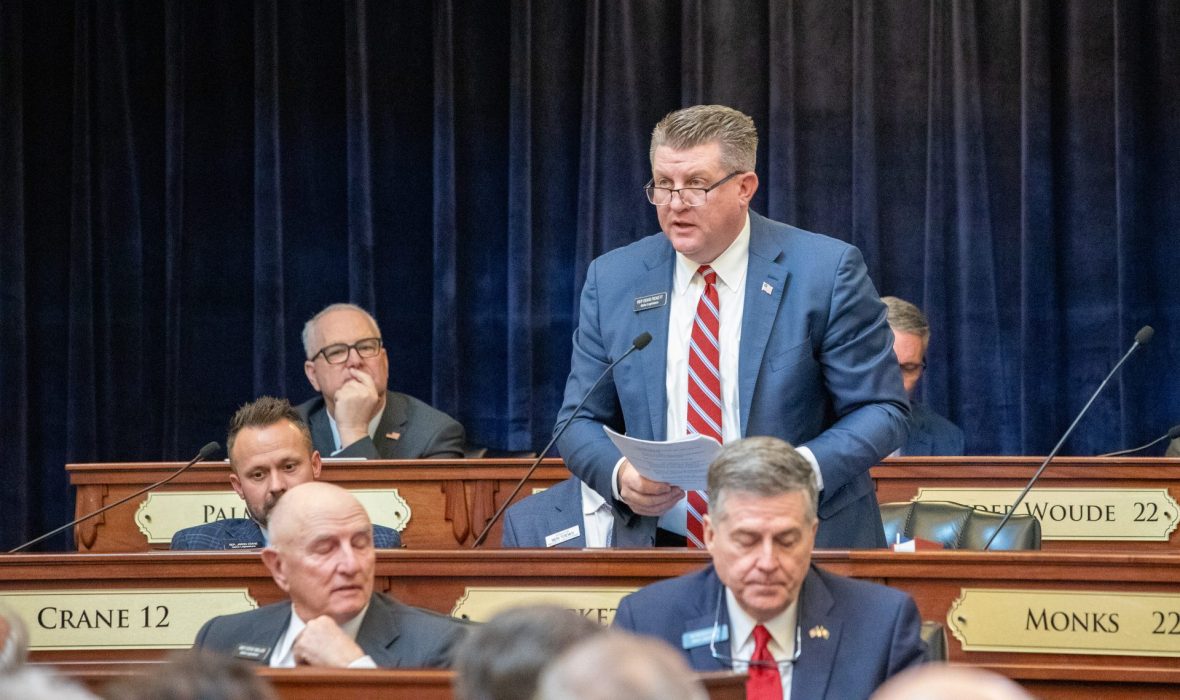
But the new bill makes several big changes to IDLA.
It would eliminate “Launchpad,” a hybrid reading class for kindergarten through fifth grade, and shut down the IDLA driver’s education program. Students who attend virtual schools would be forbidden from taking IDLA classes. The bill also seeks to eliminate $3.6 million in “double dipping,” which allows IDLA and brick-and-mortar schools to collect state funding for the same student.
Rep. Monica Church, a teacher and Boise Democrat, sought to kill the bill.
“IDLA is an essential service,” Church said. “It has become the lifeblood of our schools, especially in rural areas. … We should have a ticker-tape parade for IDLA in Idaho.”
Pickett agreed IDLA provides an essential service, and said his bill is designed to make the program sustainable.
The House Ways and Means Committee introduced the bill on a party-line vote, paving the way for a full hearing at a later date.
In an early morning meeting, Ways and Means printed a potpourri of nine new bills Tuesday — the 65th day of the session.
The Ways and Means docket included two other reworked education-related bills.
Mandatory recess. This proposal would mandate at least 20 minutes of recess in kindergarten through fifth grade, and encourage “daily unstructured activity breaks” in sixth through eighth grade.
The new bill would allow a teacher to withhold recess for disciplinary reasons. However, a teacher could not withhold recess for an entire class.
A similar bill died on the House floor last week, with opponents saying teachers should have more latitude to discipline students. The bill’s sponsor, Rep. Jordan Redman, R-Coeur d’Alene, said he worked on the rewrite with state superintendent Debbie Critchfield and with Rep. Soñia Galaviz, a school teacher and Boise Democrat who opposed the bill on the House floor.
Rural health transformation. This bill would create a nine-member committee to oversee the way Idaho spends $930 million in rural healthcare transformation grants, money that could be used to address medical education in Idaho.
The new bill sets a Sept. 30 deadline for coming up with “scoring rubrics” for grant applications. The original deadline was March 15 — which came and went Sunday, with no law in place.
These two bills go directly to the House floor.
Panel kills bill to allow universities to seek hotel tax revenues
The House’s tax committee killed a bill that would have allowed universities to seek a share of money from hotel stays.
House Bill 861 would have addressed the $22 million in hotel bed taxes collected each year. The state Department of Commerce receives this money — and close to half of it now goes to chambers of commerce and other groups promoting travel and tourism. The bill would have allowed colleges and universities to compete for these grants.
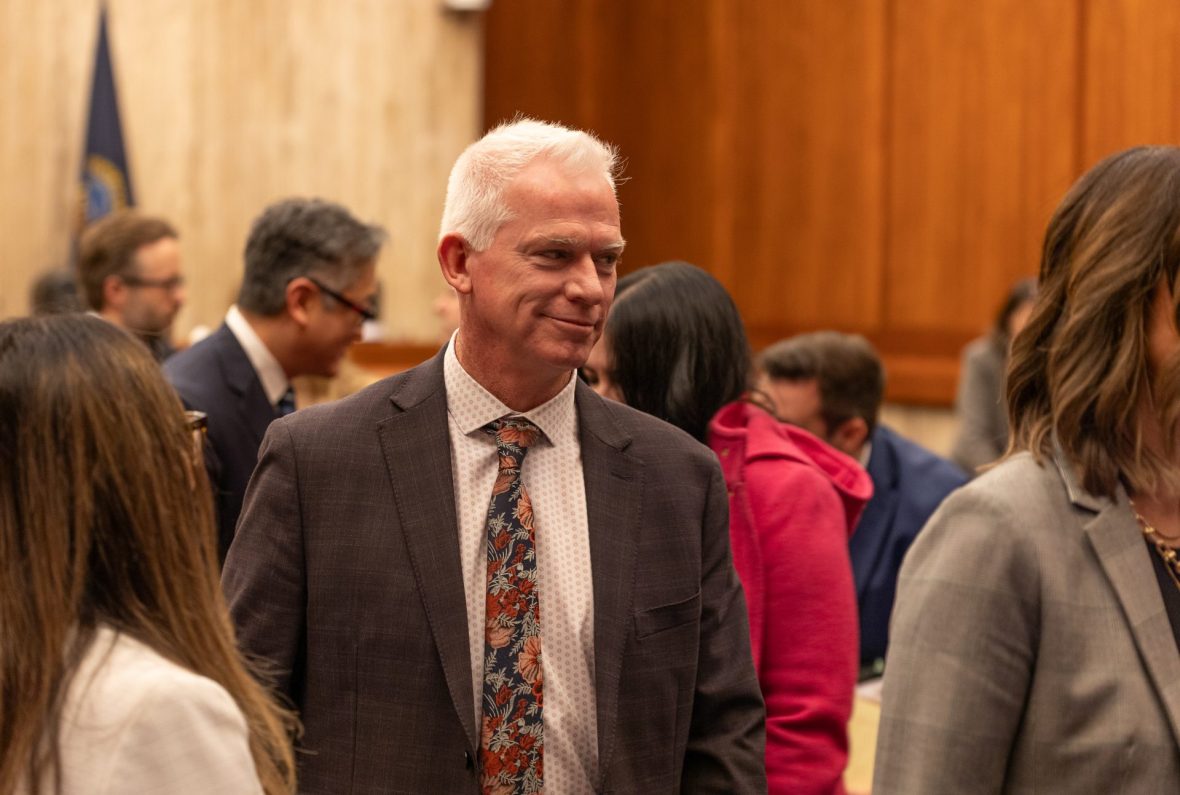
The bill’s sponsor said he was looking for a way to help Boise State University. The entire higher ed system is facing a 4% budget cut this year and a 5% cut next year — and zeroing out a line item tied to enrollment will cost fast-growing Boise State an additional $4.5 million.
“They’ve always been behind the curve when you look at funding per student,” House Majority Leader Jason Monks, R-Meridian, told the House Revenue and Taxation Committee.
Opponents said the hotel tax-funded grants are a key funding source to promote Idaho tourism. “We don’t think it’s an appropriate vehicle to transfer funds to higher education,” said Jack Hurty of the Idaho Outfitters and Guides Association.
And in a rare setback for a member of legislative leadership, lawmakers raised similar concerns. “I hate to not support the bill, but I can’t,” said Rep. Rick Cheatum, R-Pocatello.
The bill died on a voice vote — before supporters made an unsuccessful appeal for a roll call.
Bill giving public schools spending flexibility heads to full House
A bill that would give public schools with strong academic achievement more flexibility to spend state funding is going to the full House.
The House Education Committee on Tuesday unanimously voted to approve House Bill 883. The Idaho Charter School Network’s proposal would give public school districts and public charter schools “earned autonomy” over state funding, if they meet certain academic benchmarks.
An earlier version of the bill only applied to charter schools. The current version applies to districts as well, but they must meet more stringent academic standards. And it doesn’t apply to virtual charters.
The requirements would give traditional districts “an opportunity to reach a high bar, and that might be relevant to them,” said sponsoring Rep. Douglas Pickett, R-Oakley. “Whereas, to reach a bar for the public charter school, it may not look that same way.”
Emily McClure, a lobbyist for the Charter School Network, estimated that between seven and 10 districts would qualify compared to 15 charters. Idaho has 115 school districts and 76 charter schools.
Rep. Clay Handy said he was “excited” by the proposal. “I hope that we start thinking outside the box in public education and in all our education modes,” said Handy, R-Burley.
Kathryn French, of American Classical Schools of Idaho, also spoke in favor of HB 883. “This bill will allow leaders at high-performing charter schools to dedicate funds to the best place possible,” French said. “The current system is often overly prescriptive.”
How autonomy would be earned
Districts could have flexibility to spend state discretionary and categorical funds along with salary apportionment if they meet the following benchmarks:
- A composite proficiency rate on the Idaho Standards Achievement Test (ISAT) in the top 20% of districts statewide or proficiency rates in math and English language arts 15 percentage points higher than the statewide average
- A proficiency rate of 75% or higher on the spring Idaho Reading Indicator (IRI) or a 15% reduction in students scoring below proficient on the IRI
- A graduation rate three percentage points higher than the statewide average or the percentage of graduates who achieve a postsecondary degree or certificate is five percentage points higher than the statewide average
Charter schools would have to meet fewer benchmarks to qualify for earned autonomy. Charters would have to:
- Be in good academic, operational and financial standing, according to their authorizer.
- Post annual audits without “significant findings” or “going concern” disclosures.
- Demonstrate “evidence of strong academic results,” including “above-state average growth or proficiency” on the ISAT. This requirement would not apply to charters with 100% at-risk students.
Committee advances memorial calling on Congress to fund undocumented students
A memorial calling on Congress to pay Idaho’s costs to educate undocumented students easily cleared the House Education Committee on Tuesday — after a lengthy debate.
The committee voted 10-3 to advance House Joint Memorial 20.
Rep. Steve Tanner’s proposal argues that the federal government, through the U.S. Supreme Court’s 1982 decision in Plyler v. Doe, required that public schools educate all students regardless of their immigration status. But state and local governments bear the brunt of the costs to educate undocumented students.
“Without federal assistance, the Plyler decision is effectively an unfunded mandate,” said Tanner, R-Nampa.
Rep. Clint Hostetler, who supported the memorial, and Rep. Chris Mathias, who opposed it, debated it in the committee room Tuesday.
Hostetler, R-Twin Falls, said “law-abiding” Idahoans are “footing the bill” for educating undocumented students, and the memorial calls on the federal government to “come good on what they’ve put us into.”


“We are at the point where we are now left with our hands tied, and all we can do in many situations and scenarios, is to make a statement, hoping that we can force the levers of change one way or another,” he said.
Mathias, D-Boise, said Congress didn’t impose this requirement. It came from the Supreme Court arbitrating “fundamental rights.” While providing these rights “does come with some cost,” Mathias said he doesn’t believe his hands are tied.
“I feel like many people would like to use those hands to deny children an education and get Plyler v. Doe repealed,” he said. “I’m not interested in doing any of that.”
Rep. Jack Nelsen joined the panel’s two Democrats in opposition to the memorial. Nelsen, R-Jerome, said federal immigration policy has been “broken” for decades. But the memorial “simply ignores the other side of it,” he said. “The people in this country without documentation are paying taxes.”
‘Constitutional necessity:’ Committee calls for closing U.S. Department of Education
A nonbinding memorial — urging the feds to mothball the U.S. Department of Education — will go to the House floor for the vote.
House Joint Memorial 19 has no force of law, and is essentially a letter to Congress. But it is a pointedly worded letter. “The elimination of the U.S. Department of Education is not only a constitutional necessity, but will also cause taxpayer dollars to be spent more efficiently and lead to better student outcomes,” the memorial reads, in part.
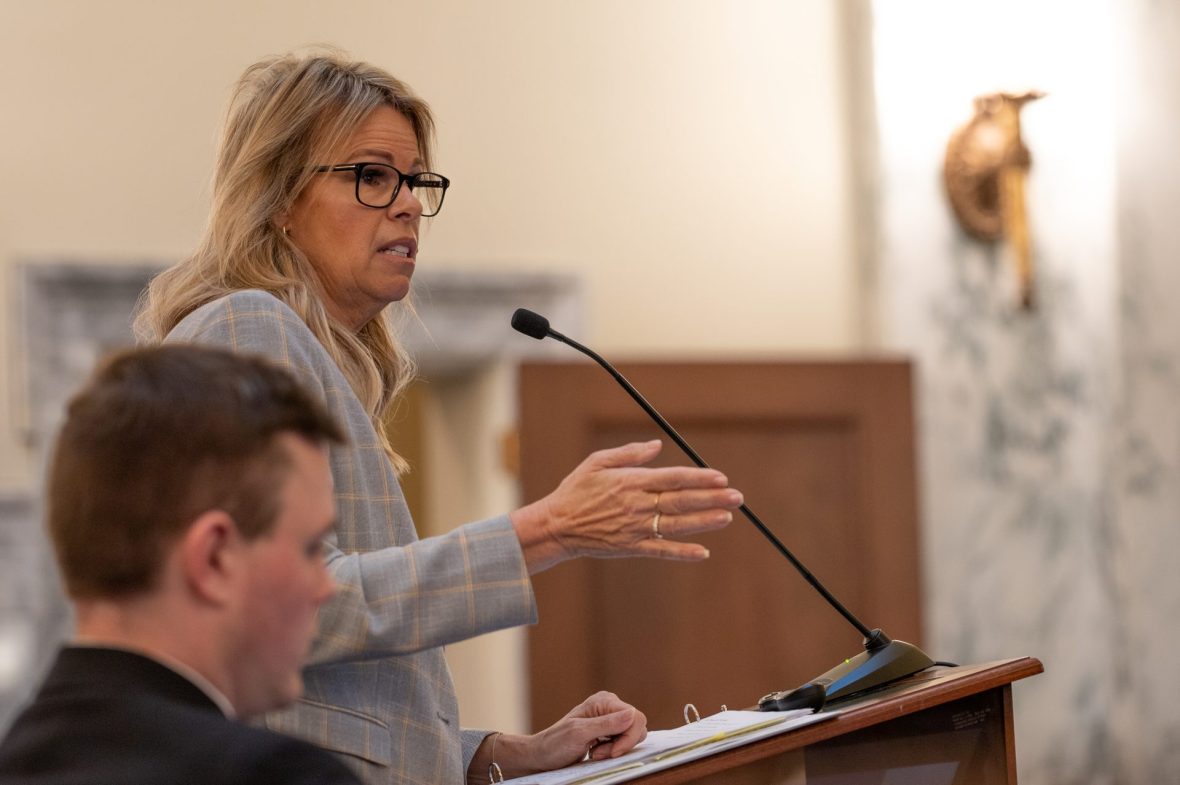
State superintendent Debbie Critchfield spoke at length on the memorial — and asserted that education decisions should be made by parents first, and local and state agencies next.
“The federal government should be the very last place we should be looking for answers,” Critchfield told the House State Affairs Committee.
Eliminating the U.S. Department of Education would reduce bureaucracy, and Critchfield said she believes her department would be able to do the same work with existing staff. Critchfield said she expects no “disruption” in federal education funding, but streamlining at the federal level wouldn’t necessarily free up money to address Idaho’s $100 million special education shortfall.
“(There are) no promises on the funding,” Critchfield said.
House State Affairs unanimously supported the memorial, sending it to the full House.
Committee OKs career ladder, Anser bus funding bills
Two House-passed education bills quickly made it through a Senate committee Tuesday.
Career ladder. House Bill 849 is designed to help career-technical educators and pupil service staffers qualify for pay raises.
CTE instructors are placed on the teacher salary “career ladder” based on experience, but can be stuck on the ladder for four years or more. This bill would allow these teachers to move on the career ladder after one year, if they receive an evaluation of proficient or better.
Newly hired pupil service staffers — such as school psychologists, therapists, counselors and nurses — would be placed on the career ladder based on professional experience.
Anser bus funding. House Bill 815 would provide $40,000 in transportation funding for Anser Charter School in Garden City. Due to a funding loophole, Anser has not received its full share of bus funding.
Both House-passed bills now head to the Senate floor.

