
A proposed 39% budget cut would force the Idaho Digital Learning Academy to eliminate course offerings, including an early reading program catering to rural schools, the program’s administrator says.
Jeff Simmons fielded an hour of tough questions about funding and rural outreach Wednesday morning, as the House Education Committee took up IDLA. The statewide online education platform is under a microscope this session; Gov. Brad Little has proposed a $10 million budget cut this year, one of two cuts targeting online programs.
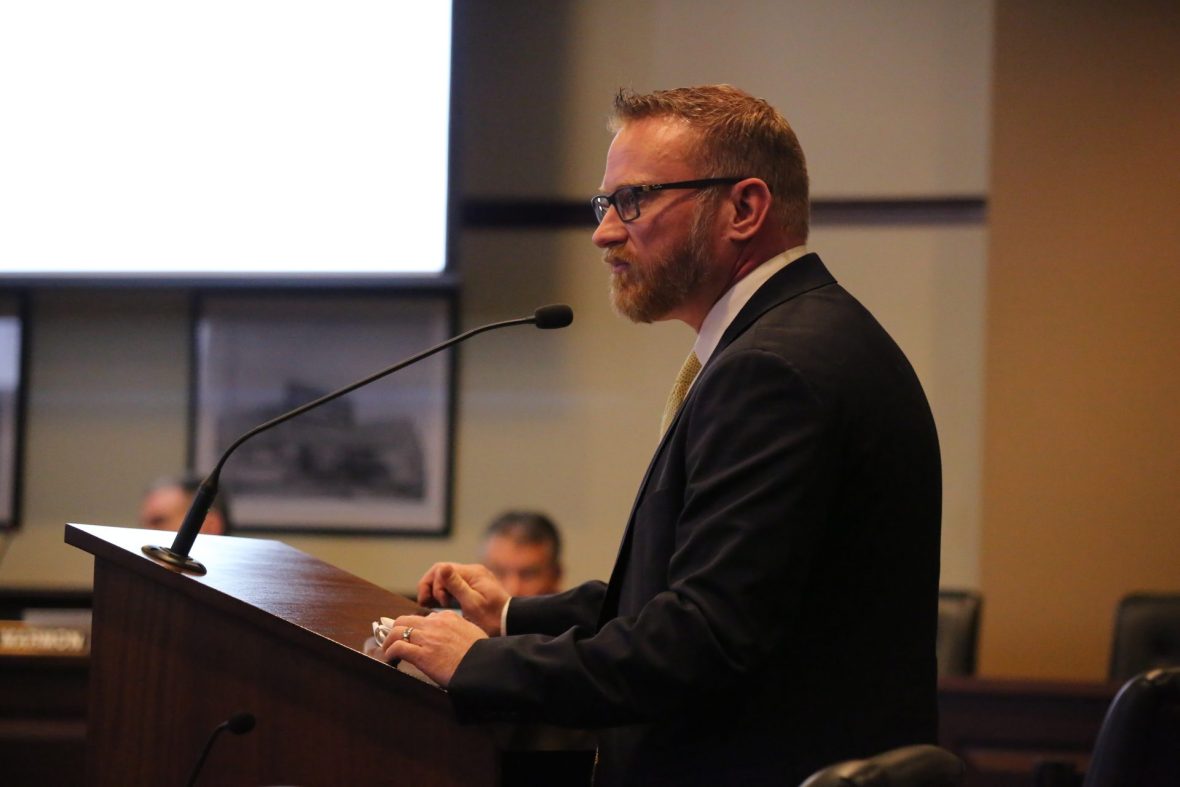
“It’s just a really deep cut,” Simmons said of Little’s proposal. “We are trying to protect rural schools … (but) there will be an impact on rural schools.”
One IDLA program that could land on the chopping block is Elementary Launchpad, a virtual, live reading course for kindergartners through fifth-graders. About 2,700 students are in Launchpad, and Simmons said it supplements rural reading programs. While rural schools receive a share of Idaho’s $72 million literacy budget, their portion of funding doesn’t always cover hiring a reading specialist or a teaching aide, Simmons said.
Several committee members were skeptical.
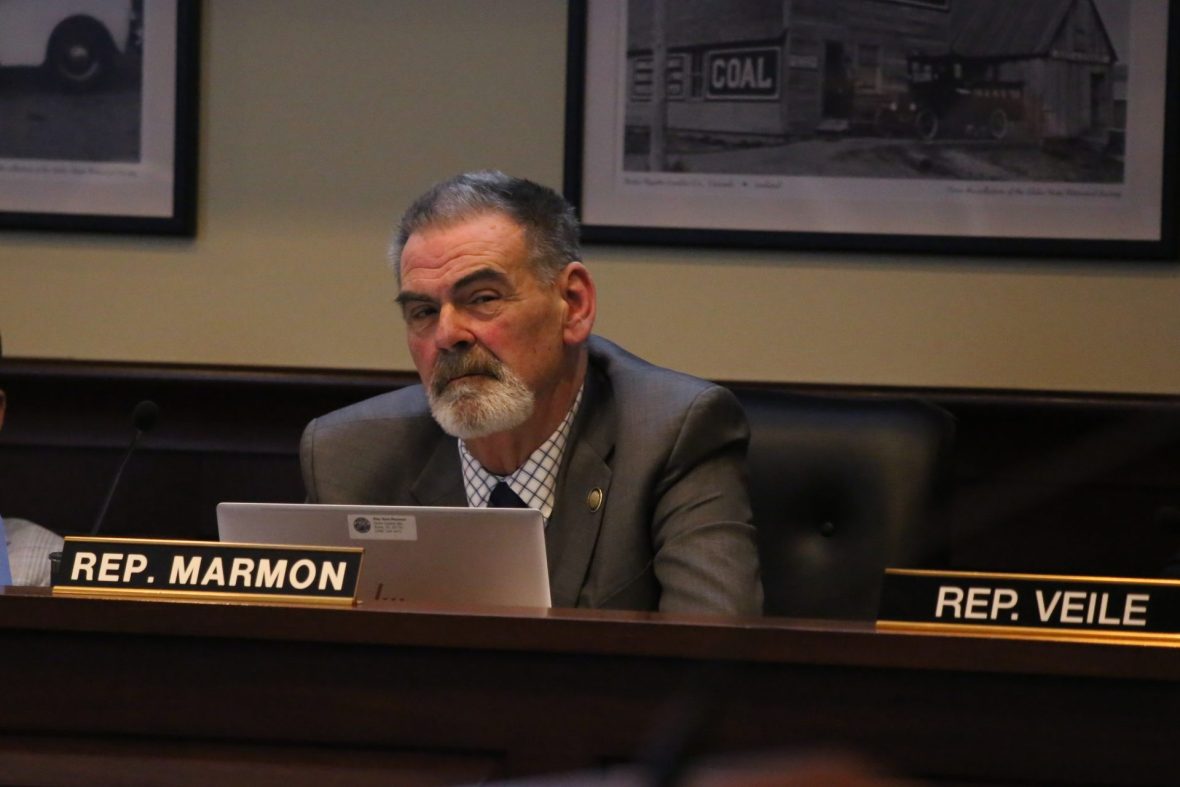
Rep. Kent Marmon repeated a recurring criticism of IDLA: double funding. The online school receives money for the courses it offers — but that same student can also generate funding for a local school district or charter.
“Why are we paying twice for the same student?” asked Marmon, R-Caldwell.
Simmons defended the funding model. If rural schools lost funding when a student attends IDLA, local leaders wouldn’t be inclined to use the program. And it would be “incredibly more expensive” for rural schools to duplicate the wide variety of courses IDLA offers, Simmons said.
Little’s proposal — which would cut IDLA’s budget from $25.8 million to $15.8 million — is designed to eliminate the double funding.
Committee members also said they were worried that an IDLA budget cut would adversely affect rural schools, as opposed to urban schools.
“The fat cow always gets to the trough first,” said Rep. Douglas Pickett, R-Oakley.
Simmons said he shares that concern. But he also pointed out that IDLA courses are available to all students, wherever they live — and said urban enrollment often helps provide the critical mass that makes an IDLA program viable.
One in five students in rural districts uses IDLA compared to one in nine students from urban districts, according to a report the agency submitted to the Legislature last year.
Lawmakers heard an IDLA testimonial from one rural administrator: Cambridge district Superintendent Anthony Butler.
IDLA serves a variety of roles for Cambridge’s 150 students. Its dual-credit offerings could allow one student to graduate high school with an associate’s degree, for the first time in district history. IDLA’s remedial classes help students make up missing credits, giving them a pathway to stay in high school. And the IDLA portfolio offers classes that wouldn’t otherwise be available in a small district.
Taught largely by part-time teachers — including retirees, or educators who also teach in brick-and-mortar schools — IDLA’s course offerings have surged in popularity.
IDLA “enrollments,” which equates to a student taking a class, could reach an estimated 58,000 this year. Eight years ago, IDLA logged about 31,000 enrollments.
IDLA receives most of its money based on these enrollments, at $445 apiece. The growth of IDLA’s budget, a 158% spike since 2019, reflects enrollment, Simmons said.
“As those state needs have increased,” he said, “the demand on IDLA has increased.”
At least one committee member was unconvinced.
“I’m not sure that’s how we’re reading it,” said Rep. Barbara Ehardt, R-Idaho Falls.
During a similar presentation to the Senate Education Committee in the afternoon, Sen. Cindy Carlson, R-Riggins, asked Simmons whether IDLA complies with the state’s anti-diversity, equity and inclusion law.
IDLA follows state laws regulating classroom content because its digital courses are offered by public schools, Simmons responded. “What we offer has to meet the same standard as what is at the school.”
Virtual schools makeover bill debuts
A House committee quickly introduced what could be one of the session’s biggest education policy bills: a virtual schools makeover bill.
House Bill 588 is “the culmination of a broad effort” to address the growing virtual schools sector, said Rep. Douglas Pickett, R-Oakley, a co-sponsor. The Legislature’s research arm, the Office of Performance Evaluations, released a critical report in December, scrutinizing spending and student performance at the Idaho Home Learning Academy, the state’s largest virtual school. Since then, IHLA officials have been working with lawmakers on a policy bill.
The nine-page bill addresses several concerns raised in December’s IHLA report.
- It would restrict the use of “supplemental learning funds,” the payments some virtual schools provide to parents to cover at-home education costs. The state report revealed that some IHLA parents misused the taxpayer funds, covering personal items such as water park passes and paddleboards.
- It would require the virtual schools’ private vendors – known as education service providers – to disclose the services they provide, and their costs, in writing.
- All virtual school teachers would need to have a state certificate.
- All virtual school curricular programs would have to align with state content standards.
Reps. Clay Handy, R-Burley, and Soñia Galaviz, D-Boise, are co-sponsoring the bill.
The House Education Committee voted unanimously to print the bill Wednesday, setting the stage for a full hearing at a later date.
The policy bill comes as Gov. Brad Little is proposing a $23 million virtual schools budget cut. Little’s budget would eliminate the supplemental learning funds — which total $20 million, across the state’s virtual schools.
LC State name change heads to full Senate
Lewis-Clark State College is a step closer to becoming Lewis-Clark State University.
The Senate Education Committee unanimously voted Wednesday to approve a bill making the name change.
President Cynthia Pemberton told the committee that potential students often overlook LC State because they assume it’s a two-year school. But the Lewiston-based institution offers both associate’s and bachelor’s degrees along with a handful of graduate programs, including nursing.
“It’s a name that gets in the way of understanding who we are,” Pemberton said.
The committee quickly approved Senate Bill 1234, which now goes to the full Senate.
Sen. Kevin Cook likened the proposal to his alma mater, Weber State University in Ogden, Utah. Cook, R-Idaho Falls, said the school’s name changed from Weber State College the same year that he and his wife graduated.
“We just thought that our investment was tripled, because we were graduating from a university,” he said.
Bullying reporting bill clears House
A bill requiring public schools to notify parents of “serious” bullying incidents easily cleared the House.
House Bill 515 would direct public school districts and charter schools to notify parents whose children are involved in bullying incidents that result in suspensions. Both the aggressor’s and the victim’s parents would have to be notified.
“When a serious bullying incident has occurred, it’s the right time, it’s the perfect time for the families involved to take appropriate steps to address that situation,” said sponsoring Rep. Chris Mathias, D-Boise.

The House unanimously voted to approve the bill Wednesday. A similar bill cleared the House last year, but the Senate rejected it.
Rep. Brent Crane supported the new bill. But the Nampa Republican said he hopes that the reporting requirements will also apply to private schools in the future. Crane referred to a “very serious situation” that recently occurred at a Nampa private school.
“Every life matters, and every kid matters, whether they are in public school or whether they are in private school,” he said.
HB 515 now goes to the Senate.

