
Republican lawmakers Thursday advanced a proposal that would remove the compulsory education provision in the Idaho Constitution and replace it with parental rights language.
House Joint Resolution 9 proposes a constitutional amendment, which requires support from two-thirds of the House and Senate before it goes to voters. An identical resolution last year fell one vote short of the required supermajority in the House.
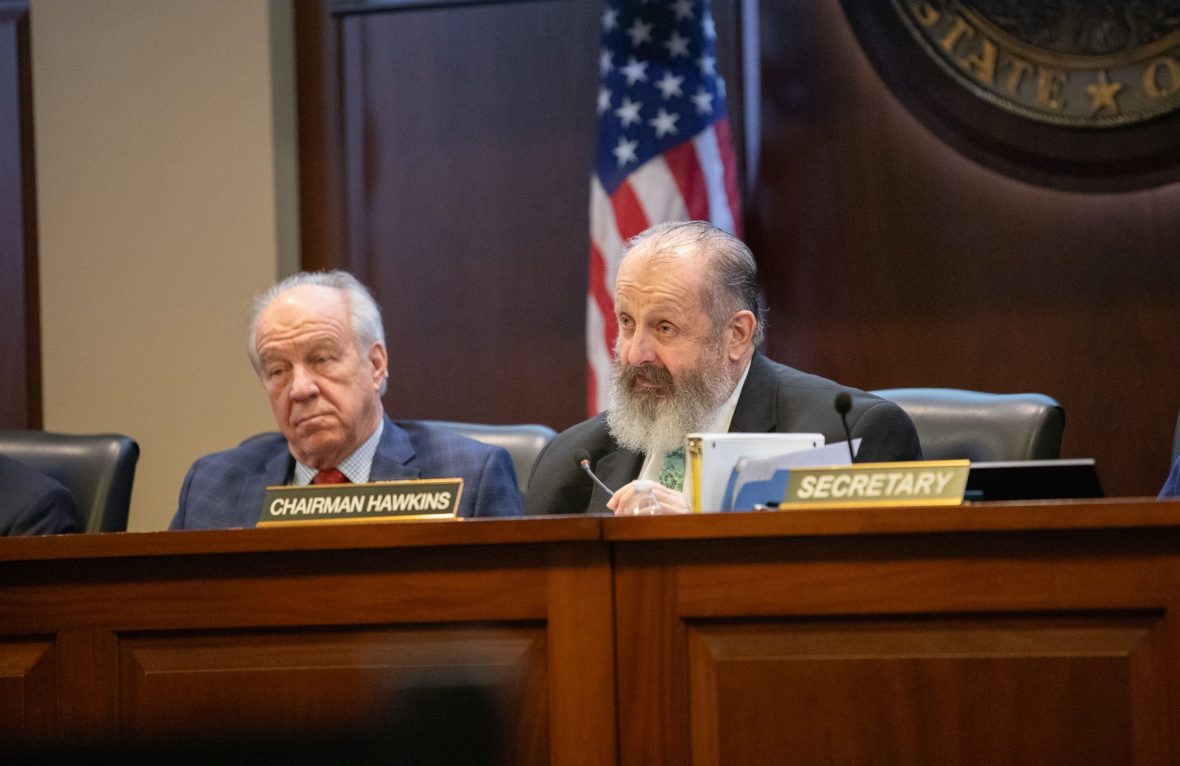
Rep. Dale Hawkins’ resolution would eliminate the constitutional provision that allows the state to require public school attendance, unless students are “educated by other means.” The new provision would say: “The right of the people to educate their children without government regulation outside of the public schools of the state shall not be infringed.”
“This does not give the right of any parent not to educate their child,” Hawkins, R-Fernwood, told the House State Affairs Committee. “That, we have in state code.”
Committee members, in a voice vote, advanced the resolution to the full House. Two Boise Democrats, Reps. Monica Church and Annie Henderson Haws, opposed it along with Rep. Stephanie Mickelsen, R-Idaho Falls.
Church said she wouldn’t oppose asking voters to consider removing the compulsory education language. “It is antiquated,” she said. But the state could “get into all sorts of issues with that additional language about government regulation.”
Rep. Erin Bingham, R-Idaho Falls, asked Hawkins whether the new language would “disallow” regulation of taxpayer funding outside of the public school system. The Parental Choice Tax Credit offers nonpublic school students state funding as long as they’re learning math, science, social studies and English.
Hawkins said he didn’t know how the change would affect these regulations. “That would be a question for an attorney.”
Former Sen. Scott Herndon, a Republican from Sagle who first pushed for a parental rights amendment, told EdNews last year that the language wouldn’t exempt nonpublic school students from requirements tied to public funds. It would shield from regulation parents who aren’t “partaking of any government program,” he said.
On Thursday, Herndon told the committee that the constitutional change “would make Idaho a leading state in the principles of parental rights.”
The Idaho Family Policy Center, a Christian lobbying group, also spoke in favor of the amendment. “God has given parents the right and responsibility to direct the upbringing, education and care of their children,” said IFPC Public Policy Director Joel Fischer. “That right and responsibility is recognized throughout the Bible.”
Recess, longer levies, online misconduct: three new bills unveiled
The House Education Committee quickly introduced a trio of bills — on a wide swath of topics.

Here’s a rundown on the bills, all introduced by Rep. Jordan Redman, R-Coeur d’Alene.
School recess. One bill would mandate at least 20 minutes of daily outdoor recess, “guaranteeing every student time to move, play, and grow.” The bill encourages, but does not require, “unstructured activity breaks” for sixth through eighth graders.
Schools could move daily recess indoors during bad weather, but schools could not withhold recess for disciplinary reasons.
Saying his bill aligns with the White House’s “Make America Healthy Again” campaign, Redman said recess boosts student health and improves behavior in school. He also spoke from personal experience; he said his wife uses recess time to help their six homeschooled children when they become restless.
The committee printed the bill, but one committee member registered his concerns.
“My heartburn is simply telling districts exactly what they need to do,” said Rep. Jack Nelsen, R-Jerome.
Supplemental levies. Redman is proposing a bill to allow school districts to run one- to four-year supplemental levies.
In most cases, districts can seek levies of no more than two years. The restriction leads to budget uncertainty and leaves voters suffering from “levy fatigue,” Redman said.
Currently, 89 of Idaho’s 116 have supplemental levies on the books. The collective value of these levies is $243.3 million, although state dollars cover slightly more than one third of these costs.
Online misconduct. Redman wants to give school districts and charter schools the authority to discipline students for disparaging online comments.
The bill would cover an online comment or social media post “that harasses, threatens, or bullies any public school employee or other person, whether it occurs during or outside of school hours or on or off school property.”
Penalties could range from a warning or reprimand to an “online behavior awareness program” to suspension or expulsion.
The three bill introductions set the stage for full public hearings at a later date.

