
Legislative budget-writers plodded through a series of bills that commit more than $5.5 billion of tax dollars for next year.
But Friday morning’s hearing was laborious — and not harmonious.
The hearing raised new questions about budget cuts, in education and across state government, that critics say are unnecessary and destructive.
The hearing also foreshadowed more tense debate — and maybe, more tight votes — over the fiscal free-for-all that has dominated the first five weeks of the 2026 legislative session.
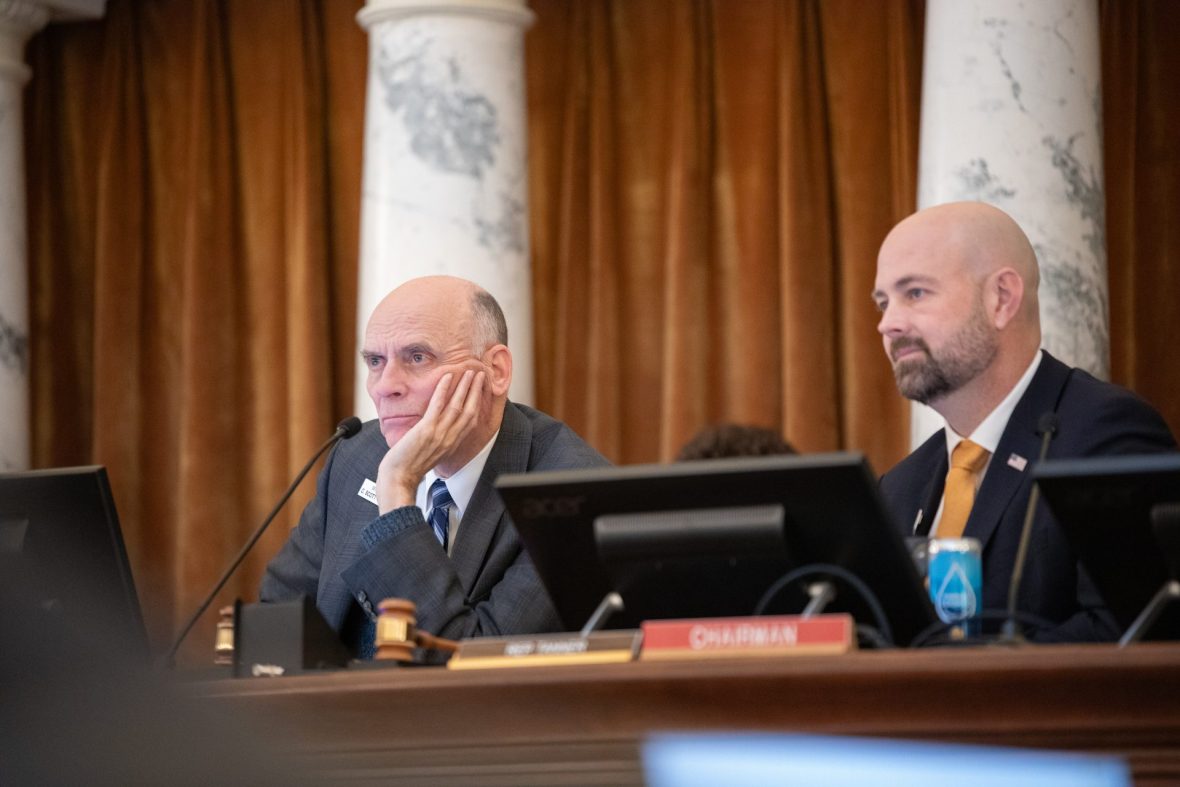
“Maintenance budgets,” explained. On Friday, the Joint Finance-Appropriations Committee passed 10 far-reaching “maintenance” budget bills. Each omnibus bill covers multiple state agencies. For instance, the public schools budget takes in K-12 and the Idaho Digital Learning Academy, among other items. The State Board of Education budget includes Idaho’s two- and four-year colleges and universities, and other agencies under the board’s umbrella.
The bills roll baseline funding from the old budget year into the new budget year. For next year, the bottom line for the 10 budget bills totals $5,508,908,400.
A big wrinkle for 2026-27. But this year’s maintenance bills also include budget cuts for most state agencies. Gov. Brad Little last fall imposed a permanent, 3% cut in base budgets. Last Friday, JFAC approved an additional 2% in cuts for next year. (K-12 is exempt from these cuts, but higher education is subject to them.)
The 2% cuts were just one point of contention Friday morning.
Several JFAC members again criticized these cuts, an across-the-board swing at most agencies. The 2% cuts would yield limited savings, a projected $31 million — but Sen. Kevin Cook said deferred maintenance and staff cuts could drive up costs elsewhere in state government. “We are passing something today that has the potential for breaking the state,” said Cook, R-Idaho Falls.
Rep. Josh Tanner, JFAC’s House co-chair, sought to head off debate over the 2% cuts. JFAC approved these cuts a week ago, said Tanner, R-Eagle, and the maintenance budgets only put them into legislation.
JFAC conservatives said the 2% cuts will provide a target, when the state needs to tighten its belt. “We do not have the revenue to do all the wonderful things we want to do,” said Sen. Cindy Carlson, R-Riggins.
What happened with the education budgets? Sen. Janie Ward-Engelking, a Boise Democrat and retired teacher, led the opposition to the two education bills.
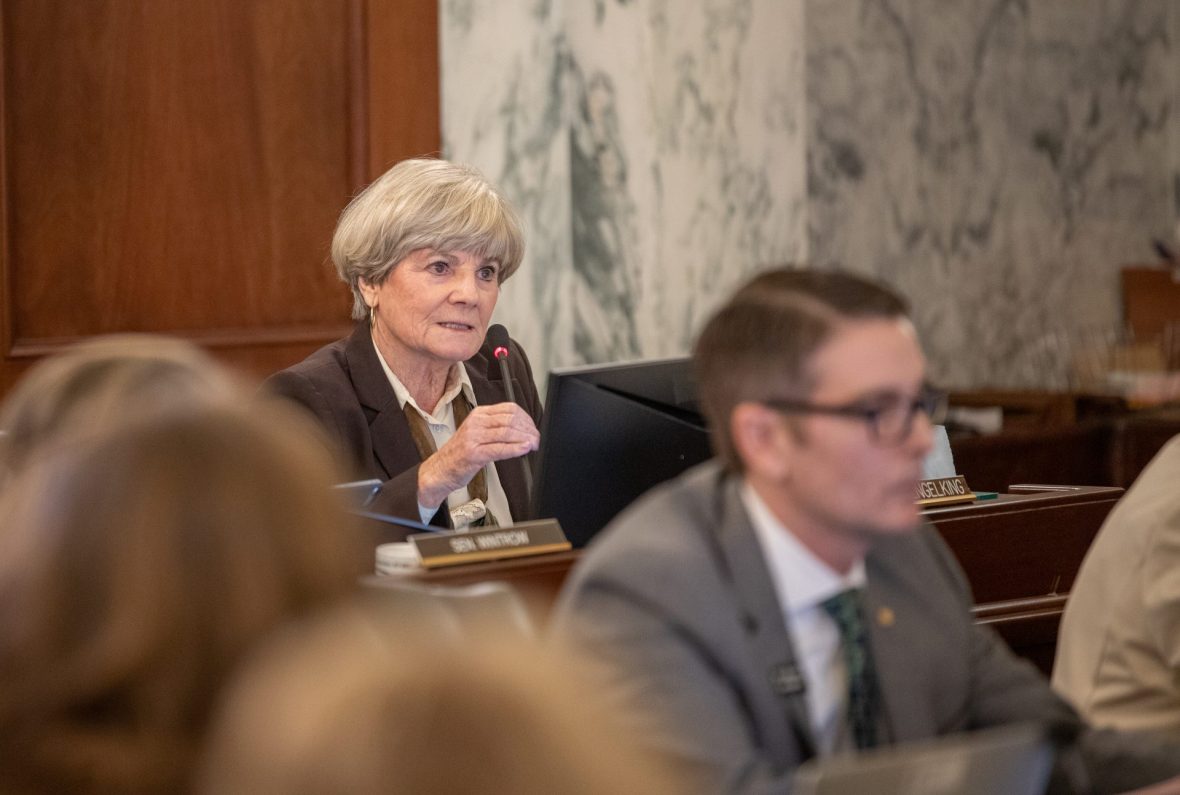
Citing recent job cuts at Idaho State University, Ward-Engelking said it will take years for higher education to rebound from JFAC’s budget proposal. “It’s not just about this year. It’s not one and done.”
As Idaho EdNews has previously reported, higher education would take a disproportionate share of JFAC’s proposed budget cuts. That’s because JFAC has spared public schools, Medicaid, prisons and Idaho State Police from the 2% cuts.
The State Board budget passed with the needed majority support from both JFAC House and Senate members — but on 6-4 votes that suggest the bill could face bipartisan opposition in floor votes.
Ward-Engelking pointed to one area of the K-12 budget — a $9 million cut to the 149 school districts and charters that do not buy employee health benefits through the state insurance plan. Ward-Engelking said the cut penalizes schools that decided not to join the state insurance plan in 2022. Tanner instead described it as a way to shift money to districts and charters on the state plan, which costs more.
The public schools budget passed along party lines — with the 17 Republicans voting yes, and the three Democrats in opposition.
Is this the last word? JFAC leaders insist it isn’t.
“This isn’t the end,” said Sen. C. Scott Grow, R-Eagle, JFAC’s Senate co-chair. “This is the beginning.”
That’s because JFAC’s “working groups,” unidentified members of the committee, could now work behind the scenes on followup bills.
These groups could produce, in JFAC nomenclature, “enhancement” budgets that address new programs and specific line items.
On several occasions, Tanner pointed out that the working groups will be able to review — and possibly reverse — the cuts from the maintenance budgets. And several JFAC Republicans said they are planning to take a closer look at the cuts.
Some colleagues were skeptical. And Sen. Melissa Wintrow pointed to one example in education.
The state’s graduate medical education programs — residencies for students who have finished medical school — now faces only the 3% cut Little originally proposed. But that’s enough to jeopardize one medical residency in Pocatello. “That’s a risk I don’t think I want to take,” said Wintrow, D-Boise, before voting against the State Board budget.
There is another wild card in the “enhancement” process. These bills could increase, or decrease, agency budgets.
The governor’s last word. If the maintenance budget bills pass both houses, they will have to go to Little’s desk.
Governors are historically tight-lipped about bills that are still in the pipeline — and reluctant to say whether they plan to use their veto stamp.
Little’s team has said the state can easily balance the books without the additional 2% cuts that are now baked into the maintenance budgets. And after attending JFAC’s three-hour Friday morning meeting, Little’s budget director voiced concerns with the bills that came out of the committee.

Division of Financial Management administrator Lori Wolff said she hopes the working groups will “mitigate” some of the damage from the cuts. But she also said Little might wind up having to sign, or veto, maintenance budgets without knowing if any followup bills are on the way.
“I think that’s the part we’re concerned about,” Wolff told reporters. “It’s really difficult for us to assess the level of risk.”
IHLA bill sails through House, heads to Senate
A bipartisan bill that would beef up state regulations on virtual charter schools unanimously cleared the House after no debate Friday.
House Bill 624 would restrict the use of “supplemental learning funds” — controversial payments to parents that were highlighted in a report to the Legislature last year. After the report, from the Office of Performance Evaluations, showed that some taxpayer funds were misused on personal items, the legislation proposed limiting their use to education-related expenses.
The bill would also require that virtual schools disclose information about the private vendors with whom they contract. In addition, virtual school teachers would have to be certified, and their curriculum would have to align with state standards.
It’s co-sponsored by Reps. Douglas Pickett, R-Oakley; Soñia Galaviz, D-Boise; and Clay Handy, R-Burley. “This has been a collaborative, bipartisan effort from individuals across the political spectrum, including leadership,” Pickett said Friday.
HB 624 now heads to the Senate.
Bill requiring PSC to report criminal behavior heads to House
A bill to require the Professional Standards Commission (PSC) to report criminal allegations to law enforcement quickly cleared the House Education Committee.
The PSC is a volunteer board that enforces the state’s code of ethics and has the authority to approve, suspend and revoke teacher and administrator certificates.
Ethics complaints that contain allegations of criminal behavior would have to be reported to law enforcement under Rep. Heather Scott’s proposal, House Bill 635. “It’s a pretty light touch, but I think it clarifies some things,” said Scott, R-Blanchard.
House Education members unanimously voted to send the bill to the full House. There was no debate.

