
A bipartisan group of lawmakers is working on a bill to address virtual schools policy — for the Idaho Home Learning Academy and its counterparts.
But one of these lawmakers, a member of House GOP leadership, also is opposed to cutting virtual school funding. Rep. Douglas Pickett, R-Oakley, said it would be “very unfortunate” to try to balance the state’s razor-thin budget on the backs of virtual students.
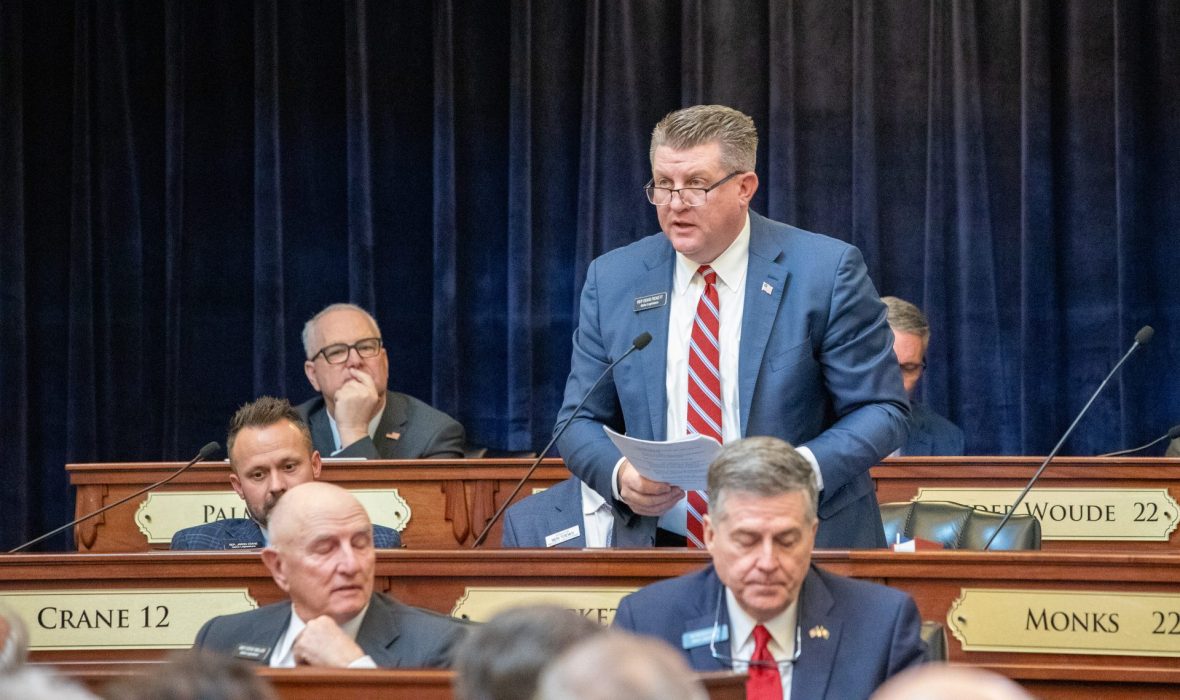
“I hope it never comes to that,” Pickett, the House’s assistant majority leader, said during a House Education Committee hearing Wednesday morning.
Policy and budget questions lingered over the House Education meeting room, as the committee heard an abbreviated version of a critical legislative staff report on IHLA, the state’s largest virtual school, serving 7,600 students statewide.
The Office of Performance Evaluations report, released in December, focused on IHLA’s spotty test scores, which lag 12 to 18 percentage points below statewide averages. The report also outlined IHLA’s controversial business model — which hinges on hiring mostly part-time teachers, and siphoning state money for teacher salaries and benefits into $12.5 million in payments to parents.
These payments, known as supplemental learning funds, are supposed to go toward household education expenses. And much of the money does go toward classroom technology, physical education expenses and performance arts programs, according to the OPE report. But OPE also uncovered some improper purchases — with parents using taxpayer dollars to subsidize private school classes, or sundries such as water park tickets and paddleboards.
On Wednesday, IHLA incoming executive director Hailey Sweeten said the Malad-based school is working on a virtual school policy bill — a response to December’s report. While the details of the bill remain under wraps, the process has brought together an unusual alliance on House Education.
Pickett and Burley Republican Rep. Clay Handy — lawmakers who represent Oneida County, which includes Malad — are working on the bill. So is Boise Democratic Rep. Soñia Galaviz, a public school teacher and an IHLA skeptic.
IHLA and other virtual schools are embroiled in the debate over next year’s state budget — and where to cut spending to bridge a $555 million gap between agency requests and projected revenues.
Gov. Brad Little has proposed a $23 million cut in virtual school spending.
The bulk of the cut, $20 million, would come by eliminating the supplemental learning funds. Eleven virtual schools distribute these funds, said Lauren Bailey, a principal evaluator who worked on the December report on IHLA.
Little’s budget would also eliminate $3 million in transportation funding. IHLA does not seek this funding, but other virtual schools use their share of state transportation dollars to cover the cost of delivering remote education.
Neither Handy nor Galaviz spoke during Wednesday’s hearing on IHLA. Pickett said their bill would address concerns raised in the OPE report. But Pickett praised IHLA’s innovative approach and its rapid growth.
“And it happened to be at a particular critical time,” said Pickett, noting the school’s skyrocketing enrollment during the COVID pandemic.
University president search bill won’t apply to school superintendents
The Senate Wednesday approved amendments clarifying that a proposal to change rules around college and university president searches would not apply to other leadership hires — including K-12 district superintendent searches.
Senate Bill 1225 would allow presidential search committees to do most of their work behind closed doors. The committee could submit the name of a single finalist to the State Board of Education. The board then would have to wait 10 business days before making a hire.
Currently, state law requires search committees to publicize five finalists before hiring a college or university president.
The amendments clarify that the 10-day waiting period only applies to college and university president searches. The bill’s co-sponsor told the Senate Education Committee on Monday that other groups, like the Idaho School Boards Association, worried that the new rules would apply to their hiring processes.
“It does not apply it to things like school boards, some of the executive positions in our state agencies and our counties,” Senate Majority Leader Lori Den Hartog, R-Meridian, told the full Senate.
Senators unanimously approved the amendments, setting the stage for a future debate on the updated bill.
Bill guiding AI in public schools advances
A bill calling for a state framework guiding artificial intelligence in public schools is heading to the full Senate.
The Senate Education Committee unanimously voted to advance Senate Bill 1227 Wednesday. Sen. Kevin Cook’s bill would direct the Idaho Department of Education to create a framework for the “responsible use of AI in K-12 education.”
The bill also requires that public school districts and charter schools adopt policies on how students and staff use AI. The local policies must align with state and federal privacy laws and protect student data.
“Humans stay in charge,” said Cook, R-Idaho Falls. “AI supports learning. It never replaces the educators.”
Representatives of the Workforce Development Council, Idaho PTA and Idaho Education Technology Association, among others, testified in support of SB 1227.

