
After a decade of federally funded work, University of Idaho researchers have determined that cattle and sage-grouse can coexist on the same acreage.
“Nesting success and insect biomass don’t seem to be affected by low to moderate levels of cattle grazing,” said Courtney Conway, a U of I wildlife sciences professor who heads the U.S. Geological Survey’s Idaho Cooperative Fish and Wildlife Research Unit.
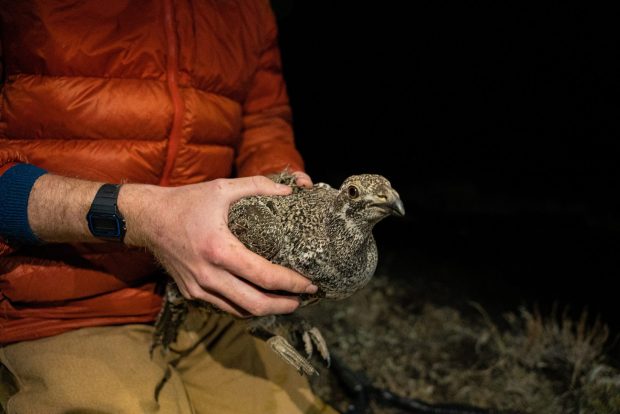
The study, published earlier this month, grew out of years of debate over the effects of spring cattle grazing on sage-grouse habitat. Researchers spent 10 years in the field, concluding their site work in 2023.
“Decisions regarding sage-grouse and cattle were being made by land managers, but there wasn’t a lot of science to rely on,” Conway said in a recent U of I news release. “We just didn’t know what effect spring grazing had on nesting sage-grouse, brood production or other vital rates, until now.”
Over the course of the decade, researchers captured and radio collared more than 1,300 sage-grouse hens at five southern Idaho research sites, tracking 1,285 nests and 399 broods.
Researchers determined that low to moderate levels of grazing, as is now permitted, have little effect on nesting and brood rearing. More intensive grazing might have more of an impact.
“We now have rigorous scientific results to support the idea that cattle and sage-grouse can coexist under the scenarios we examined,” said Karen Launchbaugh, a U of I rangeland ecology professor. “These findings suggest that responsible public land grazing can continue without harming sage-grouse.”
Four federal agencies — the Bureau of Land Management, the U.S. Fish and Wildlife Service, the USGS and the U.S. Forest Service — funded the project.