
(UPDATED, May 22, with comments from Filer superintendent.)
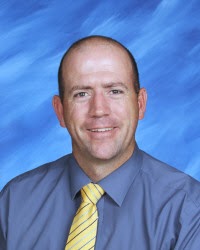
From the moment the polls closed at 8 p.m. Tuesday night, Marc Gee was pressing refresh on his computer screen.
The Middleton School District superintendent doesn’t want to admit how many times he did that before official election results came out around 11 p.m.: His district’s $19.9 million bond measure had failed with 53% support — short of the nearly 67% needed.
It was Middleton’s seventh failed bond ask since 2018.
Wednesday morning, Gee said he was “disheartened but still fighting.”
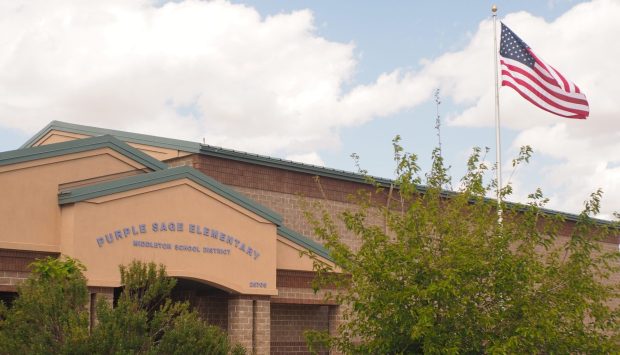
The bond would have funded a new elementary school to alleviate overcrowding in the district, a problem school leaders have been trying for years to address with a new school. But so far, the community support isn’t there.
Gee said he was surprised by the low voter turnout — just about 11% of registered voters showed up to the ballots in Middleton’s Canyon County. And he was surprised that the percentage of support did not shift at all since the last time the district ran a bond in August 2022.
Since that loss, the district took several years to regroup, solicit community feedback, scale back the ask and reduce it by nearly $40 million.
“We felt like doing all of those things was going to make a tangible difference, but in the end it did not, so that’s the biggest frustration with it all,” he said.
Middleton’s bond failure was one of three Tuesday night. Voters also rejected Shelley and Filer’s bonds, for $78.6 million and $52 million respectively, which would’ve funded new schools and facilities upgrades. Shelley’s bond loss was its second in two school years.
Bonds are especially unlikely to pass in Idaho, which has one of the highest approval thresholds in the nation — two-thirds of voters, or nearly 67%, must approve a bond. From 2020 through 2024, only 26% of school bonds have passed statewide.
Tuesday’s bond failures come after legislators have touted a $1.5 billion investment into school facilities over 10 years, as part of House Bill 521. But school leaders say the impact of those dollars is complicated. For example, the bill repurposed existing funding in ways that have potentially left a $30 million gap in funding for ongoing maintenance needs.
Middleton received $18 million in facilities dollars. But Gee said $8 million to $9 million of that went to facilities maintenance, some went toward a career technical classroom and lab, and the rest was earmarked for the elementary school — but is not enough to fully fund a building.
Even if the district had put the entire $18 million toward a new elementary, it wouldn’t have been enough, Gee said.
Shelley received more than $10 million, but much of that will go toward deferred maintenance, Superintendent Doug McLaren said. Filer’s $6.1 million allotment has so far gone toward a land acquisition — for a planned new middle school that they will now be unable to build — and toward parking lot and playground improvements and repairs.
School trustees in these three districts will now be tasked with how to move forward — to run another bond again right away, to find interim solutions and run a bond later on, or to give up on a bond measure altogether.
But Gee said Middleton’s options are limited.
“It would not surprise me that we run this bond again,” he said. “The growth is not going to stop. And so the need is going to continue to be there.”
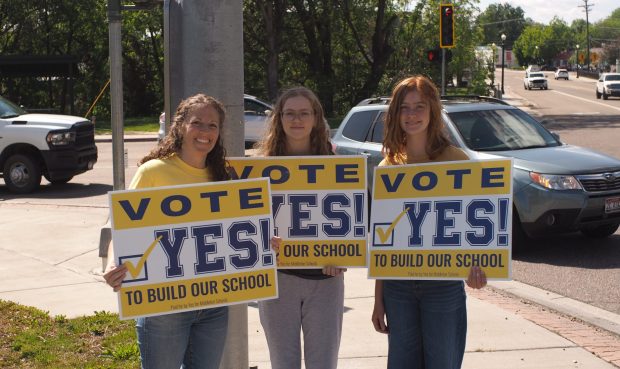
Next steps for Middleton
In past years, repeat bond elections have proved successful for school districts.
That hasn’t been the case in Middleton, seven attempts later.
This time around, one factor could have been that the school bond had competition on the ballot — local ambulance and fire districts also had levy asks. Voters may not have been able to support all of them.
Regardless of why the measure failed, Gee said he is focused on looking to the future.
Currently, two district elementary schools are over capacity and a third is near capacity. Gee said the district will likely redraw school boundaries to help equalize enrollment. Even then, each elementary will be about 7% over capacity, Gee said.
“It’s not like we can just spread it out and it’ll be OK,” he said.
School leaders will now have to consider some short-term stopgap measures, like adding modular buildings, or bringing a defunct building used for storage up to code for student use — which will be expensive. Neither option is ideal.
Then there are extreme possibilities like a split schedule, which requires a student body to be split into two and then attend classes at different times — on alternating days, or in afternoon or morning. But that would mean extending the calendar to year-round school to get in the needed hours.
“We do what we can and eventually, conditions are such that people will support the bond, or growth doesn’t happen and we’re OK. But I just don’t see (the latter) as likely,” Gee said.
Based on new and approved developments in the area, Gee said the district could add more than 2,000 new students over the next decade.
The Middleton School Board meets next on June 9 and will have a “healthy discussion on what our next steps will be,” Gee said.
Related reading: Middleton to ask patrons for $19.9 million bond to build an elementary school
Also: Read Gee’s response to patrons about the bond loss. “There is no way around it — this result hurts,” he writes.
Shelley’s bond loss was an ‘eye opener,’ superintendent says
McLaren, Shelley’s superintendent, spent Tuesday night at the Bingham County elections office awaiting results. He was joined by Brian Kress, superintendent of Blackfoot School District, which ran and passed a two-year, $4.8 million supplement levy.
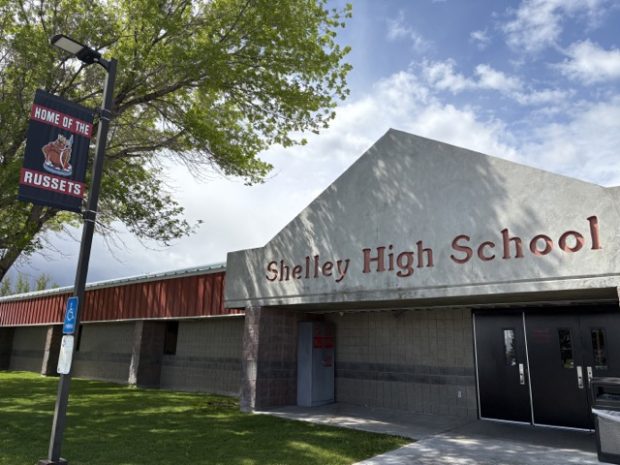
McLaren’s news was less positive. Shelley’s $78.6 million bond ask failed with just 38% support — far short of the nearly 67% needed.
“It’s definitely an eye-opener, and something we need to regroup and go back to the drawing board and see what it is that we can provide for our kids to make sure they’re safe and have the educational opportunities that they need,” he said.
If the bond had passed, it would have funded a new high school and career-technical center, as well as facilities upgrades. The improvements would have alleviated overcrowding and provided classroom upgrades for programs ranging from chemistry to welding to ceramics.
McLaren said the district’s building committee will talk about next steps at its next meeting in early June, and eventually bring recommendations to the school board.
Related reading: Rural Shelley makes a big bond ask — for the second time
In Filer, disappointment and regrouping after bond loss
Kelli Schroeder, Filer’s superintendent, had never asked a community for a bond before, so she didn’t know what to expect going into election night.
By 10 p.m. she had an answer: Voters resoundingly rejected the district’s $52 million bond ask with just 22% support, far below the needed two-thirds supermajority.
“There was disappointment,” she said. “It was disheartening … It seemed there was a lack of support for the schools and education.”

If it had passed, the bond would have funded a new middle school, an expansion to the high school and career-technical center, and improvements to the high school’s football field and track.
The new middle school would have helped alleviate overcrowding at the elementary school level and provided a safer location for middle school students; the current school is located right off a highway, where traffic is increasing.
The district’s career-technical classes are proving so popular that they need more space, which the expansion would have provided, Schroeder said.
With such low support for the bond, Schroeder said the district’s facilities committee will “go back to the drawing board and see what we can do.”
“(The voters) were obviously trying to tell us something as well,” she said.
Before the election, she heard a number of concerns about the bond. Some patrons thought it was too expensive, others wanted to see a rendering of the proposed new school before voting, and others opposed the athletic facility improvements.
“There were so many different reasons people disagreed with it,” she said.