In a state where Republicans hold 90 of 105 seats in the Legislature, the biggest battles at the ballot box often play out in the May primary elections.
To get a sense of what to expect over the next five months up to Election Day on May 19, EdNews sifted through the likely candidates in each race, examined campaign websites and interviewed a slew of incumbents and challengers.
“It doesn’t matter whether you live in District 1 or District 19 — primaries really matter in the state of Idaho,” Secretary of State Phil McGrane told the City Club of Boise earlier this month.
Voter turnout, spending from political action committees, mainstream vs. hardline conservative candidates, state budget shortfalls and the debate over school choice are all factors that will play a role this spring.
“I think that the turnout of the May primary will really tell us how engaged Idaho voters are and how much they really care and how passionate they are about continuing to make this state the great place that it’s been,” Rep. Stephanie Mickelsen, R-Idaho Falls, told EdNews.
Just 27.9% of registered voters participated in the May 2024 primary election. In the November general election that year, turnout increased to 77.8%.
We won’t know for sure who will be on the ballot until the official filing period between Feb. 23 to 27. But based on who has submitted financial forms with the Secretary of State’s Office as of Dec. 8, which is typically a precursor to running, there could be at least 26 Republican primaries in May.
Many of those races will be rematches from two years ago. But things might be different this time around after the Legislature approved the $50 million Parental Choice Tax Credit to help parents cover private school tuition and fees. House Bill 93 passed 42-28 in the House and 20-15 in the Senate.
At least 10 incumbents who voted against the private school tax credits will likely face challengers from the right.
An expensive race in the north
That includes Sen. Jim Woodward, R-Sagle, to the far north in District 1, representing Boundary and Bonner counties. A member of the Senate Education Committee, Woodward said tax credits will be on voters’ minds in May and the “great majority” of the population understands the importance of public schools — but it won’t dominate the primary.
“It will be an issue that comes into the conversation at some point, but there’s so many other pieces and parts in a Republican primary,” Woodward said.
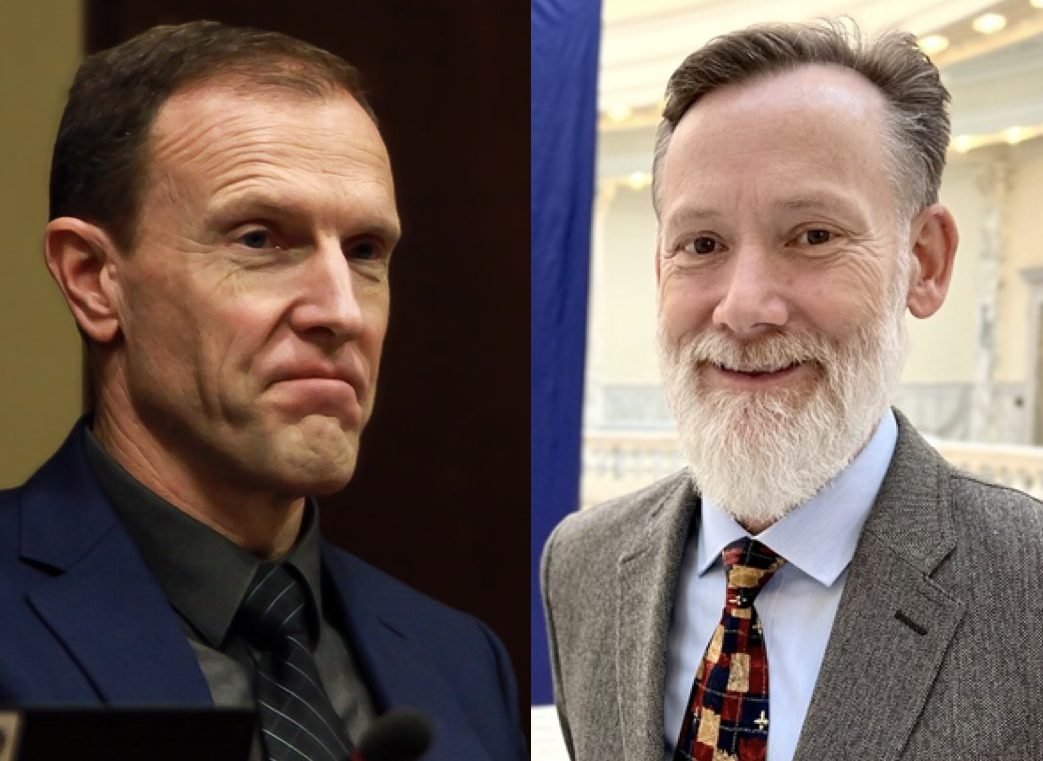
He is facing his fourth election against former senator Scott Herndon, the chair of the Bonner County Republicans, who supports “education freedom” and the abolition of all property taxes, according to his campaign website. Woodward won in 2018, but Herndon came back for another round and won the 2022 primary. Woodward took the seat back in 2024 by a 4 point margin.
It was the most expensive race for campaign spending, at a combined $278,000.
“I thought the best two out of three was good enough, but it’s a five-game series apparently,” Woodward said.
A plaintiff in the east
To the east, in District 32 representing Bonneville County, Mickelsen is facing a rematch against Kelly Golden, who began a career in Christian radio in 1998, according to her website. Golden supports “not just ‘choice’ but excellent options” in education. Mickelsen, on the other hand, is a plaintiff in a lawsuit to block the private school tax credits.
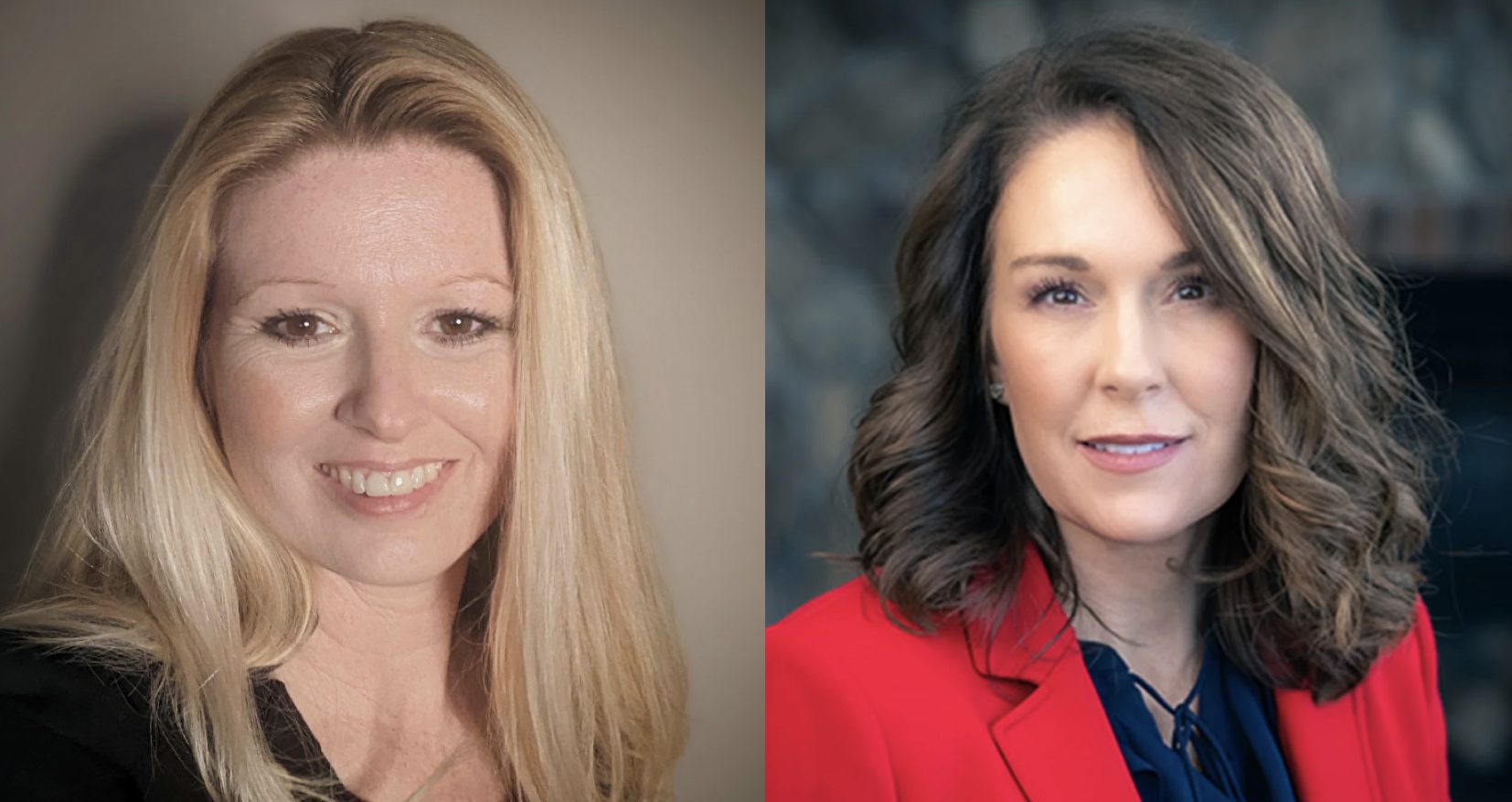
Asked if she thinks this election could be a referendum on Republicans like her who opposed HB 93, Mickelsen said she “absolutely” thinks it will be. She noted the amount of money that out-of-state PACs spent to oppose legislators who had not supported school choice in the past.
Two PACs from the East Coast spent a combined $1 million in the May 2024 primaries. Make Liberty Win, an affiliate of Young Americans for Liberty based in Virginia, spent $716,000. The Idaho Federation for Children PAC, based in Maryland, spent $300,000. The group supports private school choice.
“There was no question that they had targeting going on of legislators, knowing that there were districts that they could swing,” Mickelsen said. “They’ll come after me for this very reason.”
A dollar in Idaho
Most of the money spent on Idaho elections still comes from within the state, McGrane said in a Dec. 2 panel discussion on money in politics. But more out-of-state groups are participating in Idaho elections. A dollar in Idaho goes a lot further than a dollar in D.C., California or New York.

“We’ve just not been on the map, but we’re now on the map,” McGrane said. “And the Idaho Legislature also serves as a great testing ground for model legislation — legislation that organizations want to see passed elsewhere. They might test it in the Idaho Legislature, because it’s a very Republican legislature. It’s a good incubator to see, will this idea work or not?”
A legislator at war with the school boards
That kind of outside money in a Republican primary is “unsavory” for Rep. Ted Hill, R-Eagle.
“That’s frustrating for me because, you know, as a Republican, it’s like a firing squad when we start going after each other,” Hill told EdNews.
While some Republicans will face challengers from the right in May, Hill said that won’t be a problem for him or his fellow legislators in District 14, representing Gem County and parts of Ada County.
He shares the district with Sen. Scott Grow, co-chair of the Joint Finance-Appropriations Committee, and Rep. Josh Tanner, assistant majority leader — both Republicans from Eagle. They all supported private school tax credits.
“As a team, we’re super effective and we’re not vulnerable for any reason,” he said.

Hill, who has a kid in private school, said Idahoans are frustrated with public schools and the lack of discipline. He expects the votes against private school tax credits will hurt those Republicans in the primary.
“It was such a strong push, and the actual impact of it — it was almost a gesture,” Hill said. “It’s hardly any money. It’s a very small piece, and it’s not going to make a huge difference or move the needle much. But people really want it.”
Hill this year sponsored the successful House Bill 41. It prohibits teachers from displaying flags or banners that show opinions, emotions, beliefs or thoughts about politics, economics, society, faith or religion. Attorney General Raúl Labrador interpreted that to mean that classroom banners with the words, “Everyone is Welcome Here,” can no longer be displayed in public schools.
“You get into some schools where it’s a propaganda indoctrination center,” Hill said. “That’s where people really get upset about having themselves in public school. And we’ve gone after that.”
He said some school districts, including Boise, ignore laws that the Legislature passes. He is willing to “go to war with the school boards.”
“You know why? That’s the problem,” Hill said. “School boards are the problem. They get in there and they act like little emperors in their little empire and they do whatever they think they can.”
Censured in Jerome
For Rep. Jack Nelsen, R-Jerome, that kind of micromanagement of school districts will be the overriding issue in 2026.
“Are we going to give local districts any control or not?” Nelsen told EdNews. “Right now, the temperature seems to be to tell them how to do absolutely everything, and my belief is a little bit of respect, if you will, for local school boards.”
Trustees know their communities, know their schools and know their kids, he said. They should have some freedom.
“For the state of Idaho, it’s a bit of talking out of both sides of your mouth,” Nelsen said. “We’re comfortable with vouchers with absolutely no — absolutely no — sideboards on them. And then we spend a lot of our time micromanaging local school boards.”
In May, Nelsen faces his third primary against Magic Valley Liberty Alliance board chair Lyle Johnstone.

The incumbent faces opposition from inside and outside his district. Republican central committees in Lincoln and Blaine counties this year censured Nelsen for voting against the party platform. Young Americans for Liberty has already begun campaigning against Nelsen. The group hosted a door knocking day of action on Nov. 22, with a script highlighting Nelsen’s voting record.
Nelsen said outside PAC money is going to be a huge issue in the primaries, mostly focused on Republicans who voted against private school tax credits.
“If it’s started now, I can’t imagine the amount that’s going to be here by the time we get to the primary,” he said.
Half of ‘Gang of 8’ challenged in the Magic Valley
Several other races in the Magic Valley could be hotly contested.
Second-term Sen. Glenneda Zuiderveld, R-Twin Falls, and three freshman legislators from Twin Falls — all members of the hardline conservative “Gang of 8” who oppose spending increases — have all drawn primary challengers. In 2024, the three newcomers replaced moderate legislators.
“I think a lot of the establishment essentially wants their power back, and I think that’s why we’re going to continue to see challengers for all true conservatives in this state,” Rep. Clint Hostetler, R-Twin Falls, told EdNews.

In District 24 — covering rural Twin Falls, Gooding and Camas counties — Zuiderveld faces Twin Falls County Commissioner Brent Reinke and Hostetler faces attorney Alexandra Caval.
Hostetler introduced a $250 million private school tax credit personal bill and Zuiderveld supported bills that would require public schools to read the Bible and display the Ten Commandments.
In District 25, the city of Twin Falls, Sen. Josh Kohl faces business owner Casey Swensen and Rep. David Leavitt faces Twin Falls City Councilwoman Cherie Vollmer.
Reinke said the number of primary challengers in the Magic Valley shows people don’t feel like they are being heard on water, agriculture and education issues.

“I think it’s going to be a really interesting run to see what happens, but it really is going to depend on whether or not those voters that were asleep at the wheel several years ago wake up and get out and vote,” Reinke told EdNews.
Zuiderveld sits at the very top of libertarian-leaning Idaho Freedom Foundation’s “Freedom Index” — with a 99.4% freedom score and 100% spending score — followed closely by the other members of the Gang of 8.
A rematch with a young veteran
Up in the Panhandle, Rep. Lori McCann, R-Lewiston, said she doesn’t put too much stock into what the Freedom Foundation thinks. For comparison, the group gave McCann a 51.4% for freedom and 18.8% for spending. She voted against private school tax credits.
“Personally, I see the Idaho Freedom Foundation as being less of an importance now than it did when I first got in in 2021,” McCann said.
Education will be on the minds of a lot of people in May, she said, and teachers are going to be out all around the state.
“For the most part, public ed teachers are feeling like they’re getting beat up,” McCann, 65, said.
She will face a rematch with challenger Colton Bennett, 26, who served six years in the U.S. Army as a staff sergeant. He told EdNews that he thinks McCann will try to “leverage education” in their race.

“I suspect the framing will be from her camp that she’s the pro-education candidate,” Bennett said. “Anybody who runs against her is the anti-education candidate. And I just reject that in no uncertain terms.”
Bennett said he opposes “voucher programs” and is skeptical of HB 93. He sees it as an effort to regulate homeschool families.
“I’ve heard rumblings to expand this or make it into a voucher program,” he said. “I would vote no on that.”
In a three-way primary in 2024, McCann won by a 3-point margin, with 43.6% of the vote. Bennett said he is looking forward to wishing her “the very best in retirement.”
A rebrand against an education committee member
In another northern rematch, Rep. Mark Sauter, R-Sandpoint, who sits on the House Education Committee, will face candidate Jane Sauter, no relation. She describes herself on her campaign website as a “family-centered traditionalist,” but told EdNews that she hasn’t updated the site since 2024. She is now planning on a rebrand.
“Everybody was pretty much thinking I was just kind of like the trad wife, you know, sort of the symbol or whatever,” Jane Sauter said. “But I’m shifting that over for the 2026 primary to being more issues based.”

She supports private school tax credits and Hill’s flag bill. She opposes mask mandates, vaccine mandates and “indoctrination” in public schools, citing DEI and critical race theory.
“I feel like a lot of that stuff is just ideological and not really academic in any way, and I really would like to see a return to academics being more of a priority,” Jane Sauter said.
She’s running because she doesn’t feel like voters in her district have a conservative Republican representing them.
In the wake of school board races in North Idaho that went to far-right candidates similar to Jane Sauter, the May primaries in every corner of Idaho could turn out to be a battle between moderates and hardline conservatives.
But snow will fall and thaw in the Gem State before voters take to the ballot boxes on May 19.
“It is early and we’ll see who stays in, who drops out, what happens,” McCann said. “Things change between now and February.”