The Boise School District makes a facility plan every 10 years – rain or shine, big budget or little budget.
The last time was 2016, when the district determined it would run a bond in 2017, which passed. The bond funded a range of school renovations and expansions.
The 2016 report also projected the district’s current decade-long enrollment decline.
Amid funding decreases as a result of lower enrollment, consultant Tracy Richter acknowledged it’s an awkward time to make a facilities plan.
“When you don’t have money, it’s probably when you need to plan the most,” Richter said. “Because you really have to strap down and define your priorities.”
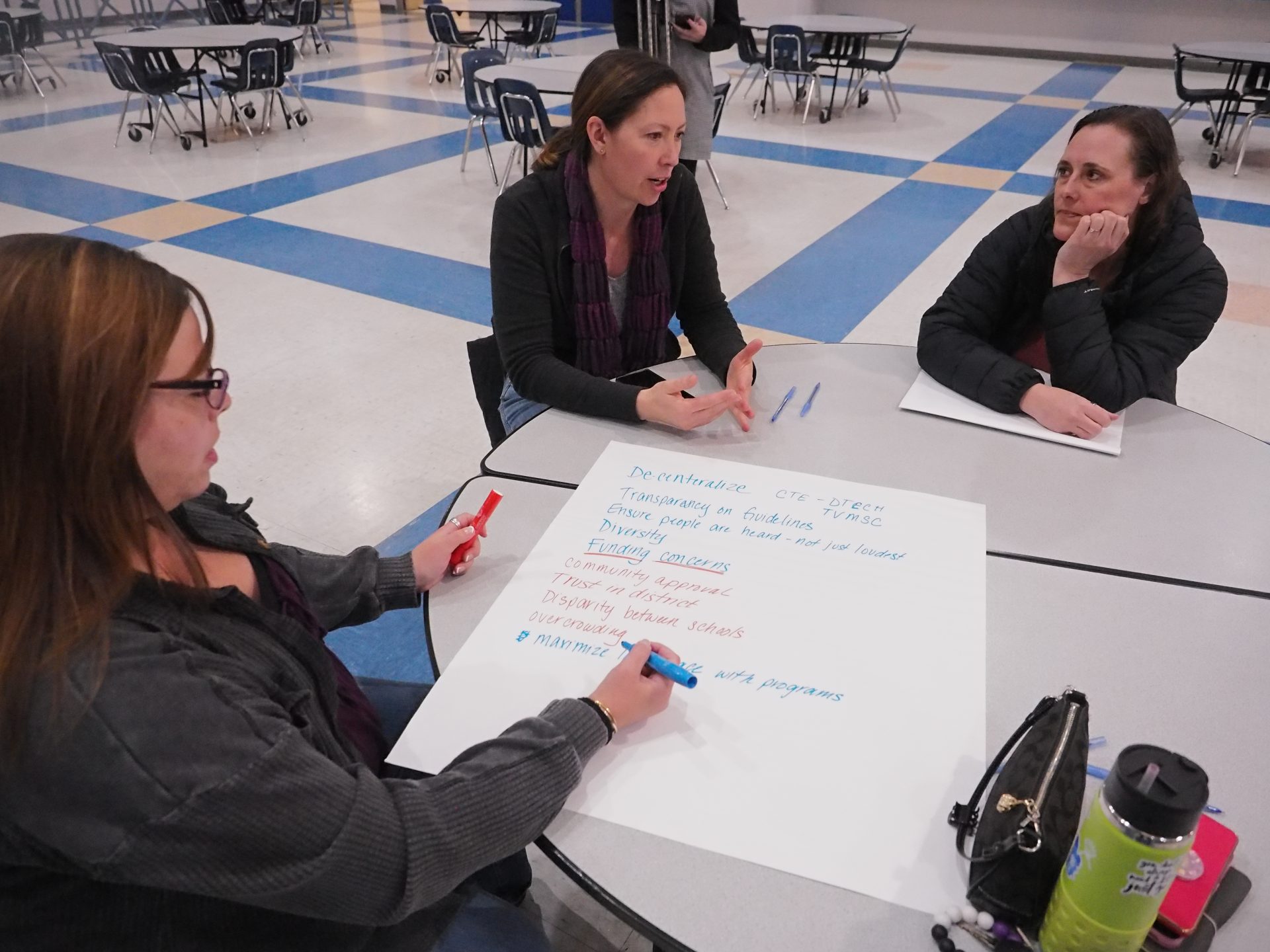
Some 35 people attended a public forum to tell Boise leaders what changes they’d like to see in the district’s buildings.
Outgoing superintendent Lisa Roberts gave opening remarks, followed by a lengthy corporate-style explanation of what a “long-range facilities master plan” is by Richter. Richter previously led the district through the facility planning processes in 2006 and 2016. He is the vice president of planning services at Georgia-based HPM Leadership.
Richter, an opponent of Idaho’s private school tax credits, lives in Florida, where the voucher program reached $5 billion last year.
Vouchers are an unsustainable model, Richter said, because a state has to increase voucher funding with every new cohort of students.
Private and charter schools are only one part of the equation draining Boise’s classrooms — rising housing costs and declining enrollment also contribute.
Kristi Randolph, a mother of a junior high student in the Boise district, said a negative public opinion of the district drives parents to seek out charters and private schools.
“I’m constantly hearing about people wanting to go to charter schools,” Randolph said. She lives in the Capital High quadrant of the district.
April Truax, a lifelong Boisean and mother of four Timberline High quadrant students, two of which have graduated, said she feels families trusts the Boise district.
Truax’s biggest concern is how centralized the district’s CTE and high-achieving programs are: All of her children have attended classes at the Treasure Valley Math and Science Center, housed at Riverglen Junior High School. One of her children opts out of the program due to the commute, and the other attends Emergency Medical Technician classes at the district’s CTE building about five miles from Timberline High.
Kelci Karl-Robinson and her two Boise High students are relatively new to Boise, and found public sentiment to be good.
Karl-Robinson used to work with the state legislature as an economist, where she said she heard often about Micron’s impact on the Boise population, and wonders if it could reverse Boise’s declining enrollment.
The district will form a task force of stakeholders and, after the summer, deliver a report outlining a facility plan like it did in 2016.