
Budget-setting lawmakers Friday cut more than half of the annual budget for the Idaho Digital Learning Alliance (IDLA) while sparing virtual charter schools from the bulk of cuts recommended by the governor.
Lawmakers have been debating cuts to virtual education for months after Gov. Brad Little recommended a $10 million reduction to IDLA — the state’s online learning platform that offers virtual courses to public schools — and a $23 million cut to virtual charter schools.
On Friday, the Joint Finance-Appropriations Committee (JFAC) approved $13.5 million in cuts to IDLA and $3 million in cuts to virtual charter schools. The budget recommendations — which still have to be approved by the full House and Senate — followed a flurry of conflicting motions and a contentious debate that focused on whether JFAC should be making policy decisions.
The IDLA cut preempted a bill that’s pending in the House Education Committee. The education policy committee has considered a handful of bills this session to reform IDLA’s state funding formula and address concerns over districts collecting state funds for in-person students enrolled in online classes. The latest proposal stalled Thursday, but House Education is scheduled to consider Rep. Douglas Pickett’s bill again Monday.
JFAC went ahead with the cuts anyway.
Sen. C. Scott Grow, co-chairman of the budget committee, said Friday that Pickett’s bill is poised to fail in House Education, and JFAC’s co-chairs were asked to take up the IDLA budget Friday as the session winds down. He declined to tell Idaho Education News who made the request.
“There are lots of names and lots of folks that are asking us to do things,” said Grow, R-Eagle. “I’m not going to name one person.”
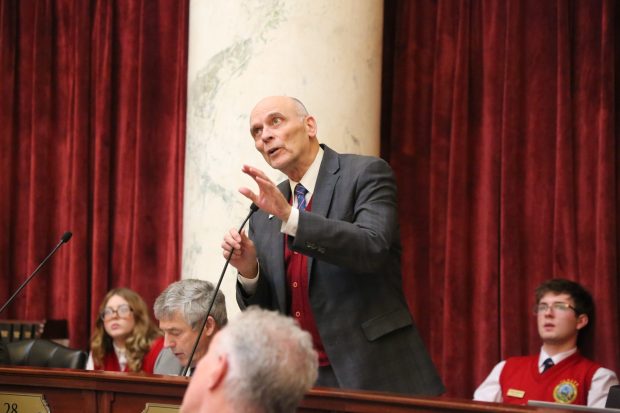
Rep. James Petzke, who sponsored a separate bill that would have cut IDLA’s budget by a little more than $9 million, urged JFAC to hold off on the budget Friday. “We don’t have to do this bill today,” said Petzke, R-Meridian. “We can wait on the policy committees to do something.”
But the budget committee voted 12-8 to approve Rep. Elaine Price’s motion to take a $13.5 million bite out of IDLA’s state appropriation for fiscal year 2027.
Price, R-Coeur d’Alene, initially proposed a $15 million reduction, which narrowly failed. She also sponsored a policy bill earlier this session that would have completely defunded IDLA. Price said Friday that she didn’t feel like the governor’s $10 million recommendation was enough.
Jeff Simmons, IDLA’s superintendent, said after Friday’s meeting that the platform will have to cut its enrollment in half if the $13.5 million cut stands. “That will touch every school,” he said. “There’s just no way we can prevent that.”
Public school leaders, particularly from rural districts, in recent weeks asked the House Education Committee not to make deep cuts to IDLA. Districts rely on the platform to supplement their curriculum with online courses that they can’t offer.
Virtual schools spared from deeper cuts. JFAC also cut $3 million from online public schools, a fraction of the governor’s recommendation.
Little proposed a $23 million cut to virtual schools after a December report from the Legislature’s research arm scrutinized spending and student performance at the Idaho Home Learning Academy.
The report, from the nonpartisan Office of Performance Evaluations (OPE), highlighted $20 million in “supplemental learning funds” that went to private education vendors, which passed on most of the taxpayer money to parents. Parents spent much of the supplemental funds on computers, lessons and other education-related expenses, but some of it went to private school classes and other questionable purchases like entertainment devices and household items.
JFAC members considered five motions proposing virtual school cuts Friday. They rejected four of them, which would have taken between $8 million and $18.5 million in classified staff funding from virtual charters and traditional districts with online programs.
Then the committee approved a motion from Sens. Cindy Carlson, R-Riggins, and Codi Galloway, R-Boise, to cut $3 million in discretionary funding for virtual charter schools.

Galloway said it would be unfair to protect traditional public schools from budget cuts while giving virtual schools a “haircut.” Meanwhile, a bill that already passed this session added “sideboards and protections” in response to the OPE study, she said.
House Bill 624, which passed unanimously before Little signed it into law, restricts the use of supplemental learning funds to education-related expenses. It also tightened state oversight of education service providers, the private vendors that contract with virtual schools and collect millions in taxpayer dollars.
JFAC approved the $3 million cut on a 12-7 vote.
Both the IDLA and virtual schools budgets now go to either the full Senate or full House. The budget bills must pass both chambers before they go to the governor’s desk.
Critchfield weighs in. In a news release Friday, state superintendent Debbie Critchfield applauded budget-setting lawmakers for keeping K-12 funding flat this session. Funding for IDLA and virtual schools are part of a broader budget that delivers $2.7 billion in state funding to public schools in fiscal year 2027, the same amount they got this fiscal year.
“The motions put forward today largely reflect the priorities we recommended alongside the governor, and I’m pleased to see that we were able to maintain current funding levels for Idaho schools,” Critchfield said in the news release.
But she questioned the “disparity” in proposed cuts to virtual education.
While the Republican supported Little’s recommendation to cut IDLA by $10 million, or 39%, Critchfield said spending decisions should reflect fairness — if that’s the goal. And she has “significant concerns” about the treatment of different virtual education providers.
“Throughout today’s discussion, there was a strong emphasis on fairness across virtual schools,” she said in the release. “But when you look at the final decisions, Idaho’s own state-created provider — the Idaho Digital Learning Alliance — was reduced by 52%, while other virtual programs saw cuts of just 1.8%. That is a significant and difficult gap to reconcile.”
High-needs special education funding bill sent to floor
The House Education Committee voted Friday morning to send a $5 million high-needs special education funding bill, SB 1288, to the House floor with a do pass recommendation.
The one-time funding for the bill comes from multiple accounts that state superintendent Debbie Critchfield “cobbled together,” said sponsoring Sen. Camille Blaylock, R-Caldwell. Legislators next year would have to reappropriate it to continue the fund.
The Legislature has a constitutional mandate to fund schools, said Rep. Ron Mendive, R-Coeur d’Alene, as he presented the bill to the committee.
The fund would support students with disabilities who have extraordinary needs, such as sensory loss, autism, traumatic brain injuries, orthopedic impairments and severe emotional disturbance.
“The bottom line is we have to deal with this somehow, the question is where the money’s going to come from,” Mendive said.
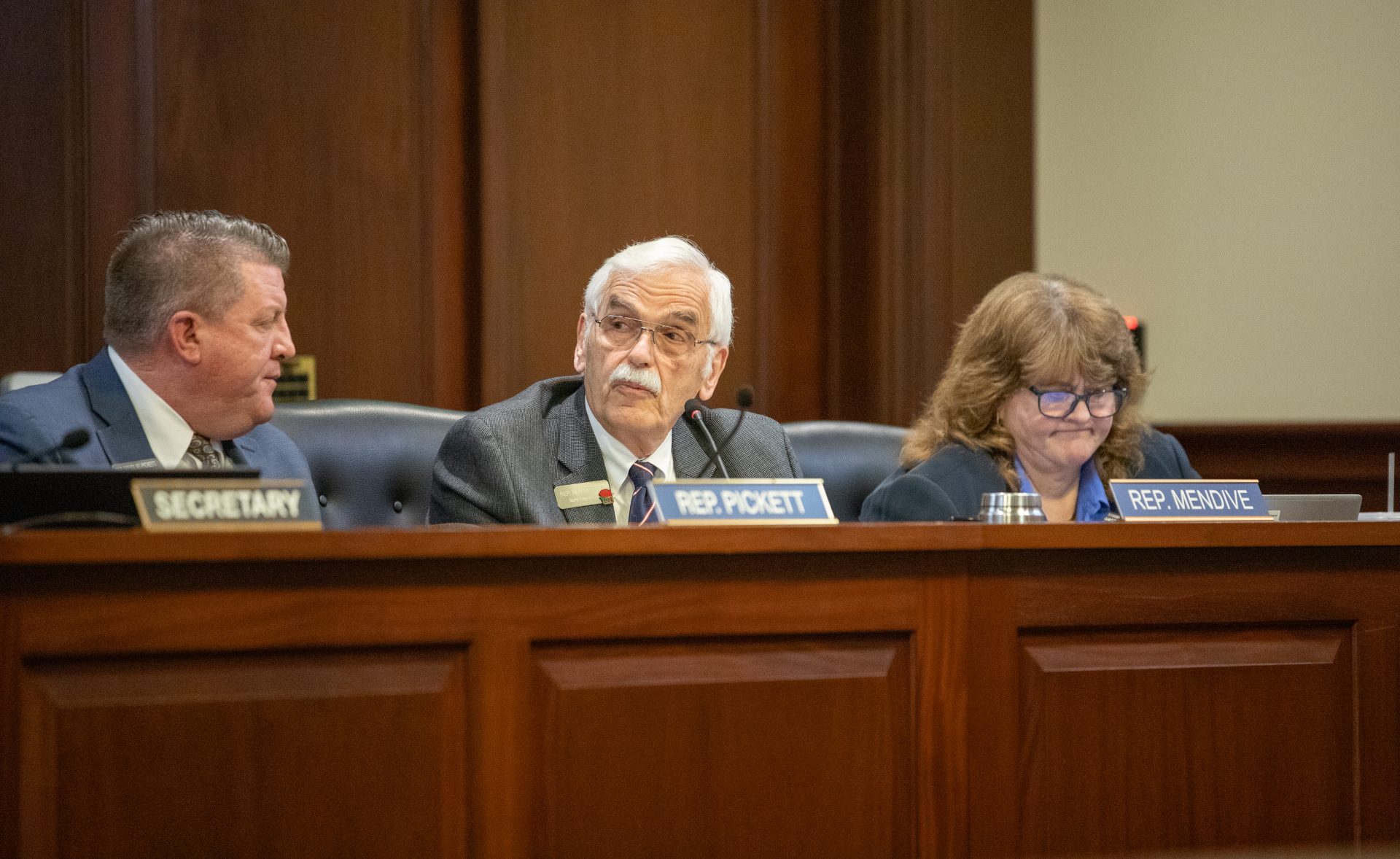
Some legislators asked if these are issues that schools and the education committees should have to deal with.
Chairman Rep. Dale Hawkins, R-Fernwood, said most people are terrified to say anything because they don’t want to seem unsympathetic. He said some of these issues should be handled by the health and welfare committees.
“Our schools are not medical centers, our teachers are not nurses, doctors, counselors, or any of those other things they are being asked to be more and more of,” Hawkins said. “We seem to be losing our grip on what schools were intended to be.”
Rep. Clint Hostetler, R-Twin Falls, said the federal government has “hogtied us.” The Individuals with Disabilities Education Act requires public schools to provide a free, appropriate public education to children with disabilities.
“What scares me is the precedent we continue to set with this,” Hostetler said. “At what point do we start saying, ‘This is not educational purposes?'”
School administrators and a nonprofit director testified in support of the bill.
The $5 million appropriation will not solve the state’s special education funding gap, but is an important first step, said Guy Wangsgard, CFO and operations officer for Bonneville School District.
Wangsgard said general education students are being underfunded because of the excess costs of special education.
“How do we absorb the cost?” Wangsgard said. “We delay classified staffing or staff hiring. We reduce general classroom support, including curriculum. We postpone maintenance or technology support.”
Melissa Vian, executive director of Idaho Parents Unlimited, said the bill is an accountable way to help rural communities. One district the nonprofit worked with last year spent $67,000 to support one young boy with a traumatic brain injury who requires multiple therapies.
“That’s nearly the cost of a full time teacher,” Vian said.
Parental Choice Tax Credit extracurricular bill advances
The House Revenue and Taxation Committee approved a bill to allow homeschool and private school students to participate in extracurricular activities without risking exclusion from the $50 million Parental Choice Tax Credit.
House Bill 934 will head to the House floor with a do-pass recommendation.
Legislators have learned that non-public school students who participate in sports at a public school, such as joining the football team, were being kicked out of the tax credit, said House Majority Leader Jason Monks, who last year co-sponsored House Bill 93 to establish the credit.
“So we just said, ‘This doesn’t count as enrollment,'” Monks, R-Meridian, said.
Rep. Jeff Ehlers, R-Meridian, said he appreciates the bill’s sponsors.
“Constituents reach out to me saying they’re being affected by this,” Ehlers said. “‘Please clarify this. Please help us with this.'”
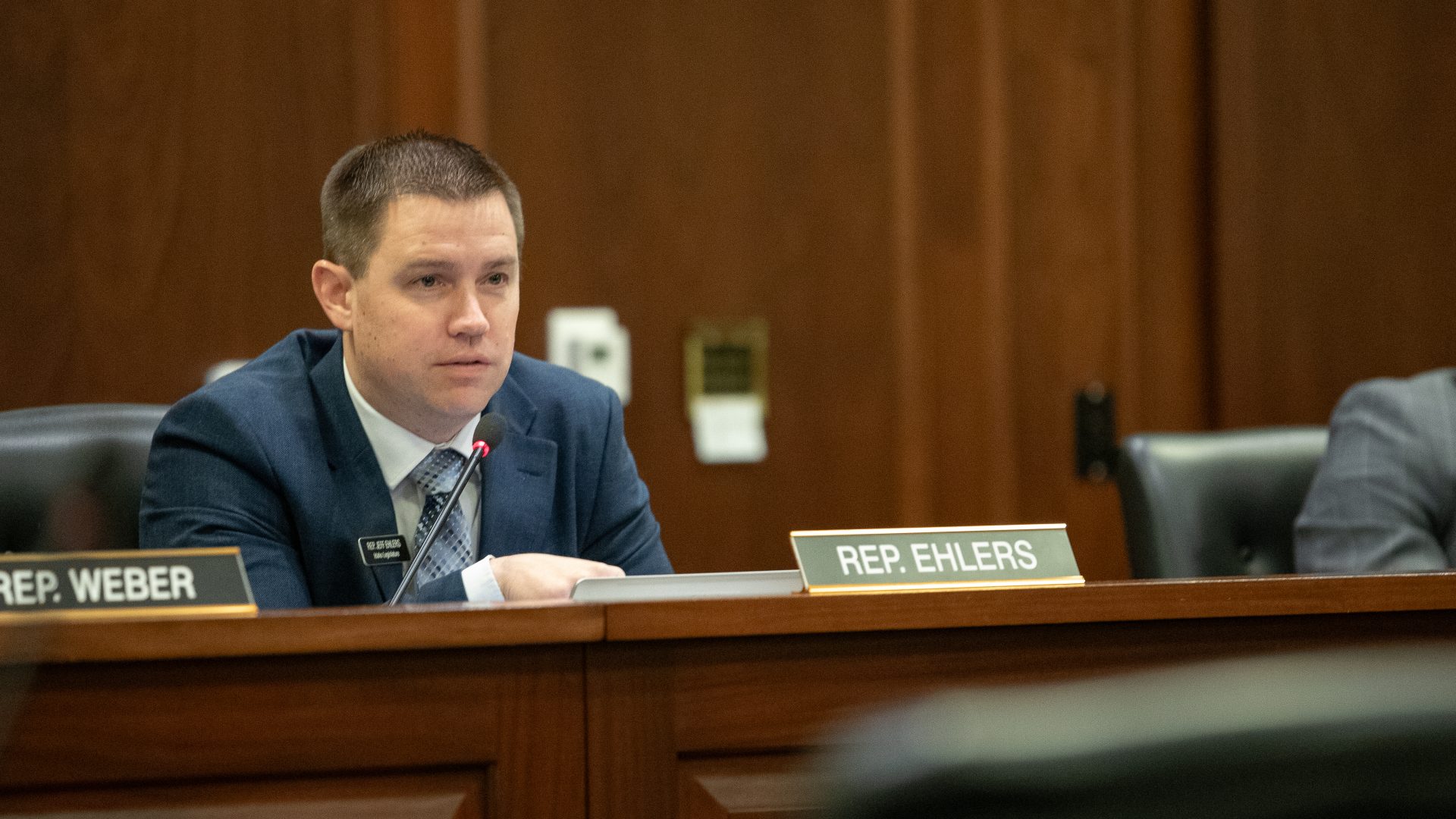
Quinn Perry, deputy director of the Idaho School Boards Association, testified against the bill. Ehlers asked her if she believes this bill is not just a technical correction — as the sponsors claim — but a change in policy.
“I’m going to say yes, because I think it is specifically selling out and authorizing to parents who receive the tax credit that they can have their cake and eat it too,” Perry said.
Chairman Rep. David Cannon, R-Blackfoot, took a voice vote on sending the bill to the House floor with a favorable recommendation. There were several ayes and several nays. He asked if those opposed would like to be recorded. The nays include:
- Rep. Steve Berch, D-Boise
- Rep. John Gannon, D-Boise
- Rep. Rick Cheatum, R-Pocatello
- Rep. Jeff Cornilles, R-Nampa
- Rep. Jon Weber, R-Rexburg
After the vote, Berch told EdNews that families who take the $5,000 per student tax credit should be consistent. He said those families are saying they don’t trust the public school system, they want to divorce themselves from it and want money for making another education choice.
“Like Quinn Perry said, this is a ‘have your cake and eat it too,’ clause,” Berch said.
Little signs moment of silence bill into law
Beginning this fall, public school classrooms will have to provide a “moment of silence” for 60 seconds at or near the beginning of the school day.
Gov. Brad Little on Thursday signed House Bill 623 into law. The bill’s mandated minute will allow students to “reflect, meditate, pray, or engage in another silent activity.” No other activities can take place during the moment of silence.
Rep. Bruce Skaug, R-Nampa, and Sen. Tammy Nichols, R-Middleton, sponsored the bill.