
A far-reaching bill to include civics instruction into state law made its debut Monday.
“We are reinforcing patriotism,” said Senate President Pro Tem Kelly Anthon, R-Rupert, as he introduced the civics bill.
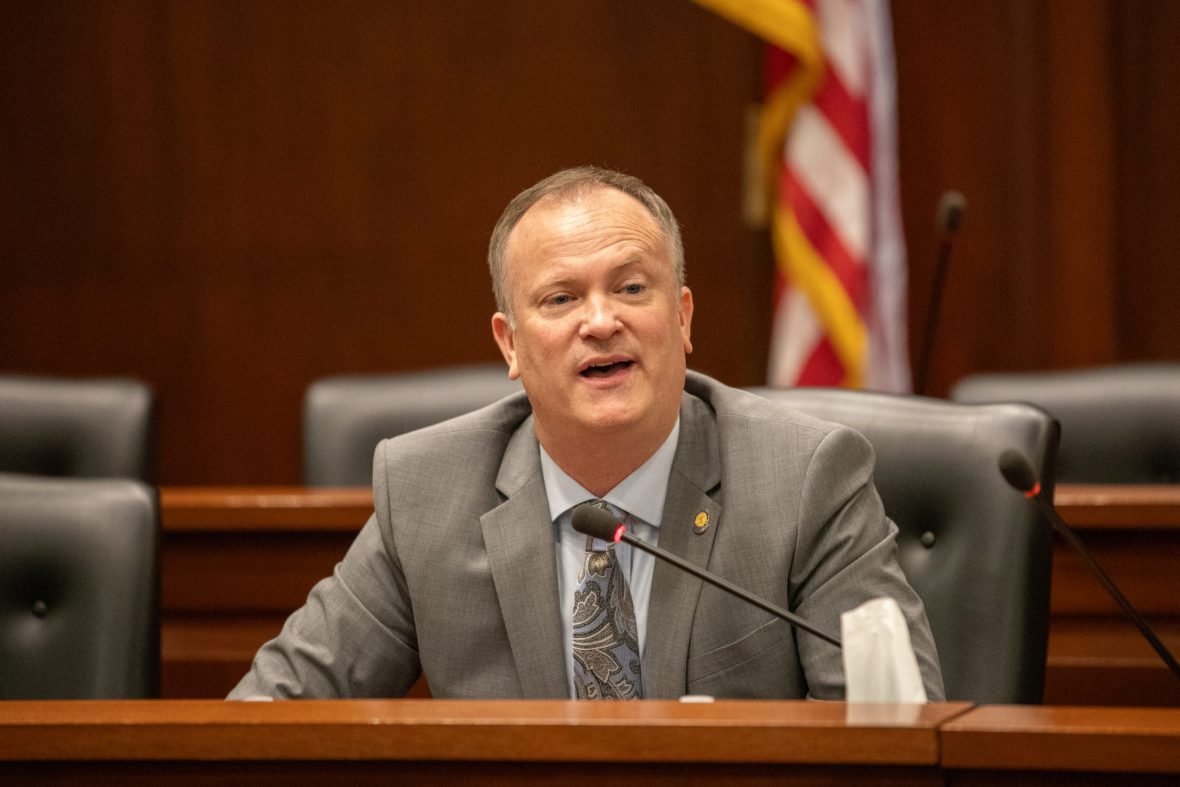
The six-page bill is thick with definitions and intent. “The legislature finds and declares that the primary purpose of this state’s system of public schools is to equip the youth of the state with the virtue and intelligence necessary for self-government through a liberal program of education that inspires a love of nation, fellow countrymen, and common history and culture.”
Much of the bill spells out how schools should shape their curricula on civics and government — addressing everything from national symbols to centuries of American and global history:
- For instance, high school graduates would need to be well-versed in historical documents including the Magna Carta, the Federalist Papers and the U.S. and state constitutions.
- Civics instruction should also reinforce a series of principles — such as, for example, the tenet that “the preservation of the republic depends, above all else, on the vigilant and manly spirit of the American people.”
- U.S. history curricula, meanwhile, “shall include instruction on how totalitarian ideologies, such as communism, are antithetical to the fundamental principles of America’s republican form of government,” and outline “the failures and atrocities of the Soviet Union and the People’s Republic of China.”
Some components of the bill are already in place.
The bill makes clear that high school students must take two credits of American history and two credits of American government, which is already required.
The bill also will require all eighth graders to take a Western civilization class, effective in 2030-31. This class would cover some 2,000 years of history, from the Greek and Roman empires to the age of enlightenment.
Anthon — who is co-sponsoring the bill along with Rep. Barbara Ehardt, R-Idaho Falls — is hoping the bill can be passed in conjunction with the 250th anniversary of the Declaration of Independence.
But he also acknowledged that the civics bill is getting a late start, as the Legislature begins the seventh week of the session. The bill has been in the works since last summer, and the Idaho Department of Education has been involved in the drafting.
“It just took a long time,” Anthon told Senate State Affairs Committee colleagues.
However, it only took Senate State Affairs a couple of minutes to introduce the civics bill, on a unanimous vote. That sets the stage for a full hearing, possibly in the Senate Education Committee.
Special education ‘service center’ bill advances
A bill to create “regional service centers” where rural public schools can share special education staff is heading to the full Senate.
The Senate Education Committee approved Senate Bill 1317 on a 6-2 vote. It’s one of state superintendent Debbie Critchfield’s two proposals aimed at Idaho’s $100 million special education funding gap.
It would spend $1 million in state funds next fiscal year to staff the regional centers. Districts that use the centers would pay fees to cover future costs. The centers would focus on “hard-to-fill” positions like speech-language pathologists, occupational therapists and school psychologists.
“It creates a pool that these smaller districts can draw from to meet those obligations and to be in compliance with federal law,” said sponsoring Sen. Van Burtenshaw, R-Terreton.
Ten people, including two superintendents, spoke in favor of the bill during a public hearing. Stoney Winston, superintendent of the Fruitland School District, said it would ease one of the district’s “greatest challenges” — recruiting and retaining specialized staff.
“We simply do not have the scale or financial flexibility to consistently attract and sustain these positions on our own,” Winston told the committee.
Sens. Christy Zito, R-Mountain Home, and Cindy Carlson, R-Riggins, opposed the bill. Carlson said she’s unsure whether the state will have additional costs after the centers are set up. Zito said she wants to “see special needs kids succeed,” but she’s “struggling to see how this is going to make a difference.”
Sales tax exemptions review bill introduced
A divided House committee printed a bill to require the state to review — and vote to renew — its $2 billion-a-year matrix of sales tax exemptions.
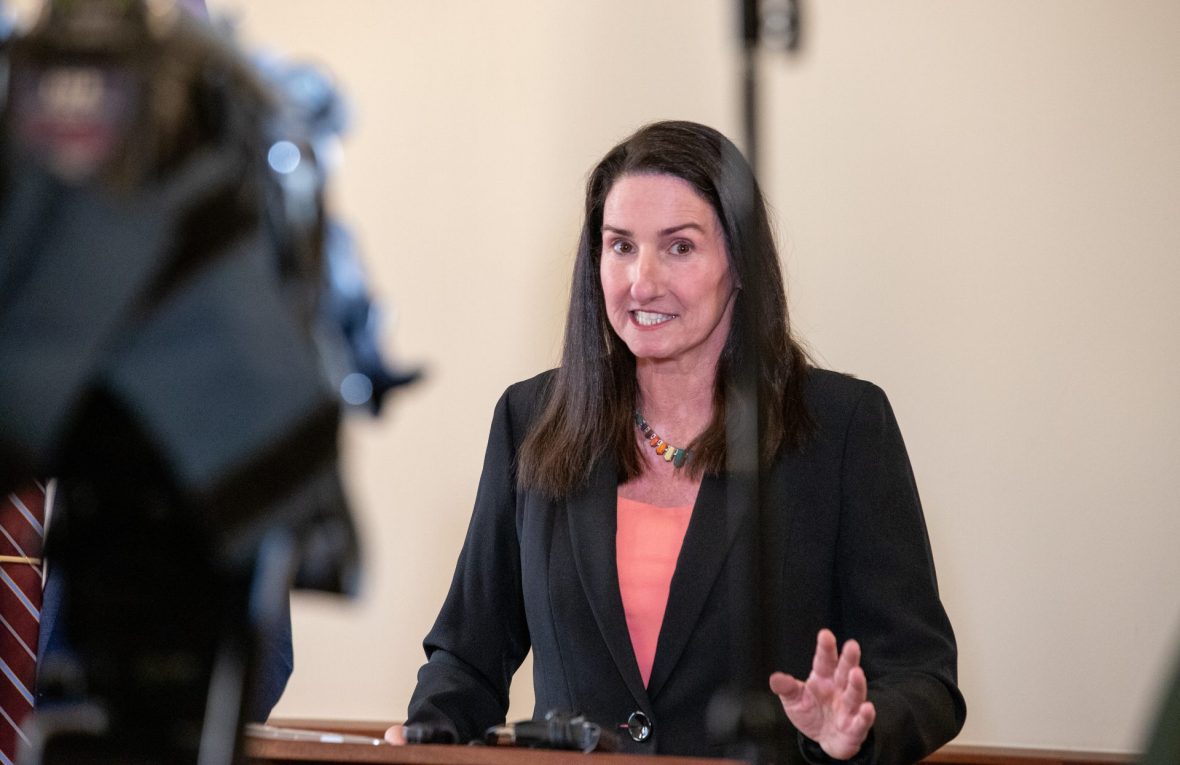
Sponsored by House Minority Leader Ilana Rubel, D-Boise, the sales tax bill would do two things:
- It would require the Legislative Services Office to conduct an annual review of the exemptions. This annual report would examine “the public purpose (and) fiscal impact” of each exemption, and recommend whether the breaks should stay on the books, according to the bill’s statement of purpose.
- The bill also would sunset all sales tax exemptions, beginning in 2031, “unless the Legislature acts by law to extend or reenact the exemption.”
The House Revenue and Taxation Committee voted to print the bill.
House passes bill to allow all parents to teach driver’s ed
The House passed a bill that would put all parents in the driver’s seat for driver’s education.
House Bill 628 would allow parents to fulfill the driver’s ed requirements in state law: at least six hours of in-car observation and six hours of behind-the-wheel instruction. Parents can already do this in rural districts, or in urban districts that do not offer driver’s ed. HB 628 would offer all parents the same latitude.
During brief debate, Democratic Rep. Steve Berch said the change would not work in his West Boise district, which is bordered by U.S. Highway 20, Interstate 84 and the crowded Eagle Road. Berch noted that family cars may not have the same safety features as driver’s ed-equipped cars — which are equipped with dual brake pads and warning signs.
Republican Reps. Jason Monks of Meridian and Kyle Harris of Lewiston debated for the bill, saying they trust parents to know how to teach their children to drive.
With a bipartisan 63-6 vote, the House sent HB 628 to the Senate.
Rep. Ron Mendive and Sen. Carl Bjerke, both R-Coeur d’Alene, are co-sponsoring the bill.

