
(UPDATED, 8:01 a.m., with tax credit bill added to the Senate Education Committee’s Tuesday agenda.)
With some debate and disagreement, budget writers diverted up to $20 million away from the Idaho Launch postsecondary aid program.
The shift includes $10 million for the current budget year, which ends June 30, and a possible $10 million for next year.
The 2026 transfer involves a surplus in the state’s In-Demand Careers Fund, which bankrolls Launch. The fund has more money than the state has applications for Launch, chief legislative budget analyst Keith Bybee told Joint Finance-Appropriations Committee members Monday.
Next year’s $10 million transfer would occur on or after Dec. 31, after Launch payments have been “obligated and reconciled,” according to language JFAC approved Monday.
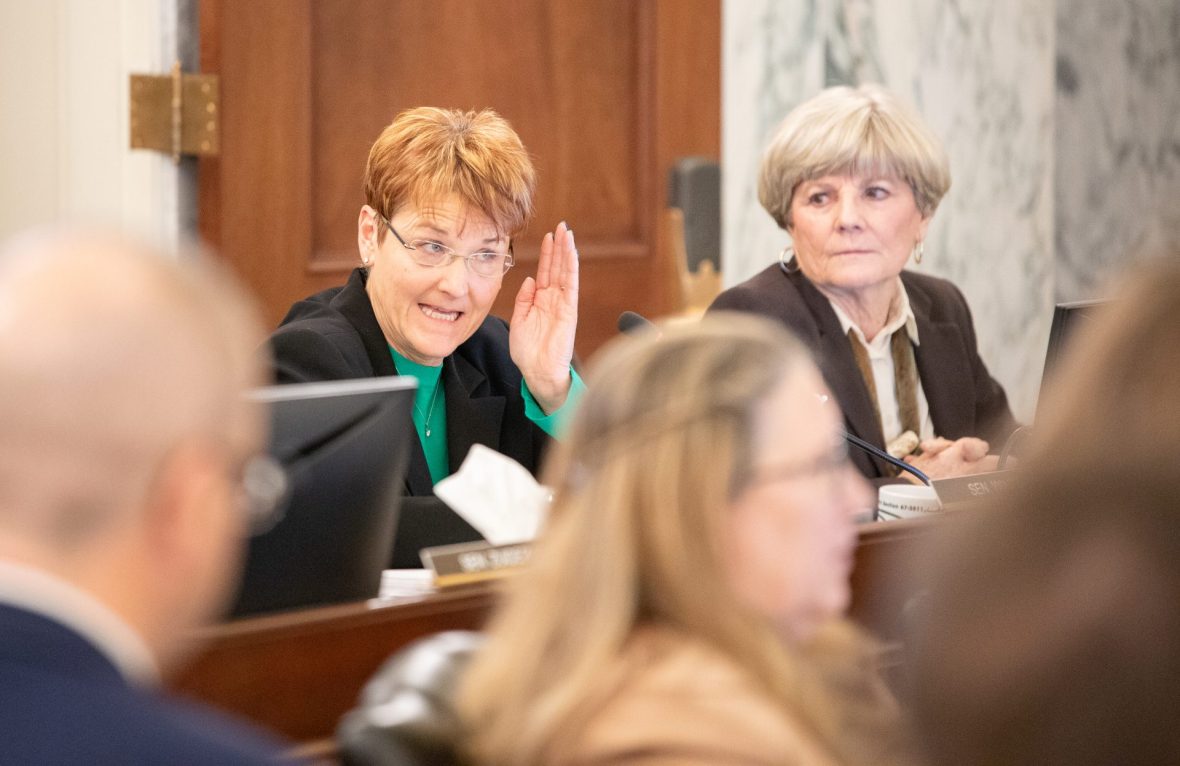
The transfers passed on 18-2 votes, with Boise Democratic Sens. Janie Ward-Engelking and Melissa Wintrow in opposition. Ward-Engelking expressed concern that the transfers would jeopardize Launch funding for students who want a share of the money.
Launch provides high school graduates with up to $8,000 to attend college or pursue a career-technical certificate.
Gov. Brad Little recommended this year’s Launch transfer but not the 2027 transfer.
This cash transfer and others are building blocks as JFAC begins cobbling together budgets for 2026 and 2027. JFAC on Friday approved 1% budget cuts for this year and a 2% cut in base spending in 2027. K-12 is exempt from both cuts, but higher ed is subject to them.
JFAC should vote Friday on 2027 “maintenance” budgets for public schools, higher ed and other state agencies. This series of bills would roll this year’s funding into the next budget year.
Cook seeks one-time cut in private school tax credit
Along the same vein as the Launch cuts, an Eastern Idaho senator wants to reduce funding for the state’s new private school tax credit.
Sen. Kevin Cook, R-Idaho Falls, is pushing for a one-time 6% cut to the $50 million Parental Choice Tax Credit.
In a newsletter to constituents Saturday, Cook said the one-time cut would treat the fledgling tax credit program “more like Launch.” He noted that most state programs have absorbed a share of budget cuts, while the tax credits have been untouched.
“Here’s the key budget issue: Tax credits come off the top,” he wrote. “In other words, they reduce revenue before it ever reaches the general fund that the (Joint Finance-Appropriations Committee) budgets and oversees. That means it doesn’t get reviewed in the same way most programs do when we’re looking for savings.”
The immediate prospects for the bill are not clear. The Senate Education Committee’s Monday agenda originally listed a proposal from Cook, “relating to the Parental Choice Tax Credit.” That item was pulled from the agenda before the meeting. However, it now appears on the committee’s Tuesday agenda.
Cook, a member of JFAC, voted for the Launch funding transfers approved Monday morning. In 2025, he voted against House Bill 93, which created the private school tax credit program.
Presidential search bill heads to House for final vote
A House committee quickly approved a bill that would move higher education presidential searches almost entirely behind closed doors.
Senate Bill 1225 would ditch language in state law, which requires the State Board of Education to publicly announce five presidential finalists. If this bill passes, the State Board would have to release only one applicant’s name. The State Board could then hire this sole finalist after 10 working days.
The bill is a direct response to the stalled Boise State University president’s search, which is on hold after 11 months. State Board leaders have said qualified applicants have balked at having their names released publicly, when they have only a one-in-five chance of getting the job.
“That math just didn’t work out for people,” said Rep. James Petzke, R-Meridian, a bill co-sponsor. “We’re protecting the people who are applying.”
Petzke emphasized safeguards in the bill, in addition to the 10-day public review. He said the bill requires the State Board to provide “periodic updates to the public” during a search and allows the board to name additional finalists if applicants are willing to go public.
The Idaho Press Club opposes the bill. In testimony Monday, Press Club lobbyist Ken Burgess said SB 1225 is an erosion of public records law — and it would involve some of the state’s highest-paid and highest-profile public jobs.
The House Education Committee endorsed SB 1225 unanimously, setting the stage for a House vote in the next few days. The Senate passed the bill unanimously last week.
Disclosure: Idaho EdNews reporters are members of the Idaho Press Club, a statewide media organization. However, EdNews Statehouse reporters do not testify on open meetings or public records legislation.
New bill would update cooperative fund rules
The House Education Committee introduced a bill to change rules around bond elections and repayment for school districts that apply for the $50.5 million Public School Facilities Cooperative Fund.
After the fund was dormant for a couple decades, the Legislature last year revived it by removing some application barriers and by doubling the money in the account. In recent months, a state panel has approved several projects altogether worth more than $30 million.
“As with any piece of legislation, as it evolves and grows and gets implemented, you see tweaks and things that you can do to improve it,” said House Assistant Majority Leader Douglas Pickett of Oakley, who’s co-sponsoring the legislation.
Districts qualify for the cooperative fund under one of the following criteria:
- In the last two years, the district failed to pass a bond that would have financed the replacement or repair of “unsafe” facilities.
- State safety regulators from the Division of Occupational and Professional Licenses (DOPL) deemed that the district is failing to address “unsafe” facilities.
- The district held a successful bond election, but proceeds fell short of the cost to repair or replace “unsafe” facilities.
The new bill would remove a controversial provision that applies to the criterion for districts that had a failed bond election. Currently, the district must hold another bond election, and if it fails, the district will qualify for the cooperative fund.

This provision applied last year to the Filer and Camas County school districts. Filer’s superintendent rescinded the district’s cooperative fund application. Camas County’s superintendent, on the other hand, urged voters to vote against the district’s bond measure.
Under the new bill, districts that meet the DOPL criterion would still have to hold an unsuccessful bond election before qualifying for the cooperative fund.
The bill makes a handful of other technical changes, including requiring that districts pay back the cooperative fund when their projects cost less than anticipated.
House Education members unanimously voted to introduce the bill, setting the stage for a future public hearing.
LC State name change clears Senate
The Senate unanimously approved a bill changing the name of Lewis-Clark State College to Lewis-Clark State University.
Sponsoring Sen. Cindy Carlson said the change would better reflect LC State’s four-year degree offerings. The Lewiston-based institution offers associate’s and bachelor’s degrees along with a handful of graduate programs.
But the “college” in its name leads some students to assume it’s a community college. “This causes great confusion,” said Carlson, R-Riggins.
Senate Bill 1234 goes to the House.
House passes social media addiction bill
A bill designed to curb youth social media addiction is headed to the Senate.
“Let’s lead the nation on this,” said Rep. Jaron Crane, R-Nampa, a sponsor of House Bill 542, dubbed the “Stop Harms from Social Media Act.”
HB 542 seeks to combat social media use without addressing content — and running into First Amendment roadblocks, said Crane. Instead, the bill would require social media sites to use their own platform to try to determine the age of their users. The social media sites would not be allowed to “present addictive interface features in the display or feed” of any user believed to be under 16 years old.
During brief House debate, Rep. Rick Cheatum, R-Pocatello, took issue with one section of the bill: a clause allowing social media users or parents to seek a civil claim of up to $10,000. Cheatum pointed out that the bill allows the attorney general to pursue a case against a social media site — and that, he said, is a more appropriate approach.
Rep. Bruce Skaug, a HB 542 co-sponsor, said previous laws have similar language — despite predictions that this would lead to a flood of civil cases. “This has not happened, with all the bills we’ve passed here,” said Skaug, R-Nampa.
The House passed the bill on a 62-7 vote.

