
Updated, 2:40 p.m., with comments from the governor’s office and Idaho Education Association.
Legislative budget-writers Wednesday reversed their decision to exempt K-12 public schools from potential 2% cuts this fiscal year and next fiscal year.
In a Wednesday memo, Sen. C. Scott Grow and Rep. Josh Tanner asked state superintendent Debbie Critchfield for “reduction plans” explaining how 1% or 2% cuts would impact the $2.7 billion public school support budget.
A 1% cut would be $27.5 million.
A 2% cut would be $55.1 million.
The possible reductions would apply to fiscal year 2026, the current fiscal year, which ends June 30, and to fiscal year 2027, which starts July 1.
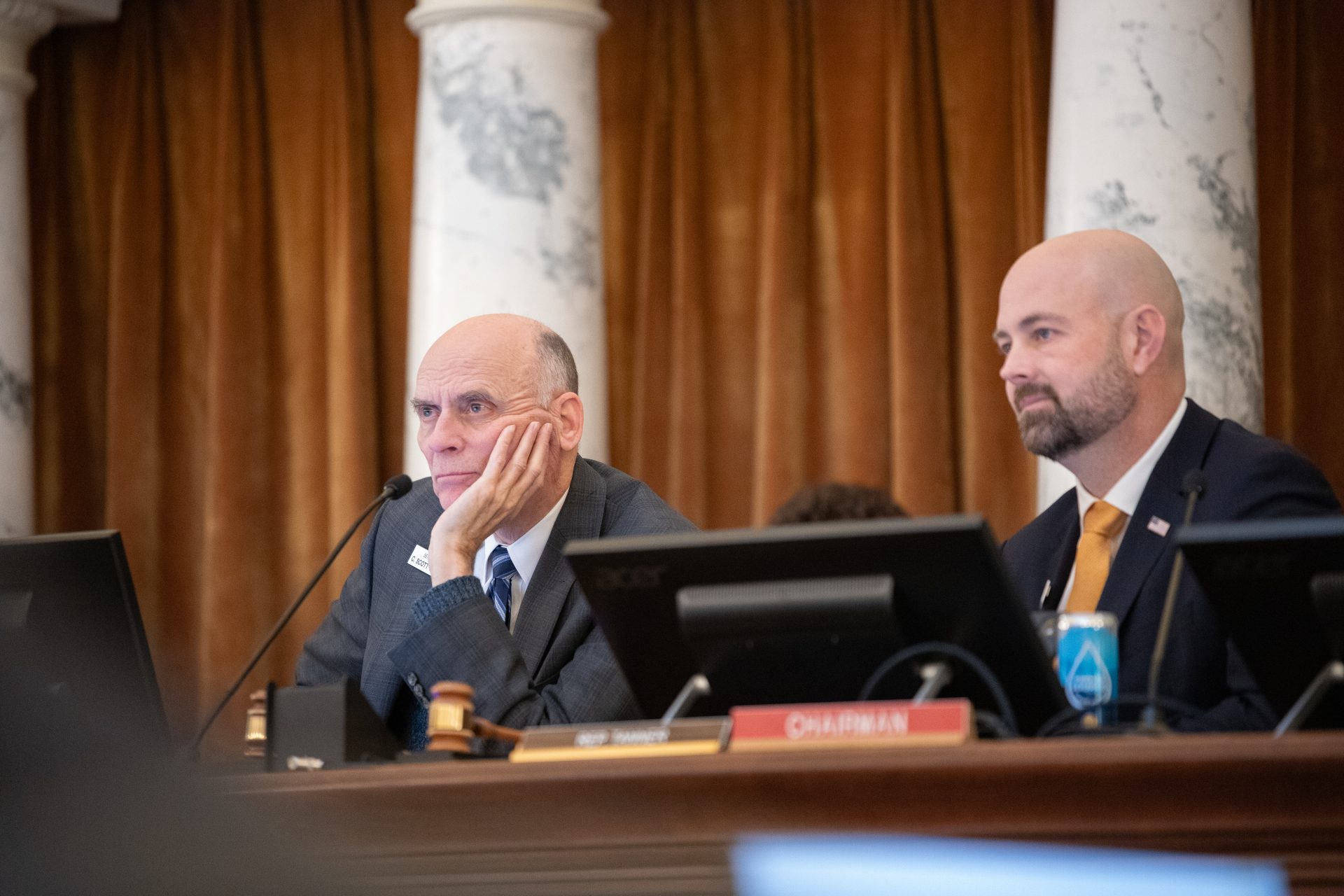
The Wednesday memo was similar to the message that Grow and Tanner — co-chairs of the Joint Finance-Appropriations Committee (JFAC) — sent to other agency directors Monday. The latest memo added the public school support and Division of Medicaid budgets to the mix.
Idaho Education News reported Monday that the co-chairs, both Republicans from Eagle, told agency directors to make plans for up to 5% across-the-board cuts — an additional 2% on top of the 3% cuts that Gov. Brad Little made through an executive order last year.
On Monday, Tanner told EdNews that public schools would be exempt from additional cuts. “We followed the exact same path as the governor,” he said, referring to Little’s executive order, which exempted K-12.
But the co-chairs reversed course Wednesday. The memo told Critchfield and Juliet Charron, director of the Department of Health and Welfare, that JFAC is “evaluating options to balance the statewide budget,” and “one of those options is to further reduce budgets.”
Grow told EdNews Thursday that “everybody ought to be thinking about” ways to reduce spending, in the interest of “fairness.”
“It says right here in the letter ‘options.’ That’s all we’re talking about,” he said.
The memo asked Critchfield, a Republican, to identify “any essential service” that would be affected by cuts. Keeping the K-12 public school budget whole is the superintendent’s top priority this legislative session.
“I was caught off guard by this memo considering recent and repeated assurances that there will be no cuts to public schools,” Critchfield said through a spokesperson Thursday. “We are working on our response now.”
It also surprised the governor’s office. Little, a Republican, proposed a hodgepodge of one-time and ongoing cuts and fund transfers to address slowing tax revenue this fiscal year and a looming shortfall next fiscal year. While his budget recommendations include cuts to public virtual schools, Little said he would protect K-12 “classroom funding.”
According to social media posts, Little was in Washington, D.C., Wednesday for an event celebrating “Trump Accounts.” The governor’s budget chief, Lori Wolff, told EdNews Thursday that Little proposed a balanced budget that protects K-12 “classroom funding.”
The governor’s plan shows there’s “a way to balance this budget without touching K-12,” Wolff said. “That’s the roadmap.”
But it also requires policy changes that lawmakers may or may not support, Tanner said Thursday. Additional agency cuts offer options to balance the budget if Little’s proposals are unsuccessful. They also make room for implementing federal tax cuts in President Donald Trump’s One Big Beautiful Bill Act earlier than Little proposed. A mid-range estimate of the cost to conform is $155 million.
“We’re just making sure we have all the cards actually laid out,” Tanner said.
Wolff countered that a 2% cut to Medicaid would also require policy changes. And deepening statewide cuts will have “major impacts” on communities, people and schools, she said, without making up much ground on the year-end bottom line.
“That deep of cuts really just creates long-term, higher costs in the out years, whether it’s for the state or for local communities to have to pick up,” she said.
If implemented, the $55.1 million cut to public schools would come in the same budget year that the Legislature unlocked $50 million in state funds for private education.
Supporters of House Bill 93, a tax credit covering private school tuition and home-school expenses, argued that it wouldn’t affect public school spending, and opponents have called for its repeal amid the state’s budget crunch.
Grow was a co-sponsor of the private school choice legislation. Asked whether critics would consider cuts to K-12 a broken promise, he said, “They probably will.”
“I’ll just say the same response,” he said. “We’ve got everybody thinking about (budget cuts). That’s all it is. It’s an option.”
The teachers’ union also weighed in Thursday. Idaho Education Association spokesman Mike Journee said clawing back HB 93 funds would keep “over-stretched public school budgets whole.”
“Instead, some lawmakers want to double down on the reckless tax cuts they approved last session so they can use public dollars to pay private school tuition — with no accountability on how that money is spent,” Journee said by email.
IEA is a plaintiff in an ongoing lawsuit challenging the private education tax credit.
New bill, unchanged bottom line: Another tax conformity bill emerges
The House’s tax committee introduced a new bill that would add President Donald Trump’s “One Big Beautiful Bill” tax cuts into Idaho law.
And the cuts would go into effect immediately — putting more pressure on this year’s budget.
The new tax conformity bill, House Bill 559, does make some changes from the version the House Revenue and Taxation Committee introduced less than a week ago. For example, the new bill would roll out corporate tax breaks for research and experimentation, spreading out these cuts over several years.
Tax cuts for individuals — including seniors and wait staff that relies on income from tips — would remain untouched. And now, all of the immediate tax breaks would go to individuals, Rep. Jeff Ehlers, R-Meridian, told reporters after Thursday’s hearing.
The projected hit on this year’s budget remains unchanged. The new bill would take an estimated $155 million out of state coffers for the budget year that ends June 30. The hit would climb to $175 million for the budget year beginning July 1.
In both cases, legislators are now at odds with Gov. Brad Little — especially when it comes to the cash-strapped 2025-26 budget. Little proposed putting tax conformity off until next year, at an estimated cost of $155 million.
The committee quickly voted to introduce the new bill, paving the way for a full hearing at a later date.
Rexburg Republican Rep. Britt Raybould supported introducing the bill. But when the bill comes back for a hearing, she said she will want sponsors to talk about the impact on education and other state budgets. “How does this fit in as part of that broader discussion?”
As he did last week, Boise Democratic Rep. John Gannon opposed the bill introduction. He again said sponsors are underestimating the cost of tax conformity — and the pressure that could place on state budgets.
School bullying notification bill heads to full House
A bill that would beef-up public schools’ reporting requirements around bullying is headed to the full House.
The House Education Committee unanimously voted Thursday to advance House Bill 515.
Rep. Chris Mathias’ proposal would mandate that parents are notified of a bullying incident that results in a suspension. School district and charter school administrators would have to report the incident to parents of both the bully and the victim.
“If your child is suspended for bullying, there are very specific conversations you should be having with your child about that,” said Mathias, D-Boise. “If your child was a victim of bullying, there are very specific and time-sensitive conversations you should be having with your child.”
Last year, the House passed a similar bill, but the Senate rejected it.
Quinn Perry, deputy director of the Idaho School Boards Association, told the committee that ISBA supports HB 515. “It strengthens the communication, accountability and trust between schools and families when serious incidents occur.”
Senate confirms White, Koehler appointments
Two State Board of Education appointments became official Thursday.
The Senate voted to confirm Jennifer White as the State Board’s executive director and to confirm Pete Koehler as a State Board member.
White has served as director since April, and Koehler joined the State Board in October. Both were appointed by Gov. Brad Little.
White is a former trial lawyer and Boise State University government affairs director. Koehler previously served as Nampa School District superintendent and as an Idaho Public Charter School Commission member. He was also chief of staff to former state superintendent Sherri Ybarra.
Thursday’s Senate vote makes their appointments official.

