
State superintendent Debbie Critchfield mostly played defense Wednesday as lawmakers scrutinized K-12 public school spending.
The Republican fielded a range of questions from the Joint Finance-Appropriations Committee (JFAC). Members of the budget-setting panel asked about special education funding and public schools’ growing fund balances, and debated local tax increases amid declining enrollment.
They also raised the possibility of cutting into $2.7 billion in state spending on public schools. Sen. Cindy Carlson, R-Riggins, asked how K-12 would absorb a 5% reduction as lawmakers consider ways to balance the budget amid a looming revenue shortfall.
Critchfield said she would consider the question but she didn’t have an immediate answer.
“I don’t even know where to start with that,” she said. “The bulk of the budget (includes) statutory increases that I don’t control.”
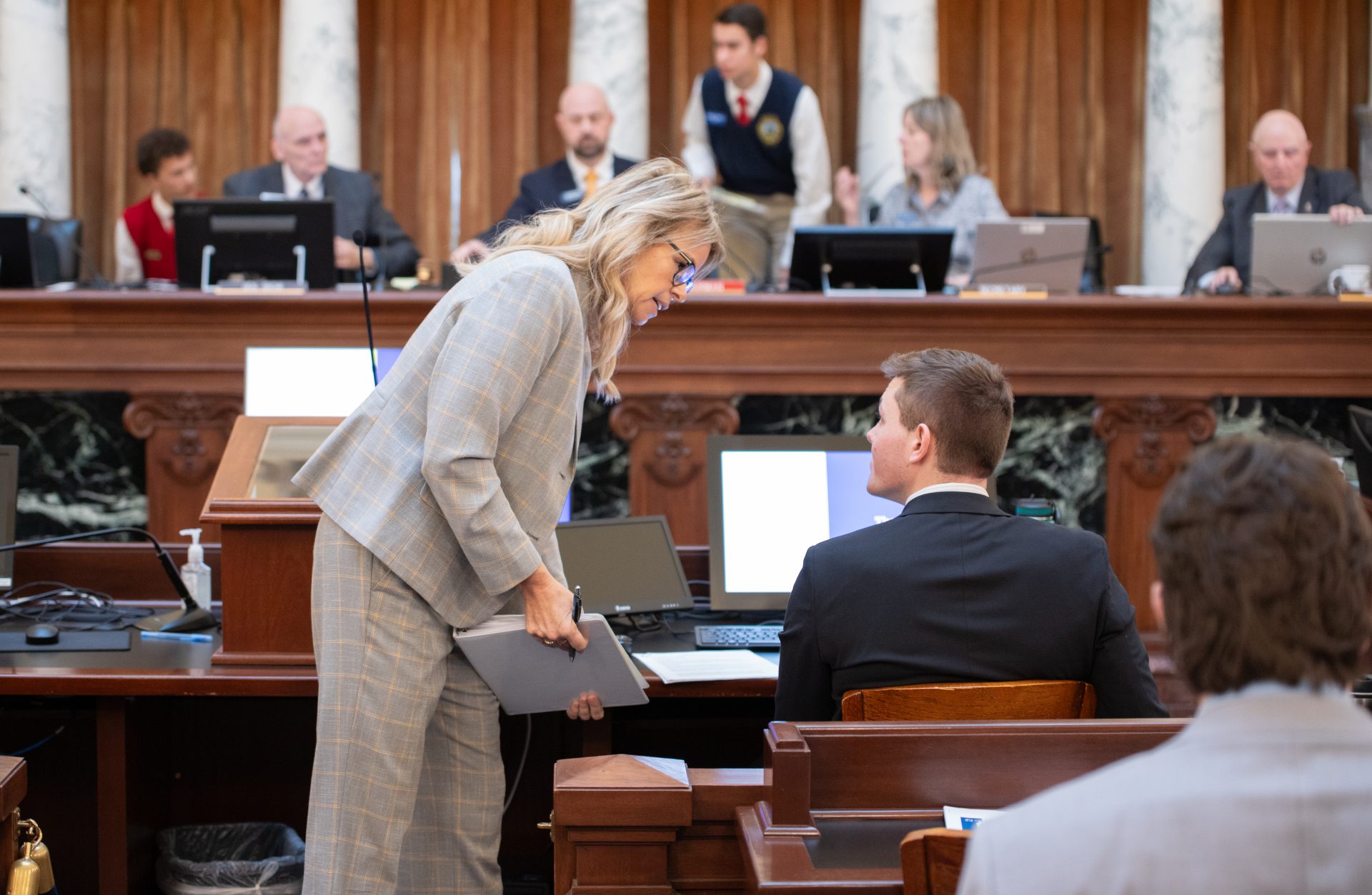
Asked after Wednesday’s meeting whether public school leaders should be “worried” about a 5% cut, Critchfield said she wouldn’t use that word. Neither her budget nor Gov. Brad Little’s spending recommendations consider a K-12 reduction, she said.
Aside from cuts to online learning, Little’s budget would hold public schools harmless. And if lawmakers decided to target K-12 for cuts, the governor has veto authority.
“It is our absolute priority that the budget that was recommended is the budget that we get,” Critchfield told EdNews. “We’re going to work as hard as we can.”
Here’s what else JFAC discussed Wednesday:
Special education
While Critchfield last month hit pause on her $50 million block grant proposal, she’s recommended smaller state funding changes for special education.
These include:
- $5 million for a high-needs fund that supports students who are particularly costly to educate.
- $1 million to staff regional service offices.
Both proposals shift money from existing fund sources. And they would only make a small dent in a $100 million gap — the difference between state and federal special education funding and local spending.
A few JFAC Republicans were skeptical.
Rep. Kyle Harris said he was surprised to see the high-needs fund again, after the Legislature rejected a similar and smaller proposal last year. And he questioned whether current state funding supports “things that education should not be funding in the first place,” such as student housing.
“Instead of trying to shift funds around, why are we not trying to fix the spending issues we have?” said Harris, R-Lewiston.
Rep. Steve Miller raised a broader concern: whether the state should be supporting high-needs students, whose rights to services in public schools are protected by “unfunded” federal mandates. Miller, R-Fairfield, said children who have “no future in some level of self-care” would be better served in health care facilities that have “professional capability of taking care of them.”

“We are educators,” Miller said. “We are not designed for medical health or mental health care for students who do not have the future of being self-sustaining.”
This drew a strong reaction from Senate Minority Leader Melissa Wintrow. The Boise Democrat said she’s grateful that it’s no longer the 1970s, when children with disabilities were “institutionalized.”
“The disability community is essential,” she said. “Thank God we have federal requirements, so we’re not institutionalizing kids and that we can detect them earlier.”
Wintrow’s comments then prompted an objection from Rep. Elaine Price, R-Coeur d’Alene. “We’re not saying that they’re not essential,” she said, before committee co-chair Rep. Josh Tanner, R-Eagle, stepped in and pressed Wintrow to move on.
After the meeting, Critchfield acknowledged a disconnect between her goals and the sentiments expressed by JFAC Republicans. If the superintendent hopes to chip away at the $100 million special education gap, she’ll first have to convince lawmakers that it’s the state’s responsibility.
“There’s a lot of information and communication that needs to happen on the topic,” she said. “The funding itself is a thing. We know what that gap is. But I think the understanding of who our schools serve and why they serve them is an equal part of that.”
Fund balances
Another JFAC member wondered whether the Legislature could force public schools to tap their savings amid the budget crunch.
Sen. Glenneda Zuiderveld referred to a recent Idaho Education News article that reported school districts and charters have a record amount in fund balances. Altogether, districts and charters carried over $716 million from the previous budget year to the current one.
Idaho law allows districts and charters to carry over up to 5% of their annual spending into the next budget cycle. In addition, recent state investments in public school facilities — such as House Bill 292 and House Bill 521 — allowed districts to save the money and build interest as they plan for capital projects.
Little last week touted that his proposed budget doesn’t lean on $1.3 billion in state rainy-day funds to address Idaho’s revenue shortfall. But Zuiderveld, R-Twin Falls, asked Critchfield whether there’s a law that would allow the Legislature to compel public schools to tap their own reserves.
“How can they use those to help us through this difficult time that we’re in?” Zuiderveld asked.
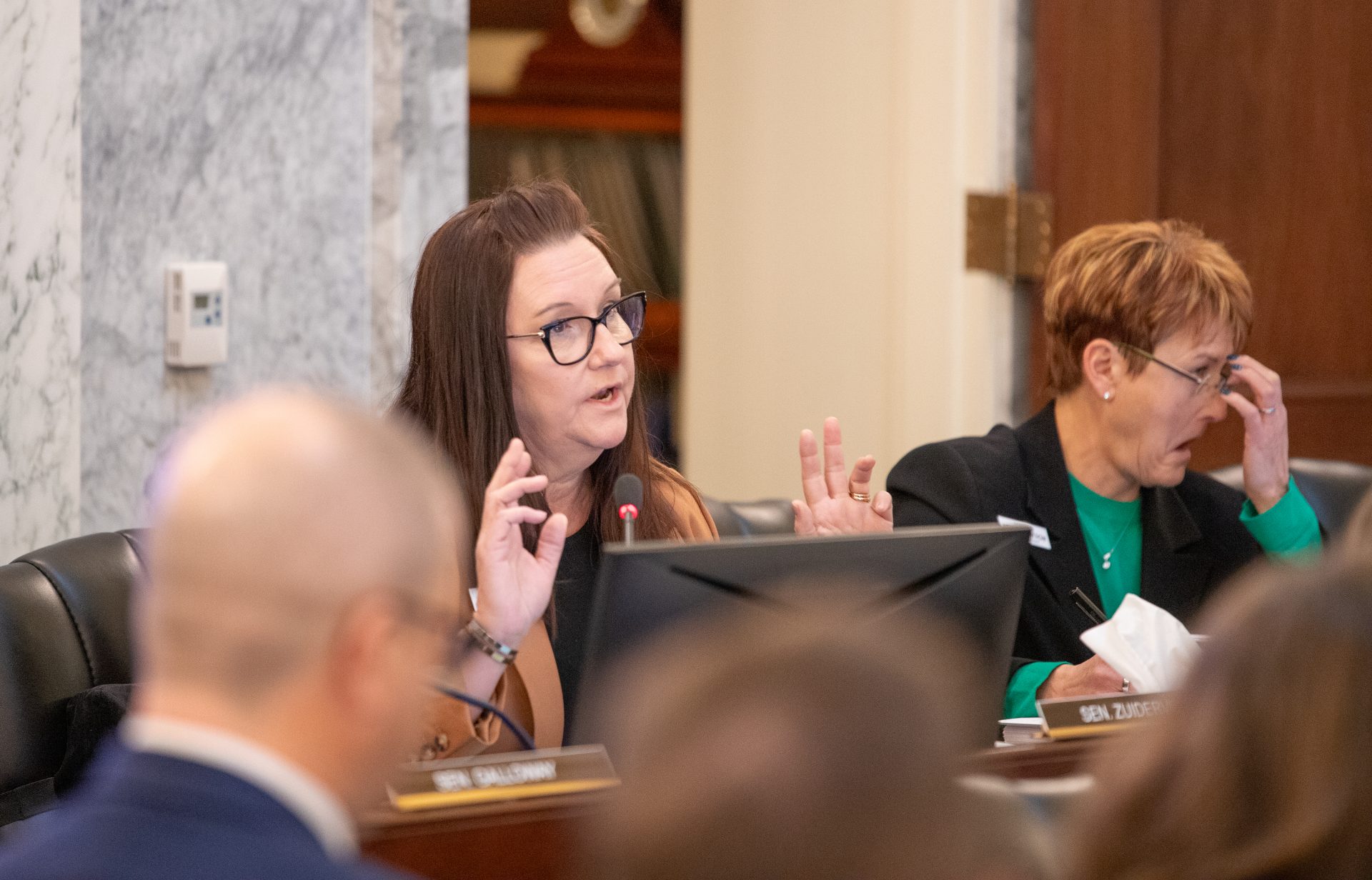
Critchfield said she’s not aware of such a law. But carryover balances are intended for unexpected costs, she said, and public schools aren’t “hoarding” money or building nest eggs. Critchfield said she expects that public school leaders are already planning to dip into their savings as the state limits spending.
“Each local board will make the determination of how and when they use those dollars,” Critchfield said.
Declining enrollment
Wednesday’s JFAC meeting briefly became a turf battle between lawmakers representing the Boise and West Ada school districts. A discussion of declining public school enrollment sparked the verbal skirmish.
Critchfield’s budget assumes a dip in enrollment-driven “support units” by the end of the current school year. These metrics in the state’s K-12 funding formula essentially represent the cost to operate a classroom. The Idaho Department of Education projects a decrease from 15,954 to 15,722 support units after fall enrollment dropped 1.2% this school year.
These figures likely will change, but public schools currently stand to lose about $22.3 million from this dropoff. In a normal budget year, this money would be transferred to the Public Education Stabilization Fund, a rainy-day account. But Little proposed reverting this money to the state’s general fund.
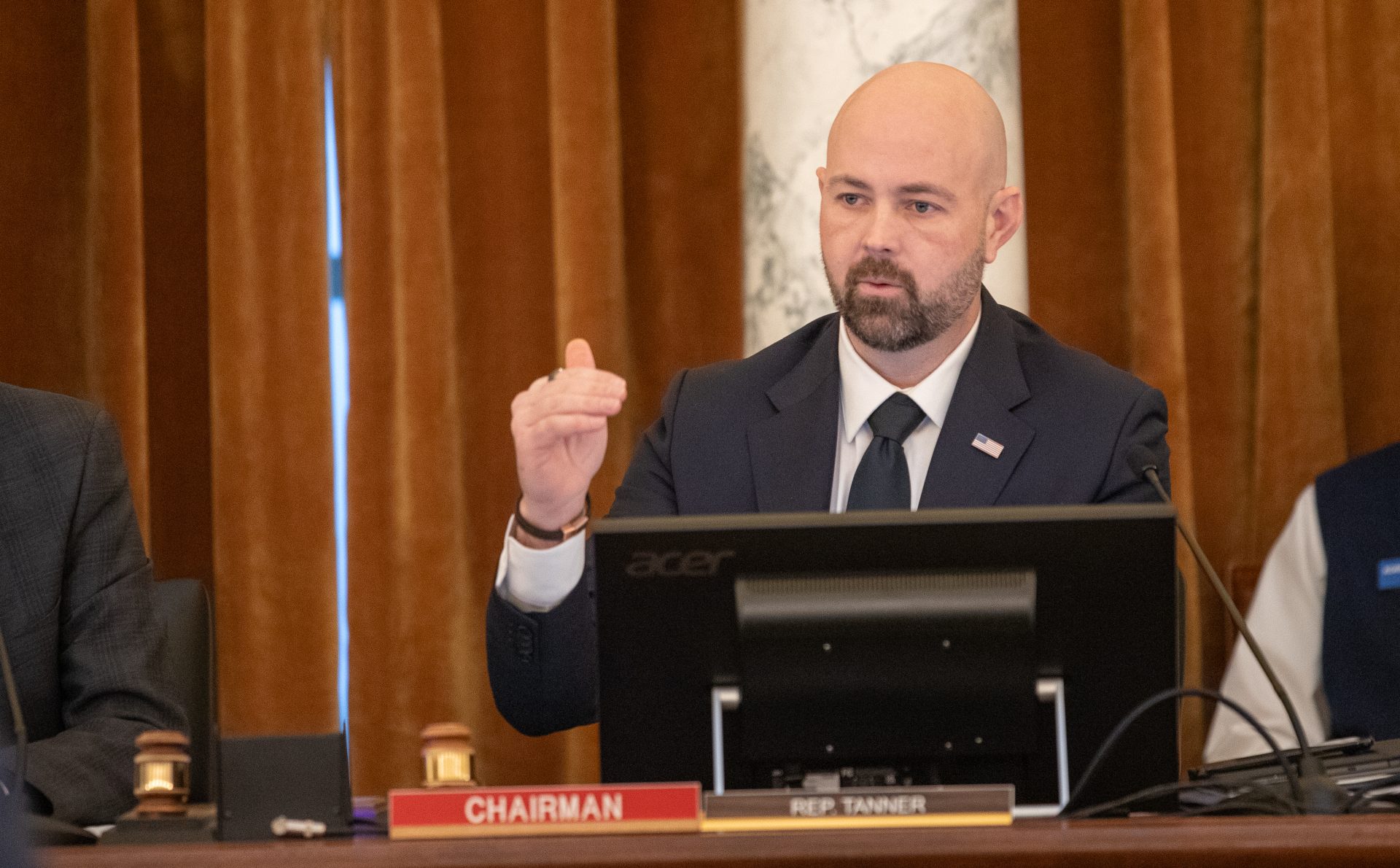
Tanner, who represents West Ada, seized an opportunity to chide the Boise School District for imposing a “massive” property tax increase as district enrollment decreased by about 2% this fall. Boise trustees raised local taxes by $30.4 million — an 18% increase — to fund pre-K programs and support at-risk students, among other items.
“I talked to multiple families that are leaving the city of Boise, trying to try to move out west, towards West Ada” because of the tax increase, Tanner said. West Ada, meanwhile, decreased its local tax levy to just 7 cents per $1,000 of assessed property value.
Wintrow shot back that West Ada — the state’s largest school district with nearly 40,000 students — has received the “lion’s share” of recent state investments that helped districts fund building projects and pay down locally supported bonds and levies.
Under House Bill 521, the school facilities funding bill from 2024, West Ada received about $150 million, while Boise’s share was capped at $40 million. This was about half of what Boise could have received through the attendance-based formula that divided the state money.
“Boise city schools have been put into a corner, and it is not fair to our constituents and our taxpayers at all,” Wintrow said.
AI schools bill makes a quick debut
With no discussion, the Senate Education Committee introduced a K-12 artificial intelligence bill.
The bill’s sponsor, Sen. Kevin Cook, R-Idaho Falls, said he wants to put some “bumper pads” around AI, and set some guidelines about how kids learn about it.
The bill would require the Idaho Department of Education to develop a statewide framework for the use of generative AI in K-12. The framework should “prioritize human-centered oversight, transparency, safety and data security,” according to the bill.
The Education Department would also be assigned to develop AI literacy and testing standards.
School districts and charter schools would be required to set local AI policies that align with the state’s framework.
The committee’s quick vote sets the stage for a possible public hearing, at a future date.
Low-key confirmation hearings in Senate Education
The Senate Education Committee held a pair of brief, and highly cordial, confirmation hearings Wednesday.
Pete Koehler — a former chief of staff to state superintendent Sherri Ybarra, Nampa school superintendent and Idaho Public Charter School Commission member — is up for a State Board of Education appointment. He was named to the board in October.
While describing himself as a “neophyte” on higher education topics, Koehler also said he has a “deep passion” for K-12 issues — from K-3 literacy to elementary education in math to career-technical programs.
Jennifer White is up for confirmation as State Board executive director. A former trial attorney, White worked in government affairs for Boise State University before she was hired to the State Board post in April.
Committee members had no substantive questions for White. Sens. Kevin Cook and Cindy Carlson took turns praising White’s appearance before the Joint Finance-Appropriations Committee Tuesday, where she spoke at length about budget issues facing the board. “It’s going to be fun to work with you,” said Carlson, R-Riggins.
The committee is scheduled to vote on both confirmations Thursday. The Senate would ultimately need to approve the confirmations.

