
Continued budget cuts could force colleges and universities to increase tuition.
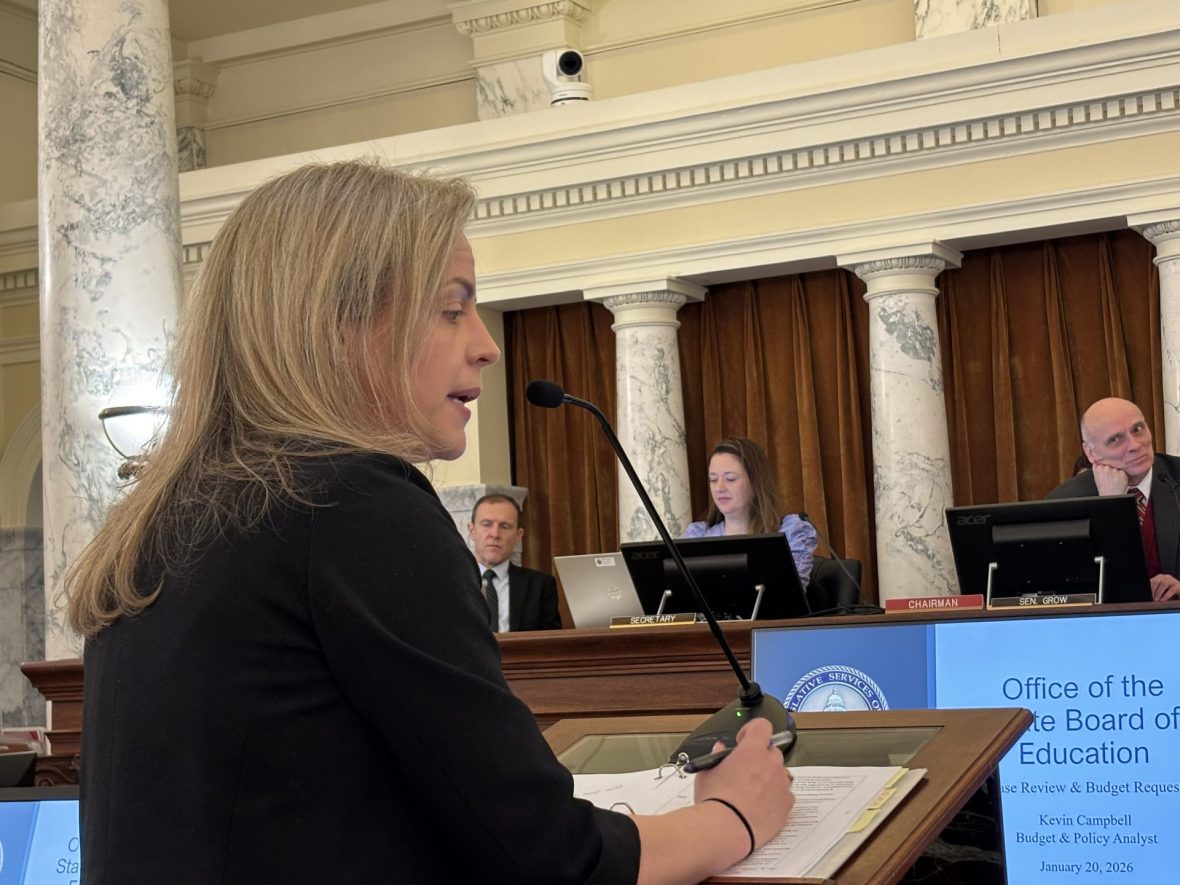
But on Tuesday, State Board of Education Executive Director Jennifer White said that isn’t necessarily a done deal.
“It certainly has to be on the table as part of our discussion,” White told Joint Finance-Appropriations Committee members.
In May, the State Board of Education approved a 3.5% across-the-board tuition hike for in-state undergrads. Here’s how 2025-26 tuition stacks up:
- University of Idaho: $9,400.
- Boise State University: $9,364.
- Idaho State University: $8,914.
- Lewis-Clark State College: $7,876.
The State Board doesn’t usually set tuition and fees until the spring — after the legislative session. The 2026 Legislature will debate budget cuts across state government, and higher education has already absorbed some of the hit.
Gov. Brad Little’s midyear 3% budget cuts, announced in August, spared K-12 but left higher education on the chopping block. The cuts, now permanent, translate to $13.3 million across the higher ed system. College and university officials say the cuts will force staff reductions — 28 full-time positions at the University of Idaho alone — and Boise State University has said a tuition increase “will be necessary.”
Little’s spending request for 2026-27, released last week, proposes a $753.3 million budget for the state’s four-year schools, a 1.9% increase. But while the budget proposes an increase in dedicated funding — primarily student and tuition and fees — general funds from state tax dollars would actually decrease slightly.
One budget pressure point involves a complex formula that is designed to help colleges and universities absorb enrollment growth.
The formula, known as enrollment workload adjustment (EWA), has been unchanged for 20 years, but funded inconsistently. Little has proposed defunding EWA next year, a $9.5 million cut.
The move comes as Idaho higher education enrollment is increasing, growth that runs counter to national trends. It comes at a critical moment for the colleges and universities, White said.
The EWA formula is based on three years of enrollment averages. As Idaho colleges and universities have grown programs in high-demand careers, they stood to receive a boost in EWA funding, White said.
Without EWA, colleges and universities will need to cut staff positions, which means it will take longer for students to complete their degrees.
“We need that investment in workforce development,” White said. “We need that investment, frankly, in Idaho competitiveness.”
However, the State Board could scrap the EWA formula eventually, in favor of an outcomes-based funding approach. This won’t begin before 2027 at the earliest, but White offered JFAC a preview of what a new formula might look like.
Colleges and universities would put 10% of their funding “at risk,” she said. They would be able to earn this money back based not just on enrollment, but also on graduation rates and student progress. They would also receive funding based on graduation numbers in high-priority programs such as health care fields, cybersecurity and teacher education.
If colleges and universities didn’t earn all of their money back, the State Board would spend the balance on intervention programs.
The idea is to have the colleges and universities compete for their own share of the budget, instead of using a “Hunger Games approach” that pits schools against each other, she said.
But as she spoke before the budget committee — and with seven college and university presidents in attendance — White said a new formula could create winners and losers.
For example, Idaho State University would get a relatively large share of funding because of its focus on high-priority, health care majors. Based on the current outcomes-based model, Idaho State would receive a funding increase — since Idaho State would actually lose funding under the current EWA model. Idaho’s seven other two- and four-year schools would all fare better under the EWA model.
New bill would move presidential searches almost entirely behind closed doors
A new bill, unveiled Tuesday, would move the search process for new college and university presidents almost entirely out of public view.
Without debate, the Senate Education Committee unanimously introduced the bill — which, if passed, would apply to the stalled, 10-month search for a new Boise State University president.
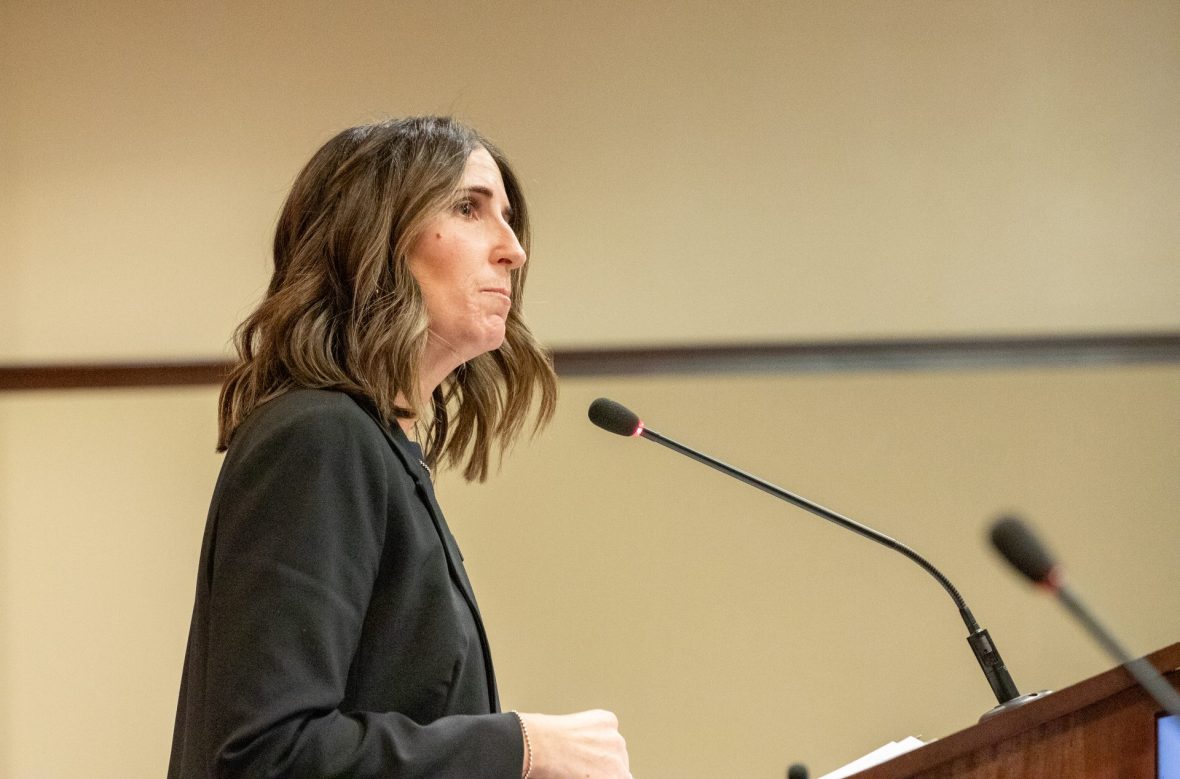
“We have lost some really good applicants in that process,” said Senate Majority Leader Lori Den Hartog, who co-sponsored the bill with a fellow Meridian Republican, Rep. James Petzke.
The bill would truncate and all but eliminate the public phase of presidential searches.
Under current law, candidates can apply for a president’s job in confidence. The state can then screen applicants and semifinalists behind closed doors. But after that, the state must release the names of five finalists — a short list of candidates who come to campuses for open forums with students, staff and faculty.
The bill would allow a search committee to winnow down the field of applicants — through closed-door vetting and interviews — and submit a sole finalist to the State Board of Education. The board would have to wait at least 10 business days before hiring the new president in open session.
“There’s still opportunity for the public to vet that name,” Den Hartog said.
If passed, the bill would go into effect immediately. And that would allow the State Board to rework the process for the Boise State search.
Boise State’s search ground to a halt in October and remains on hold, almost a year after Marlene Tromp left Idaho’s largest four-year school for the top job at the University of Vermont.
State Board members have said the current law has thwarted the search process. They say candidates don’t want to be named publicly, especially if they have only a 20% chance of getting the job.
The State Board supports the proposed changes and helped with the bill’s wording, Den Hartog told EdNews after Tuesday’s hearing,
Earlier Tuesday, a spokeswoman would not say whether the State Board had a hand in writing the bill — or whether the State Board even supports it.
“The board does not comment on proposed or pending legislation,” Marissa Morrison said in an email to EdNews.
Senate Education’s vote paves the way for a full hearing on the bill.
Democrats urge Tax Commission to freeze HB 93 advance payments
Democratic leaders Friday urged the State Tax Commission to freeze advance payments through the Parental Choice Tax Credit.
Advance payments are one of two ways to receive a state subsidy through the private school choice program. Applicants can claim a tax credit for expenses already incurred, or they can request an advance payment covering future expenses. Only households earning 300% or less than the federal poverty level qualify for the advance payment.
The tax credit application period opened last week, and more than 3,300 students applied.
House Minority Leader Ilana Rubel and Senate Minority Leader Melissa Wintrow asked the Tax Commission to pause the advance payments “until sufficient oversight measures are in place to prevent the misuse of public funds.”

The Boise Democrats sent a letter to Tax Commission chairman Jeffrey McCray, the agency responsible for administering the Parental Choice Tax Credit. GOP lawmakers and Republican Gov. Brad Little created the tax credit last year through House Bill 93.

“While we recognize the intent behind (HB) 93, to give parents more educational choice, the lack of upfront accountability mechanisms, particularly regarding advance payment, opens the door to fraud and abuse,” Rubel and Wintrow wrote.
The Idaho Statesman first reported the letter Monday.
The Democrats pointed to examples from other states with similar programs that lack “adequate accountability.” In Arizona’s education savings account program, taxpayer funds bought kayaks, ski passes, SeaWorld tickets and Lego sets, they wrote.
Rubel and Wintrow also noted an Idaho example. The Office of Performance Evaluations last year found that the Idaho Home Learning Academy’s reimbursements to parents “misused” taxpayer funds for years, they wrote.
According to the Tax Commission’s Parental Choice Tax Credit website, the advance payment can only be used on qualifying education expenses, such as private school tuition, curriculum and tutoring. Recipients will be required to hand over receipts. Expenses that don’t qualify will have to be refunded.
But the Democrats argued for safeguards before payments are sent. They suggested:
- A system for pre-verifying vendors and expenses.
- A method for auditing receipts.
- A fraud prevention and recovery mechanism.
The Democrats also asked that reporting requirements be published in a “transparent, public-facing manner.” And the advance payments should be paused until “court challenges are completed,” they argued.
The Idaho Supreme Court is scheduled to hear oral arguments in a lawsuit challenging the tax credit Friday.

