
We all have shelled out — or will shell out — hundreds of thousands of taxpayer dollars on an open meetings lawsuit.
And we won’t get any answers for our money.
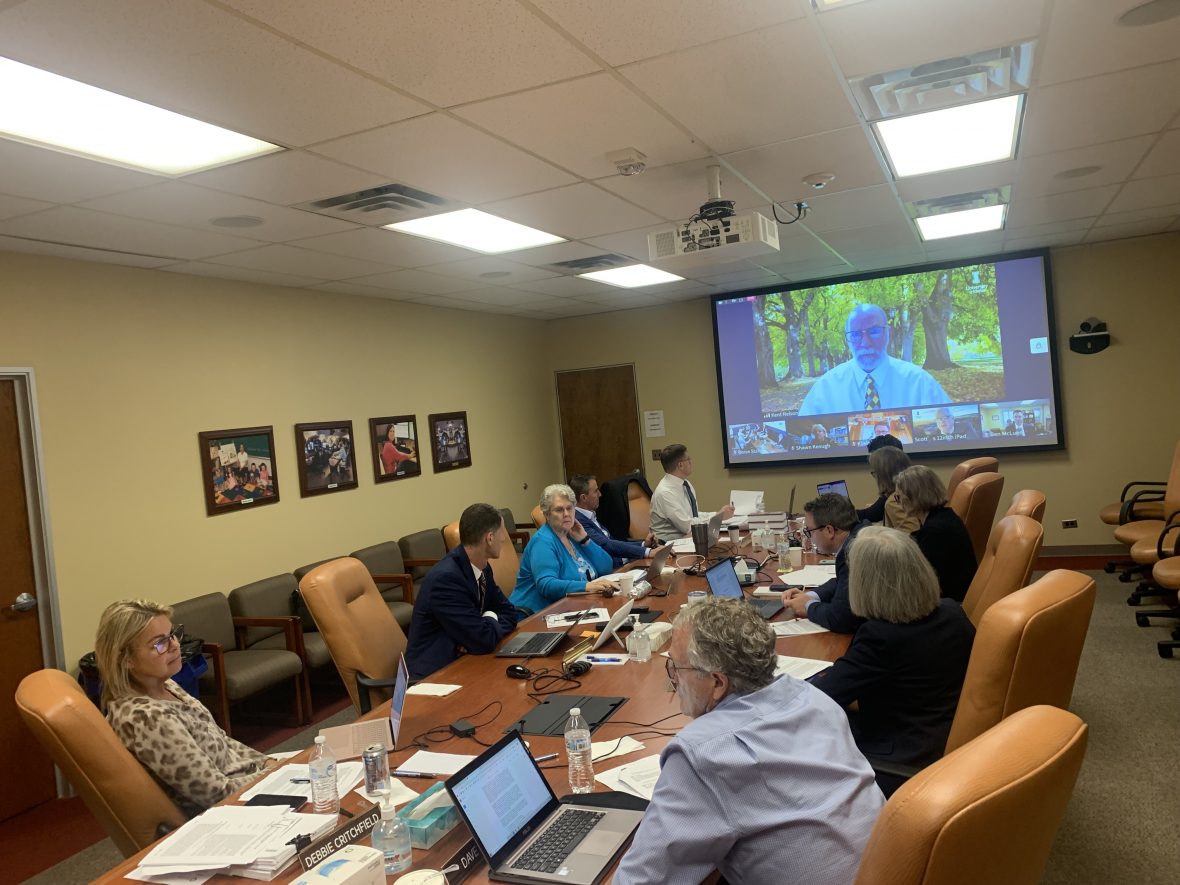
That’s because the lawsuit went away when the proposed University of Idaho-University of Phoenix partnership went away.
It all seems pragmatic, on the surface.
Attorney General Raúl Labrador’s lawsuit was centered on the Phoenix purchase — and whether the State Board of Education broke the law by discussing the idea in three closed-door executive sessions in early 2023. Which board members most certainly did, under an exemption in Idaho’s open meeting law, which otherwise defaults to doing the people’s work in public view.
Fast forward from 2023 to 2025.
On June 3, the U of I and Phoenix finally put its proposed partnership out of its misery. That left the open meetings lawsuit as a curious, unresolved vestige from the U of I’s $685 million Phoenix bid. On June 18, Labrador announced he was dismissing the lawsuit.
Not surprising. But here’s the thing. The case kicked around the courts for two years, with the legal questions unresolved.
In January 2024, Ada County District Judge Jason Scott ruled that the State Board’s closed-door meetings were legal. Labrador appealed, and in December, the state Supreme Court sided with Labrador and kicked the case back to District Court. The Supreme Court ruling championed the “preference for sunshine” built into Idaho’s open meetings law — and castigated Scott for his reading of the law. But the ruling, as much as anything, called for a do-over.
“We have not concluded that the Open Meetings Law was violated by the Board,” said Justice Gregory Moeller, writing on behalf of the majority.
It would have been up to Scott to interpret the law — again. But that isn’t going to happen.
After two years. And $387,513.64.
And that’s just the State Board’s side of the ledger. The board hired Boise law firm Gjording Fouser to argue on its behalf. Normally, the attorney general’s office defends a state agency in court — but in this case, the attorney general’s office was suing the State Board. Hence the outsourcing.
We don’t know how much Labrador’s office spent suing the State Board. “We have not calculated what the fees would be,” spokesman Damon Sidur said in an email to Idaho EdNews. Labrador had in-house legal staff work the case, as opposed to hiring outside counsel.
When Labrador moved to dismiss the case, the State Board and the a.g.’s office agreed to cover their own costs. (Scott had originally ordered Labrador’s office to cover the State Board’s fees, but the Supreme Court set that aside as well.)
But make no mistake. The taxpayers were always going to be on the hook for this case and all the legal maneuvering that came with it. When two public agencies go at it in court, the battle over legal fees is really just a matter of bragging rights. The State Board’s hired crew and Labrador’s in-house lawyers will both get paid by the same set of bosses.
Bosses who should reasonably expect that public agencies follow the law and do their work in the open. Honoring that “preference for sunshine” Moeller extolled in December’s Supreme Court opinion.
Any public official — no matter how well-intentioned and committed to transparency — would be hard-pressed to find direction from this lawsuit. That’s what happens when cases are closed without closure.
The Phoenix lawsuit hinged on some little-used verbiage in the open meetings law. An obscure section of the law covers “preliminary negotiations” over a transaction that places a public entity “in competition with governing bodies in other states or nations.”
The State Board said this exemption applied to the Phoenix discussions, and in his ruling, a sympathetic Scott agreed. Scott said the State Board had reason to believe the U of I was competing against other public bidders. He also said, in essence, that “preliminary” discussions could cover any talks leading up to a contract.
The Supreme Court saw both points differently. Just believing there could be competition doesn’t satisfy the law. And deeming all negotiations “preliminary” runs counter to the idea of open government.
Both conclusions call the State Board’s actions into question. But keep in mind, the Supreme Court went out of its way to say the State Board’s actions might or might not have been legal.
It pains those of us who are transparency junkies, but the law allows the State Board and other public agencies to meet behind closed doors to discuss some items, under limited circumstances. And sometimes, the process is more awkward and opaque than it needs to be.
Just last month, the State Board held a closed-door meeting to discuss litigation, as the law allows. When the board took up the matter in open session, members spent a grand total of two minutes voting on a settlement involving the University of Idaho — and didn’t even bother to talk about the case or the settlement.
It took EdNews six days and two public records requests to hunt down the settlement, which carves up 93,000 disputed IP addresses. Anyone watching the meeting in real time — in person or on the livestream — could not have had a clue what board members were doing, even though they were doing it in full public view.
Idaho has a solid open meetings law. But even when a good law is put into practice, questions inevitably follow.
The Phoenix lawsuit could have answered some questions. Considering how much the case cost, taxpayers got a miserly return on their investment.
Kevin Richert writes a weekly analysis on education policy and education politics. Look for his stories each Thursday.