
It might be the most important public hire in Idaho this year.
Yet the search for Boise State University’s next president is cloaked in intrigue.
Sure, there’s a slick looking search website — with not one but two pretty photos of trees on campus in full bloom. There are rosters for the State Board of Education’s search committee — and the subcommittees that held listening sessions on campus this spring.
But there’s no timetable, because that’s open-ended. There’s no cost estimate for the search, because that’s fluid. And there are certainly no applicants’ names, or even a tally of unnamed applicants.
The State Board answered some, but not all, of EdNews’ questions this week. Here’s what we know about the process so far.
A confidential vetting process
The search is being headed up by the State Board’s newest member: David Turnbull, an Eagle developer, appointed in October. Board staff said Turnbull had no time for an interview this week, and asked Idaho Education News to submit written questions about the search.
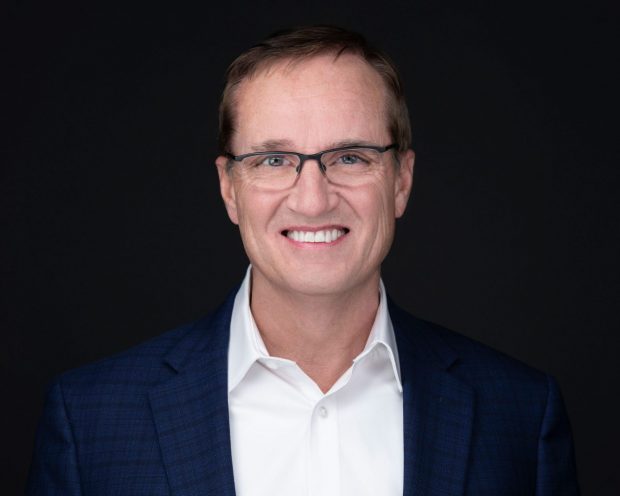
In a prepared statement Thursday, Turnbull noted the high stakes. “The Boise State president is one of the most critical hires the State of Idaho will make for the foreseeable future, and the search committee that has been gathered fully understands and appreciates this.”
The eight-member search committee won’t make the hire. This committee will interview semifinalists and turn over a list of finalists to the State Board, which ultimately picks the new president.
No interviews will happen any time soon. The “priority deadline” for applications is July 18, the State Board said Thursday.
And the public won’t see any applicants’ names until the search committee does its vetting. Under public records law, the State Board needs to release only a list of five finalists. There is one catch; if the search committee recommends fewer than five finalists, then all applicants’ names would be public record.
In the meantime, the search committee is operating under signed nondisclosure agreements, with Turnbull as the sole public point of contact.
“This is standard practice for all president searches,” State Board staff said, in response to one of EdNews’ written questions. “Confidentiality is important to attract the best candidates and protect the candidates in their current jobs while the process continues to identify finalists who are then publicly named.”
The last, long search
Nobody needs to say it publicly. But the State Board is hoping for a better process this time around. The last time the Boise State president’s job came open, the board circumnavigated an awkward 17-month search.
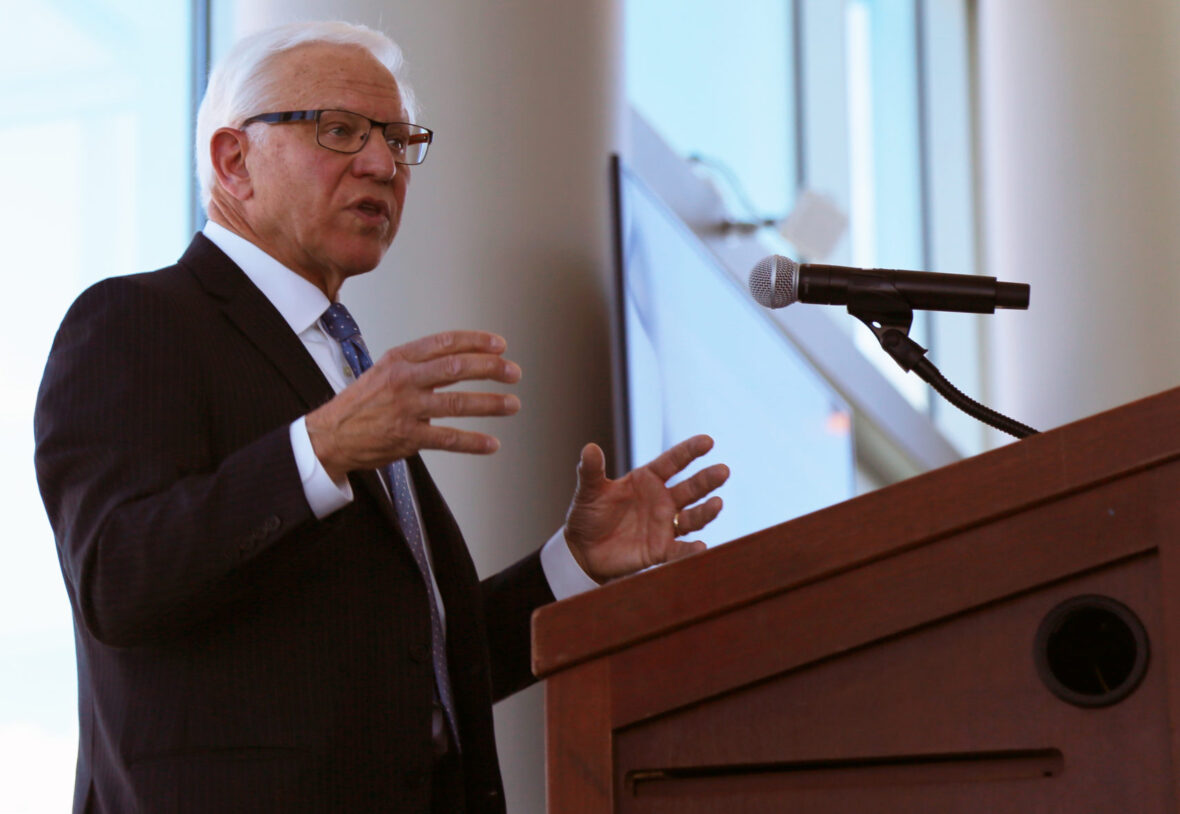
In May 2018, six months after longtime President Bob Kustra announced his plans to retire, the State Board met on campus to interview and consider three finalists. In an unexpected head fake, the board unanimously voted to start over. Board members did not discuss their abrupt decision, and then-President Linda Clark explained it in general terms. “The process was a good one, the pool was strong, but, simply, we didn’t find the right fit.”
The quest for “the right fit” meant launching a second search, hiring a new headhunting firm, installing Provost Martin Schimpf as interim president for more than a year and reopening the pool to more than 60 applicants.
In April 2019, at a board meeting that had the vibe of a gameday tailgate, the board swiftly and enthusiastically hired Marlene Tromp. Her tenure ended in May, after six years marked by enrollment growth and research and fundraising milestones, but also beset by political controversy.
Presidential searches cost money, for staff and consulting work, and for bringing in finalists for interviews and campus visits.
Russell Reynolds Associates — the board’s current search firm, which was unconnected with either phase of the last Boise State search — has a $155,280 contract. Other expenses “will be determined as they are received,” State Board staff said Thursday. Clearly, there is no small financial incentive to get a search done the first time.
Perhaps more importantly, a drawn-out search costs time. For as long as the search goes, the state’s largest four-year university is inevitably stuck in a holding pattern.
Turnbull acknowledges the need to get the timing right.
“The search committee timeline is on track, and we are moving with all deliberation to guarantee that the right candidate for Boise State is chosen, and the search committee will do everything to ensure the process is valid, thorough, and respected.”
Who’s at the table?
With two State Board members, three Treasure Valley business leaders and three university representatives, the small search committee is notable for its omissions.

Rep. Wendy Horman, R-Idaho Falls, is quick to point out that no legislators are on the committee. But Horman — who co-chairs the powerful Joint Finance-Appropriations Committee, which led the charge to cut Boise State and University of Idaho’s budgets this session — also says the Legislature has sent a message about the culture of higher education.
“There’s really not a question of what the Legislature is concerned about and what we’re hoping to see,” Horman said.
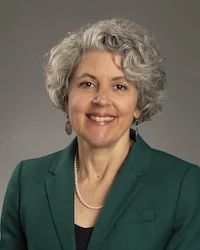
Boise State Faculty Senate President Laurie Cavey has her own set of concerns. The mathematics professor is not happy to see a small search committee made up mostly of members from outside the university community. The State Board added one faculty member early in the process — Lisa Growette Bostaph, a criminal justice professor — but Cavey said the initial absence of a faculty representative was “shocking.” The lack of a student representative, she said, is “absurd.”
The State Board points to the subcommittee process. These groups — representing students, administration and staff, faculty, alumni, and the university foundation and athletics — have fed information into the search committee.
“The process has been well-informed by their work,” State Board staff said Thursday. “We also expect that stakeholders of all types will have opportunities to provide feedback as the process continues.”
An academic? A politician? A business leader? A unicorn?
Hiring the next president is, unavoidably, a final statement on Tromp, who left Boise State to head the University of Vermont.
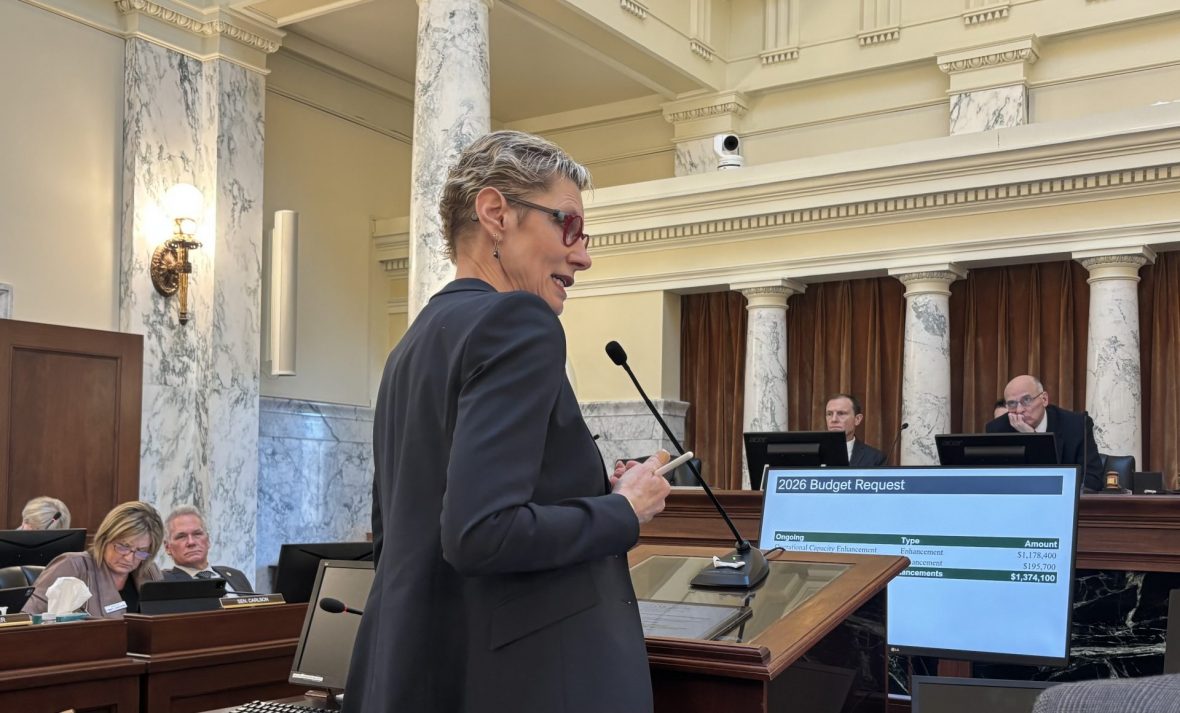
Over the past several years, Boise State has weathered an outsized amount of scrutiny at the Statehouse, Cavey said. This was beyond Tromp’s control, and it placed her in an impossible position. Now, Cavey fears that the State Board might look beyond academia and hire a politician as president. Someone, she said, “to come in and fix everything that’s wrong with Boise State University,” over the objections of faculty members who see no fundamental flaws at the university.
Across the country, there is certainly precedent for hiring a politician to run a state university. And while Horman is one of the most influential members of the Legislature, she isn’t insisting on seeing a politician in the president’s office. She said she enjoyed a candid, excellent relationship with Tromp, and gives Tromp credit for the improvement in some of Boise State’s student metrics.
“I hope to see someone who wants to partner with the Legislature … regardless of which sector they come from,” she said.
The State Board has shown a willingness to make a nontraditional hire. The same year the board hired Tromp, a career academic with a doctorate focused on Victorian literature, the board also hired C. Scott Green, an executive with an international law firm, to head his alma mater, the University of Idaho.

The key is not so much the resume as it is relationships, said Tommy Ahlquist, a physician and developer who this spring co-chaired the State Board’s athletics and university foundation search subcommittee.
“I don’t think it’s a unicorn at all,” Ahlquist said this week. “Sometimes we make this too hard.”
Ahlquist admired Tromp’s life story — as a first-generation student from rural Wyoming — and her passion for Boise State’s students. But Tromp and some legislators clashed almost immediately, he said, and she could never change that narrative. The next president, he said, will need to tap into Idaho’s sense of heritage, and Idahoans’ passion for Boise State. “It is kind of the front porch of Idaho, in many ways.”
The state’s prospectus to would-be candidates notes the enormity of the task.
“Higher education is in a time of transition and new opportunities. As leaders who are asked to do much more than simply run an institution, presidents must build relationships throughout the state; report to the State Board; work with the Governor, state legislature and industry and community partners; focus on and serve the needs of students; (and) build trust with and earn the respect of the faculty.”
A search committee is trying to find a candidate who matches this job description. At least for now, this high-profile work is taking place outside public view.
Kevin Richert writes a weekly analysis on education policy and education politics. Look for his stories each Thursday.